BEYOND the activities at a “Clay and Calm” programme for senior citizens in Ipoh, Perak, is a bigger impact – friendship, purpose and the joy of learning something new.
For many among the 80-plus participants, it was more than just a ceramics workshop.
The five-day programme at UTC Perak Senior Citizens’ Activity Centre (PAWE) in Waller Court flats became a space to share stories, rediscover creativity and strengthen social bonds, all while nurturing mental well-being and fine motor skills.
Rosnah Alwi, 64, from Bercham, has been a member of the centre for two years and treasures the community.
The former officer at a government-linked company left the workforce at 49 to focus on family, and now runs a hamper business.
“Here, we meet friends, stay active and keep our minds open.
“It is one big family, and we help each other, cook together and I even gain new customers through the friendships we make,” she said.
Lim Gwi Suan, 84, a retired music school teacher who lives with her daughter, joined PAWE before it was relocated.
It was previously housed at Urban Transformation Centre (UTC) Perak building but moved to Waller Court flats early this year (however, they still go by the name UTC Perak PAWE).
Though Lim now relies on e-hailing to get around, she still makes it to the centre three times a week.
“There are so many interesting programmes, like sewing, clay work, and daily exercises.
“The most important thing is the exercise, but also the trips we go on together,” said Lim who is from Pasir Puteh.
Azmi Ali, 68, a retired postal supervisor from Kampung Manjoi, joined PAWE on the encouragement of his wife who was already a member.
“I enjoy the cycling and aerobic exercises, and now I am learning ceramics for the first time.
“After retirement, I did not want to just sit at home.
“Here, I make friends and try new activities,” he said, adding that he has been a member for five years.
K. Kamala, 62, also enjoys the family vibe at PAWE, having been a member for eight years and now attending sessions five days a week.
The former cleaner from Taman Pinji Mewah, Lahat, said: “PAWE is like a big family. No matter our race, we are like brothers and sisters here.
“Even if I feel sad, when I get here I forget my worries as we give each other advice and support.
“This is a place of connection, learning and shared laughter.”
For Kuldeep Kaur, 67, the “Clay and Calm” programme was just the latest in a string of activities that have coloured her life.
A former administrator who worked in the private sector, she was encouraged by friends to join the centre two years ago.
“They told me it would be interesting, a good way to spend time and get to know people.
“I am happy to be here. I have learned so many new things, like cooking different dishes, picking up new languages, playing games, exercises, ceramics and sewing,” she said with a smile.
Building inclusivity
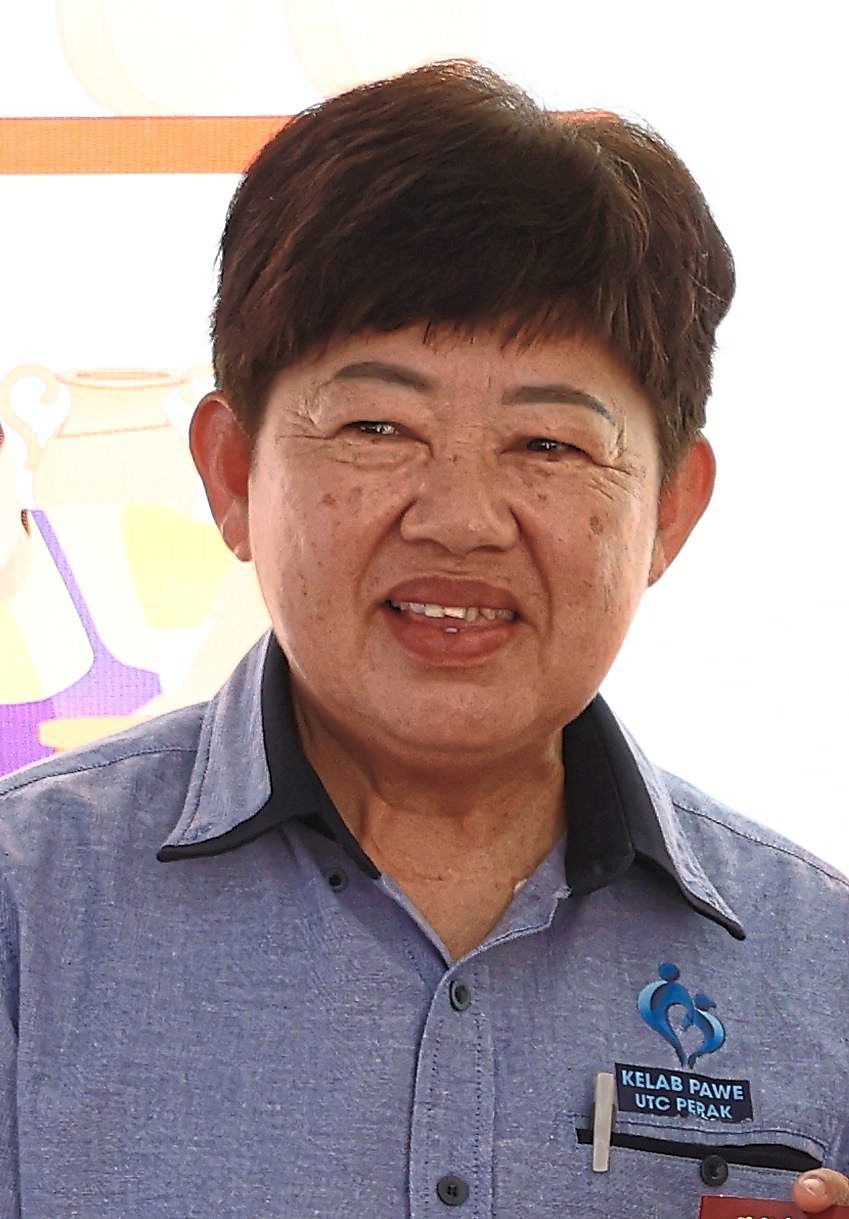
UTC Perak PAWE chairman Datuk Tan Lian Hoe said the ceramics workshop was part of an initiative aimed at promoting creativity, community bonding and economic empowerment among seniors.
Tan said the programme was not only about making pottery but also fostering stronger ties among the multiracial senior citizen community and giving them something meaningful and creative to do.
She said her aim was to keep the seniors’ minds active, their spirits high and eventually, even help generate a source of income for them.
“This centre is one of the few in the country with a truly multiracial membership – Malays, Chinese, Indians and Punjabis, among others.
“We have about 200 members,” said Tan.
“Since relocating, we continue to run daily activities, Monday through Friday.
“These include morning aerobics, handicraft workshops, cooking classes, religious and moral talks, flower arrangement, and festive celebrations such as Hari Raya, Chinese New Year, Deepavali and Christmas.”
The centre also collaborates with local groups for joint events.
With many senior citizens not having a regular income and some relying on children and grandchildren for financial support, Tan said programmes like these could help them develop products that could be marketed locally and even internationally.
“Participants will take home their creations once it is glazed in a ceramics factory.
“In the future, we aim to produce high-quality ceramic items as gifts or souvenirs,” she said.
The centre also arranges regular excursions to broaden members’ horizons, with recent destinations including Melaka and Kelantan, while the international tours included a trip to Betong in Thailand.
“Our goal is to help senior citizens stay connected with the world. They should not feel isolated at home.
“We want them to feel happy, valued and aware of how much they still have to offer,” said Tan.
“Membership is open to individuals aged 60 and above,” she added.
Creative therapy
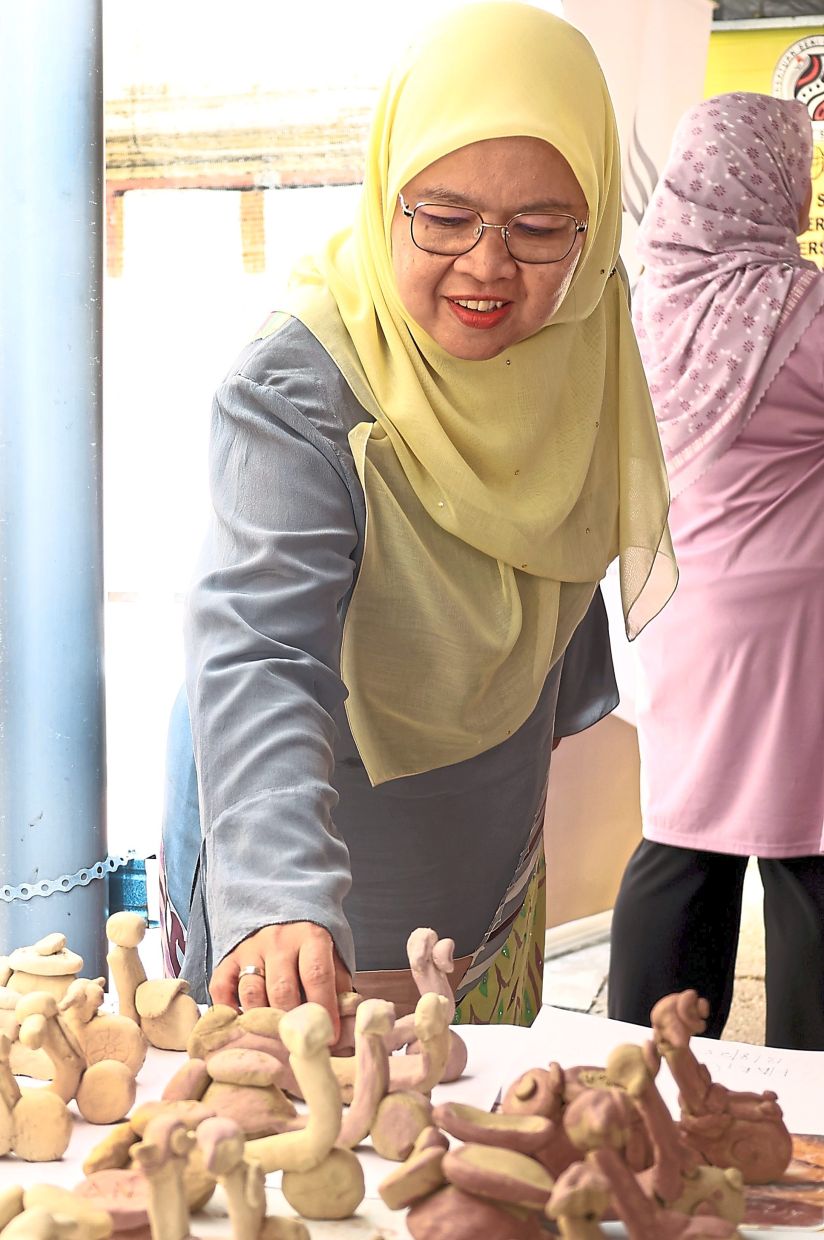
Perak Ceramic Art Association (Persera) chairman Mohd Shukri Hashim, who led the workshop, said the class was designed to introduce the elderly to the art of ceramics while encouraging creativity, hand coordination and mental engagement.
Participants worked on sculpting a Vespa model from clay, a project chosen for its moderate complexity, he said.
“Making a Vespa is a bit challenging because it involves several ceramic techniques like pinching, kneading and shaping.
“If we had chosen something simpler like a vase, it would only require one basic technique.
“This way, the seniors get to try multiple skills.”
Mohd Shukri said the way people created their ceramic piece could reveal their thought processes, creativity, personality and even motor skills.
“Beyond crafting a decorative piece, the activity also serves as a form of art therapy.
“Persera has around 30 members, including ceramic entrepreneurs, enthusiasts and academic experts.
“Our initiatives range from early childhood exposure to senior citizen workshops.
“Classes vary from short sessions to intensive six-month ones,” he added.
Games with meaning
The five-day programme also saw Sunshine Qualicare, a social enterprise dedicated to training caregivers, organising games designed to improve physical coordination, memory and focus.
Managing director Sarina Mohamed Mokhtar said the organisation’s core mission was to train caregivers, families and local groups to better support bedridden patients, particularly the elderly, and people with disabilities.
“Our activities are fun but they are also functional, as we want the elderly to not only enjoy themselves while playing but also learn games that can easily be replicated at home or within the community,” she said.
One exercise, she added, improved hand dexterity and body balance, particularly for hemiplegics (those paralysed on one side of the body).
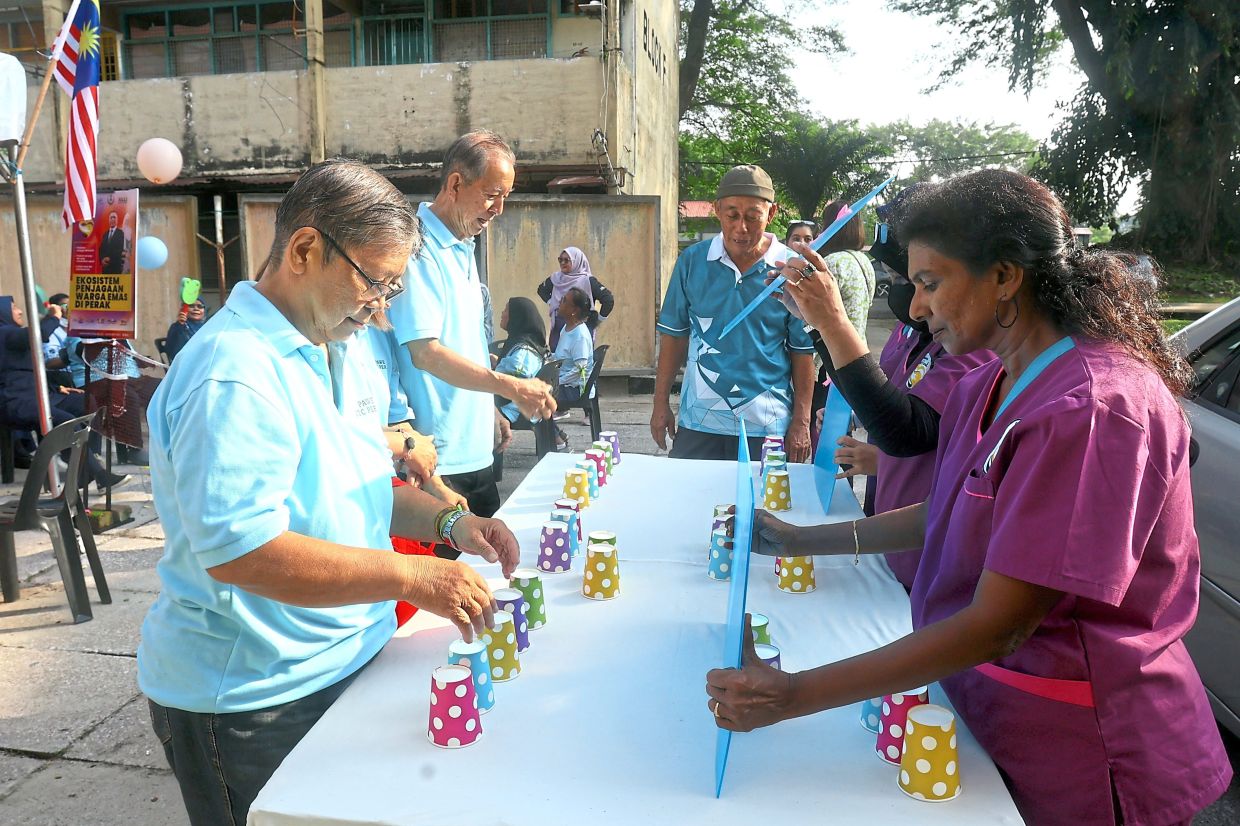
Another is a colourful memory game aimed at those with dementia.
“Starting with just two cups and progressing to five, the game stimulates the right side of the brain, which controls visual cues, while also re-engaging memory function,” said Sarina.
“For fun and focus, participants enjoy the ping-pong ball challenge, which tests visual- spatial ability, creativity and concentration as players find inventive ways to land the ball in an egg carton.
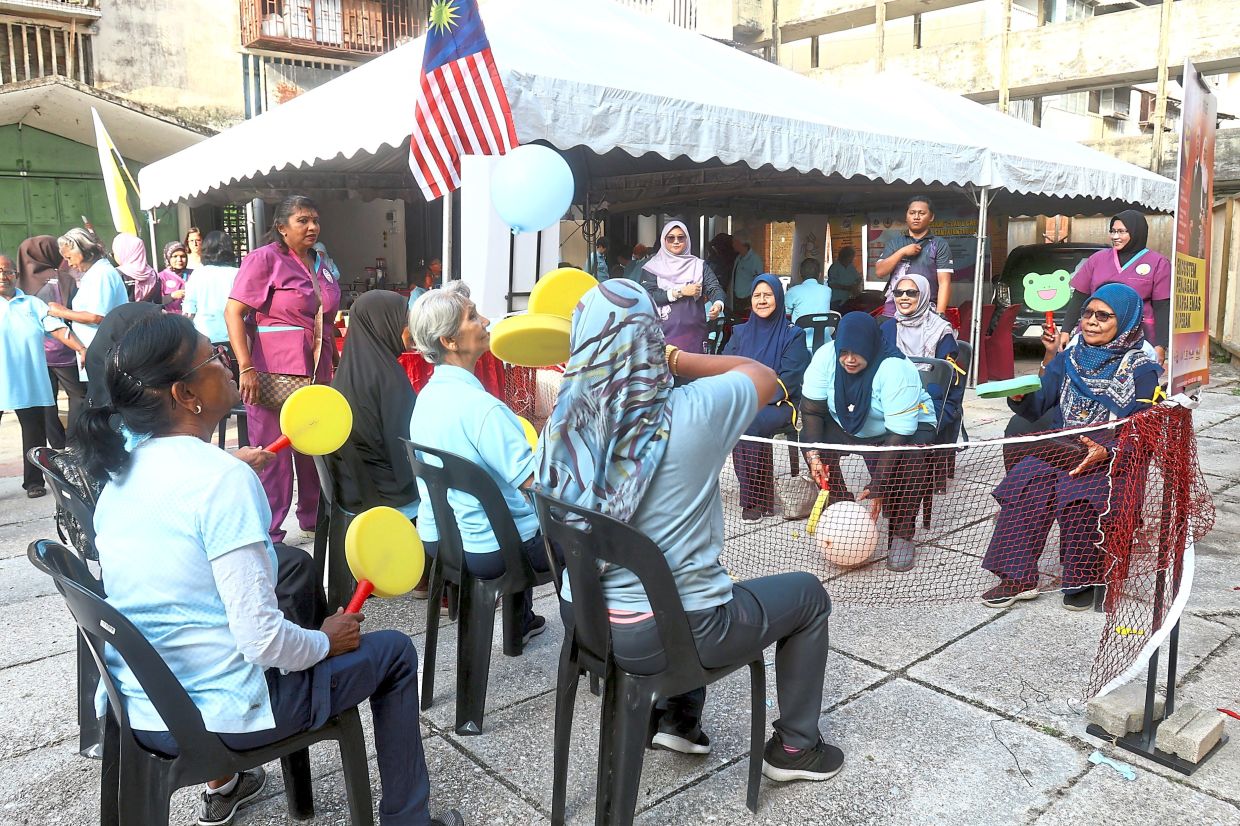
“The volley balloon game replaces a volleyball with a balloon and uses foam bats, allowing players to remain seated.
“This inclusive, low-impact cardio activity is particularly suitable for persons with mobility issues,” she added.
Sarina said Sunshine Qualicare frequently collaborated with PAWE centres to bring these activities to various locations, holding demonstrations and workshops on elderly care.
“Our goal is simple; we want to keep the elderly active, engaged and happy while giving caregivers practical tools they can use every day,” she said.
Attention on ageing
Perak Women and Community Development Secretariat director Jamilah Zakaria, who launched the programme, said the state aimed to promote social well-being and inclusion through inter-generational programmes to bridge the gap between young and old.
The initiative, she said, aligned with the Perak Sejahtera 2030 development plan that prioritised inclusive programmes for vulnerable groups.
She said Perak, categorised as an ageing state, must continue to care for and empower senior citizens through structured, community-based support.
According to the Statistics Department (DOSM), 14.6% of Perak’s population in 2023 was aged 60 and above.
And as per DOSM projections, Jamilah said, Malaysia would become an aged nation with over 17% of the population 60 years or older by 2040.
Stating that Perak planned to deepen its inter-generational approach, she said programmes could not be designed solely for older people without simultaneously raising awareness among the young.
She said future programmes would include youth participation, which would build empathy and practical caregiving awareness among younger residents while reducing the risk of loneliness among seniors.
“We plan to introduce an inter-generational and community support system programme across Perak next year, with the support of local leaders and grassroots organisations.
“The programmes will include psychomotor activities, music and dance sessions, reading therapy, and community service opportunities.”
Jamilah noted successful examples from Japan, where elderly citizens remain active and mobile due to strong community support systems.
She advocates for a similar model in Perak, where local leaders and volunteers can help seniors stay connected and supported.
“At present, much of the elderly engagement ecosystem in Perak is anchored by PAWE, with its focus on activities and awareness.
“The state government supplements these efforts with funding and on-the-ground programme support.”
Awareness was essential, she said, as public understanding was the foundation for long-term sustainability.
“When communities appreciate the needs of seniors, the case for caregiver training, home-based support, and inclusive design becomes self-evident.”
Jamilah said many Malaysians provided care informally within families and neighbourhoods.
Ensuring they had practical guidance on seniors’ physical and mental health could significantly improve outcomes while easing caregiver strain.
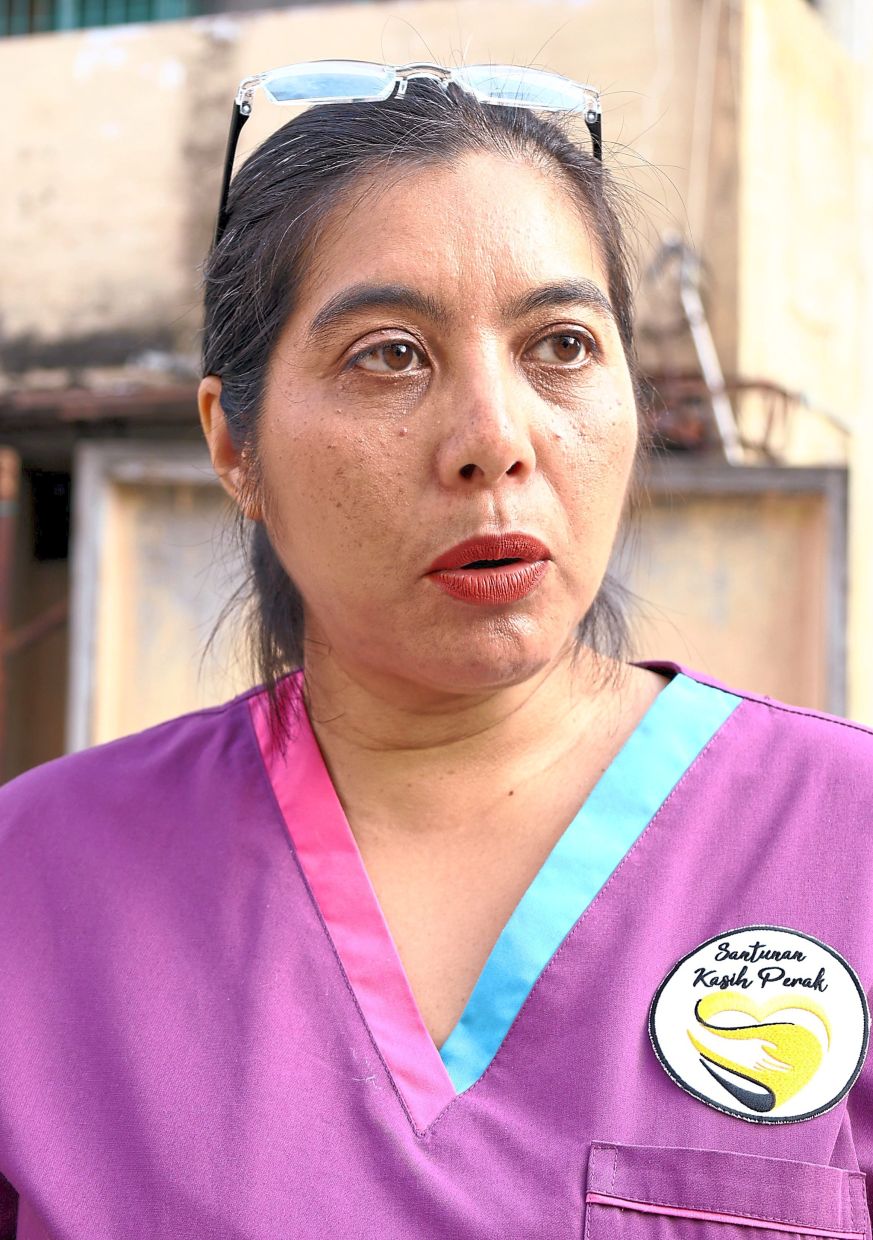
To help meet this need, Perak has launched “Santunan Kasih”, a programme that trains aspiring caregivers and volunteers.
“Trainees learn core competencies for supporting seniors at home, knowledge that they can use for family caregiving or to start small, community-based care services,” Jamilah added.