
ON Aug 13 last year, Datuk Seri Maimunah Mohd Sharif was back in her hometown of Kuala Pilah, Negri Sembilan, enjoying a rare break after six years at the helm of an international stint, when a call came from the Prime Minister.
Two days later, she was in Kuala Lumpur City Hall (DBKL), sworn in as Kuala Lumpur’s first woman mayor and handed a clear mandate – cut waste, restore financial health and raise the city’s standing globally.
A year on, she has pushed through the capital’s most comprehensive land use plan, slashed reliance on consultants and steered DBKL back into surplus revenue, all while navigating the complexities of running Malaysia’s busiest city.
Stepping onto global stage
The newly appointed mayor found herself at the centre of a crisis just a week into her job.
An 8m-deep sinkhole emerged on Jalan Masjid India, forcing Maimunah to lead a high-stakes rescue operation for a missing victim while still learning the layout of her own office.
It was a trial by fire for the 64-year-old former executive director of the United Nations Human Settlements Programme (UN-Habitat).
“I had to hit the ground running and learn at the speed of light,” she said in an interview with StarMetro.

“I was told I was the chair of the disaster committee for Kuala Lumpur, so that meant leading, forming the task force and coordinating at every level.
“When I first came to DBKL, I had a plan – I wanted to meet the people, get to know my team, then read up on the policies,” she said.
Responsible for 25 departments and four executive directors, she had wanted to sit down with each of them.
“But when the sinkhole incident happened, it put me in a position where I had to make decisions there and then.
“In a way, that incident allowed me to meet key people I had planned to visit later, like the heads of the police, fire and rescue department, health department, Indah Water, Air Selangor and Tenaga Nasional.
“I met them in the middle of a crisis, not in the nicest way, but it helped me build those connections straight away,” she said.
Beginning her career as a town planner with Penang Municipal Council in 1985, she then served as mayor of Penang Island City Council and president of Seberang Perai Municipal Council.
Maimunah credits her time at the UN in Nairobi, Kenya, as crucial preparation for her current role.
“In Penang, all my staff were locals, while at the UN, my team came from all over the world, with different cultures and backgrounds.
“That taught me a very different way of managing people and navigating complex environments.
“As Kuala Lumpur mayor, it is also about engaging with investors, the diplomatic corps and ambassadors whose headquarters are here.”
In the public’s eye
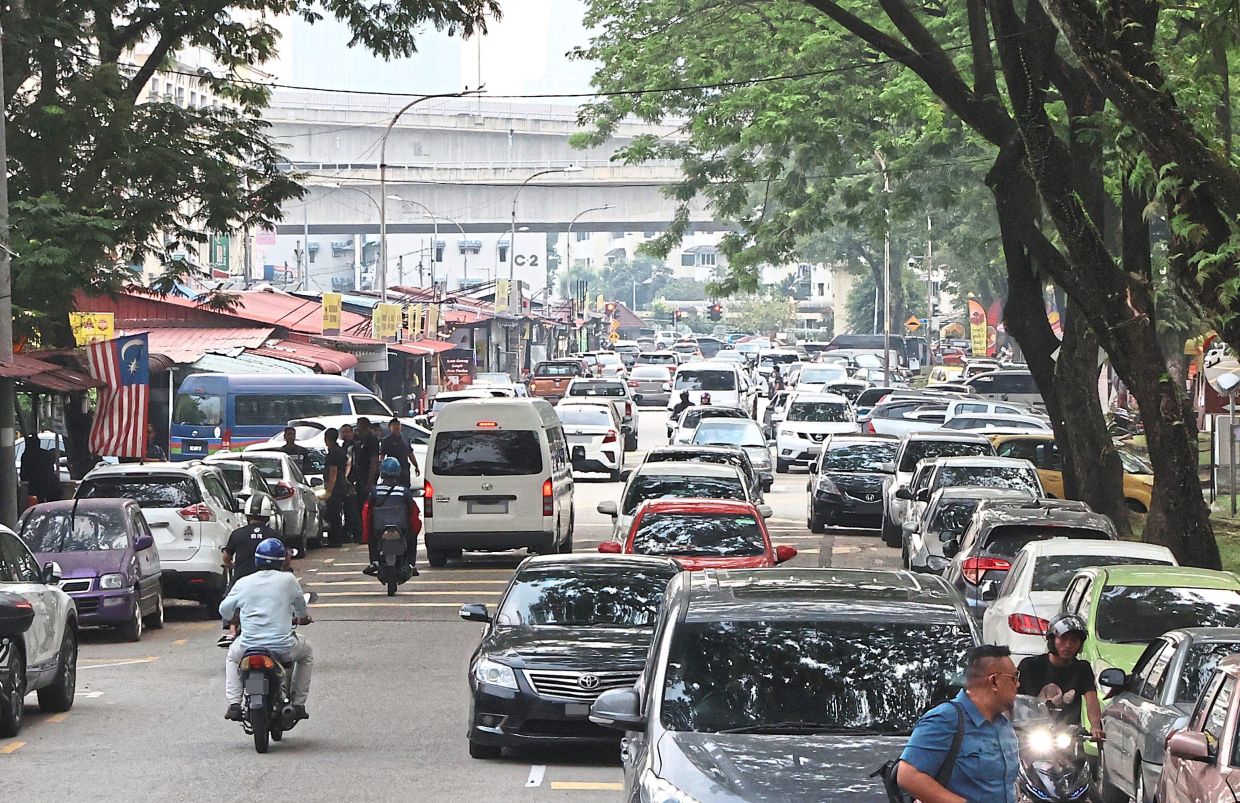
Enforcement has been one of the more sensitive issues during Maimunah’s first year as mayor, but she is clear about her preferred approach.
“If I have a choice, enforcement will always be my last resort.
“I want to start with advocacy, capacity building and education, such as telling people not to trade in prohibited areas, not to set up illegal hawker stalls and not to employ foreigners illegally.”
Still, Maimunah acknowledged that education alone was not enough.
“We have to do it concurrently; educate and enforce.
“We take action only after following procedures like giving notices, but action has to be taken if we want to be a global city.
“Look at other capitals – the streets are clean, the pavements are clear and you can walk seamlessly,” she noted.
In recent months, DBKL’s enforcement work had drawn attention after incidents such as the July arrest of a man who threatened officers with a parang during an operation in Desa Pandan and a March scuffle with a balloon vendor in Jalan Tuanku Abdul Rahman that went viral.
In both cases, DBKL said warnings were given, but pledged to review standard operating procedures (SOP) to avoid future confrontations.
The challenge, Maimunah admitted, was that enforcement often felt like a temporary fix.
“Today we take action and tomorrow they come back,” she said.
To make enforcement more sustainable, DBKL is creating alternative trading spaces, streamlining hawker permit applications and sending officers on the street to assist traders directly.
She also sees the need for stronger collaboration with the police.
“It is easy to say enforcement officers should always be courteous, but if you are on the street and people are chasing you, you need to be strong.
“We have told them not to provoke and to take care of themselves, but it is a tough job.”
Breaking down silos
Another early challenge, Maimunah said, was earning the trust of colleagues and staff at DBKL, as she was an outsider to the organisation.
To build rapport and understand its inner workings, she organised a retreat with senior management from all 25 departments.
It was there she discovered significant overlaps in job scopes and functions.
The Masjid India sinkhole incident also revealed how fragmented the city’s expertise was.
“We had to bring in geotechnical expertise and that was when I realised we already had geotechnical engineers scattered across different departments – in planning, engineering and project implementation.
“One might focus on the surface, while another specialises in what is underneath, yet they were not working together.
“Why aren’t all these people in the engineering department? Wouldn’t that be easier?
“So, we streamlined them into one unit within engineering and now, they work together with clearer roles and coordination,” she explained.
Marking milestones
Looking back on her first year, Maimunah said her priorities stemmed from a clear mandate from Prime Minister Datuk Seri Anwar Ibrahim.
“He told me to ensure DBKL is compliant with the national reform programme, reduce leakages and waste, improve financial sustainability and boost efficiency.
“It is not about adding skyscrapers, but improving the city’s reputation through stronger international relations, inclusive policies and leadership in delivering Malaysia’s global commitments.”
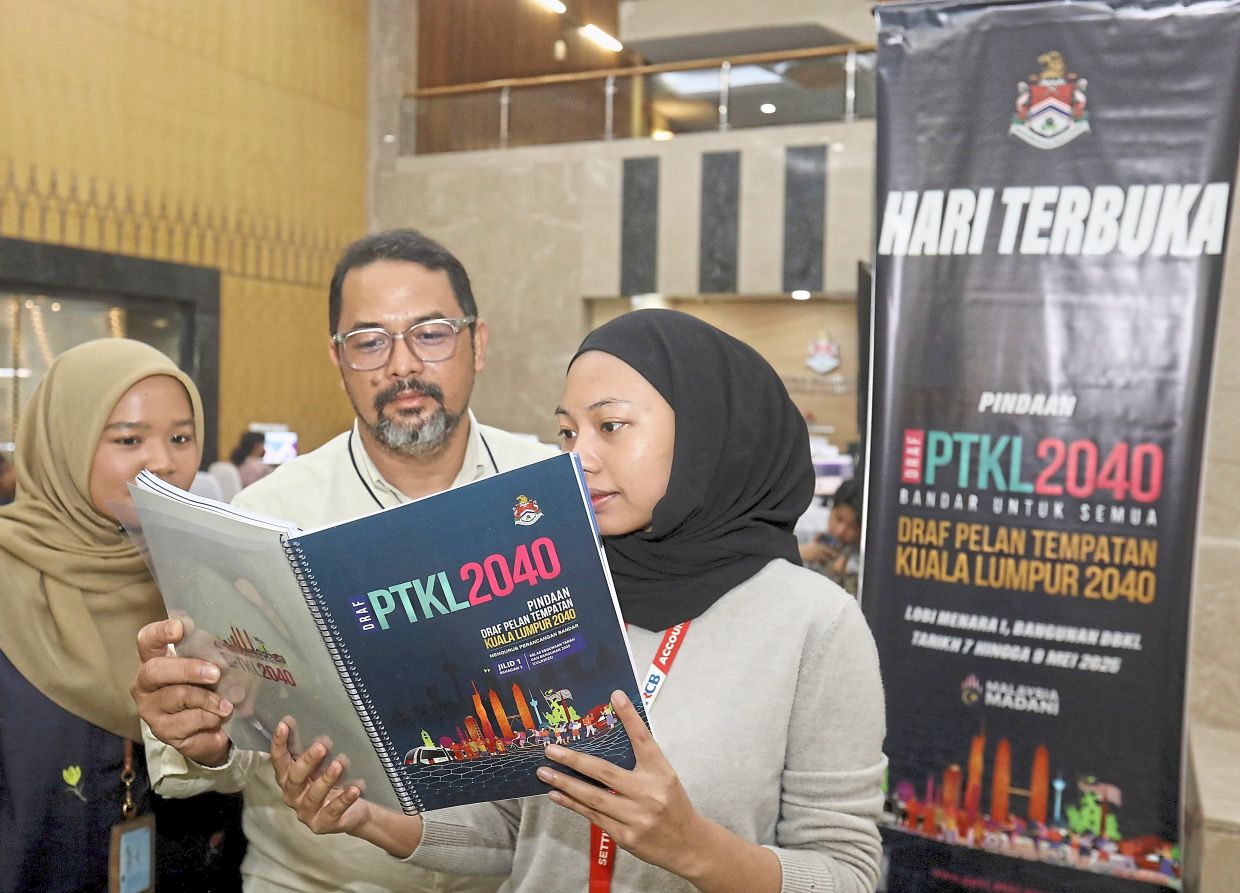
Among her top achievements is the Kuala Lumpur Local Plan 2040 (PTKL2040), gazetted in May, which defines land use for all 176,000 lots in the city, providing clarity and assurance to investors and residents.
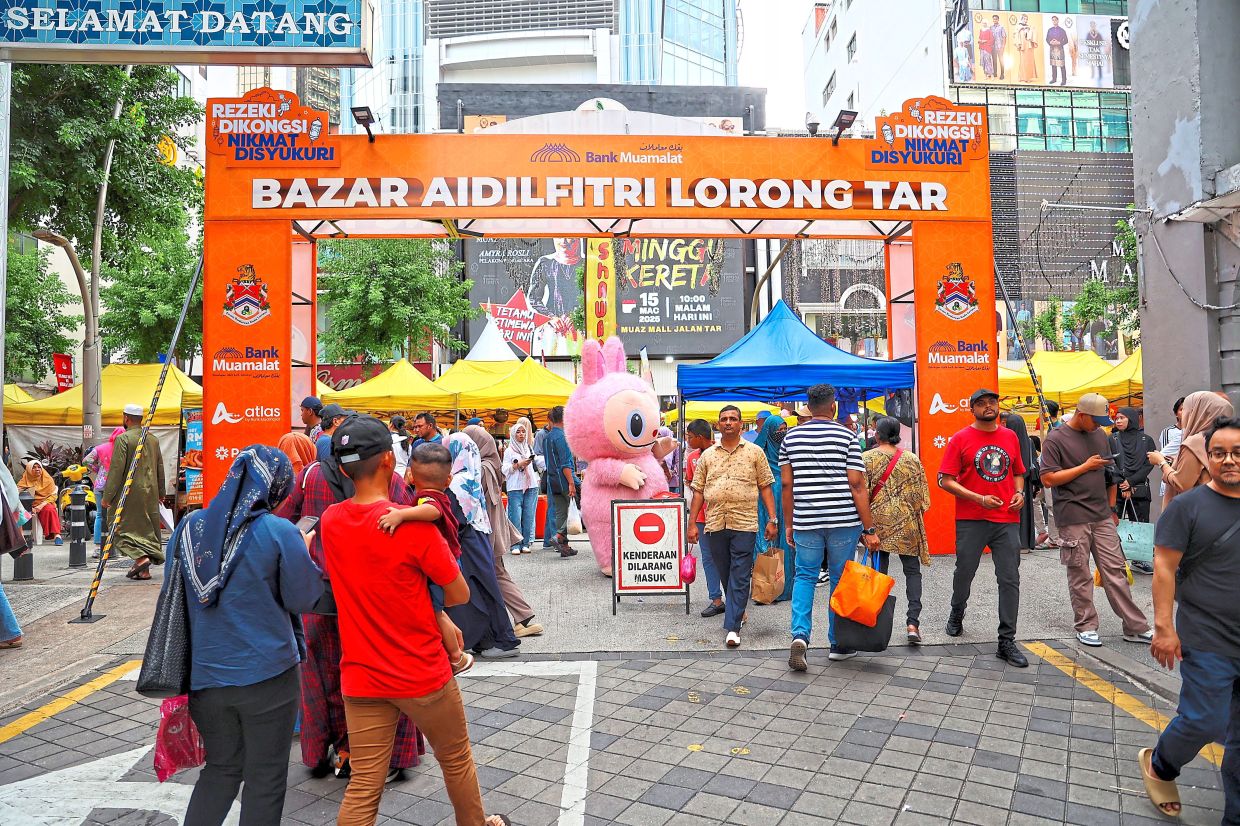
Another milestone was DBKL’s first-ever direct management of the city’s festive bazaars, pulled together in under three months.
“It was a huge logistical task involving the police, People’s Volunteer Corps (Rela), MPs, traders and non-governmental organisations.
“I received mostly positive feedback, even from retail associations who said this was the first year they made a profit.
“One retailer told me they used to buy 10 lots and keep them empty so their storefront was clear.”
DBKL also set up a real-time operations room for 40 Ramadan bazaars (3,201 lots) and two Aidilfitri bazaars (366 lots).
Financial reform was another priority.
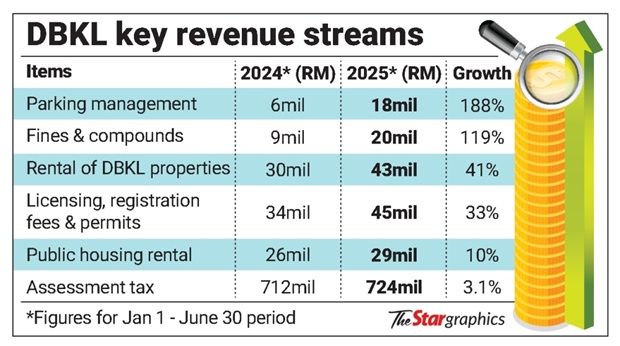
After two years of deficits (RM283mil in 2022 and RM75mil in 2023), DBKL closed 2024 with a RM27.6mil surplus, with significant increases in its key revenue streams (see graphic).
She credited this to introducing a “budget as a spending plan” principle.
“You have the money, then you spend.”
Another major change was a sharp cut in reliance on consultants, with appointments reduced by 57% compared to the previous year.
Only 12 consultants were hired in 2024/2025, down from 28 the year before.
“I do not mind hiring consultants if it is for something we truly cannot do.
“But sometimes, once the budget is approved, the first instinct is to look for a consultant.
“At the end of the day, we will not even know how to draw a plan anymore and any knowledge on this does not get passed down,” said Maimunah.
Kuala Lumpur’s role on the international stage is also high on her list.
This week, the city concurrently hosted the Asean Sustainable Urbanisation Forum (ASUF), Asean Governors and Mayors Forum (AGMF) and the Meeting of Governors and Mayors of Asean Capitals (MGMAC).
“It is a big moment for Kuala Lumpur and for Malaysia as Asean chairman,” Maimunah said.