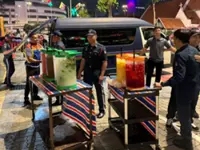
Many food and beverage operators in tourist spots like Jalan Petaling and Jalan Sultan regard Kuala Lumpur City Hall’s (DBKL) enforcement operations as part of the cost of doing business.
“After the Covid-19 pandemic, we saw a brief business boom. But once old tenancy agreements expired, many faced rent hikes of nearly 70%,” said Kuala Lumpur Hawkers and Petty Traders Association member Melvin Chan.

“Those who remain have to work harder just to stay afloat,” he said to explain why operators often place tables and chairs along crowded corridors and five-foot ways.
“This is not always out of defiance, but sheer necessity,” he added.
With rental soaring and tourists expecting street-side dining, operators say they are doing what it takes to survive.
“Many old operators, some who have been here for 50 years, have left because they simply cannot afford the rent anymore,” said Chan.

A fourth-generation member of the family behind the iconic Fung Wong Biscuits, which has called Chinatown home since 1909, Chan has seen the neighbourhood’s rental landscape change dramatically.
“We currently pay RM17,000 in rent, which is considered low, only because we are members of the traders association.
“Without that, the same shoplot would easily go for around RM35,000,” he said.
Some shoplots can now cost up to RM45,000 a month to rent, forcing operators to either leave or extend their business onto public walkways.
“Before year 2000, rent was as low as RM800. Then it jumped to RM8,000.
“Today, some shoplots go for RM35,000 to RM45,000. Many old-timers simply couldn’t keep up,” Chan said.
Association chairman Datuk Seri Ang Say Tee said using public walkways had long been a part of the Chinatown dining experience.
“It is nothing new; it has just become crazier lately because operators are under pressure to maximise profits and tend to overlook safety.
“But alfresco dining is part of the culture here; it is what tourists come for,” he said.
Ang believes in better regulation, not a blanket ban.
“We just need to control the numbers,” he said, suggesting a model like Jalan Alor, where DBKL closed one lane to accommodate outdoor dining.
“If a road has two lanes, close one, but make sure each operator only gets a fixed number of permits,’’ he added.
Asked about a permanent DBKL or police presence, Ang disagreed.
“Having enforcement officers walking around all the time might make tourists uncomfortable and traders nervous,” he said.
He estimates 70% of Chinatown’s visitors are foreign tourists, about 20% from China.
“They love dining alfresco under the night sky.
“They prefer it to big, posh restaurants. That is the charm of Chinatown,” he said.
Both Ang and Chan said they hoped to meet the Kuala Lumpur mayor soon to discuss closing parts of the road to traffic after 6pm, similar to Jalan Alor, to better manage crowds while preserving the area’s unique dining culture.