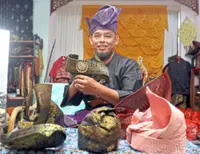
The tanjak has been preserved through the years via cultural activities.
Two prominent practices that continue to uphold the tradition of wearing tanjak are silat and horseback archery.
In horseback archery, the tanjak serves as a symbol of warriorhood, strength and cultural identity.
The Malaysia Horseback Archery Federation (MHAF), established in 2022, was formed to provide better coordination under Youth and Sports Ministry.
ALSO READ: Classic ‘tanjak’ makes headway
It has increased the number of horseback archers to 156 members presently, compared to 127 last year.
Its president Mohd Nasrul Kamarulzaman, 37, said horseback competitions had individuals showcasing their own culture through their clothes.
“Most traditions from every civilisation include the wearing of head coverings. And for the Malay community, it is the tanjak.
“When it comes to horseback archery, it is deeply rooted in cultural tradition and continues to be preserved just as it was before.
According to Mohd Nasrul, horseback archery has existed in Malaysia since 2007 and active since 2019.
For practitioners like Mohd Khairul Nizam Hosnas, a horseback archer based in Putrajaya, donning the Lang Menyosong Angin Tanjak (Negri Sembilan) is both a personal and cultural statement.
The 42-year-old who grew up in Negri Sembilan picked up horseback archery in 2019, driven by his passion for extreme sports.
“It’s our responsibility to ensure this tradition continues to gain public attention.
“Plus, it is an extreme sport that challenges one’s bravery, strength and physical endurance.
“I had always wanted to try horseback archery, but information was scarce back then.
“My interest grew after I saw a video of an archery teacher shooting arrows at high speed while riding a horse without holding the reins, during a competition abroad.
“That inspired me to seek out a mentor and start training,” he said.
The tanjak is put over an equestrian helmet to protect the rider’s head in the event of a fall.
To Mohd Khairul, the tanjak is a symbol of self-respect and cultural integrity.
Wearing it, he said, was a reminder to carry oneself with discipline, pride and awareness of one’s heritage.
“It completes the traditional outfit and reflects a person’s character and manners, especially for archers.”
He said the tanjak was a symbol of Malay identity and every Malay should own one.
“It’s not just for sport, it is worn during major events and cultural celebrations too.
“You won’t see tanjak in other equestrian sports, but in horseback archery, it’s a must.
“Wearing the tanjak absolutely helps me embody the warrior spirit – it’s part of our Malay heritage, where a warrior’s origins could often be identified by the style of his tanjak.
Mohd Faisal Nordin, 45, a traditional archer and coach at Kelab Memanah Tradisional Aman Archers in Shah Alam, Selangor, focuses on instilling both technique and cultural values in his students.
In traditional archery tournaments, especially on the international stage, he sees the tanjak as an essential part of representing Malaysia with pride.
“When Malaysian archers appear in full traditional attire, complete with the tanjak, it sends a powerful message.”
For Faisal, the importance of busana or traditional clothing in archery is more than ceremonial.
It is an educational tool and a conversation starter too.
“When we attend international events, we see archers from Turkiye, South Korea, Mongolia and other countries wearing their cultural attire with pride.
“It’s only right that we do the same and make the uniqueness of the Malay tanjak truly stand out,” Mohd Faisal added.
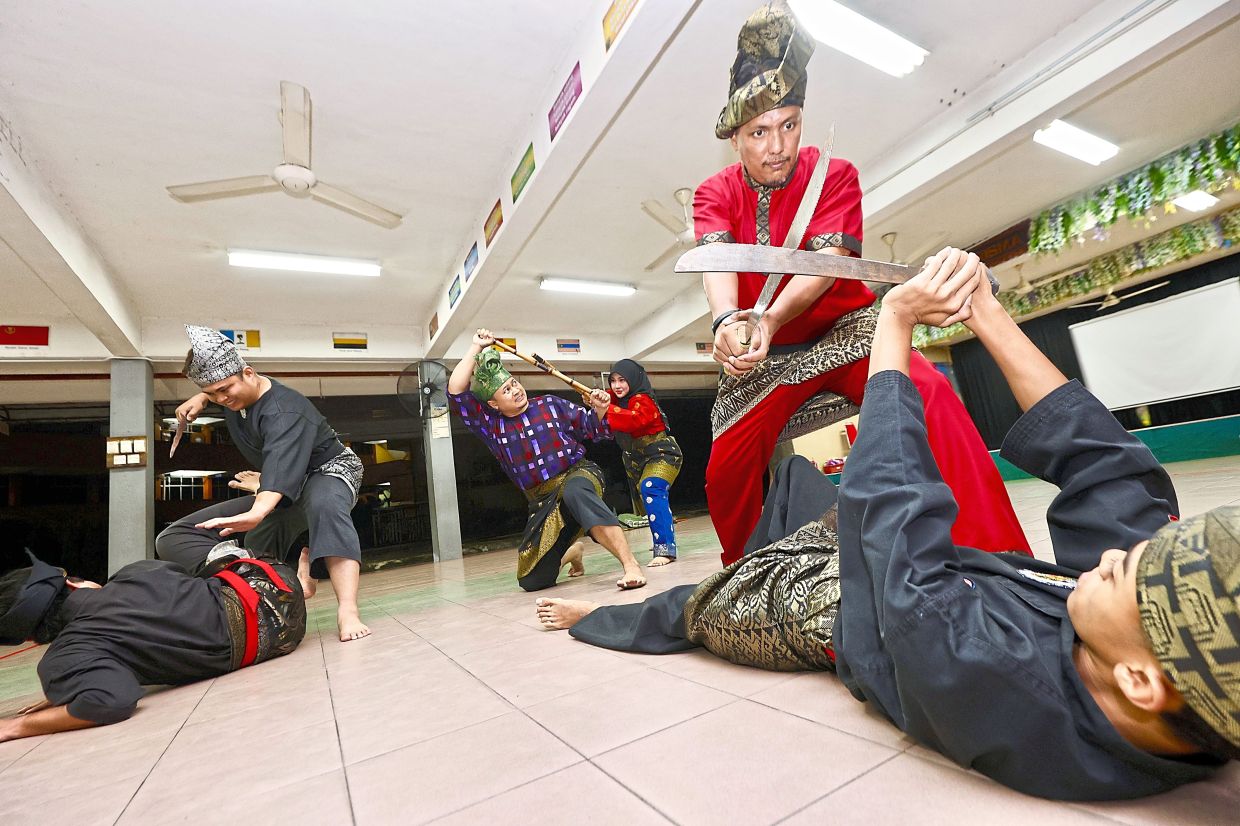
Zulkifli Mohd Nur, 44, a Silat Gayong coach at Pusat Latihan Kajang Utama, said the tanjak was worn much like a songkok.
He said the tanjak was not just ornamental, because in moments of danger, it could even serve as a weapon.
“In Silat Gayong we have the use of cindai, a piece of cloth used in combat techniques, and the tanjak can serve a similar purpose if needed,” he said.
Another silat practitioner and tanjak-maker Khairul Nizam Mohd Husain, 39, said wearing the tanjak during a performance preserved its culture.
“The tanjak should be used only for specific ceremonial purposes.
“It is worn as part of a uniform when carrying out duties or fulfilling responsibilities assigned by the palace or royalty.
“For the general public, the semutar is traditionally used instead,” said Khairul Nizam.
He said the tanjak represented the identity of its wearer.
“For example, it can reflect where a person comes from, their educational background or even lineage.
“Sometimes, the wearer may be entrusted with a responsibility or a symbolic journey.
“But today, in order to pass this knowledge to the current and future generations, we need to reveal everything to show just how great the Malay civilisation once was,” he added. — By MEGAT SYAHAR