



THE direct flight from Penang to Chennai, India, launched on Dec 21 last year has been well received by travellers.
Penang Convention and Exhibition Bureau (PCEB) chief executive officer Ashwin Gunasekeran said the occupancy rate for flights both ways had reached 85%.
IndiGo Airlines, which introduced the flight, has assigned an A320 aircraft with a seating capacity of 186 passengers.
Ashwin said the three-and-a-half-hour flight had opened new opportunities for tourism, business and cultural exchange.
“There are numerous attractions in Penang, including destinations of natural beauty such as the national park and Penang Hill.
“We attract tourists who come specifically for our heritage and it typically takes at least three nights to fully experience what Penang has to offer.”
He added that travel agents in Chennai were actively working to bring visitors to Penang for tours and the feedback had been overwhelmingly positive.
“Just as Penang is being promoted, so too is Chennai and the state of Tamil Nadu.
“Tourists are discovering the shared cultural values, traditions and shopping experiences between the two destinations.
“Strengthening these connections is aligned with Penang’s broader strategy to expand its presence in key markets,” Ashwin said.
PCEB director Wong Yuee Harng said the direct flight not only connected two cities but also brought communities together and increased opportunities.
“It opens the doors for cultural exchange, business opportunities and better people-to-people connections.
“Penang and Chennai share many cultural similarities from vibrant Indian festivals like Deepavali and Thaipusam, to the rich flavours of south Indian cuisine.
“Visitors from Chennai will find a deep connection in Penang where our shared heritage and cultural traditions create a sense of familiarity,” he said.
Yuee Harng added that Penang government fully supported and was committed to sustaining the initiative.
“This collaboration is about fostering economic ties, encouraging business growth and deepening cultural understanding,” he said.
The daily IndiGo flight 6E1046 departs Penang at 9.30am and lands in Chennai at 10.35am (local time).
From Chennai International Airport, 6E1045 departs at 2.15am (local time) and arrives at Penang International Airport (PIA) at 8.08am (local time).
Last year, Malaysia welcomed over one million Indian visitors.
Penang tourism and creative economy committee chairman Wong Hon Wai said India, with its population of 1.458 billion according to United Nations estimates, represented a massive market following the Federal Government’s announcement extending visa exemptions for Indian nationals until Dec 31, 2026.
Media tour
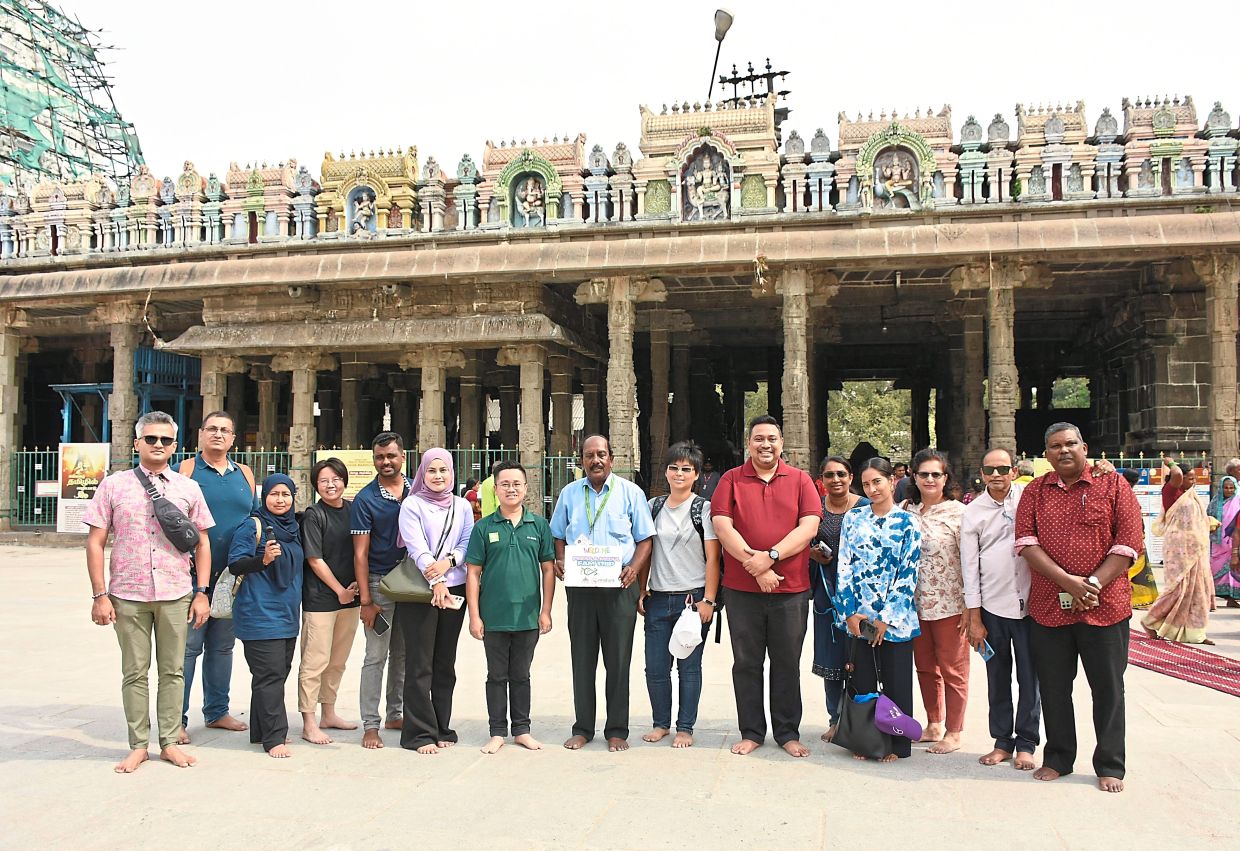
A group of 12 media representatives from Penang recently embarked on a media familiarisation trip to Chennai.
Organised by PCEB, the trip included visits to several prominent sites, such as the Unesco World Heritage Site of Mahabalipuram, local handicraft centres, silk saree weaving workshops, AVM Heritage Museum (a south Indian movie production studio) and various cultural and heritage landmarks.
The objective of the trip was to spark interest among Penangites to consider Chennai as a potential travel destination.
The trip showcased Chennai’s diverse attractions, its rich cultural heritage and unique travel experiences.
Ashwin said the visit to Chennai was part of a two-way marketing initiative aimed at strengthening ties between the two regions.
“Through extensive media exposure, we aim to raise awareness of Chennai’s vibrant tourism offerings, ensuring the success of the direct flight while fostering deeper collaboration in both tourism and business,” he said.
Common traits
Chennai, with a population of over 12 million, is the capital and largest city of Tamil Nadu, the southernmost state of India.
Like Penang in many ways, though much larger, the city boasts a rich array of cultural experiences and heritage spots that echo Penang’s own charm.
In both cities, locals hone their craft, passing skills down through generations.
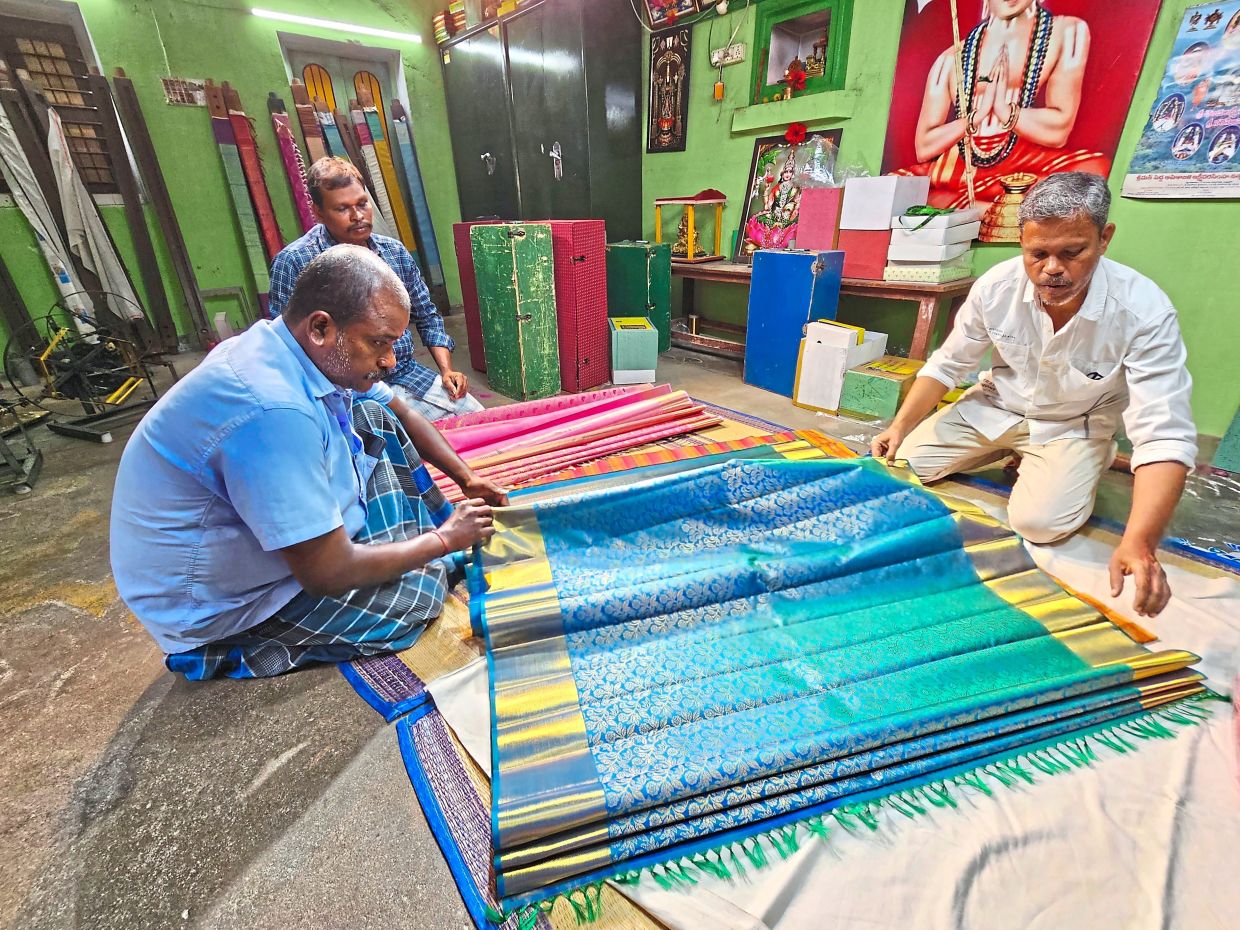
This tradition is evident in Chennai’s silk saree weavers, particularly in Kanchipuram, located 72km from the city.
The artisans have been perfecting their craft since childhood, learning a tradition passed down from their ancestors.
The sarees they create are often woven with gold and silver thread, a painstaking process that can take weeks to complete.
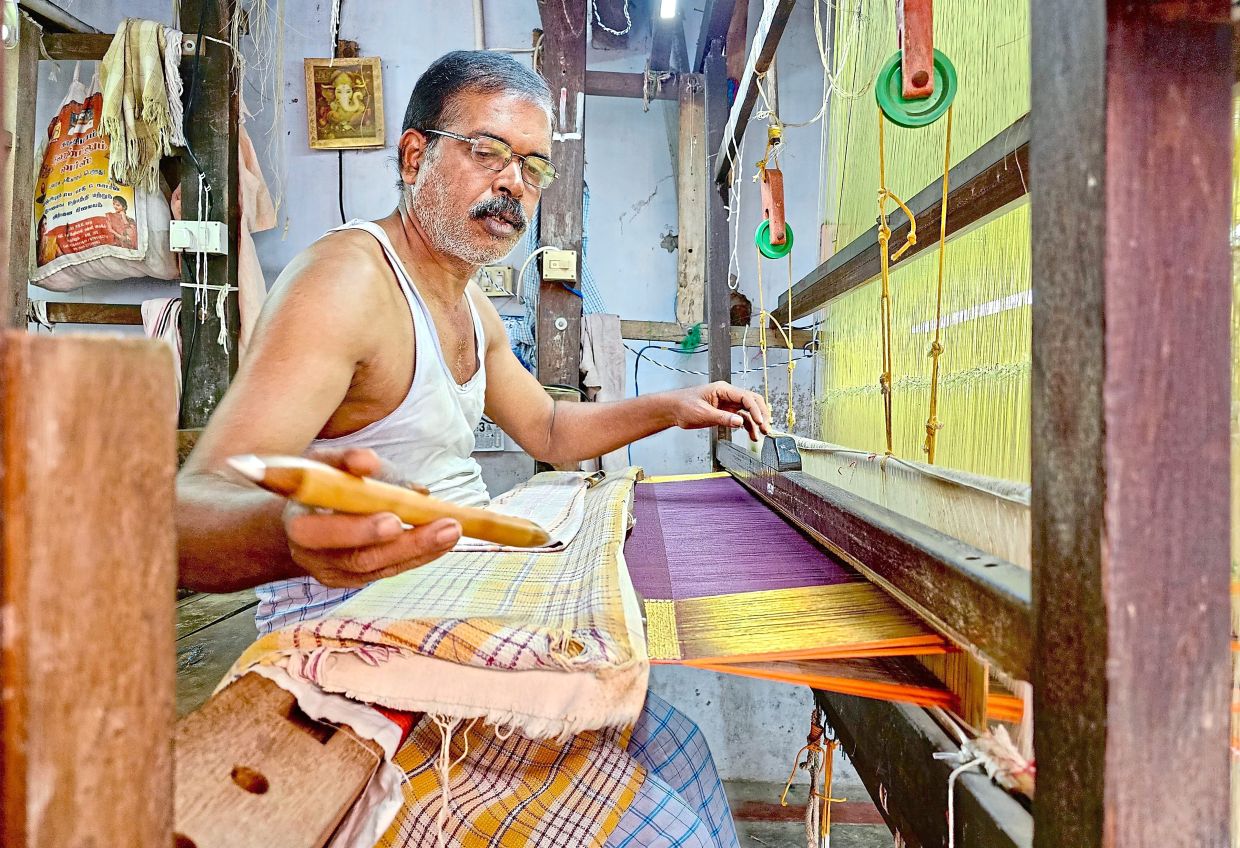
Weaver E. Selvam, 60, who learned the craft from his parents, shared his passion for the art.
“I love it because I can sit in one spot for around eight to nine hours a day, working without having to walk or endure the sun.
“I can take breaks whenever I want, and the money is good compared to other day jobs,” said the eldest of five children whose four other sisters are also silk saree weavers.
His wife is a weaver too, and the tradition has been in the family for years.
Despite his deep connection to the craft, Selvam noted the decline of this traditional trade.
His children, with degrees and office jobs, have shown little interest in continuing the legacy.
“Today, the younger generation does not see prestige in weaving. They prefer office jobs, but I believe my job is easier and pays better.
“It is sad that the art and skills may die with my generation,” added Selvam.
P. Sampath, 37, who has been weaving for a quarter of a century, said his farmer parents encouraged him to pursue weaving as a career to avoid the hardships of working in the fields.
“Their work was tough. They didn’t want that for me.
“Weaving, however, is an art that I enjoy. Every saree is unique, requiring attention to detail, which makes the process rewarding,” he said.
Sampath admitted that weaving was no longer seen as a desirable career, but for him it remained the best option.
“I work indoors at my own pace carefully crafting each saree.
“Sometimes it takes up to 60 days to complete a custom order. It is stress-free, and I’m proud of the work I do,” he said.
This situation mirrors what Penang faces, where many of the younger generation are reluctant to take over local artisanal crafts passed down through the ages.
Another long-standing tradition in Chennai is the art of carving granite into statues for temples and homes.
Stone carver A. Shanmugam, 60, said each piece is made from a single stone as granite cannot be joined.
Met as he was completing a sculpture for a temple in Malaysia, Shanmugam, who has spent 35 years on this intricate craft, said: “We use both heavy and hand tools to carve, often spending days or even weeks on a piece.
“A large statue can take up to three months to complete.”
S. Murugasan, 47, a carver working on an imperial guardian lion for a client in Kuala Lumpur, shared his process.
“I start with the ball in the lion’s mouth and then work on the face.
“It’s a delicate process, as any mistake could cause damage. We enjoy the challenge of creating these intricate designs,” he said.
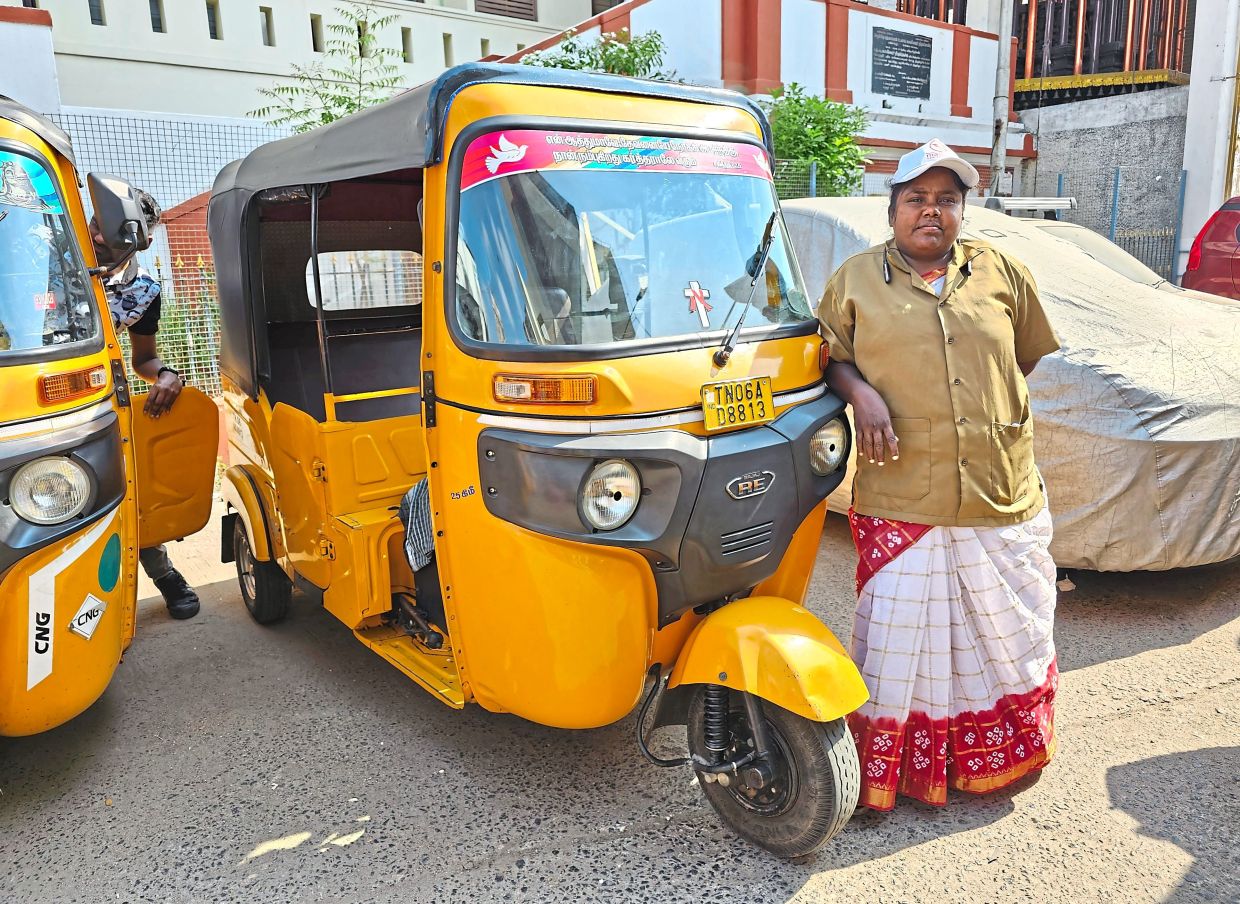
Many women in Chennai have also taken up driving auto rickshaws, a motorised three-wheeler similar to Thailand’s tuktuk.
V. Karpagam, 42, took up the trade 13 years ago and is part of a union of about 50 women drivers.
“I chose this line of work to make money and have flexible hours, especially as a single mother raising three children.
“Women drivers are sought after by other women because they feel safer, especially when travelling with children or at night.
“I believe women can do anything and I enjoy meeting people from all walks of life,” said Karpagam, who works from 10am to 8pm and has the luxury of taking time off when needed.
Her auto rickshaw vocation has allowed her to educate her three children.
“Even when I’m not working, people still reach out to me for rides, especially when they need to get to the hospital urgently.
“Women feel more secure with a female driver, especially when giving birth or dealing with emergencies,” Karpagam said.

