
Beneath the crystal-clear waters of the South China Sea surrounding Mersing islands lies a vibrant, thriving ecosystem of coral reefs.
Located 10km to 65km off Johor’s east coast, the Mersing archipelago consists of five main islands – Pulau Tinggi, Pulau Pemanggil, Pulau Babi Besar, Pulau Sibu and Pulau Aur – alongside 92 smaller islands and islets.
A close-knit community of just 700 residents, most islanders depend on marine-based livelihoods, primarily fishing and tourism, both of which rely heavily on the health of the surrounding coral reefs.
Renowned for their striking underwater scenery and abundant marine life, the islands off Mersing boast over 50% live coral cover, earning a “good coral cover” status.
These reefs play a vital role in nurturing fish populations, contributing significantly to the area’s marine biodiversity.
Globally, coral reefs support 25% of all marine species, despite occupying less than 1% of the ocean floor.
Unfortunately, these life-giving ecosystems are under increasing threat from pollution, destructive fishing practices, coastal development, invasive species and most critically, rising sea temperatures caused by global warming.
The El Nino phenomenon, in particular, has exacerbated this crisis, causing sea temperatures to soar and placing coral reefs at risk of widespread bleaching.
In Malaysia, Reef Check Malaysia (RCM) has been at the forefront of coral reef conservation.
The recipient of the 2023 Star Social Impact Grant (SSIG), RCM continues its mission to protect Malaysia’s marine ecosystems.
The non-governmental organisation (NGO) partners with local communities, government agencies and private sectors to promote sustainable marine conservation efforts.
Since 2007, RCM has worked closely with Johor Fisheries Department to carry out annual reef check surveys around the islands.
While earlier surveys had shown improvements in coral health, the 2023 survey revealed concerning results.
Sea temperatures spiked to 33°C, well above the usual 28°C to 29°C, resulting in coral bleaching across 20 out of 36 monitored reef areas.
“If this warm water temperature continues, a mass-bleaching event is likely and we risk losing the corals,” said RCM programme manager Nazirul Amin Azmi.
“Once large-scale bleaching starts, there is little we can do to reduce seawater temperature,” Nazirul added.
In response, RCM launched the “Building Marine Conservation Leaders in Mersing Islands” initiative.
The one-year programme, funded by a RM50,000 grant from Star Foundation’s SSIG, trained 10 local youths to become marine conservation leaders.
This commitment aligns with Malaysia’s national biodiversity protection efforts.
The participants earned scuba diving certification and received hands-on training in coral rehabilitation, reef monitoring and underwater cleanups to safeguard this fragile ecosystem.

“Our approach involves engaging the local communities in citizen science,” said RCM chief operating officer Theresa Ng.
“You don’t need a marine biology degree to make a difference.
“We train community members to dive, monitor, protect and rehabilitate the coral reefs.
“Our long-term goal is to empower the local community to take the lead in marine conservation,” she said.
A thriving coral reef ecosystem is crucial to biodiversity, serving as a nursery for marine species such as fish, molluscs, crustaceans and other marine organisms.
Beyond their ecological importance, coral reefs provide essential services such as nutrient cycling, carbon sequestration and coastal protection.
Acting as natural barriers, they protect communities from waves and storms.
“Malaysians often overlook the importance of coral reefs as habitats for many fish species that are vital to our food security,” Ng said.
“Without healthy coral reefs, our fish stocks could decline significantly.”
Natural Resources and Environmental Sustainability Minister Nik Nazmi Nik Ahmad recently emphasised the importance of preserving Malaysia’s natural heritage for future generations.
For Adilah Ahmad, one of the youth leaders trained under the programme, the experience was life-changing.
“Witnessing the vibrant life of the coral reefs truly captured my heart.
“It gave me a sense of purpose to conserve our precious corals,” she said.
With support from SSIG, Adilah and her peers achieved the following:
> Installed 10 mooring buoys to prevent anchor damage to coral reefs.
> Deployed 22 coral restoration blocks with 155 rescued coral fragments.
> Conducted 36 reef health and coral bleaching monitoring surveys.
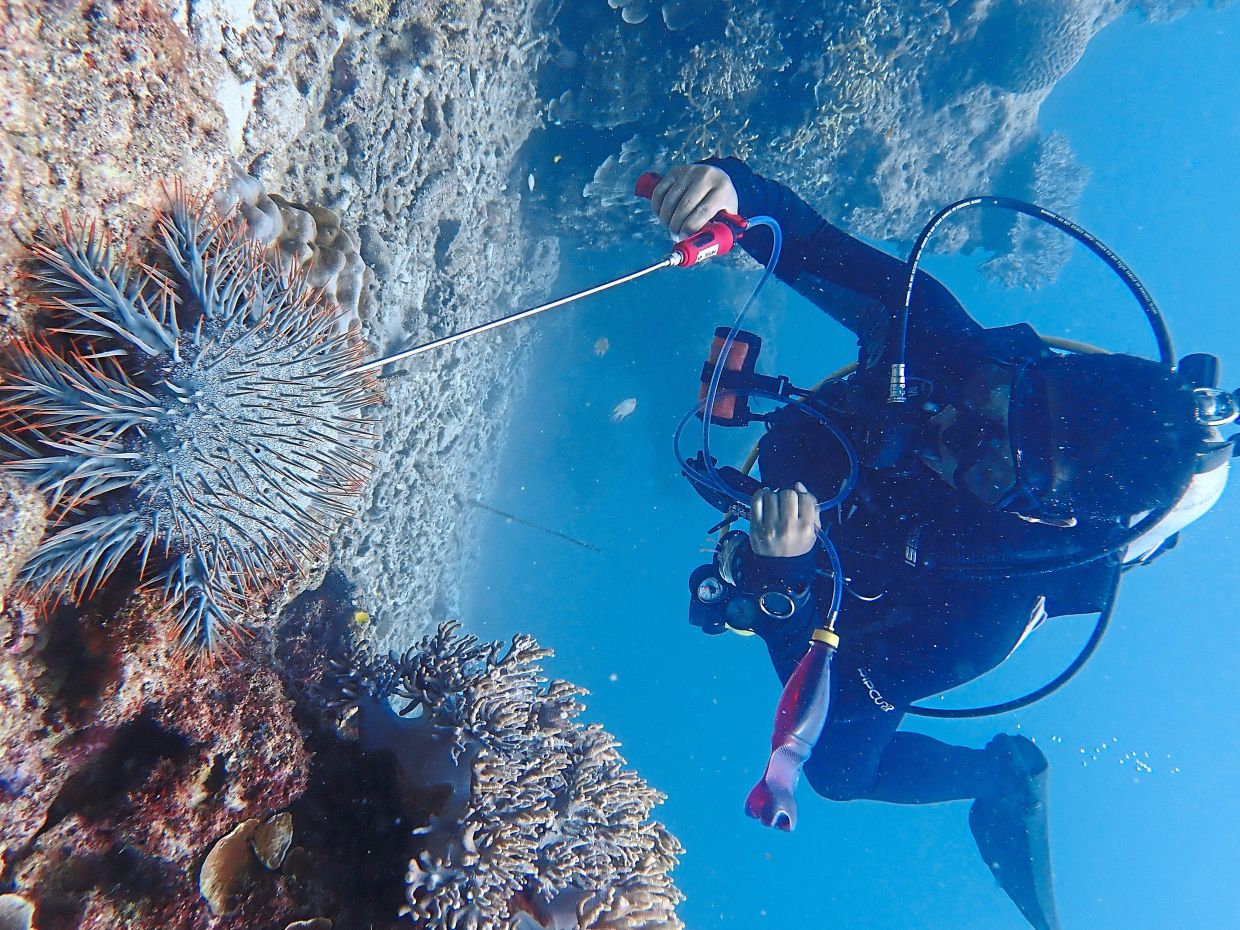
> Addressed a coral predator outbreak by culling 21 crown-of-thorns starfish.
> Completed five underwater cleanups, removing 110kg of marine debris and ghost nets.
“The transformation we’ve seen in these youths is extraordinary,” said RCM chief programme officer Alvin Chelliah.
“They have become not just conservationists but also ambassadors for the ocean.
“Their dedication gives us hope for the future of Malaysia’s marine biodiversity.”
While it may take a village to raise a child, it takes an entire community to rehabilitate coral reefs.
Though the journey is far from over, the passion and resilience of local champions inspire hope for a brighter future beneath the waves.
The SSIG programme, a grant-giving initiative under Star Foundation – the charitable arm of Star Media Group – supports impactful and sustainable social projects.
Now in its fifth year, the programme offers grants of up to RM50,000 for eligible NGOs and social enterprises.
Applications for 2025 are open until March 31. For details, visit bit.ly/starsig