In an effort to improve the safety of schoolchildren and road users, Kuala Lumpur City Hall (DBKL) is expanding its School Road Safety Project to three more areas in the city this year.
Kuala Lumpur mayor Datuk Seri Maimunah Mohd Sharif said the project, involving eight schools, would be expanded to Brickfields, Jalan Cochrane and Bandar Tun Razak.
This follows the success of a pilot project at SK Danau Kota 2 in Setapak that focused on redesigning roads around schools to reduce speeding while also raising road safety awareness among people in the area.
Launched in December last year, this initiative received positive feedback from various stakeholders, including teachers, parents and residents.
“Kuala Lumpur is the first city to implement a 30km/h speed limit in school zones during the launch of the School Road Safety Project at SK Danau Kota 2.
“The school zone covers a minimum radius of 200m from a school,” she said.
She added that the speed limit was also recommended at the United Nations (UN) level for cities to adopt better road safety strategies.
“We are currently focusing on these three zones and if we have the extra budget, we will also implement this programme in Sentul,” she told StarMetro.
The School Road Safety Project is part of the Bloomberg Philanthropies Initiative for Global Road Safety (BIGRS).
DBKL’s Urban Transport Department collaborated with the Global Designing Cities Initiative (GDCI) under BIGRS and its local liaison Bike Commute Malaysia, as well as the Malaysian Institute of Road Safety Research (Miros) to test new road flow designs in the school area.
This initiative also aligns with Malaysia’s commitment to reducing road-related fatalities after Deputy Prime Minister Datuk Seri Dr Ahmad Zahid Hamidi’s announcement of a reduction in the speed limit from 40km/h to 30km/h around school zones in July last year.
The UN and World Health Organization also agree that 30km/h is the maximum speed that can be safe for places where vehicular traffic mixes with vulnerable road users.
Covering more schools
According to Maimunah, Brickfields is likely to be the last area for the project, as it involves five schools in close proximity to one another.
“The Jalan Cochrane area project is likely to begin first.
“We are currently collecting data and finalising road designs in stages with GDCI,” she said, highlighting that these designs would take into account the views of local stakeholders, such as school boards and community associations, to ensure their effectiveness and sustainability.
“When we developed the local plan, we gathered data for all the schools in Kuala Lumpur.
“And when we started with SK Danau Kota 2, we proposed including more schools because we realised that this is about creating a safe city for children,” she said, adding that reducing the speed limit around school zones was critical.
GDCI Asia and Africa programme lead Kim Lua said locations with traffic fatalities near schools were prioritised.
“These neighbourhoods are selected because they have traffic fatalities near schools, though the crashes do not necessarily involve students.
“The priority is ensuring safer traffic conditions around schools.
“At the same time, we are also looking into improving first-mile and last-mile connectivity, such as walkability for school-goers to access public transport hubs like train stations,” he said.
The project begins with data collection on traffic volume, land use and user behaviour before local communities and DBKL are roped in.
“As we develop the designs, we introduce pop-up infrastructure such as lane separation bollards and traffic management facilities to gauge effectiveness.
“Then, we create interim road designs to observe how the changes impact road users.
“If issues arise, we collect data again to adjust the designs,” he explained.
GDCI designs the roads, while DBKL handles the implementation.

Some of the factors considered for the programme are high traffic risks, high vehicular speeds, simplicity in implementation, high footfall, proximity to surrounding nodes as well as its potential to be expanded to a larger network.
Lua added that lower speeds in school zones would not necessarily cause traffic jams.
“Traffic congestion is often due to the drop-off and pick-up of students or vehicles parking illegally along roadsides, which obstruct traffic.
“We incorporate these factors into the street design to address these problems more effectively,” he said, urging public support for the project.
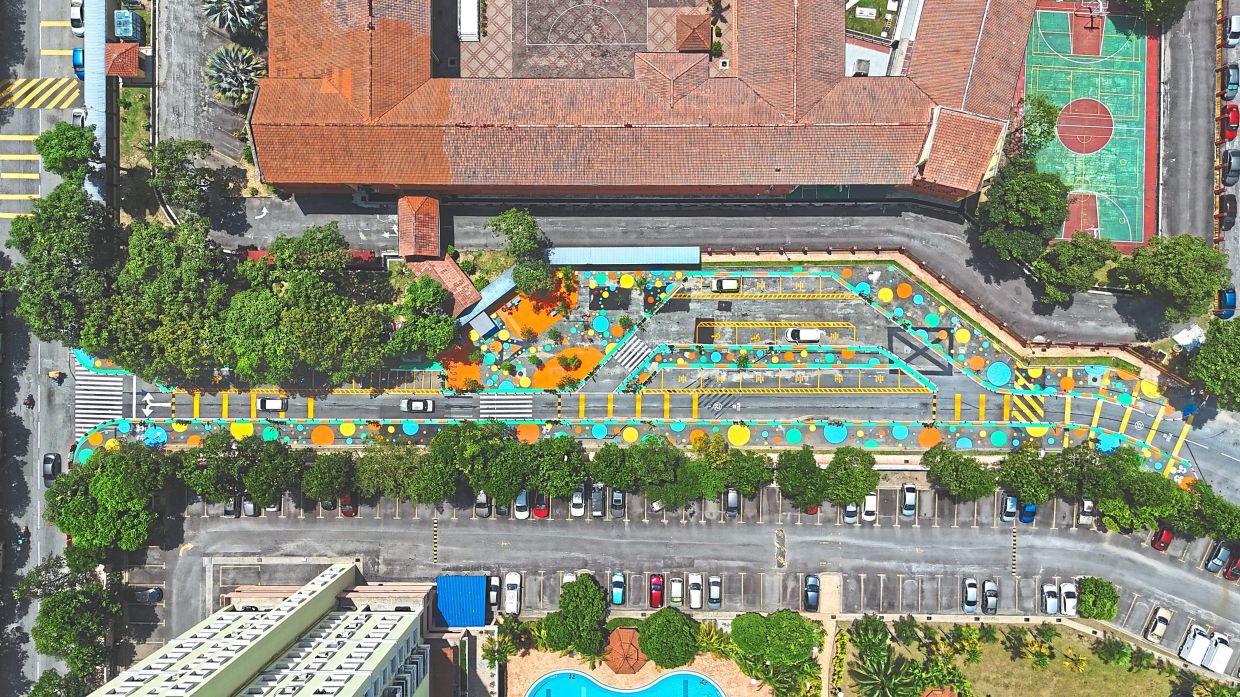
At SK Danau Kota 2, the redesign saw traffic barriers installed, walking paths painted and a lane narrowed to make way for a waiting area for schoolchildren.
The narrowed lane not only reduces the crossing distance for pedestrians but also limits the chances of an accident.
Road fatalities
The School Road Safety Project is timely as recent statistics underscore its importance.
In 2023, 322 road crashes occurred in school zones nationwide, resulting in injuries or fatalities.
Additionally, the Statistics Department’s 2023 report revealed that road death was the second-highest cause of fatalities among children under 14 in Malaysia, accounting for 3.8% of deaths.
High speeds are a major risk factor for these fatalities.
The Star also reported that international research showed that every one kilometre reduction in speed could lower the fatality rate by 4% to 5%.
Reports also indicated that a speed reduction of 5% could decrease fatal crashes by 30%.
Last year, Bukit Aman Traffic Investigation and Enforcement Department director Comm Datuk Seri Mohd Yusri Hassan Basri revealed that 779 fatal crashes involving school students were recorded in the first nine months of the year.
Extending to public areas
Maimunah said implementing the project in three new areas would increase public awareness of the need to travel at a lower speed around school zones.
“As we expand this project, we hope that there will come a time when the public make requests for its implementation in their neighbourhoods — that will be our key performance indicator.
“When the public demand for safer roads for their children to cycle to school, it will demonstrate the project’s success.
“While we prioritise road safety in school zones, we ultimately aim to take the programme to public areas such as parks, playgrounds and commercial zones,” she added.
Maimunah said she also participated in the Bloomberg Philanthropies’ Mayors Challenge.
The Mayors Challenge is a competition that encourages innovative, replicable ideas to improve cities and the lives of their residents.
Fifty finalists, to be unveiled in March, will receive US$50,000 (RM218,460) and a chance to participate in an Ideas Camp to refine and test their concepts.
The 25 cities with the most inventive ideas will each be awarded US$1mil (RM4.454mil) and operational assistance to bring their proposals to life.
“This School Road Safety Project is very much a public- private partnership programme involving stakeholders.
“We are also exploring the launch of a citywide speed challenge to reduce vehicle speeds.
“Driving slower does not mean traffic jams; it is for the safety of city residents,” Maimunah said.
Brickfields Rukun Tetangga chairman SKK Naidu said the proposed School Road Safety Project in his area was a safety boost for school-goers.
“When Bloomberg Philanthropist approached me about the project, I was supportive of it.
“There are 10 schools in the vicinity with more than 3,500 students,” he said.
Naidu also urged the authorities to look into obstructions on pathways as these often led to pedestrians, especially school children, walking on the road.
“DBKL has built nice walkways in Brickfields but they are sometimes misused by hawkers who set up stalls on these pedestrian facilities.
“We also hope that while implementing the project, DBKL and relevant parties can consider banning heavy vehicles from travelling in school zones.”
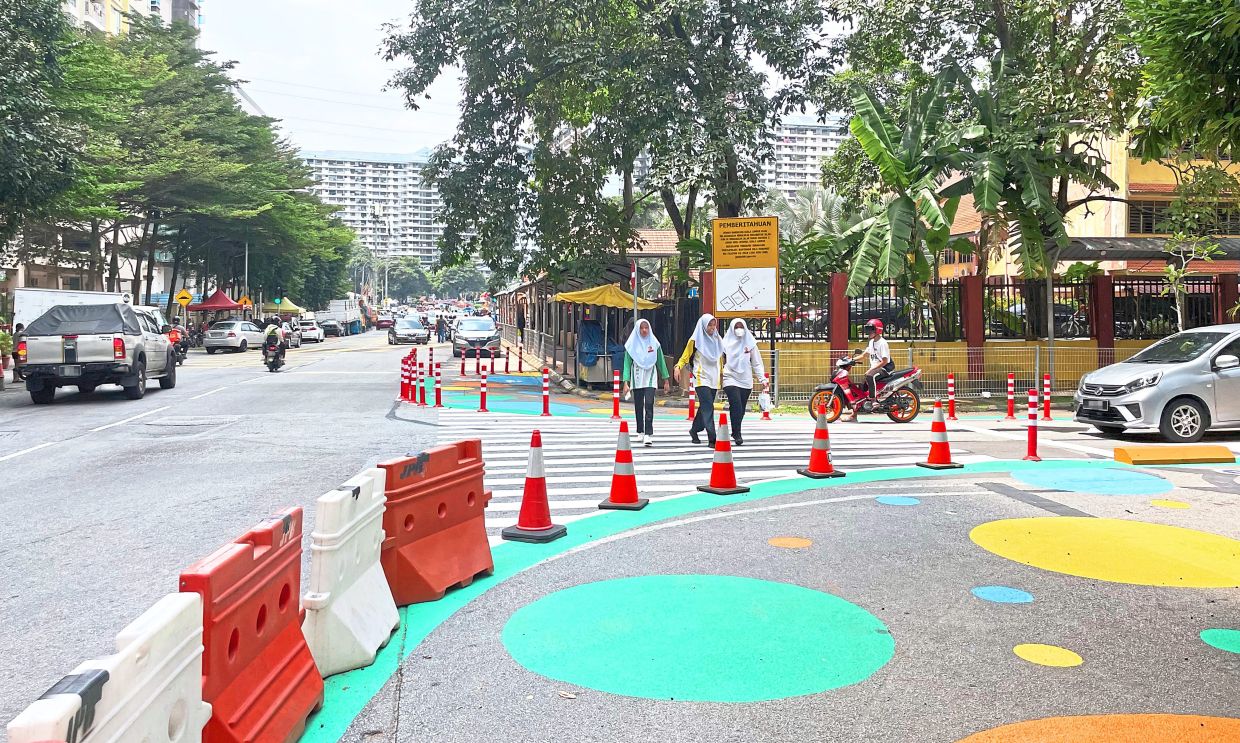
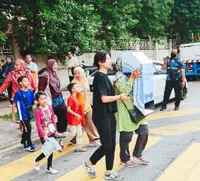
SK Danau Kota 2 pupils walking past colourful markings on the road on the way to school. — Photos: Courtesy of GDCI/Bike Commute Malaysia
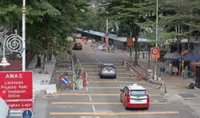
Before the full implementation of the new road design at SK Danau Kota 2, pop-up infrastructure such as lane separation cones are used to gauge its effectiveness.
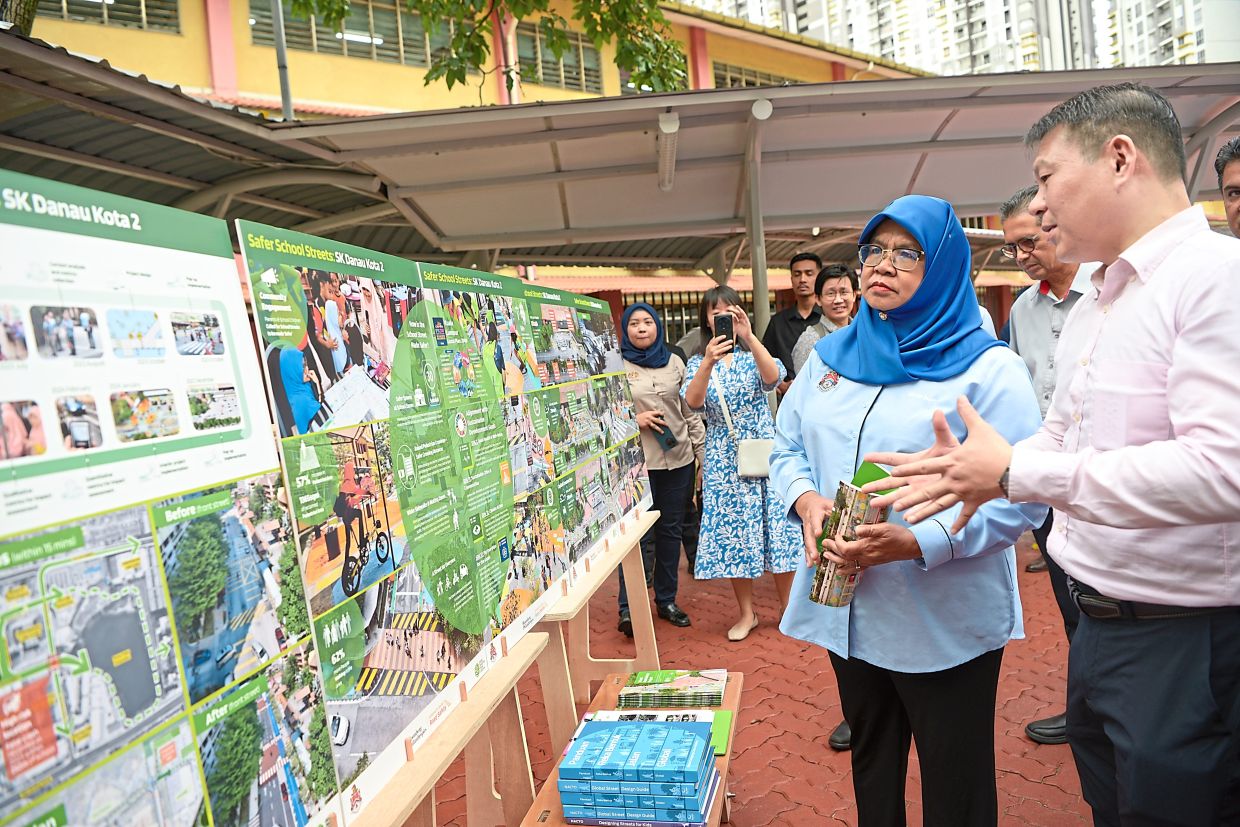
Lua (right) explaining the road design to Maimunah during the launch of the pilot project at SK Danau Kota 2.
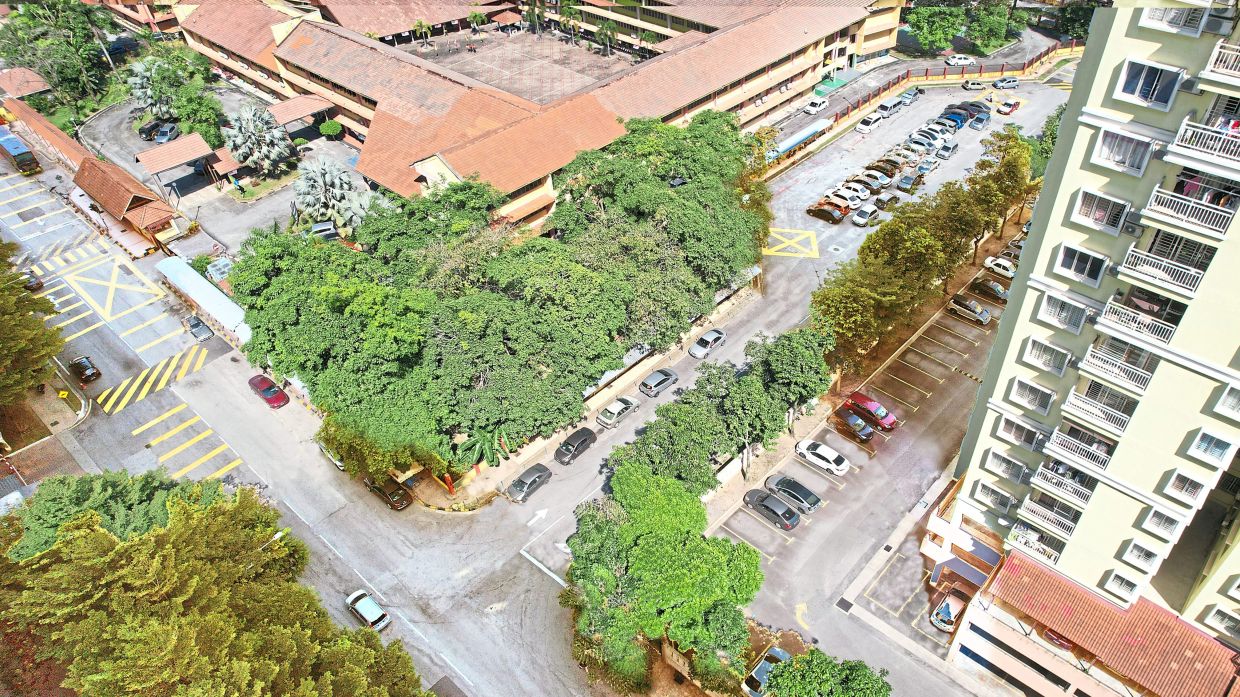
An aerial view of the area before the road redesign was implemented at SK Danau Kota 2 in Setapak.
An aerial view of the area and after the road redesign was implemented at SK Danau Kota 2 in Setapak.
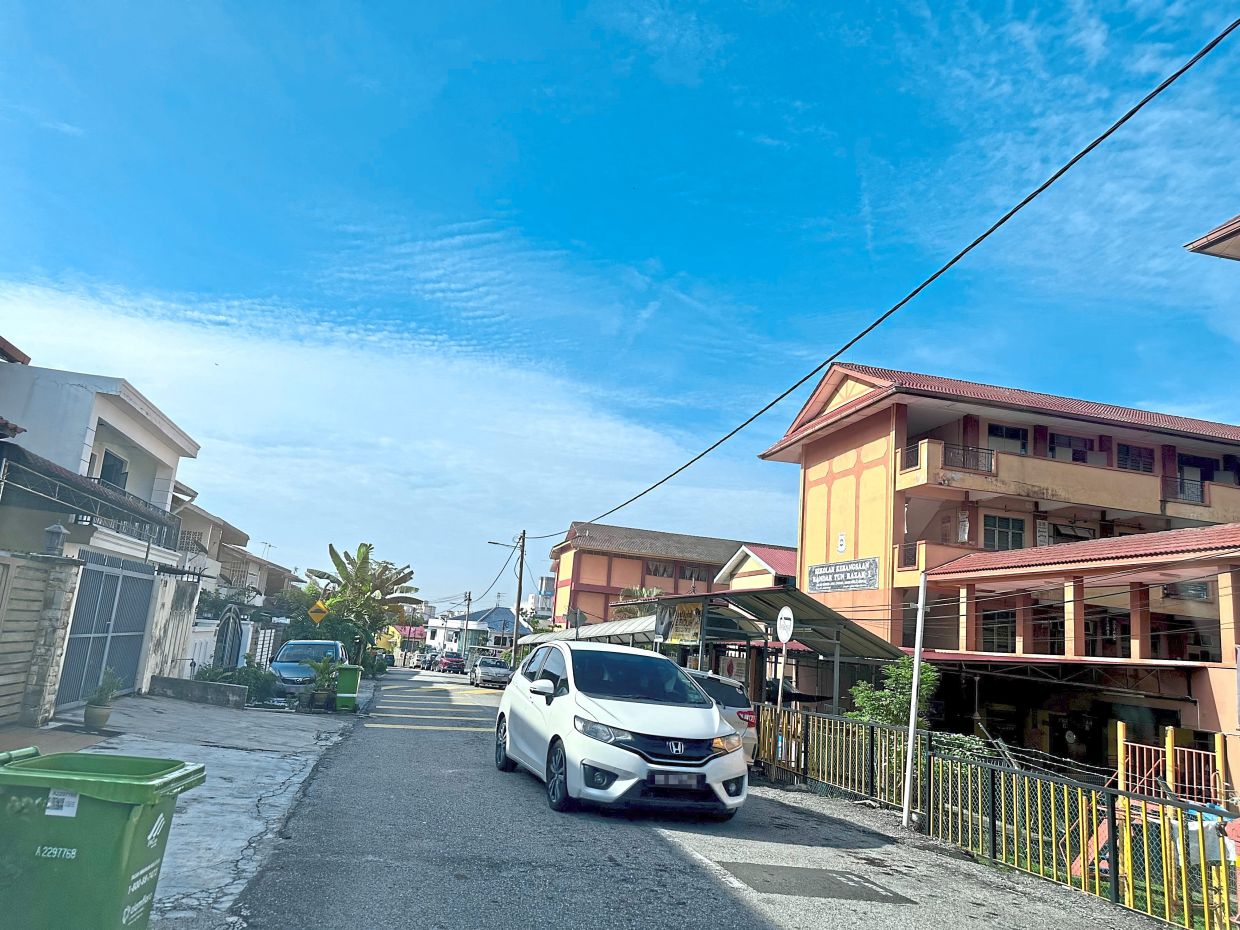
A view of Bandar Tun Razak, near SK Bandar Tun Razak 1, earmarked for the project. — Photos: LOW BOON TAT and LOW LAY PHON/The Star
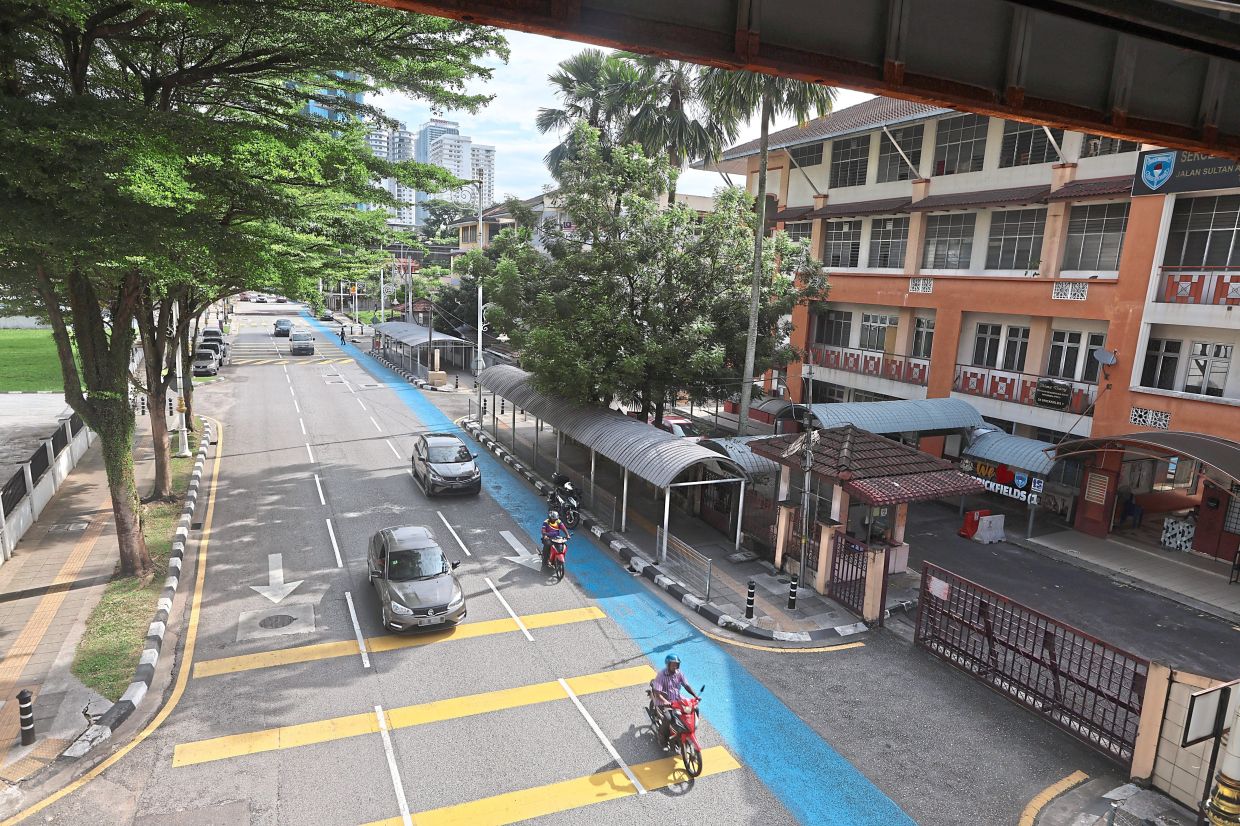
GDCI is looking into the road design at Jalan Sultan Abdul Samad in Brickfields, where many schools are located — Photos: LOW BOON TAT and LOW LAY PHON/The Star