Residents irked by changes to original plans, lack of consultation
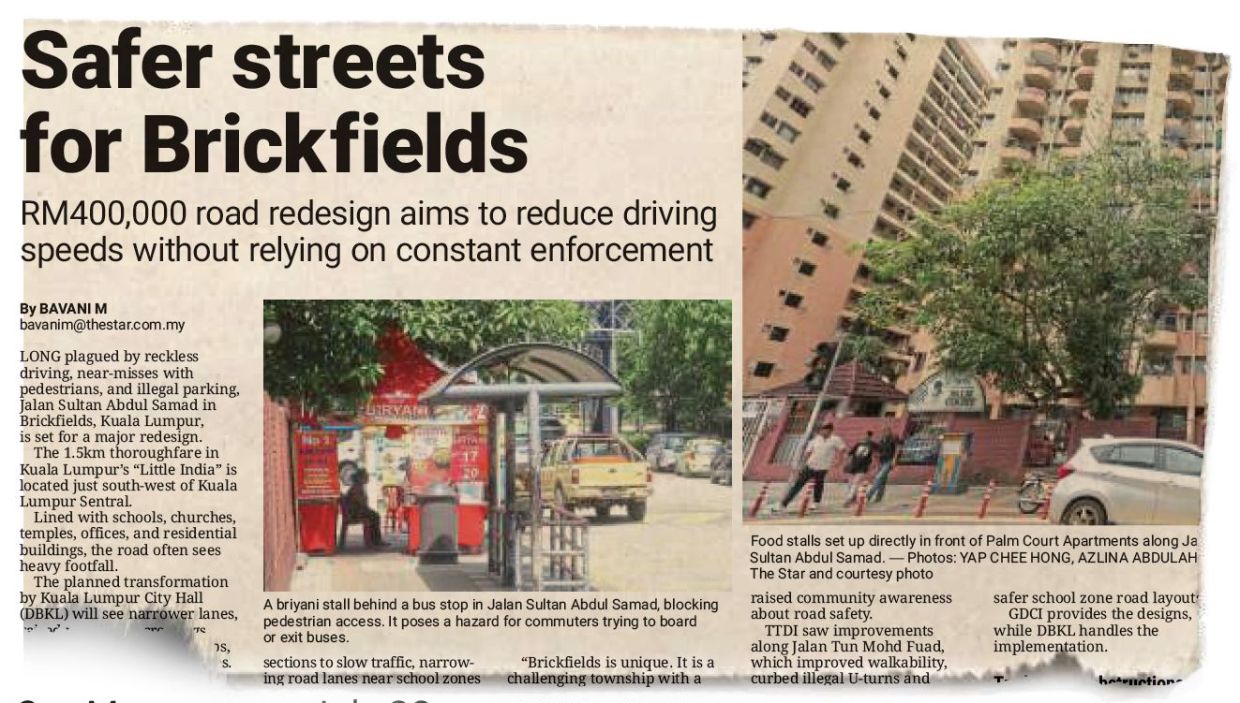
AFTER six months of delays and shifting timelines, work has finally commenced on the long-awaited redesign of Jalan Sultan Abdul Samad in Brickfields, Kuala Lumpur.
However, residents claim that the project was not unfolding as initially promised.
Budget constraints and alterations to the original plan have left the community frustrated, as these changes were neither explained nor shared with them prior to construction.
Brickfields Rukun Tetangga chairman SKK Naidu said he was disappointed that after months of discussions and multiple meetings with stakeholders, Kuala Lumpur City Hall (DBKL) went ahead and began work without informing residents.
Naidu said a DBKL senior officer managing the project had confirmed that work had started at the Jalan Rozario-Jalan Sultan Abdul Samad junction.
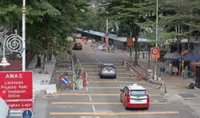
Here, the pedestrian walkway was being raised to enhance crossings and encourage footpath use.

“We were supposed to be consulted on the finalised plan before work began.
“The most critical stretch is near Palm Court Condo and SJK (T) Vivekananda – a zone needing urgent attention,” said Naidu.
He also expressed concern over DBKL’s decision to reduce the three-lane road to two.
“Narrowing Jalan Sultan Abdul Samad to two lanes will lead to unnecessary congestion.
“This will worsen once KL Sentral’s redevelopment progresses and new apartments in Ang Seng are completed, increasing traffic without new roads in Brickfields,” he highlighted.
ALSO READ: Safer streets for Brickfields
StarMetro previously reported that Jalan Sultan Abdul Samad, known for incidents of reckless driving and near-misses with pedestrians besides the chronic problem of illegal parking, was set for a major makeover.
Initially expected to start in June, the RM400,000 project was delayed to August but only commenced in late November.
The 1.5km stretch in Brickfields, lined with schools, churches, temples, offices and homes, had long faced heavy footfall and persistent congestion.
Don Premaseri, a representative of the Buddhist Maha Vihara Temple, echoed similar concerns.
“Anyone coming from Jalan Rozario into Jalan Sultan Abdul Samad is at risk.
“Whether turning left towards Jalan Berhala or heading to the Lutheran Church on the right, the manoeuvre is hazardous.
“This new configuration will only worsen the situation.”
“When making such changes, you cannot look at them in isolation.
ALSO READ: Concerns over wider paths
“The entire network needs a proper traffic assessment first.”
Don stressed on the importance of Jalan Sultan Abdul Samad as a major artery.
“It used to be two-way, then became one-way, and now it has been narrowed even further.
“This poses a danger to schoolchildren, especially those from SJK (T) Vivekananda,” he added.
In response, DBKL Urban Transportation Department deputy director Muhammad Azri Abdul Aziz acknowledged the project’s delays but denied that residents had not been informed.
“We have engaged extensively with stakeholders.
“This project has been delayed for too long, and we need to start,” he said.
“We prioritised the Jalan Rozario–Jalan Sultan Abdul Samad junction because it is a school area, focusing on public safety first.
“The next phase will address bicycle lanes and pedestrian walkways.”
Muhammad Azri added: “Accessibility is key. Give us a chance to complete the work. If anything is lacking, we can change it later. We are doing this not just for the current generation, but for the future.”
The road project is a collaboration between DBKL and the Bloomberg Philanthropies Initiative for Global Road Safety.
The initiative supported Malaysia’s efforts to reduce road fatalities by providing expert guidance on safer street design, enforcement and data monitoring.
DBKL’s Urban Transport Department also partnered with the Global Designing Cities Initiative (GDCI), Bike Commute Malaysia and Malaysian Institute of Road Safety Research (Miros) to develop safer school-zone layouts.
GDCI provided the designs, while DBKL managed implementation.