Historic mansions set to host Asean delegates amid RM600mil heritage renewal efforts
AFTER nearly six years of closure, the government is planning to reopen the historic Carcosa Seri Negara mansions to host top-ranking delegates during Malaysia’s Asean chairmanship.

Minister in the Prime Minister’s Department (Federal Territories) Dr Zaliha Mustafa told StarMetro she has been in discussions with Finance Minister II Datuk Seri Amir Hamzah Azizan about reopening the mansions for a high-tea event with conference delegates in October.
As a member of the main committee, Dr Zaliha said 180 out of the 300 planned Asean-related events would take place in Kuala Lumpur and Putrajaya.
“Carcosa Seri Negara is one of Kuala Lumpur’s precious assets, much like the Sultan Abdul Samad building in Jalan Raja.
“It needs to be rejuvenated and brought back to life for the community to enjoy,” she said.
Carcosa and Seri Negara are two colonial-era mansions located on 13.3ha near the Perdana Botanical Gardens in the capital city.
Carcosa, built in 1896, was the official residence of the first Federated Malay States Resident-General Sir Frank Swettenham, while Seri Negara, constructed in 1913, served as a guest house for royalty and other dignitaries.
Both buildings were gazetted as National Heritage sites under the National Heritage Act 2005.
Custodianship of the buildings was transferred to the Tourism, Arts and Culture Ministry (Motac) in June 2019 by the Director-General of the Land and Mines Department, under the Natural Resources and Environment Ministry.
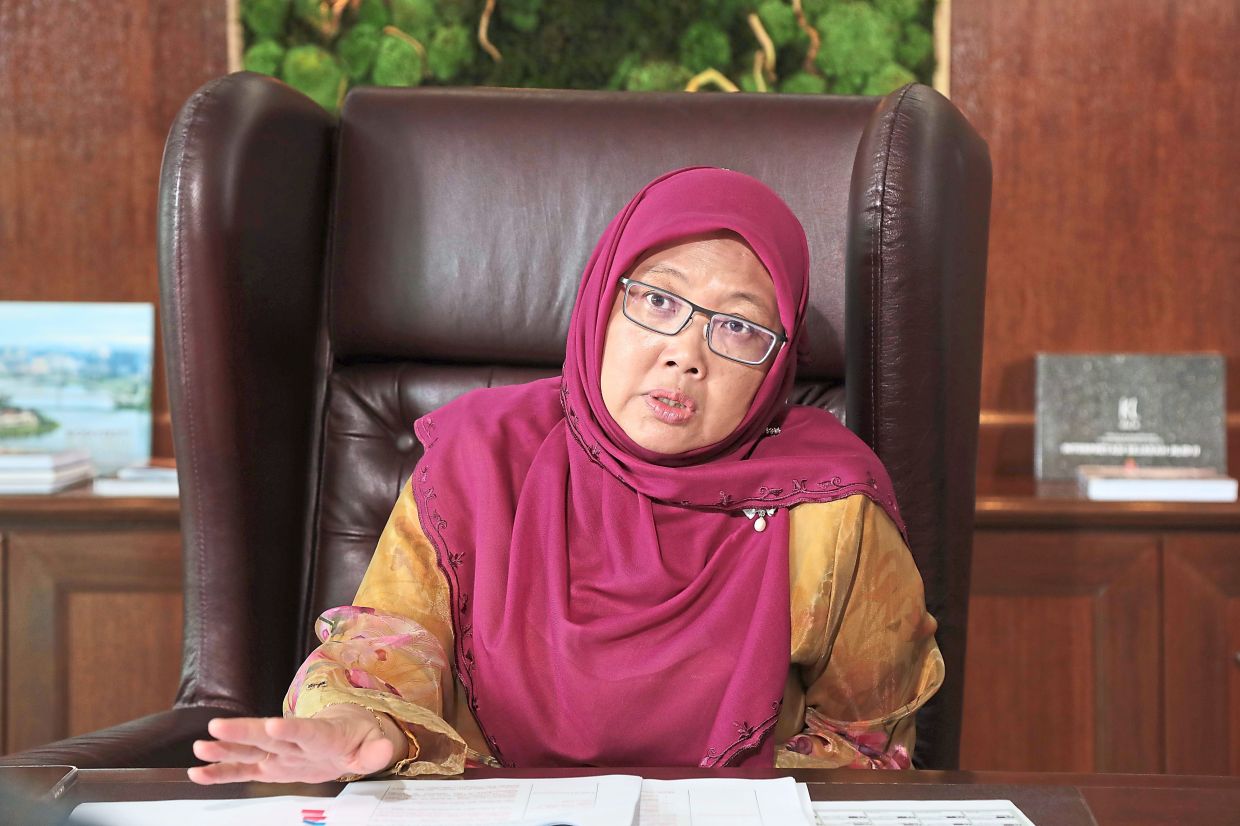
Dr Zaliha said she was unsure about the condition of Carcosa Seri Negara.
“But I hope we can use it soon, as it will be a nice backdrop for the event in October.
“The plan also depends on how much work needs to be done to prepare the venue,” she said.
Dr Zaliha expressed hope that both mansions and Bangunan Sultan Abdul Samad would be ready for Visit Malaysia 2026.
In addition to the initial RM20mil allocated under Budget 2025, she said the government has provided an extra RM600mil to ensure the restoration projects could take off.
“This funding will be directed towards restoring the Sultan Abdul Samad building and Carcosa Seri Negara.”
Dr Zaliha said it was essential that these buildings be preserved for future generations.
She said projects such as the Kuala Lumpur Creative and Cultural District (KLCCD) had helped to breathe new life into historic landmarks, in line with Prime Minister Datuk Seri Anwar Ibrahim’s vision that has led to both Amir Hamzah and her co-chairing the project.
“The Prime Minister is concerned about the condition of these structures; their restoration is one of our key priorities.”
The restoration project is being managed by sovereign wealth fund Khazanah Nasional through its subsidiary Think City, and includes 10 flagship initiatives.
The KLCCD masterplan connects various areas of Kuala Lumpur, focusing on major landmarks such as Dataran Merdeka and Masjid Jamek.
Surrounding the downtown core is a buffer zone that includes sites such as Merdeka 118 and Kampung Attap, as well as iconic parks like Taman Tugu and Perdana Botanical Gardens.
Downtown Kuala Lumpur is divided into five precincts — Civic, Petaling Street, Heritage Triangle, Education and Traditional Shopping.