‘Improved connectivity crucial to Johor’s growth and creation of new markets’


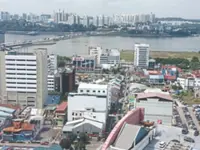
The design concept for the Muar HSR station. The northern Johor town had been earmarked as an educational hub and stood to gain from the rail link project. — Filepic

MALAYSIA needs to continue developing, improving and strengthening its connectivity and accessibility if it wishes to aspire to be developed, prosperous and economically strong.

Iskandar Regional Development Authority (Irda) chief executive officer Datuk Ismail Ibrahim said transportation of cargo and people was of utmost importance whether by land, including road and rail, air or sea.

He said Malaysia had always placed connectivity as one of its pillars of development since the country achieved independence in 1957.

Ismail said the Kuala Lumpur-Singapore High-Speed Rail (HSR) project, which was recently terminated, would have further improved connectivity throughout the peninsula.

“Instead of connecting Iskandar Malaysia in south Johor and stopping in Kuala Lumpur, the project should be extended up to Penang in the north, ’’ he said when met at the Irda headquarters in Danga Bay, Johor Baru, here.

He said it boiled down to the wisdom of the Federal Government, whether the project was viable and should be revived, given the fact that it was part of the transportation system and would improve connectivity.

“If Malaysia were to embark on the HSR project, we need to make decisions quickly as it involves a lot of public funds, ” he added.

Ismail said if the project materialised in the future, it would spur development in other parts of the country, including the urban centres near the stations earmarked along the route.

Johor Real Estate Housing Developers Association (Rehda) chairman Wong Boon Lang said Iskandar Malaysia — the country’s first economic growth corridor — needed a huge catalyst to boost its growth rate in the region.

He said Singapore had a lot to offer Johor in terms of a new market source and the state could meet the demands through good and speedy HSR connectivity.

He added that Iskandar Malaysia would benefit immensely from the HSR.

“Major plans had been drawn up by the private sector, including Rehda members, to take advantage of the project when it was first announced.

“The project was expected to ease and facilitate intercity travel, thereby promoting greater commerce and tourism between Malaysia and Singapore, ” said Wong.

He said Batu Pahat and Muar stood to gain as it would have brought these two northern Johor towns to the doorstep of the vast Singapore market.

The 350km-long HSR, which was first mooted in 2010, was expected to reduce travel time between Kuala Lumpur and Singapore to 90 minutes.

Both countries signed a memorandum of understanding in 2016, with the HSR originally expected to be completed by 2026.

However, in 2018, the project was put on hold due to high costs, with Malaysia seeking an extension to the agreement until Dec 31,2020.

The HSR project was terminated on Jan 1, with Malaysia reportedly paying S$102.8mil (RM320mil) to Singapore for the cost incurred for the development of the project and in relation to the extension of its suspension.

Get 20% OFF The Star Digital Access

Monthly Plan

RM 13.90/month

RM 11.12/month

Billed as RM 11.12 for the 1st month, RM 13.90 thereafter.

Best Value

Annual Plan

RM 12.33/month

RM 9.87/month

Billed as RM 118.40 for the 1st year, RM 148 thereafter.

Follow us on our official WhatsApp channel for breaking news alerts and key updates!

Next In Metro News

DBKL takes enforcement action at KL Wholesale Market in joint operation with various agencies
Perak community revives idle land
Auspicious convergence draws temple devotees
Drawing on batik to preserve Selangor craftsmanship, heritage
‘Make environment a priority in Johor’
Furniture chain opens 16th outlet in Jalan Kuching, KL
New Tangkak rep vows to tackle water woes
Orphaned assets under review
Building healthy habits in kids
Perak to assist ex-civil servants interested in modern agriculture

Others Also Read