



WHEN Aurora Tin decided to give zero-waste living a try, she asked her husband to join her.
He agreed, thinking that it would not last and that Tin would eventually give up.
“It was like making a New Year’s resolution.We were not sure if we would be able to do it,” said Tin who began the new lifestyle in January 2016.
She made the decision after reading Colin Beavan’s book No Impact Man which related his experience of giving up plastic and turning his electricity off for a year and how it changed him.
On their first day, Tin realised it was tough to change certain habits that they had been practising for some time.“I remember how my husband once asked me to buy his favourite pastry, egg tarts.
“At the bakery, I saw that it came in a wrapper so I didn’t get it for him,” said Tin, adding that her husband was very disappointed when she returned home empty-handed.
He then challenged Tin to bring a mug to her favourite bubble tea outlet.
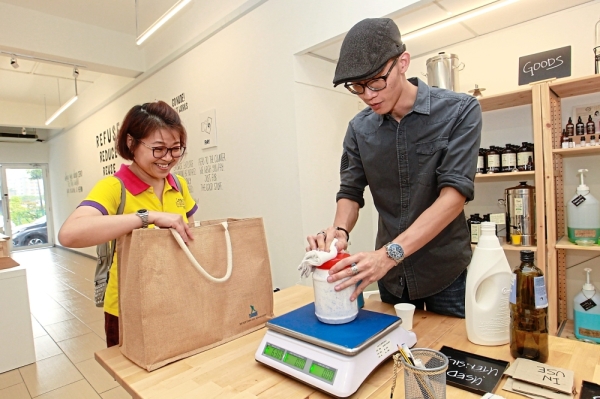
“To my surprise, the barista took my order and filled my mug,” she said, adding that this made her realise that adopting a zero-waste lifestyle was possible.
Now in their third year, the couple have wholeheartedly embraced the zero-waste lifestyle that began as an experiment.
“We thought we would try it for only a year, just like Colin (Beavan), but we are actually enjoying it.”
However, it would be a lie to say that they now produce no rubbish.
“It is not possible to have zero waste but we are trying to produce less rubbish,” said the former environmental journalist.To-date, their household rubbish has reduced significantly as the couple also began composting food waste in their garden.
In addition, Tin now has more cash in hand as she has stopped spending unnecessarily.
“Honestly, I cannot remember the last time I bought new clothes since I started participating in clothes swap parties,” she said.
In 2016, Tin initiated the Zero Waste Malaysia (ZWM) Facebook group and registered it as a non-governmental organisation a year later.
The Facebook page allows those interested in adopting such a lifestyle to interact with each other.
It also has a database of shops selling products without packaging.
ZWM held its first zero-waste festival in 2017 which saw the participation of zero-waste movement guru Bea Johnson.
“The zero-waste culture has certainly grown in Malaysia, especially in the Klang Valley. “We used to beg sundry and bakery shops to sell us ingredients without packaging but they would not entertain us back then.”
Tin said the 5Rs in zero-waste living are refuse, reduce, reuse, recycle and rot.
Tin also claimed that her expenses had reduced by 40%.
“You don’t need to get organic products, you can continue buying your groceries from the pasar malam (night market), just remember to bring your own containers,” she said.
During Chinese New Year, Tin used her soup pot when buying bak wa (dried red meat) and filled her biscuit jars with cookies from the night market.“The aim is to reduce the amount of rubbish we produce,” she said.
Responsive retailers
Today, there are many zero-waste shops and more retailers are changing their way of selling groceries to cater to those who have adopted the lifestyle.
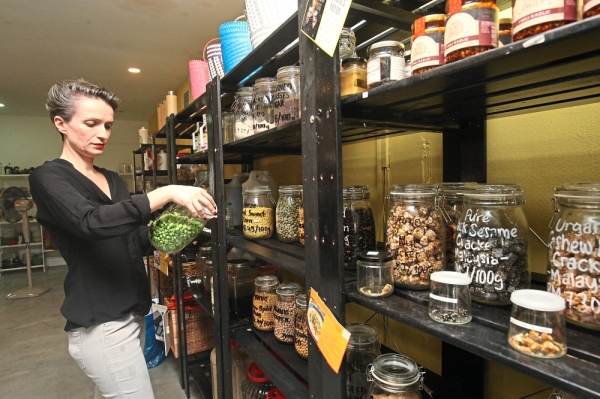
Customers at zero-waste stores bring their own containers or bags to pack and carry their purchased items.
Edible products are sold by weight, usually a minimum of 100g. Customers must weigh their bags or containers first at the store before filling them with their chosen products.
Tin goes to The Frangipani Bulk in Kuala Lumpur to get toothpaste refills made by French expatriate Malika Bouqniss who runs the outlet.
Bouqniss, who makes deodorant bars and toothpaste, has been practising the zero-waste lifestyle for over four years.
“In France, the pick-up rate was slow, but it took off when more people started adopting it.“Big supermarkets knew that they would have to do something or lose their regular customers, so they had no choice but to provide a section for consumers who did not want packaging,” said Bouqniss who is an active member of Zero Waste France.
The Hive founder Claire Sancelot is also championing the movement by getting more locals to jump on the bandwagon.
Sancelot was the first to operate a zero-waste store in Malaysia after moving here from Hong Kong.
She began her journey in 2010 after realising that recycling was not good enough.“Recycling is good, but it is not helping us reduce waste, people need to understand the severity of climate change,” said Sancelot, who began her zero-waste store in the back room of her yoga studio in Kuala Lumpur in 2016.
She began by selling cereals and seeds but had trouble convincing suppliers at first.
“They told me the business was too risky. They feared the items would go bad or get contaminated,” said Sancelot, adding that she had over 600 products sold loose at her Bangsar and Jalan Ampang stores.
The mother-of-three said more people should adopt the lifestyle.
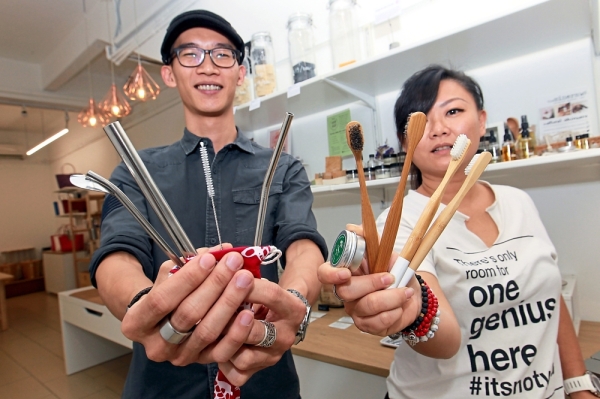
“We cannot just stop at buying a metal straw, we need to practise reducing rubbish, eating less meat, banning single-use plastic and carry our own shopping bags,” she said.Sancelot also gives talks in schools and organises weekly workshops on zero-waste living.
Chemical engineering lecturer Ong Chun Wen agreed that education was important.
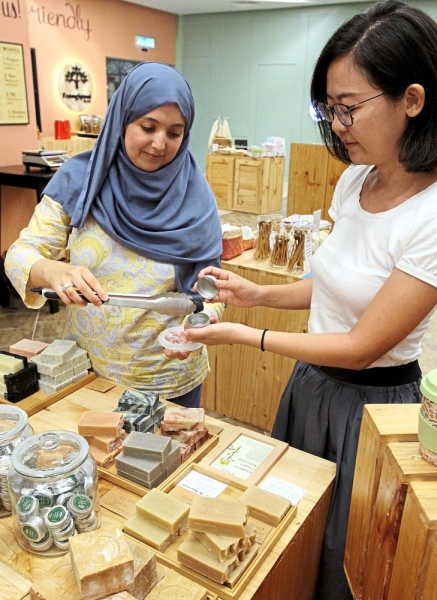
He said it was an uphill task convincing senior citizens about the need to adopt the lifestyle.
“The younger generation is able to read about it online or may have heard of it from friends, and are more likely to change without much persuasion compared to the older generation,” said Ong who runs the A Bit Less store in Kepong.
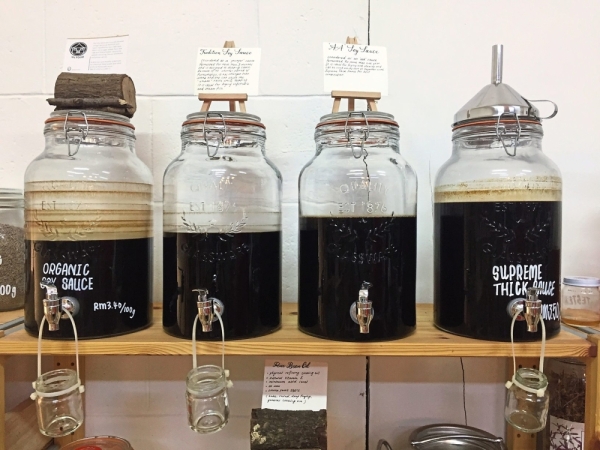
The no-frills store sells goods like biscuits, noodles, olive oil, vegetables and even locally produced soy sauce.
Cheryl Anne Low, who runs Nude, a zero-waste store in Petaling Jaya, said videos of fish and turtles dying due to consuming plastic thrown in the sea prompted her to go zero waste.
“Nowadays, I only buy what I need and try to reuse or repurpose everything else,” she said, adding that composting was a great way to minimise food waste.
Low, who is also a diver, carries metal straws with her during holidays and gives it to friends to encourage the practice.
“They have become used to my admonishments,” said the 40-year-old who also sells pet food at her store.
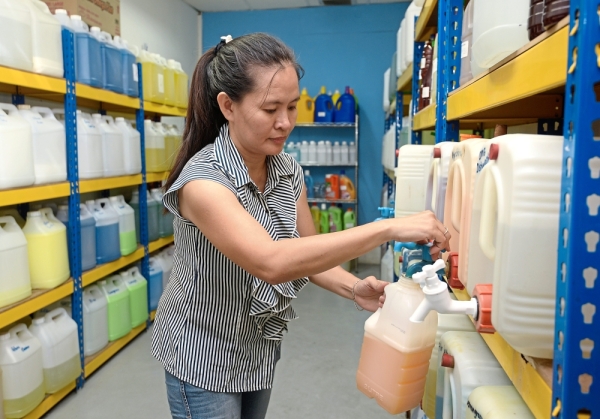
When it comes to buying detergents, Clytia Wong’s Bring Your Own Bottle outlet in Damansara Kim is a place to consider.Wong offers a range of detergents from laundry liquid to softener, dishwash, floor cleaner, shower cream and car shampoo at a fraction of the market price.
“There is no brand and it is fragrance-free, yet we found it difficult to find customers at first.
“People were unsure of the concept and some didn’t even bring their own bottles,” she said, adding that she was reluctant to sell plastic bottles as it defeated the purpose of setting up such a store.After six years, Wong noted
that the zero-waste culture had caught on with more people aware of the need to reuse and not just recycle.
Already a subscriber? Log in
Get 20% OFF The Star Digital Access
Cancel anytime. Ad-free. Unlimited access with perks.
