Mount Fuego, an active volcano in Guatemala, has been regularly spewing lava, smoke and ash since 1999.
The spectacular eruptions are usually viewed from a safe distance at Mount Acatenango, a dormant volcano on the opposite side.
My wife and I booked a two-day, one-night hiking tour to see the Mount Fuego eruption when we visited Guatemala recently.
On the morning of the hike, we we given a safety briefing and other instructions at the agency’s office.
Warm clothing and hiking gear were available for rent, but we had brought our own. Porters, too, can be hired to carry your bags during the hike.
A packed lunch, some snacks and four litres of water (per hiker) were provided, which we had to carry ourselves. From the four litres, one litre was for the guides to use to cook our meals and make hot drinks.
The water didn’t really weigh much at the office, but later, while climbing up 5.5km with an elevation gain of 1,350m on a single day with loose gravel, switchbacks with cold blustery winds, this soon made us think otherwise.
The ride to the base camp (2,400m) took about 90 minutes; we were given a more detailed briefing after that. The guides told us that the hike to the viewing camp (3,736m) would take around five to six hours.
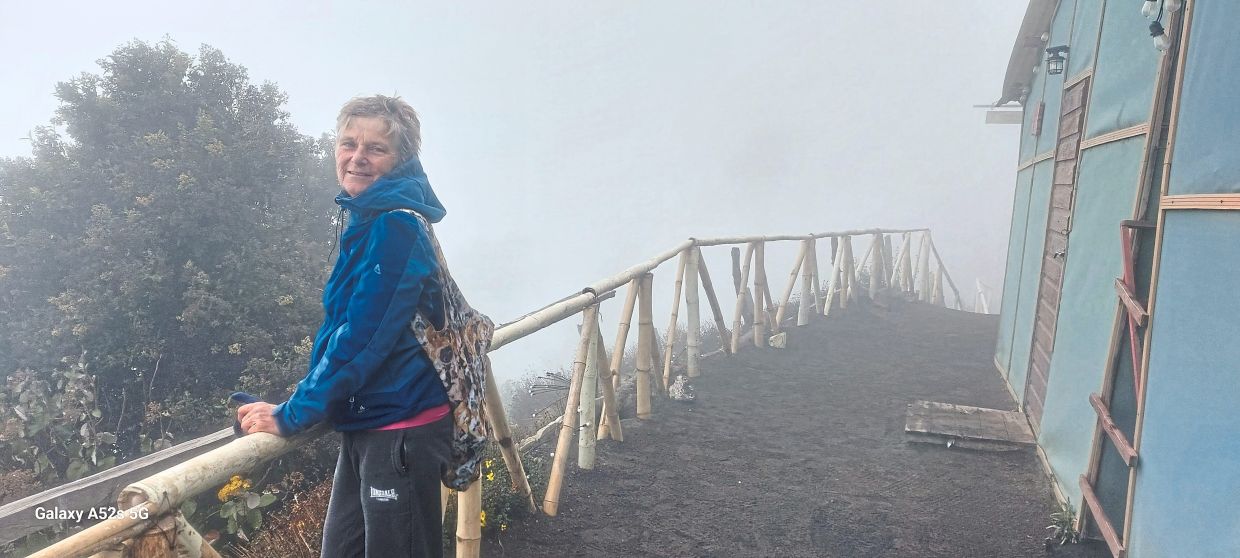
It was already pretty chilly at the base camp and the weather got even colder as we went up. We initially passed through some farmland, followed by heavily wooded forests with thick undergrowth and later, alpine forests. That’s when it became misty, and the cold winds blew stronger.
Higher up, the fog was thicker, and visibility was down to less than 10m. My wife and I struggled, and so did a few others. One of them gave up and hired a horse to go up instead.
Halfway up the trail, we were breathless, and our legs ached badly. That was when we decided to hire a porter to carry the water. Mind you, even though we carried the load halfway up, we still had to pay full price for the porter.
Without the extra weight it was easier to hike, though we were already low on energy by then so it was still challenging.
(Our tip: Hire the porters at the very beginning.)
The guides were always with us and gave us lots of encouragement, which was nice.
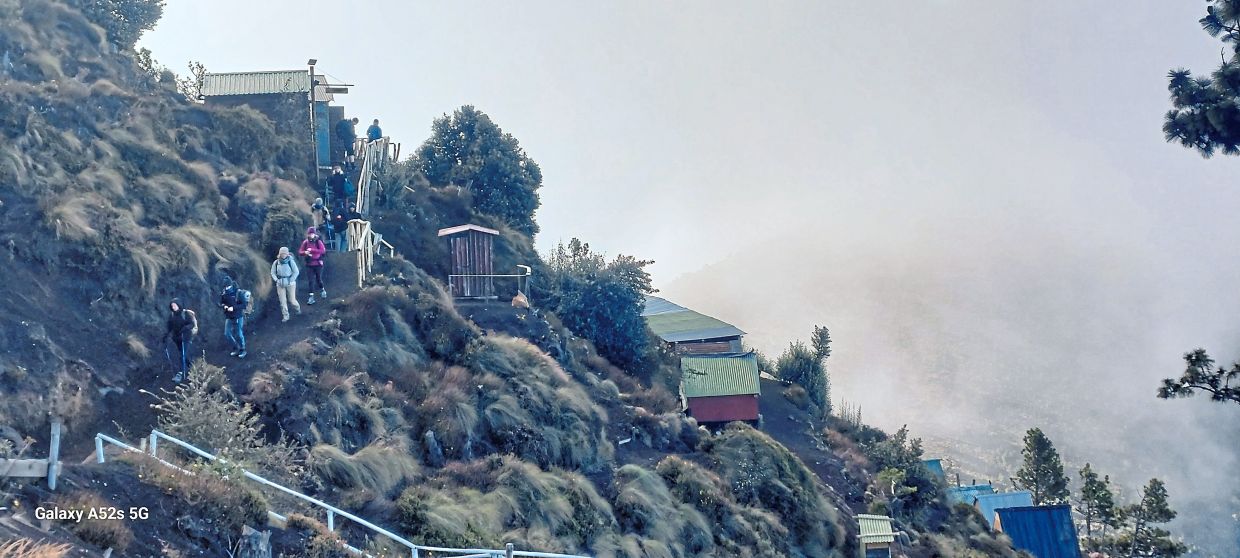
After six hours, we arrived at the viewing camp. The aches and pains were forgotten upon catching glimpses of Mount Fuego peeking out from behind shifting fog and clouds.
Our accommodation was a simple wooden hut with big glass windows – great for seeing the mountain. There were six of us in one hut with wooden bunk beds, pillows, mattresses, blankets and extra sleeping bags.
The toilet, however, was just a shack with a bucket, shared among 30 over hikers.
As evening approached, the fog and clouds disappeared, showing off the grand Mount Fuego in all its glory. White plumes of smoke cascaded over the rim and slid down gently in slow motion to the bottom.
But there was no eruption that day – in fact, the volcano had not erupted for some time, we were told. Some of the hikers with better cameras managed to take pictures of the crater’s rim that was red with lava.
It was truly a sight to behold.
Tea and dinner were served in the hut as it was too cold and windy to eat outside.
Then it was an early night for everyone as we had a 300m uphill hike at dawn to view the sunrise.
Unfortunately, the bitter cold, lack of restful sleep, rough and rocky trail, as well as the altitude proved too much for my wife and me. We made it two-thirds of the way, before turning back.
After the hikers from the sunrise trek had returned, breakfast was served, and then it was time to head down to the base camp.
My aches returned with a vengeance going down the trail. My knees “collapsed” on me twice and I had to be physically supported by the guides.
Three weeks after our adventure, Mount Fuego erupted ever so strongly that some villages down below had to be evacuated. Nature is the master and it sure does follow its own rhythm.
The views expressed are entirely the writer’s own.