As the drone lifts and steadies itself at about 50m, the landscape doesn’t just change – it reveals itself.
What seemed flat moments earlier quietly opens up into curves, hidden lines and soft splashes of colour you’d never notice from the ground.
The mud shows its geometry, the lotus leaves form rings within rings, and the whole place shifts from familiar to intriguing with a single climb into the air.
Flying a drone has never truly been about pointing a camera at something.
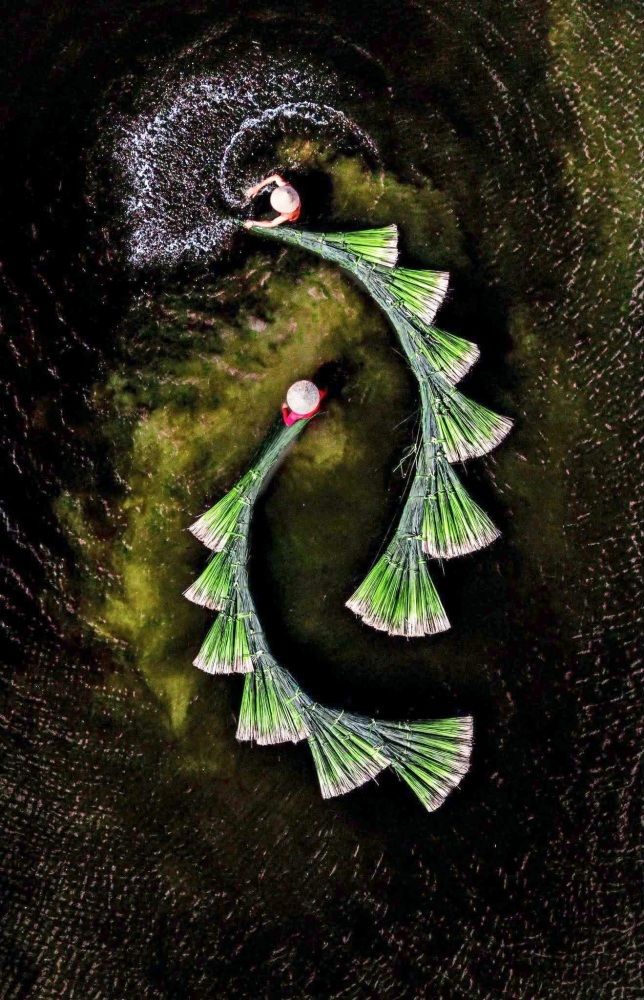
Once it rises into the open sky, perspective becomes fluid.
Every slight tilt, every small correction, every drift with the breeze changes the way the world arranges itself beneath you.
The drone’s camera becomes its eyes and the handheld screen becomes your compass. Suddenly you’re not just looking – you’re navigating.
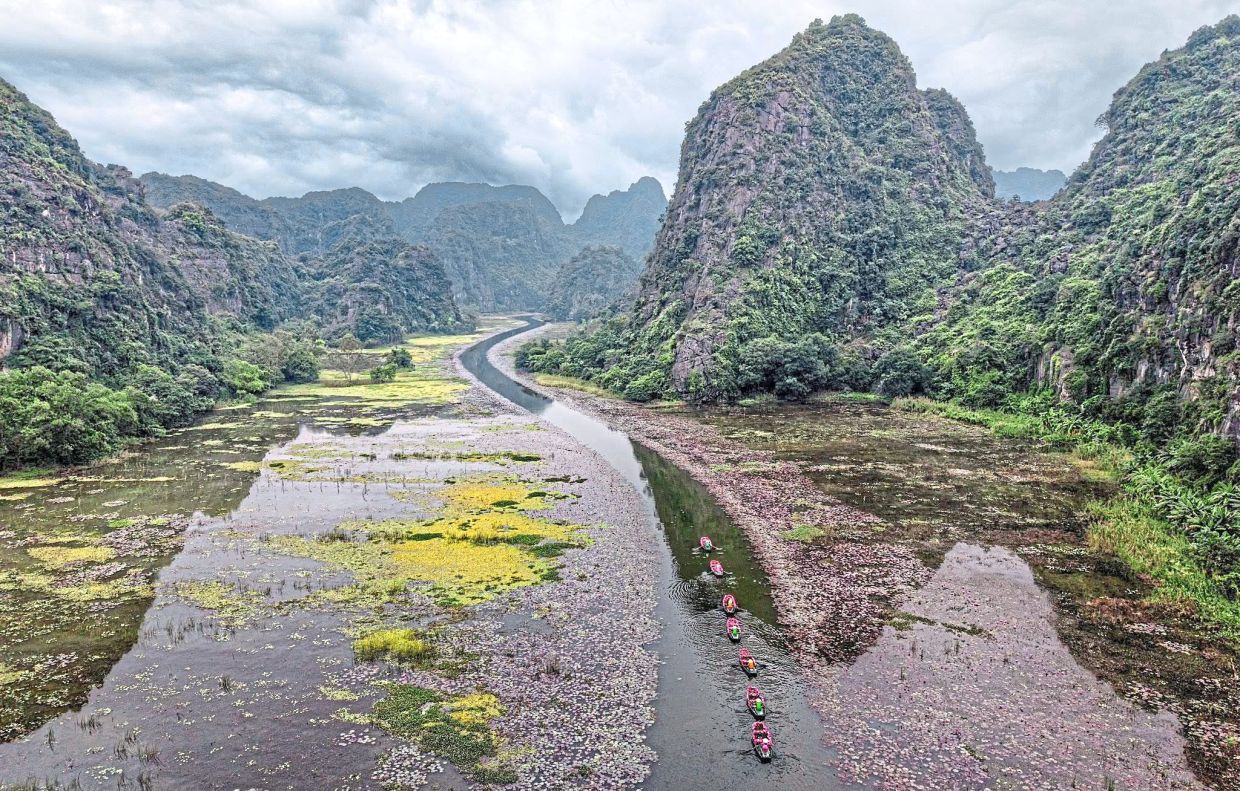
There’s a mix of technique and instinct involved, a kind of gentle trust you place in this tiny buzzing thing.
But once you get into the rhythm of it, the noise of everyday life fades a little. These outdoor sessions, short as they often are, offer a breather from the week’s fast pace.
There’s a sense of release as the drone glides forward, and your attention narrows to a single idea: find something unexpected.
Wetlands, river bends and open farmlands tend to be the most rewarding.
They give the drone room to climb and they give you distance – the kind that turns ordinary shapes into sweeping patterns.
Places shaped by water and seasonal labour tend to transform the most.
From above, you see the quiet work of time: channels cut by slow currents, fields organised not by straight lines but by habit.
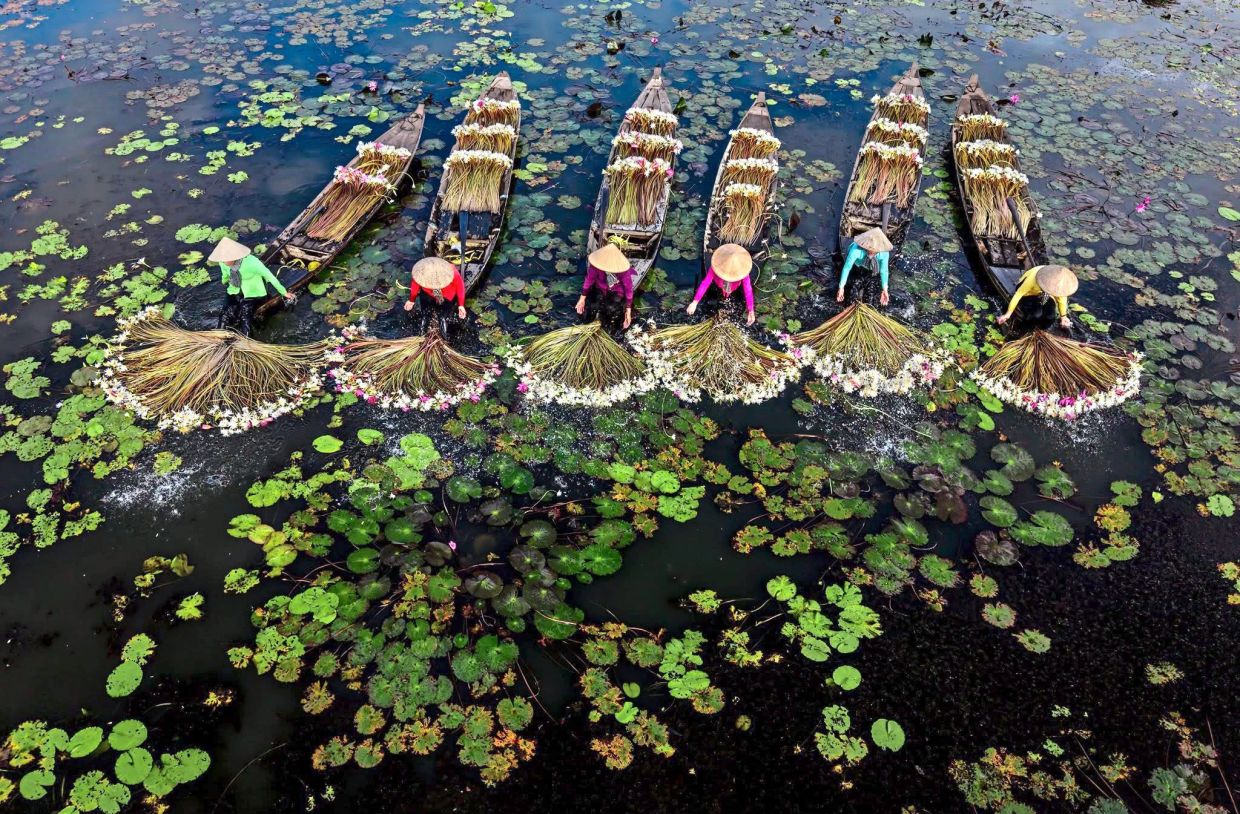
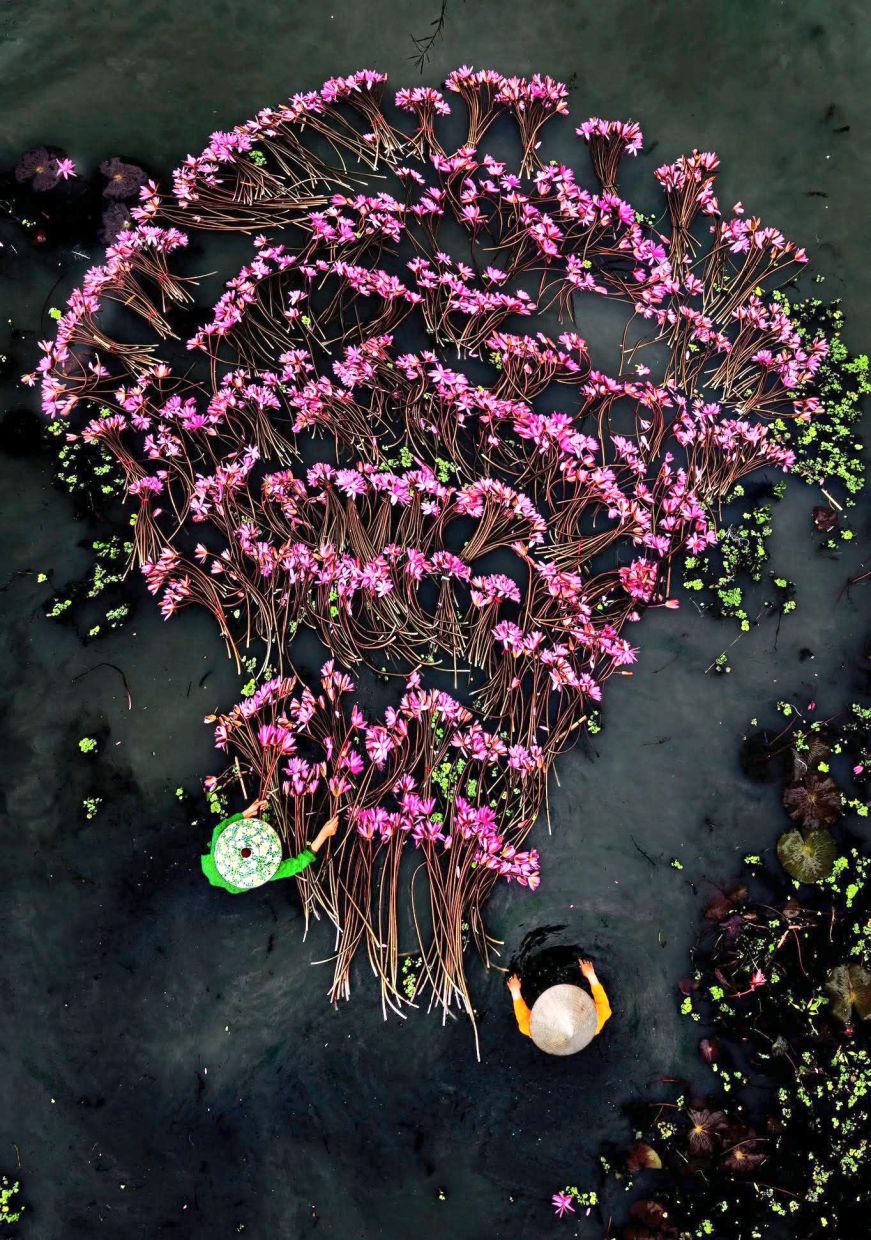
Vietnam’s lotus wetlands are one of the clearest examples.
From ground level, you see flowers, stems and water. From the sky, you see movement.
Workers wade across the shallows, their bright tops turning the scene into shifting strokes of colour.
Their paths form gentle arcs across the dark surface and lilies collect behind them like brush marks.
It’s the sort of view that seems choreographed even though it’s just the ordinary rhythm of a day’s work.
A drone catches these subtleties – the slight curve of a boardwalk that looked straight when you stood on it, the neat lines left behind by boats drifting along narrow waterways, the sudden silver flashes of sunlight bouncing off ripples.
At times, the shadows dance more beautifully than the subjects themselves. And yes, the newer drones are easier to fly.
But the quirks are still there: the sneaky gust that pushes you sideways, the battery warning that shows up sooner than expected, the brief panic when the signal dips.
The machine always complains louder than you do.
Still, once you realise that most of these problems sort themselves out, you go back to enjoying the view.
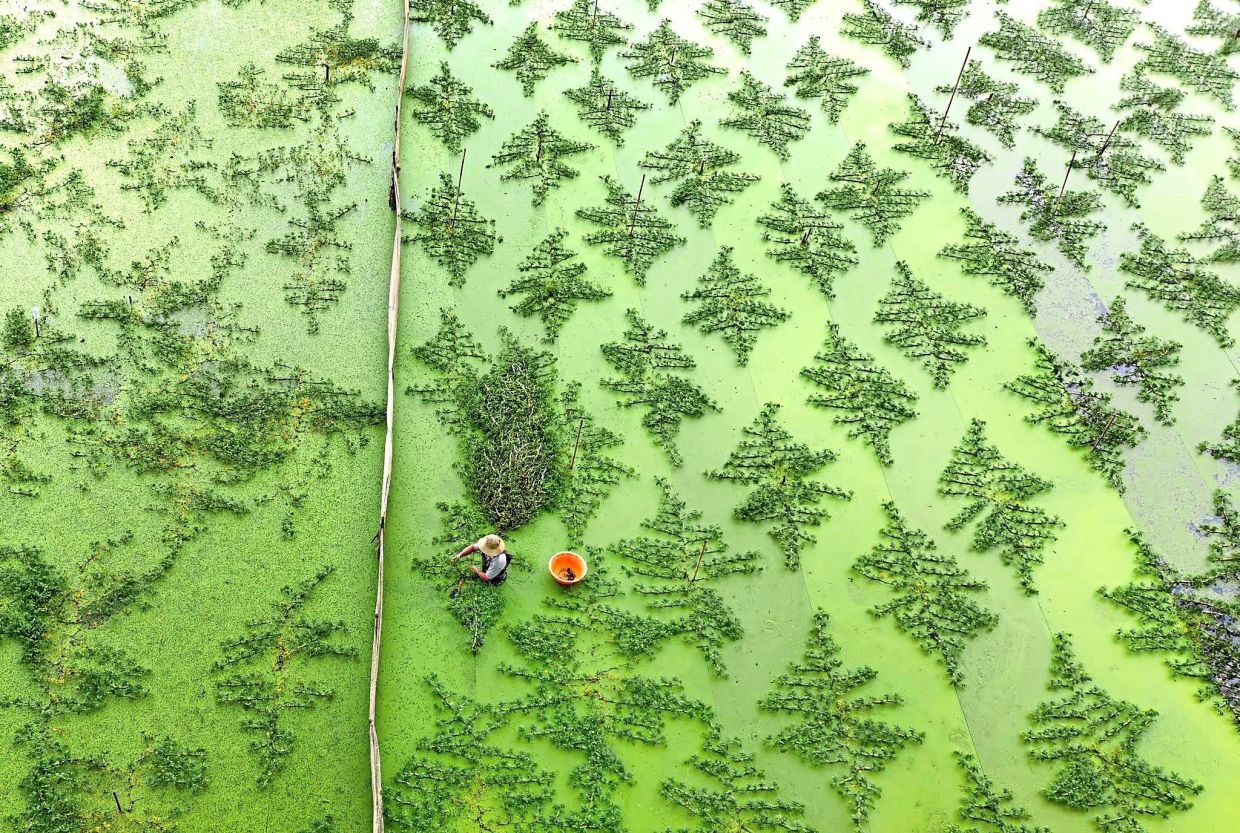
The real pleasure is in that quiet, almost two-dimensional calm you only get from above – a slower rhythm where colours stretch, shapes settle and nothing on the ground changes except the way you see it.
That’s the charm of taking a drone outdoors.
It’s a reminder that familiar places will still have surprises, waiting at the height of a short climb.