
Amsterdam is a city suffering from overtourism, with calculations suggesting for every local resident, 12 people visit per year.
Nevertheless, even in this visitor magnet, there are areas away from the main sightseeing spots that hardly any tourists stray into. Which is a shame, because these places are also intriguing, and far closer to genuine Amsterdam life.
One easy tip to avoid the crowds is this: Set your alarm for 5am – preferably on a Sunday – and then you can stroll along the classic Amsterdam canals all to yourself. The traffic is not yet roaring at that time, the city is quiet and the gables of the patrician houses are reflected in the pristine water of the canals.
But even if you don’t want to get up that early, you can still enjoy the typical Amsterdam brick facades without the crowds. Just take the metro to the RAI exhibition centre, to find the Rivierenbuurt, a neighbourhood in the architectural style of the Amsterdam School of the 1920s and 1930s.
Anne Frank lived on Merwedeplein before she and her family were forced into hiding in 1942 by the Nazis who invaded from Germany. If you take a walk from the Rivierenbuurt to the 1928 Olympic Stadium, you will pass through the even wealthier neighbourhood of Apollobuurt where many expats live today, from well-heeled managers to IT experts.
But where do you actually meet the real, born-and-bred Amsterdam folks who have to make ends meet without big salaries? Check out the Nieuw-West district, which is also a good place to stay as a tourist.
The neighbourhood is a little out of the way, but only if you’re on foot. On the other hand, you can get anywhere quickly on a bike. And hiring a “fiets” to explore the city with is a good idea anyway. Just be sure to adhere to the rules of the road along with the many Amsterdam-ers, for whom bikes are the main way of getting around.
Peaceful lake shore
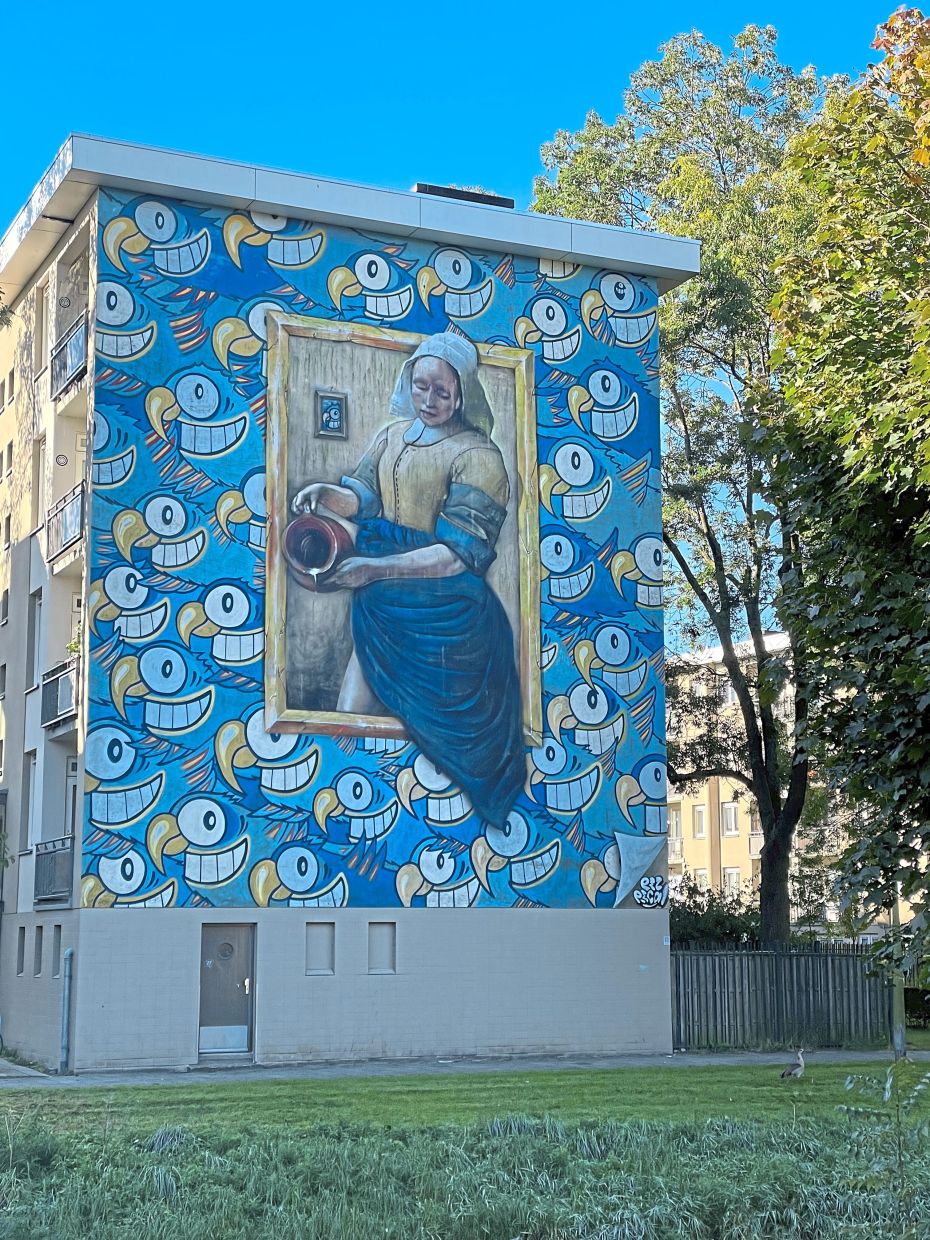
Cycling is particularly fun in the Nieuw-West district because the traffic is nowhere near as dense as in the city centre. What’s more, there are many murals to discover, such as a slightly alienated milkmaid by the artist Vermeer.
And you can delve into plenty of green and blue, for example the Sloterplas lake with its beautiful marina.
It is almost rural in the “Fruittuin van West” or the orchard of the west. As if making your way through a green cave – the leafy route along a slope – you will find an inner courtyard with organically grown fruit and vegetables, and a cafe. It doesn’t get much more peaceful than this.
If you cross the entire city from West to East, there beckons another world at the other edge of Amsterdam, the notorious Bijlmermeer neighbourhood, or Bijlmer as it is known for short.
It once held out promise, then for a long time was a synonym for fear and poverty, only to undergo a dramatic comeback.
The neighbourhood was designed in the 1960s as a “paradise for the New Man” and a “city of the future”. Then as now, it is surrounded by greenery and consists mainly of high-rise apartment blocks. What is immediately noticeable is the tranquillity as car traffic is routed around the neighbourhood.
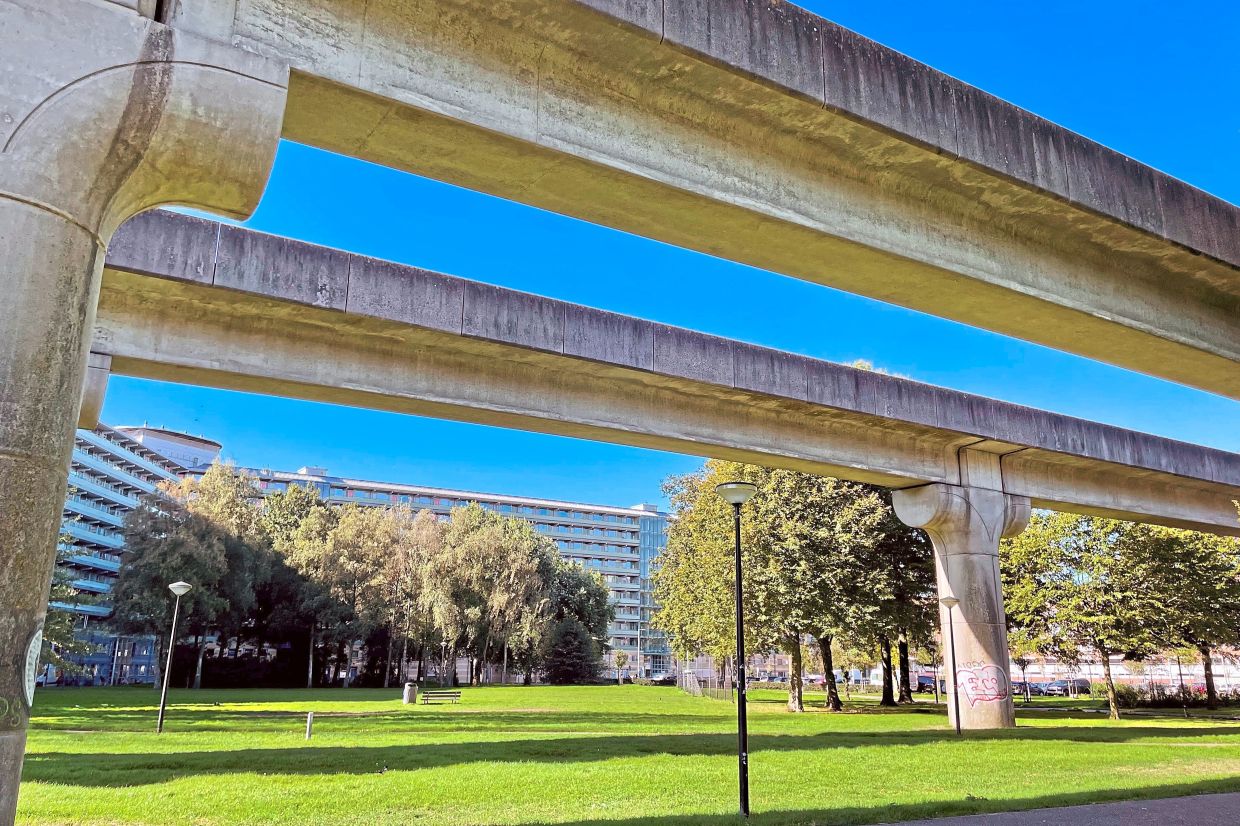
A railway line that cuts through the neighbourhood runs through the air on trestles. As a result, the ground area is reserved for pedestrians and cyclists.
The Bijlmer Museum brings the history of the neighbourhood to life. Its founder, Henno Eggenkamp, is a Bijlmer pioneer from the very beginning. The now 79-year-old was one of the first residents to move in in 1969.
“I experienced everything,” he tells museum visitors. He never wanted to go anywhere else, and the idea of the neighbourhood still impresses him today: Social classes are largely eliminated thanks to the uniform architecture.
“Everyone lives in a flat of the same size, and you can’t change it by painting the door differently or adding an extension,” Eggenkamp says. “There are no status symbols here.” The flats are not visible from the outside because privacy was important to architect Siegfried Nassuth (1922-2005).
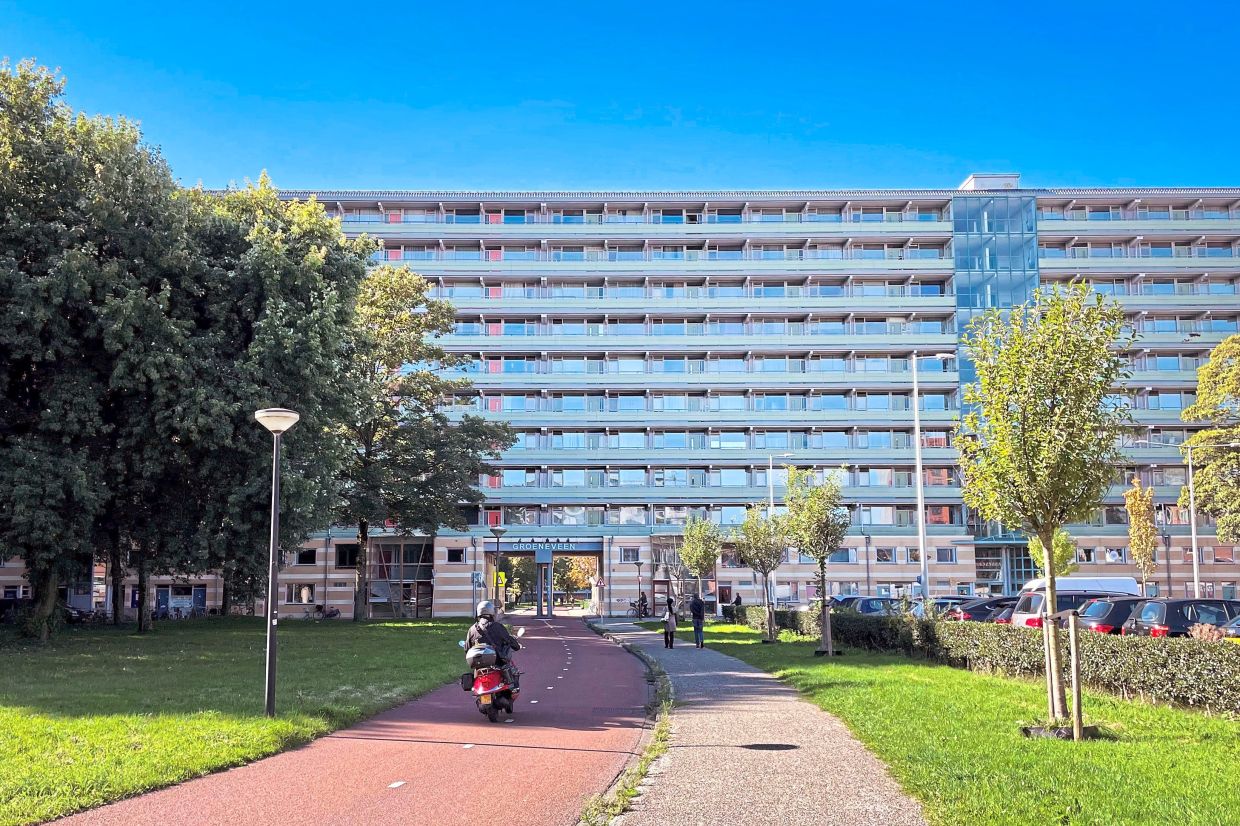
But as soon as you step outside, you feel part of a community – Nassuth wanted to prevent anonymity and loneliness. There are meeting places such as playgrounds, sports facilities, seating areas and social centres.
The Bijlmer, like many urban areas in large European cities, has gone through turbulent times. In the 1980s wealthier residents moved out and the neighbourhood became a setting of urban poverty with crime and drugs.
With migrants moving in, it also became more international. Ironically, a catastrophe – the crash of an Israeli cargo plane on Oct 4, 1992 – put Bijlmer back in the spotlight and there followed a major redevelopment programme revitalised the area.
Among others, the Amsterdam Arena – now Johan-Cruyff-Arena – opened in 1996 as the home grounds of the football club Ajax Amsterdam. A new self-confidence emerged, one essentially rooted in the multicultural character of the neighbourhood.
Today, the Bijlmer really is a natural paradise, just as its designer Nassuth had envisioned. He was far ahead of his time by almost completely eliminating car traffic. And high-rise buildings are also being built again to create urgently-needed living space.
“Suddenly the Bijlmer looks very modern,” says Eggenkamp and smiles. As if he hadn’t known it all along. – CHRISTOPH DRIESSEN/dpa