More than 6,700 new trees to be planted as part of greening efforts
GEORGE TOWN: In the march toward urban modernisation, trees are often seen as the first casualty.
However, in the development of the Penang LRT Mutiara Line, the urban canopy is not an afterthought; it is a central pillar of the project’s environmental commitment.
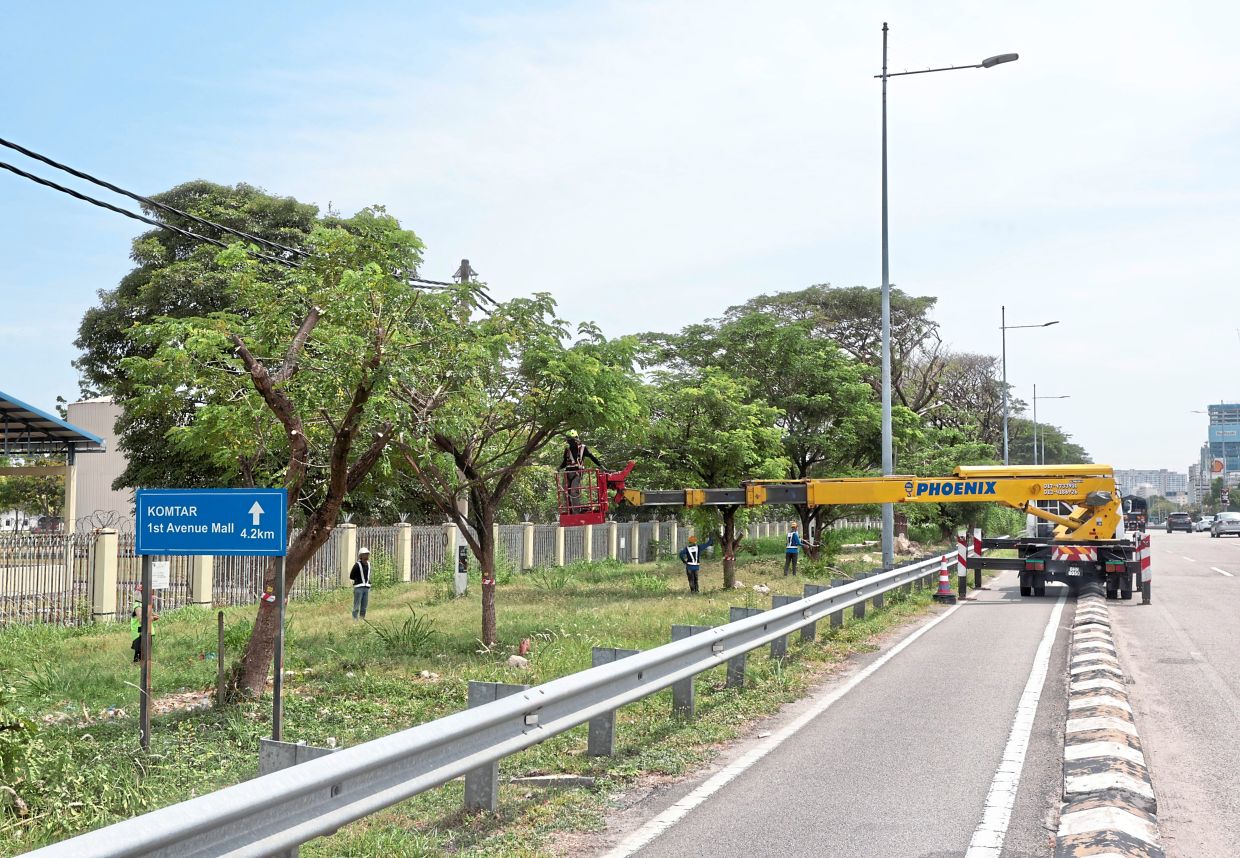
A mission is currently underway to manage the thousands of trees that line the project’s 23.7km corridor. While the necessity of infrastructure means that approximately 2,100 existing trees are slated for removal, they are not being cleared indiscriminately.
Under a stringent conservation mandate, the project will see more than 6,700 new trees planted – a replacement ratio of three to one – alongside a specialised “rescue mission” to transplant 86 prized trees that are identified for preservation.
Instead, these 86 trees will be carefully transplanted to new locations and monitored by arborists for two years to ensure their survival.
Among them are big-leaf mahogany (Swietenia macrophylla), tall, majestic trees prized for their timber, which is commonly used in musical instruments such as guitars, cellos, violins and drums.
Also included are several pink mampat (Cratoxylum formosum), known for their striking purple-pink blossoms and reddish young leaves when they flush.
The rest comprise more familiar species such as rain trees and angsana trees.
This laborious task is happening alongside another mission to plant more than 6,700 new trees.
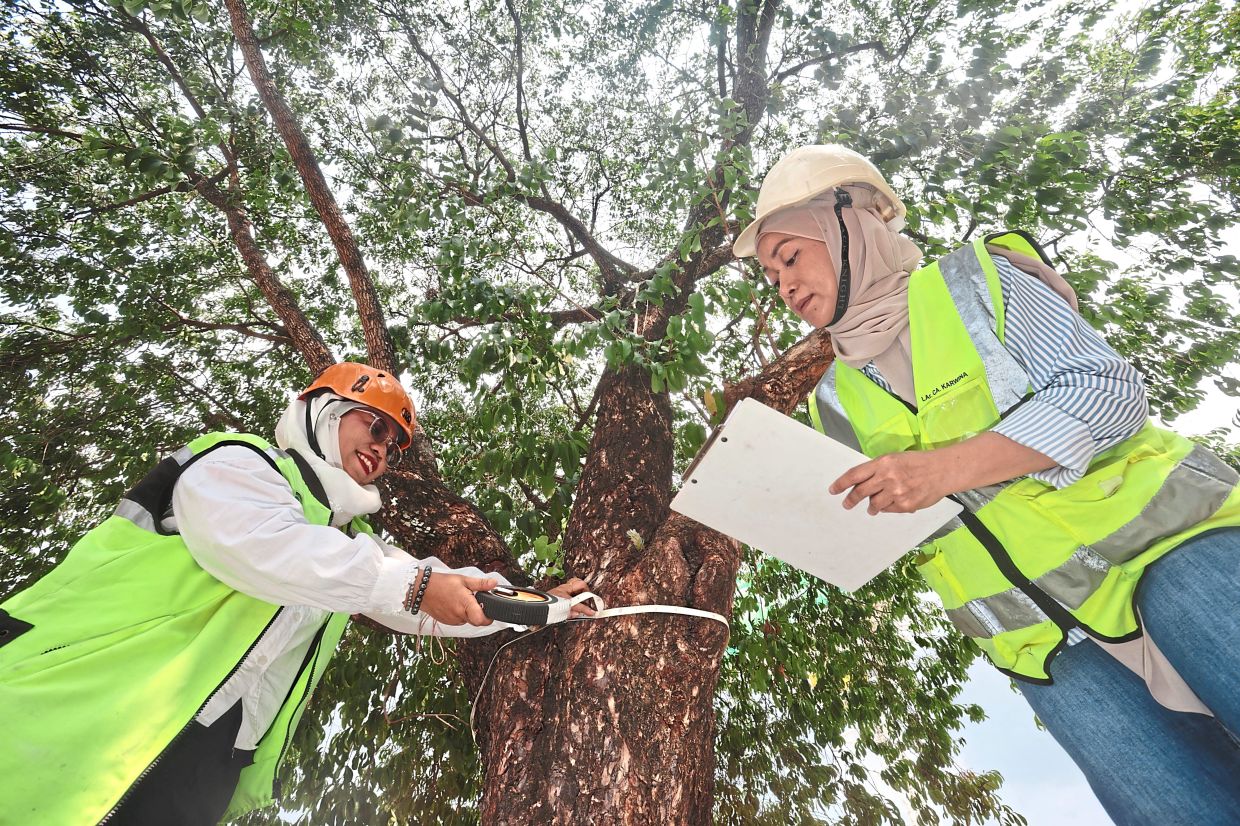
Arborist Karwina Abu Bakar said the 86 trees marked for transplanting have been growing along the stretch from Komtar to Permatang Damar Laut for about 20 to 40 years.
She said arborists are carefully assessing each tree based on their health, structural condition and whether it can be safely relocated.
She said the process involved not only relocating selected trees but ensuring their survival through a structured, long-term maintenance programme.
“Factors such as the feasibility of forming a root ball, site accessibility for machinery, and the absence of underground or overhead utilities like high-voltage cables are taken into account before any relocation is approved.”
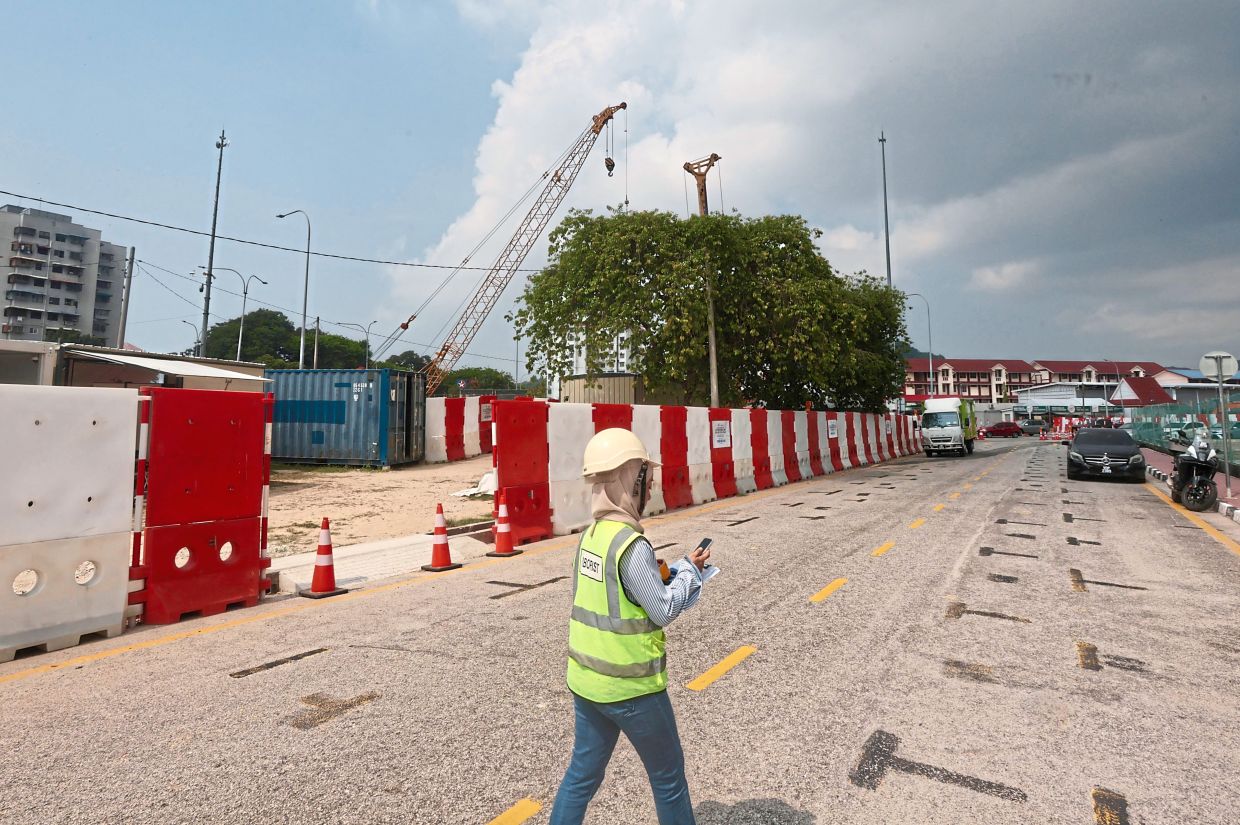
Karwina noted that many of the affected trees were matured and played a significant role in carbon sequestration and urban cooling due to their lush canopies and high photosynthetic capacity.
She said the mahogany and the pink mampat are relatively rare in cities.
The transplanting process, Karwina explained, would take many stages. It starts with careful pruning, followed by a “hardening period” of one to two months.
“This is to allow new shoots to stabilise before further work is done,” she said, adding that trenching works are then carried out to prepare the root system.
The tree is subsequently secured using a ball-and-burlap method to ensure the soil around the roots remains intact during relocation.
“The actual lifting process requires heavy machinery, including cranes of up to 60 tonnes, and is usually carried out at night to minimise traffic disruption,” she said.
Once transplanted to a new place, contractors must monitor the trees for two years, with intensive care during the first six months.
“The trees must be watered regularly but we must avoid waterlogging as the roots are sensitive. Root stimulants and wound treatment coats are also applied,” she said.
She added that arborists must strive to help transplanted trees thrive because there is a performance bond of RM2,500 to RM100,000 per tree, depending on the size of the tree.
“The bond is only returned if the tree survives the two years after transplanting. If a tree does not survive, an arborist must explain the cause. Only valid and justifiable reasons will allow for the bond to be refunded,” she said.
While the physical removal of trees during construction can appear jarring, arborists emphasise that these are essential steps within a comprehensive green blueprint. This is not a matter of simple land clearing; it is a highly regulated effort by contractors under the close monitoring of local authorities.
By balancing preservation with the addition of over 6,000 replacement trees, the project ensures that the people of Penang can enjoy both a modern LRT system and a significantly greener urban landscape.
Native trees, safer roots
On the planting of new trees, Karwina said the project involves planting about 6,780 trees of at least 2m tall to replace some 2,100 existing trees that were allowed to be felled.
She said the new tree selections focused on native species with non-invasive root systems to avoid damage to road structures and comply with Public Works Department (JKR) guidelines.
“Larger trees are planted farther from LRT pillars, with canopy spreads of 7m to 9m at maturity. Medium-sized species are used along tighter stretches.
Among the selected species are flowering trees such as the golden shower tree (Cassia fistula), known for its cascading bright yellow blooms; Thai crape myrtle (Lagerstroemia floribunda), which produces vivid purple-pink flowers; and the Indian cork tree (Millingtonia hortensis), noted for its fragrant white blossoms. Leafy varieties include merawan (Hopea odorata), a tall species with a straight canopy, and kelat (Syzygium polyanthum), which is dense and richly foliaged.
Karwina said that each stretch of the alignment will have its own charm and character with commuters experiencing changing colours and forms from the flowering trees along the route.
This, she added, reflects the diversity of culture, food and nature that Penang is known for.
The approval process for tree management along the LRT Mutiara Line project is subject to a stringent, multi-layered procedure overseen by Penang Island City Council (MBPP).
Stringent checks
Mayor Datuk A. Rajendran said the process begins at the pre-submission stage requiring comprehensive environmental and site studies, including detailed tree surveys and arborist reports.
“Every tree within the project footprint is properly assessed for its health, stability and ecological value,” he said.
All applications, which include detailed tree removals or transplanting plans, are then channelled through the One Stop Centre (OSC) Committee, which serves as the central coordination system for development proposals.
MBPP Landscape Department plays a key role in evaluations with other technical agencies such as JKR and Department of Irrigation and Drainage consulted.
Rajendran stressed that tree cutting would only proceed after fulfilling all conditions, including obtaining OSC approval.
“Only after these approvals are in place can any tree cutting be carried out legally.
“Tree management in urban projects is not just about clearing land. It involves balancing development needs with environmental preservation and ensuring the safety of the public,” he said.