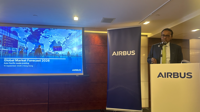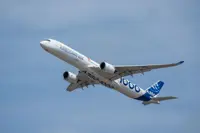
The Asia Pacific region will need over 17,600 new aircraft by 2040 to accommodate passenger traffic growth and retirement of older fleet, says Airbus International in a statement.
Passenger traffic growth of 5.3% per annum and the retirement of older, less fuel efficient aircraft will see the region require 17,620 new passenger and freighter aircraft.
Airbus International chief commercial officer Christian Scherer is optimistic about the growth of aviation sector in the region.
“We are seeing a global recovery in air traffic and as travel restrictions are further eased the Asia Pacific region will become one of its main drivers again,” he said in a statement.
In a region which is home to 55% of the world’s population, China, India and emerging economies such as Vietnam and Indonesia will be the principal drivers of growth in Asia Pacific.
Meanwhile, the middle class – who are the likeliest group to travel – will increase by 1.1 billion to 3.2 billion. What this means is that the likelihood for people to travel is set to almost triple by 2040.
The aforementioned statistics spell good news for an industry that’s been battered by Covid-19, said Scherer.
“We are confident of a strong rebound in the region’s traffic and expect it to reach 2019 levels between 2023 and 2025,” he said.
Of the demand for 17,620 aircraft, nearly 30% of these will replace older, less fuel efficient models.
According to Scherer, there’s an “ever greater focus on efficiency and sustainable aviation in the region”.
“Our modern portfolio offers a 20% to 25% fuel burn and a CO2 advantage over older generation aircraft and we pride ourselves that all our aircraft products are already certified to fly with a blend of 50% SAF, set to rise to 100% by 2030,” he said.
The global aviation industry has already achieved huge efficiency gains, as shown by the 53% decline in aviation’s CO2 emissions per revenue passenger kilometre since 1990.
It was previously reported that airlines in the region has committed to net zero carbon emissions by 2050, surpassing the existing industry commitment to halving carbon emissions within the same period.
This all-industry effort will be based on a combination of technology, operational improvements, sustainable aviation fuels (SAF), and global market-based measures.
Sustainable aviation fuels are expected to feature heavily in the industry’s overall reduction in carbon emissions by almost completely replacing fossil fuels on commercial flights by 2050. – Chester Chin
Already a subscriber? Log in
Get 20% OFF The Star Digital Access
Cancel anytime. Ad-free. Unlimited access with perks.