
The recent major fashion weeks have made one thing clear – the industry’s promises of progress are facing growing scrutiny.
Protests by People For The Ethical Treatment Of Animals (Peta), both on the runway and outside shows, have brought these concerns to the fore, with activists urging designers and luxury houses to reconsider their use of animal-derived materials.
At Paris Fashion Week, Stella McCartney’s Spring/Summer 2027 show offered a timely reminder of how fashion can use its platform to question the treatment of animals and the materials it relies on.
The collection explored the impact of overfishing and ocean degradation, while continuing the designer’s longstanding commitment to animal-free fashion.
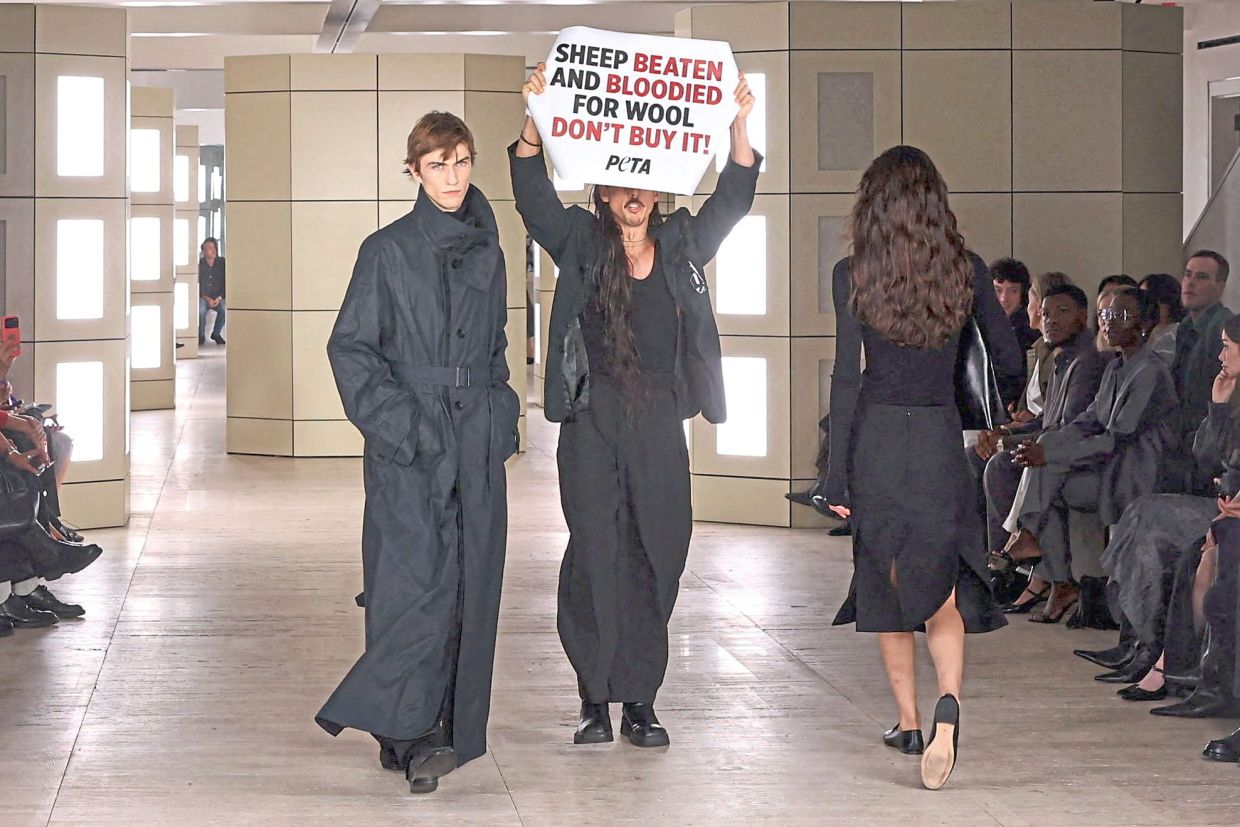
The debate took a more confrontational turn at New York Fashion Week, where Peta activists disrupted the COS runway show to protest the use of wool.
The incident escalated when Steven Kolb, chief executive of the Council Of Fashion Designers Of America, physically restrained two protesters, prompting widespread criticism.
He later apologised and resigned from his role after two decades with the organisation.
Despite some cities adopting fur-free policies for their shows, tensions between ethical commitments and commercial demands remain, raising questions about how much meaningful progress the industry has made.
At the heart of the debate is cruelty-free fashion.
Fur may be the industry’s most contentious and longstanding animal welfare issue, but it is far from the only one.
Leather, wool, feathers and exotic skins each raise ethical questions, weighed against traditions, craftsmanship, material performance and consumer expectations.
Ultimately, progress depends not only on the availability of cruelty-free alternatives, but also on the industry’s willingness to embrace them.
Bringing the discussion home
With the traditional “big four” fashion capitals of New York, London, Milan and Paris no longer holding the same dominance over the global industry, the conversation around ethical practices deserves closer scrutiny at home, too.
“Animal-derived materials remain part of everyday fashion in Malaysia, even if fur and heavy wool garments are less practical in a tropical climate,” says Jason Baker, president of Peta Asia.
Read more: New York Fashion Week runway drama puts sustainability and ethics debate on show
Leather, for instance, remains a significant concern.
According to figures cited by Peta Asia, Malaysia imported US$136mil (approximately RM555mil) worth of handbags with leather outer surfaces in 2022, alongside US$23.6mil (RM96.4mil) worth of apparel and accessories made from leather or composition leather in 2023.
Baker also points to Malaysia’s documented python-skin trade, with reptile-skin goods openly marketed in Kuala Lumpur.
While the country may not be a major market for fur coats, animal welfare remains relevant given how widely animal-derived materials feature in everyday products.
Nevertheless, Baker believes awareness of animal welfare and animal-free alternatives is growing locally.
Increasing engagement with animal rights issues and more considered consumer choices, he says, present opportunities for the fashion sector to explore alternatives.
He also challenges the perception that animal-free materials are less luxurious or inferior in quality.
Technological advances have produced options that can match or even outperform animal-derived materials in durability, comfort and appearance.
From pineapple-leaf leather to plant-based insulation and fabrics that replicate the softness of wool, cashmere and silk, these innovations give designers more choices without relying on animal-derived materials.
Local labels are exploring alternative approaches, too.
Baker points to TwoFrens, which uses plant-based natural dyes, and LTTL, which works with natural, sustainable and biodegradable fibres.
Together, such examples demonstrate how style and practicality can coexist with more considered material choices.
A broader reckoning with responsibility
While animal welfare has emerged as a prominent talking point in recent weeks, environmental concerns have long shaped discussions around responsible fashion.
From resource-intensive production and water pollution to textile waste and carbon emissions, the industry’s environmental footprint remains a significant concern.
The growing volume of clothing produced and discarded each year has further underscored the need to rethink how garments are made, consumed and disposed of.
According to the United Nations Environment Programme (UNEP), the textile industry accounts for an estimated 2% to 8% of global greenhouse gas emissions and consumes around 215 trillion litres of water annually.
Meanwhile, a 2025 UNEP report estimates that 92 million tonnes of textile waste are generated globally each year. In 2023, less than 1% of the global fibre market came from textile-to-textile recycling.

Yet environmental impact is only one dimension of the discussion.
Andrea Guerot, head of fashion design at Esmod Kuala Lumpur, a fashion school, believes greater attention should be given to preserving creative and technical knowledge, alongside cultural responsibility.
“Fashion depends on generations of accumulated expertise: textile techniques, pattern-making, garment construction, traditional dress, local craftsmanship and the relationship between clothing and the communities that create and wear it,” she explains.
“Yet these forms of knowledge are often undervalued compared with technological novelty, global market expansion and production efficiency.”
For Guerot, responsibility also means protecting the diversity of ways in which fashion can exist, rather than focusing solely on minimising environmental harm.
“Ultimately, I believe we need to move beyond asking how to make fashion production less harmful and begin asking what kinds of fashion practices, skills, cultures and economic models we want to preserve and encourage,” she says.
Achieving this, she adds, requires greater transparency to address both the material and human dimensions of the industry, from pollution and environmental degradation to social and cultural concerns.
Education is key
Beyond materials and manufacturing, responsible fashion also depends on how the next generation of designers is trained to understand the industry’s broader impact.
For Guerot, this begins in the classroom, where young talents must develop creative and technical skills while learning to consider the wider implications of their design choices.
At Esmod Kuala Lumpur, industry and artistic collaborations expose students to different approaches to sustainability.
These experiences encourage them to see it as a multifaceted discipline in which creativity, material innovation, resourcefulness, industry practices and social responsibility intersect, rather than a single prescribed approach.
Read more: What does it take to be a fashion designer? Hard work, and the right education
Guerot cites several past student projects that put these principles into practice.
Lim Yu Jie developed a zero-waste prototype using deadstock fabric from the luxury industry, while Arissrar Sangkhaney Bun Liang created a plant-dyed collection before launching her eponymous sustainable label.
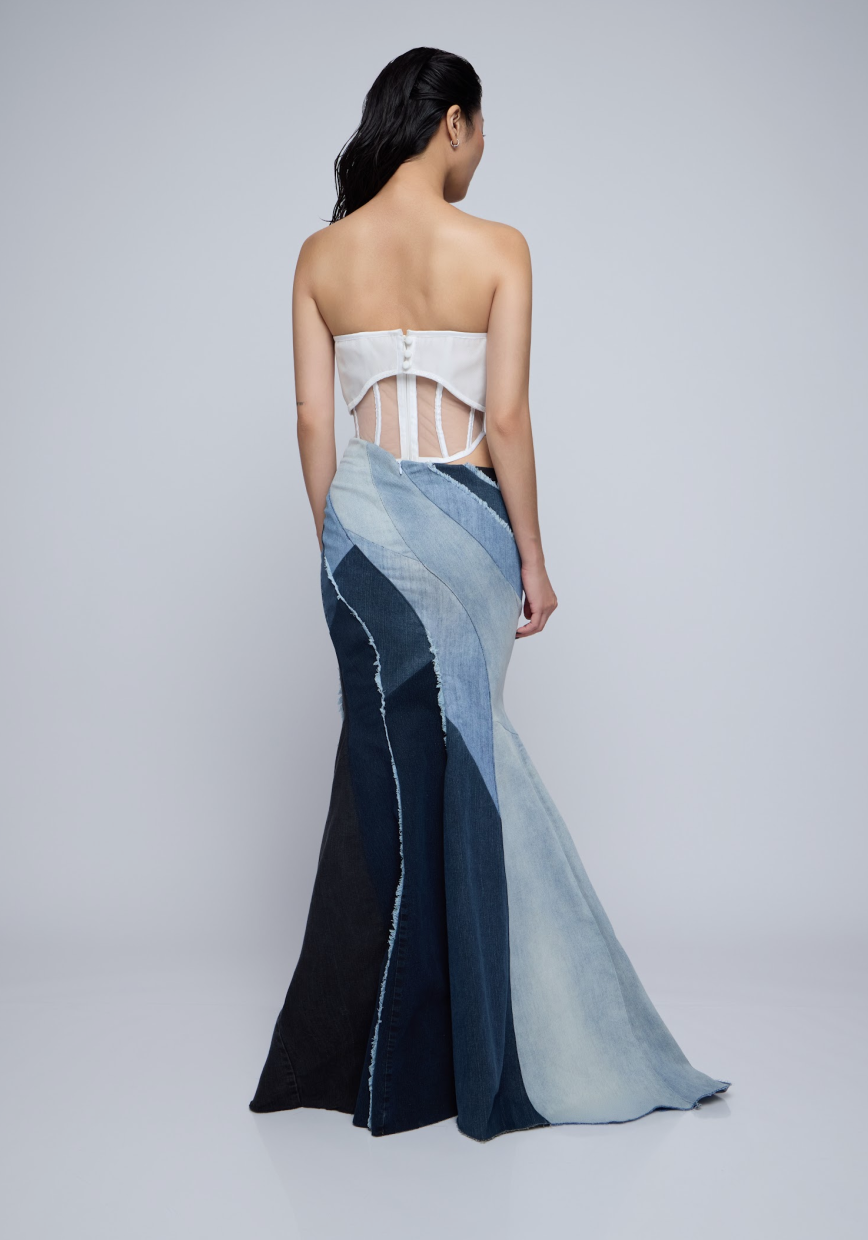
Sam Shu Yi, meanwhile, upcycled denim into a mermaid-inspired collection highlighting ocean degradation and pollution from the fashion industry.
Guerot also stresses the importance of making such practices viable for emerging designers, many of whom begin as independent creatives or small businesses producing individual garments or limited collections rather than industrial quantities.
For them, responsible practices must be realistic and proportionate, allowing room for creative expression while remaining economically viable.
“It’s not a trend, it’s a way of life,” she says.
The human aspect of fashion
For brands, this also means looking beyond the product itself to consider how their business can create tangible benefits for the communities around them, as Samsonite Malaysia general manager Ambert Khoo explains.
The company’s annual trade-in campaign, for instance, gives pre-loved luggage a second life while extending its impact beyond waste reduction.
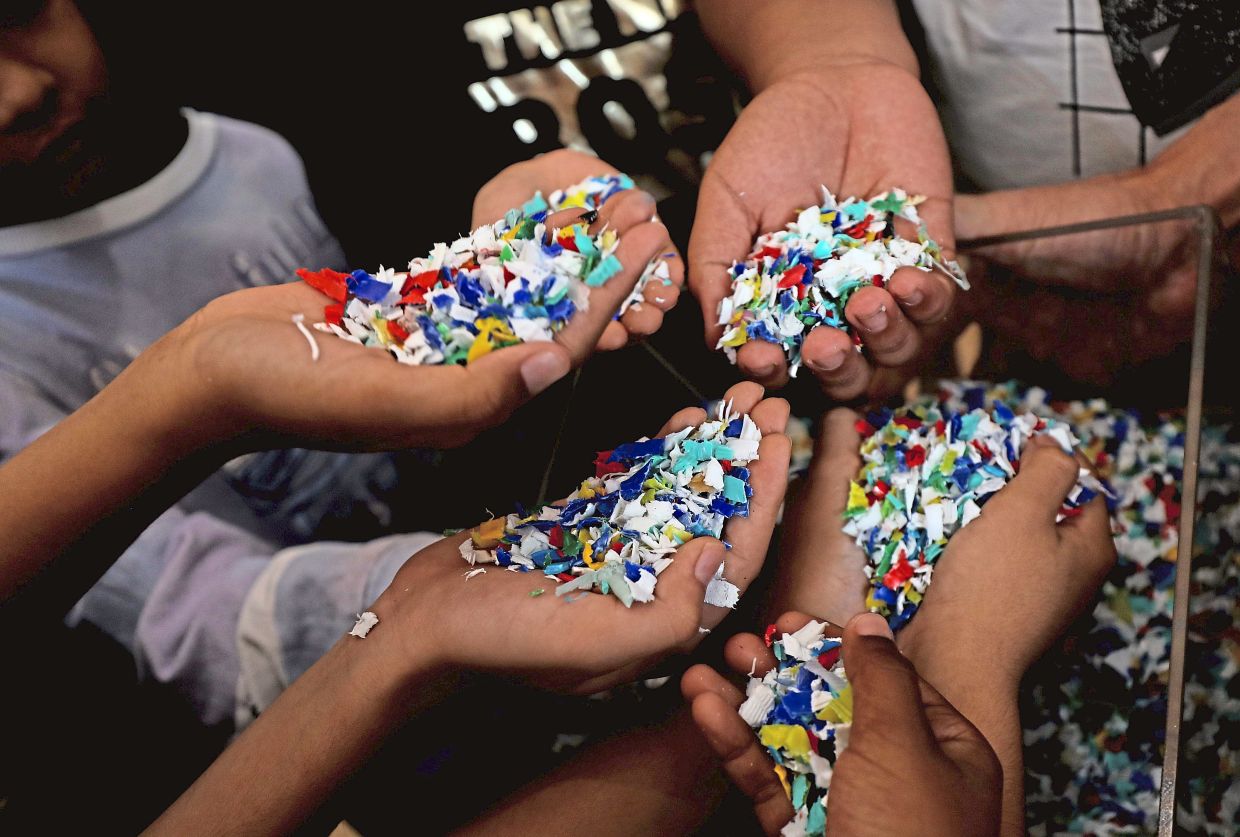
In its recent partnership with Precious Plastic, Samsonite upcycled collected luggage into furniture for children at Yayasan Chow Kit, creating practical pieces.
“The furniture was designed specifically around their needs, and we also wanted to create a more welcoming and inspiring environment for them,” says Khoo.
The project also incorporated a “Tree Of Hope” artwork created by the children, giving them an opportunity to express their aspirations and experiences.
Some pieces were designed to serve multiple purposes, including collapsible tables that can be displayed as framed artworks when not in use.
For Khoo, such details help ensure that community initiatives address genuine needs rather than simply serve as extensions of a brand’s marketing strategy.
“Authenticity starts with ensuring that an initiative has a genuine purpose and creates lasting value for the people it is intended to support,” he says.
He believes commercial success and social responsibility can go hand in hand.
Thoughtfully developed initiatives can benefit communities while reinforcing a brand’s values and strengthening consumer trust.
Price, quality and design, however, remain central to purchasing decisions.
The challenge is thus to make responsible choices practical and accessible, rather than asking consumers to compromise on the products they want.
Ultimately, Khoo believes meaningful change depends on consistency and transparency, with brands demonstrating their commitments through tangible action rather than words alone.
This is the broader challenge facing the fashion industry, globally and locally.
Whether through animal-free materials, lower-impact production, the preservation of traditional craftsmanship or initiatives that support local communities, responsibility cannot be reduced to a single material, campaign or cause.
Nor is it measured solely by what a brand promises.
It must be reflected in how products are made, how people are treated and what happens when an item reaches the end of its useful life.
The question is no longer simply how fashion can become less harmful, but how it can make a more meaningful contribution to the world around it.
That requires turning good intentions into everyday practice, making responsibility an integral part of how fashion is designed, produced, sold and experienced.