
For 270 years, a Manufacture whose history is distinguished by innovations and bold creativity, has constantly pushed the boundaries of technical and aesthetic mastery.
Driven by passion and perseverance, Vacheron Constantin celebrates a milestone anniversary in 2025, an illustrious history of being perpetually in tune with the times while looking firmly to the future.
Since the turn of this century, Vacheron Constantin has marked each new decade by honouring its heritage, looking to the future and issuing a number of exceptional timepieces.
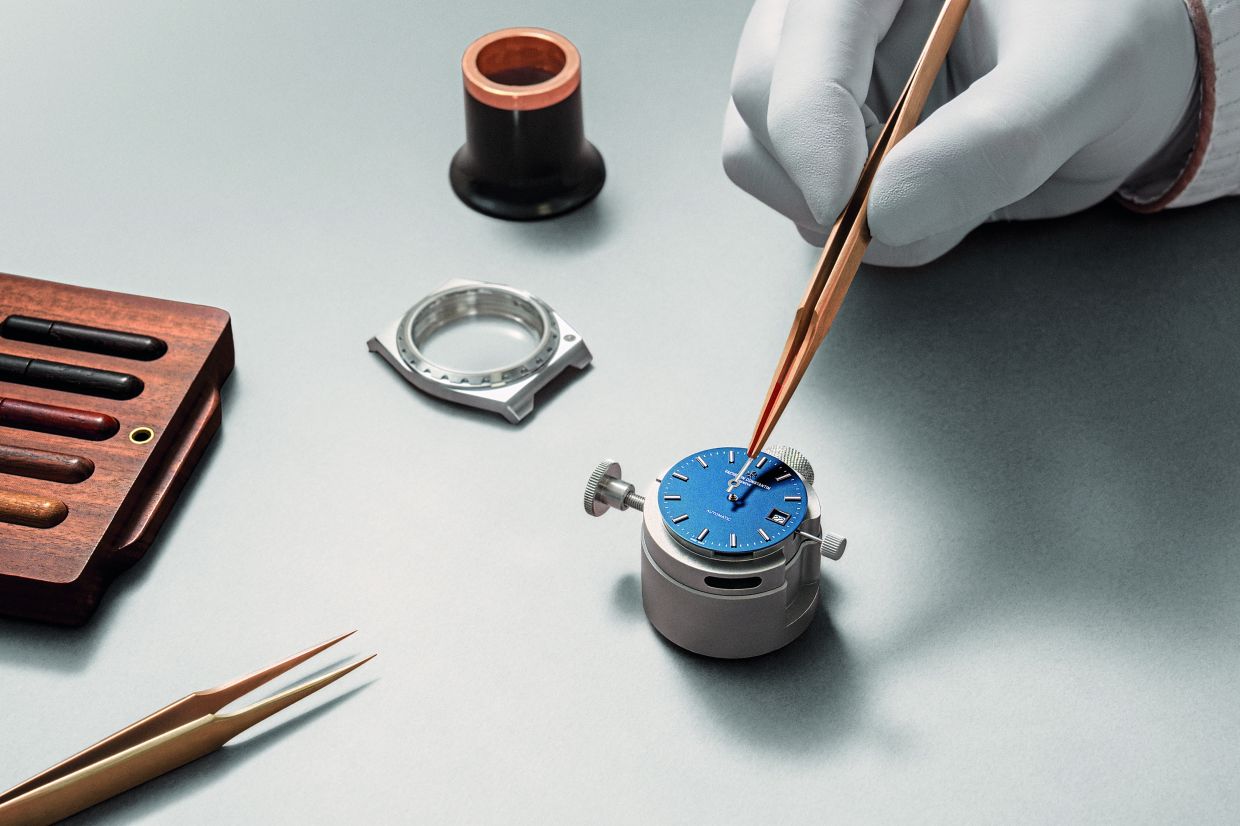
Throughout 2025, to mark 270 years of creation, tradition and innovation, a series of celebrations begins with the reissue of an iconic timepiece, much awaited by its clients, the Historiques 222 in stainless steel.
A quest for excellence
In the 18th century, when Vacheron Constantin was born, Geneva was a peaceful and economically prosperous city.
Its booming economy was matched by great cultural richness: the home city of Rousseau, it attracted other great minds, including Voltaire, who took up residence the same year that the Maison was established.
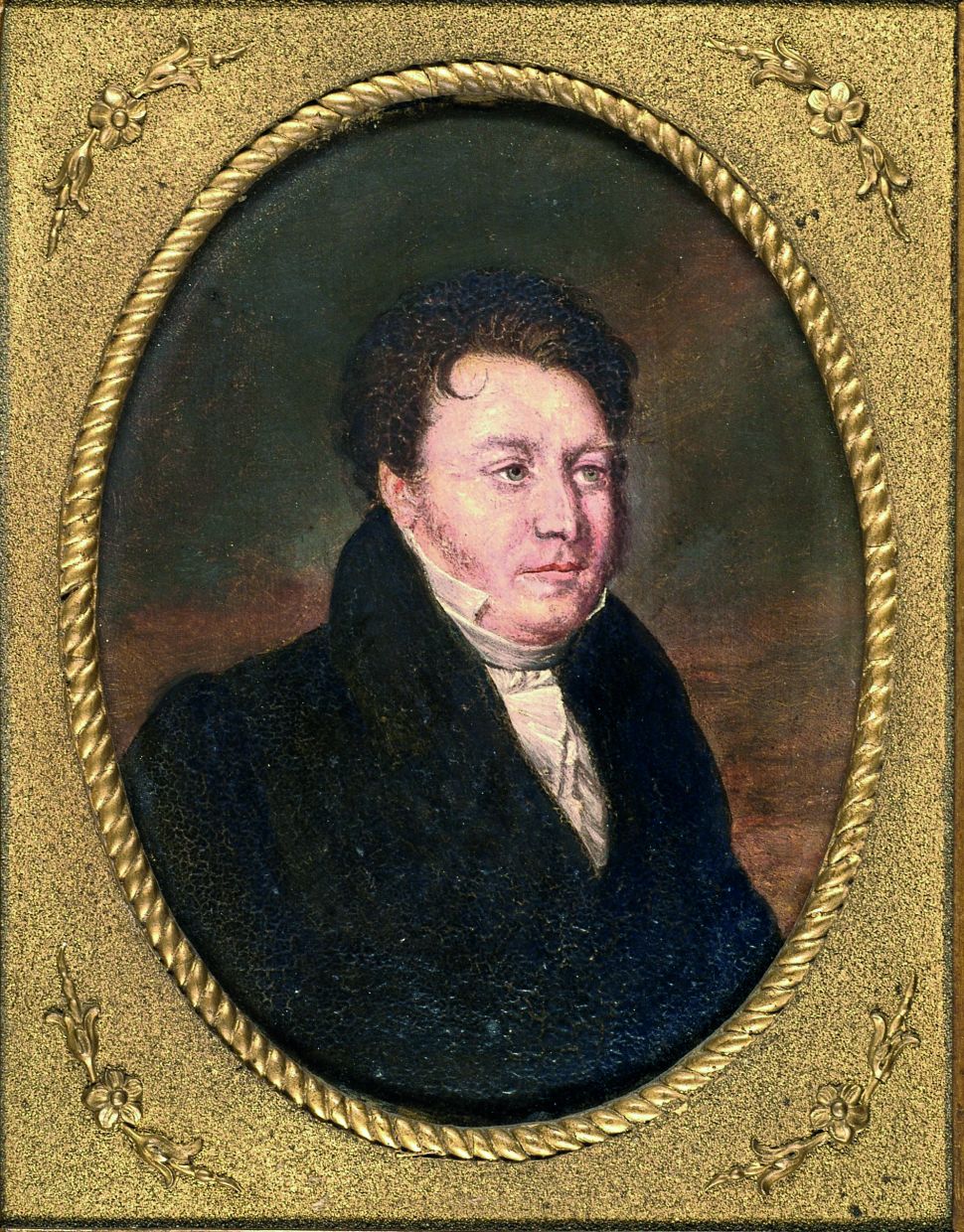
Jean-Marc Vacheron’s signing of his watchmaking apprenticeship contract in 1755 is regarded as the founding act of Vacheron Constantin – the beginning of a quest for watchmaking excellence driven by the determination and passion of successive generations.
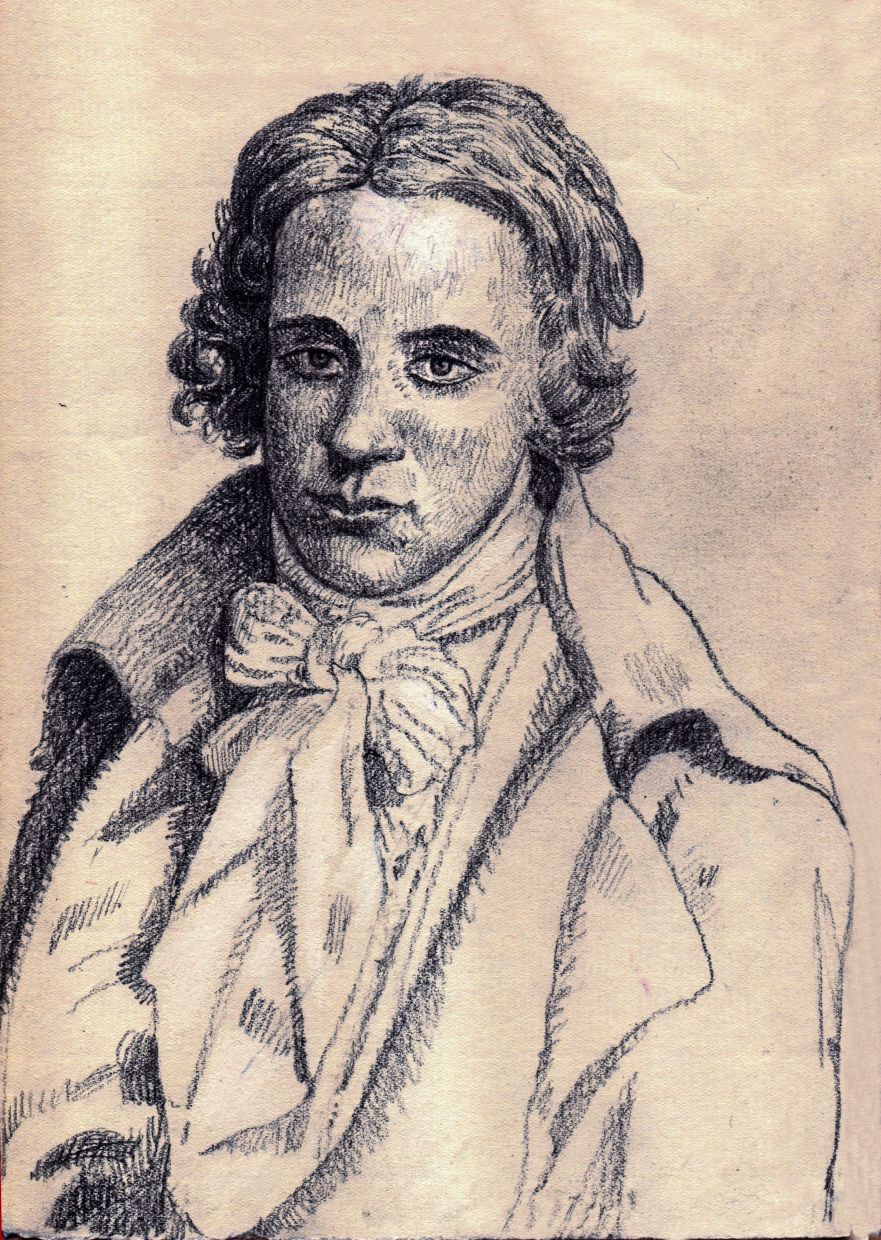
In 1819, Jacques Barthelemi Vacheron, the founder’s grandson, received a note from his new business partner, Francois Constantin, urging him to “do better if possible, and that is always possible” – a maxim that remains the motto of the Maison to this day.
The Maison’s enduring success lies in its singular approach to watchmaking – one that deftly balances technical mastery and artistic sensitivity, mechanical complexity and craftsmanship, innovation and elegance.

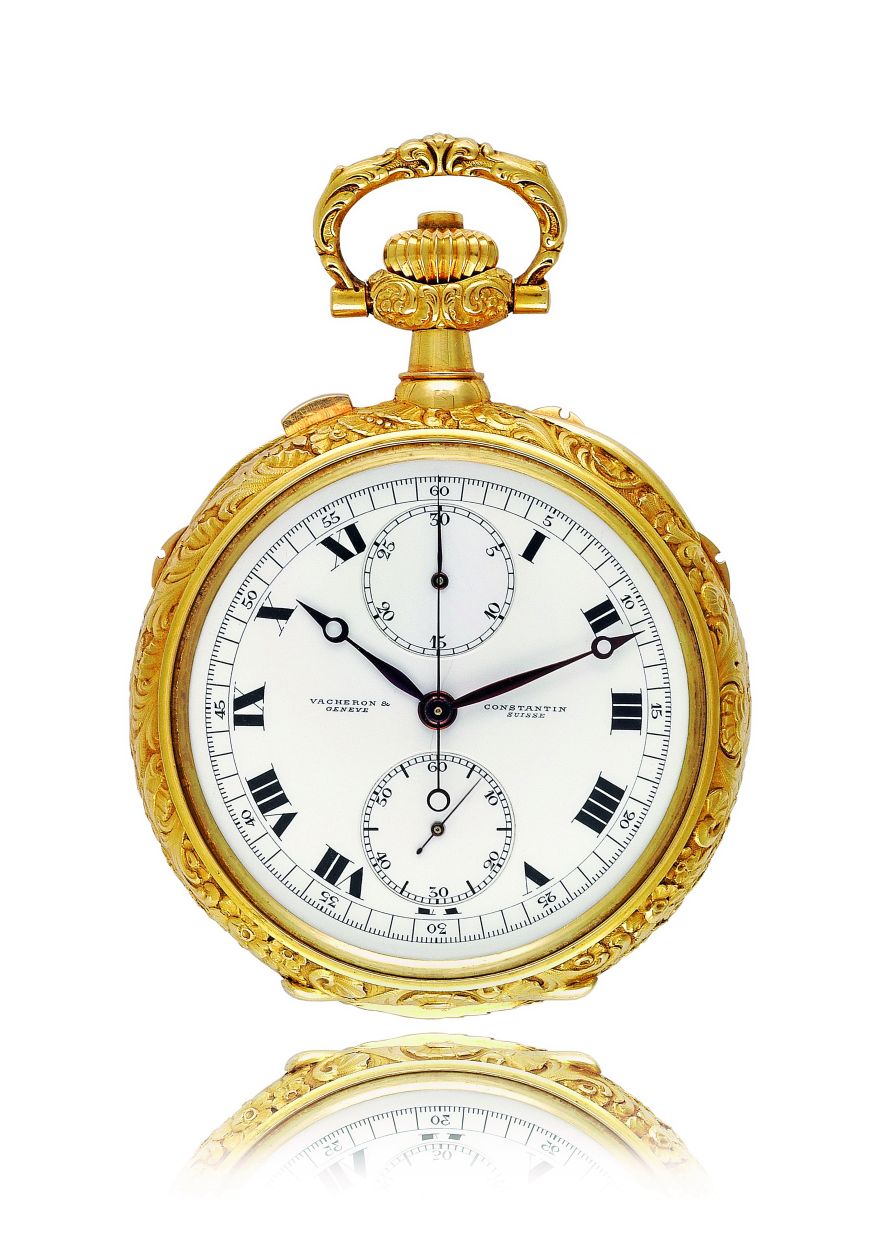
Encapsulating the creativity and skill of the Maison’s watchmakers, artisans and designers are timepieces such as the pocket watch with chronograph and chiming mechanism set in an elaborately chased 20k gold case, created in 1918 for American industrialist James Ward Packard; and the Les Cabinotiers Armillary Tourbillon, a single-piece edition timepiece created in 2023 for the dashboard of the bespoke Rolls-Royce Amethyst Droptail.
Technical accomplishments and horological innovation
Vacheron Constantin’s boldly creative spirit has given birth to countless innovations, particularly in the field of high complications and timekeeping precision.
From the first calendar timepiece recorded in the Manufacture’s archives in 1790 to the 2024 Les Cabinotiers The Berkley Grand Complication watch equipped with 63 complications, many fields of technical expression have been explored.
Chiming watches, mechanisms for measuring short intervals of time, astronomical functions, special displays and tourbillon regulators – these avenues of research have led to major innovations in timekeeping mechanisms and in the refinement of production processes.
Horological firsts include the invention of a special watchmaking pantograph that enabled the standardisation and interchangeability of components for watches equipped with the same calibre in 1839; the development of a portable high-frequency precision device enabling the calculation of 1/20th of a second in 1934; and the creation of a very small rectangular movement named the tuyau (pipe) in 1914, the forerunner of the baguette movement, which was fitted to many jewellery watches.
In 1932, Vacheron Constantin collaborated with Louis Cottier in developing Reference 3372, the first watch to incorporate the “Cottier system” world time complication, which enables the simultaneous display of 24 time zones and was to become the standard on which almost all world time displays are based.
Many more world firsts have followed – among them the first retrograde date display (the “Don Pancho” in 1940), the first Hebraic perpetual calendar (Les Cabinotiers Reference 57260 in 2015) and the first Chinese perpetual calendar (Les Cabinotiers The Berkley Grand Complication in 2024).
In 2019, the Manufacture developed a dual-frequency mechanism with two oscillators, presented in Calibre 3160 QP.
By alternating between the 5 Hz oscillator (active mode) and the 1.2 Hz oscillator (standby mode), the power reserve can be extended to 65 days.
In Vacheron Constantin’s quest for excellence, accuracy of timekeeping is a prerequisite – this pursuit of timekeeping precision is symbolised by the Maltese cross that has been the Maison’s emblem since 1880.
Chronometry competitions in the 19th century gave the Manufacture the opportunity to shine in this field, notably through a pocket chronometer with a yellow gold hunter-type case and a white enamel dial, regulated by a highly accurate detent escapement 1869 and a pocket watch submitted to the Geneva Observatory in 1947 which registered an average daily deviation in rate of just two hundredths of a second.
In 1907, the Manufacture unveiled the Chronometre Royal, conceived as a robust and highly technical timepiece that offered an outstanding level of precision and reliability.
Mastering horological complications and combining them in highly complex calibres became another endeavour for the Maison.
During the first half of the 20th century, in keeping with long-established tradition, many high-complication timepieces were commissioned from the Maison by distinguished collectors or created as gifts for sovereign rulers.
Aesthetic mastery and bold creativity
Vacheron Constantin’s continuing quest for complex mechanical engineering is inseparable from its pursuit of beauty and cultivation of aesthetic craftsmanship.
Every movement component is hand-finished – even those that are invisible once the watch is assembled.
Many calibres carry the prestigious Poincon de Geneve (Geneva Seal), a hallmark awarded only to timepieces made in Geneva and attesting to the highest level of hand-decoration and finishing.
Decorative techniques may include perlage, Cotes de Geneve, bevelling, chamfering, mirror-polishing and engraving.
An art unto itself, open-working involves the carving away of metal from movement components to leave only a fine structural skeleton that allows the eye to travel deep into the calibre – its most accomplished and technically demanding expression being the skeletonisation of ultra-thin movements.
In the Maison’s own metiers d’art workshops, specialised artisans have mastered the crafts of engraving, gem-setting, enamelling and guillochage, among many others – elevating timepieces into miniature works of art.
An early example of this approach is a 1812 quarter-repeater watch with an enamel dial and guilloche caseback, which epitomised the Maison’s technical mastery and artistic sensibility.
In 1943 the Maison introduced Reference 4261, a minute repeater with a record-setting ultra-thin movement just 3.2mm thick — the technical prowess inherent in this movement is equalled by the pure elegance and sublime craftsmanship of its case and dial.
At 36mm in diameter and just 5.25mm thick, the case – with double-stepped bezel and convex three-tiered sides – is complemented by teardrop-shaped lugs.
On the sector dial, pierced dots mark the minutes and Roman numerals and faceted arrowhead hour markers are applied onto a guilloche pattern of concentric circles.
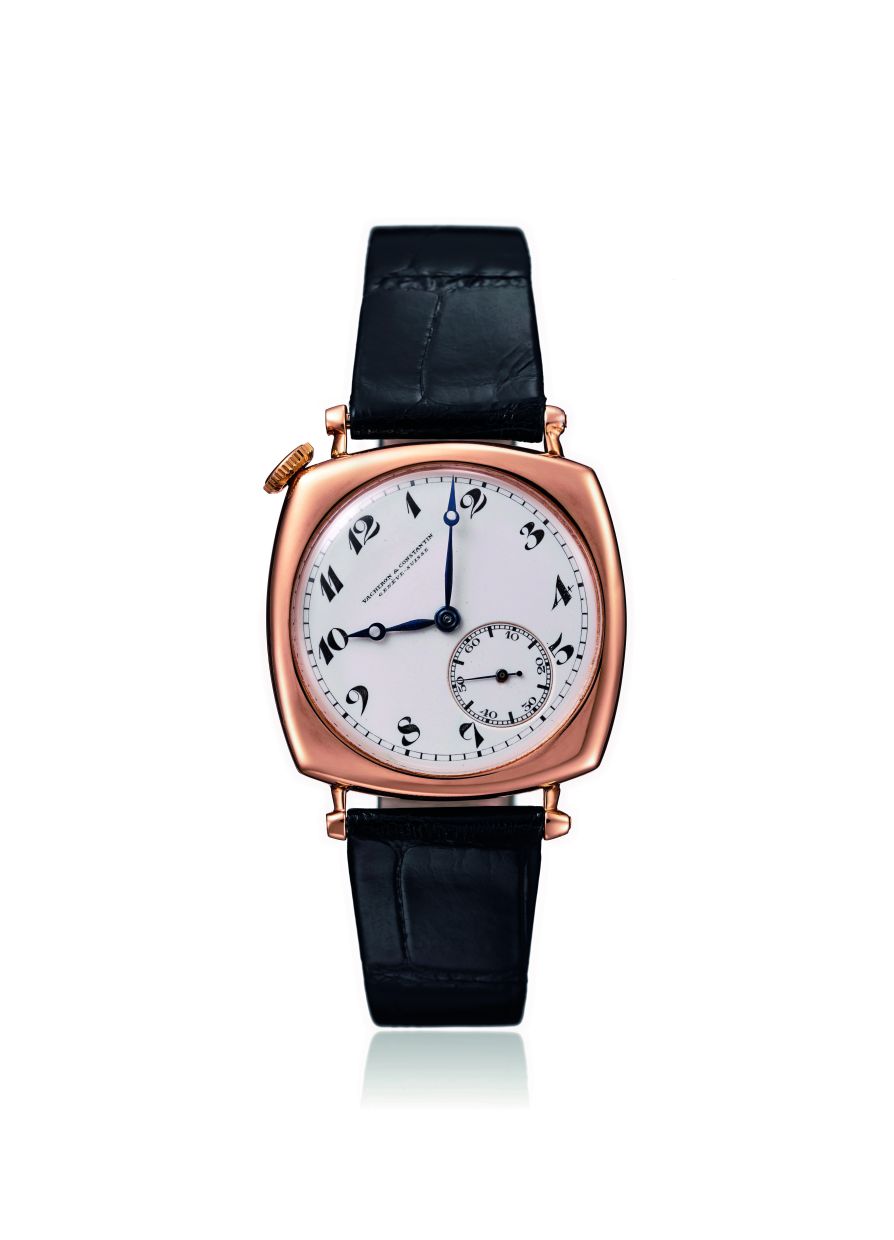
In the 1920s, as men began to adopt wristwatches, Vacheron Constantin introduced the American 1921, an avant-garde wristwatch which captured the spirit of the Roaring Twenties.
In June 1972, the French government awarded the rare Diplome du Prestige de la France to Vacheron Constantin – the first watch company to receive the honour.
To celebrate, the Maison designed a new wristwatch with an oval movement set in an asymmetrical quadrilateral case – an early example of the bold aesthetics that characterised the emancipatory style of the 1970s.
Since the creation of the Maison’s first ladies’ watch in 1889, Vacheron Constantin’s quest for innovative watchmaking has led it to pay particular attention to High Jewellery timepieces.
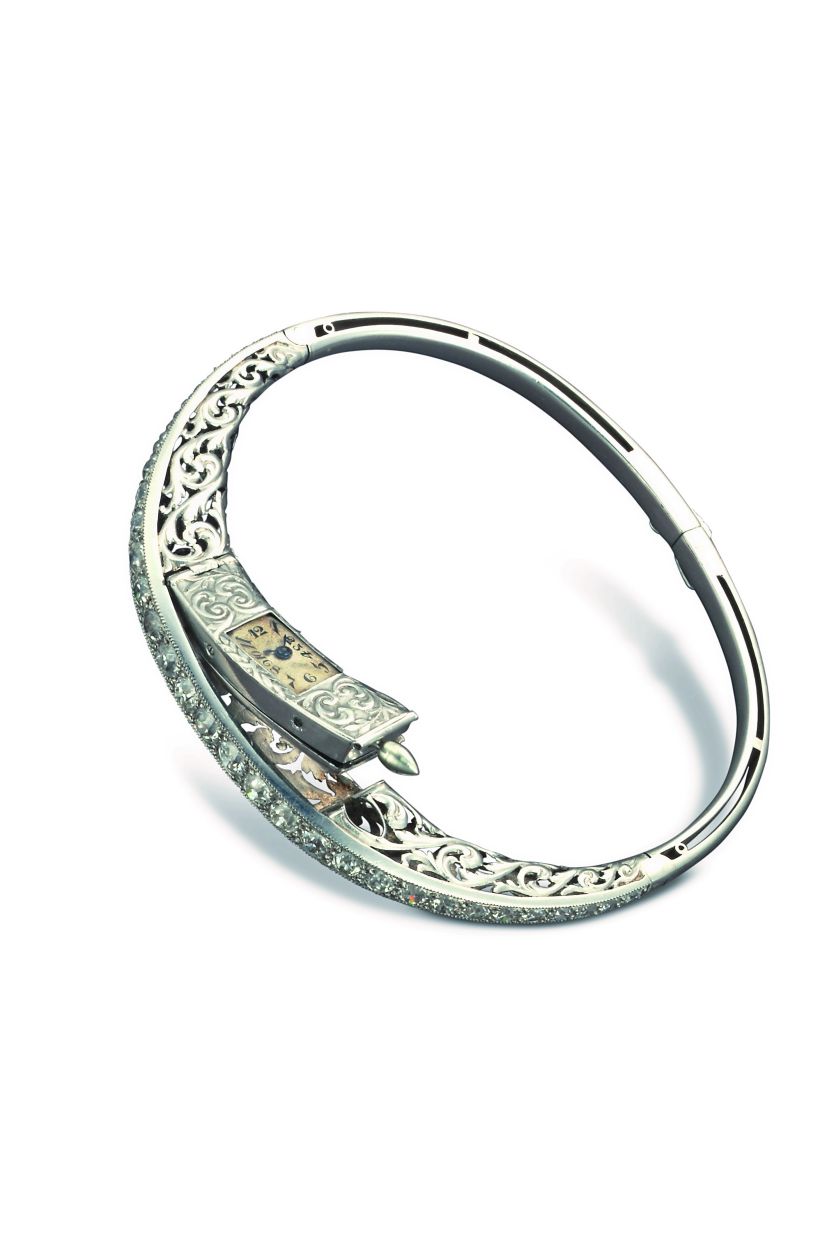
A curved version of the baguette movement was made in 1916 for a ladies’ wristwatch – crafted in platinum and diamonds with an open-worked, chased and engraved case, it enabled a sideways view of the time.
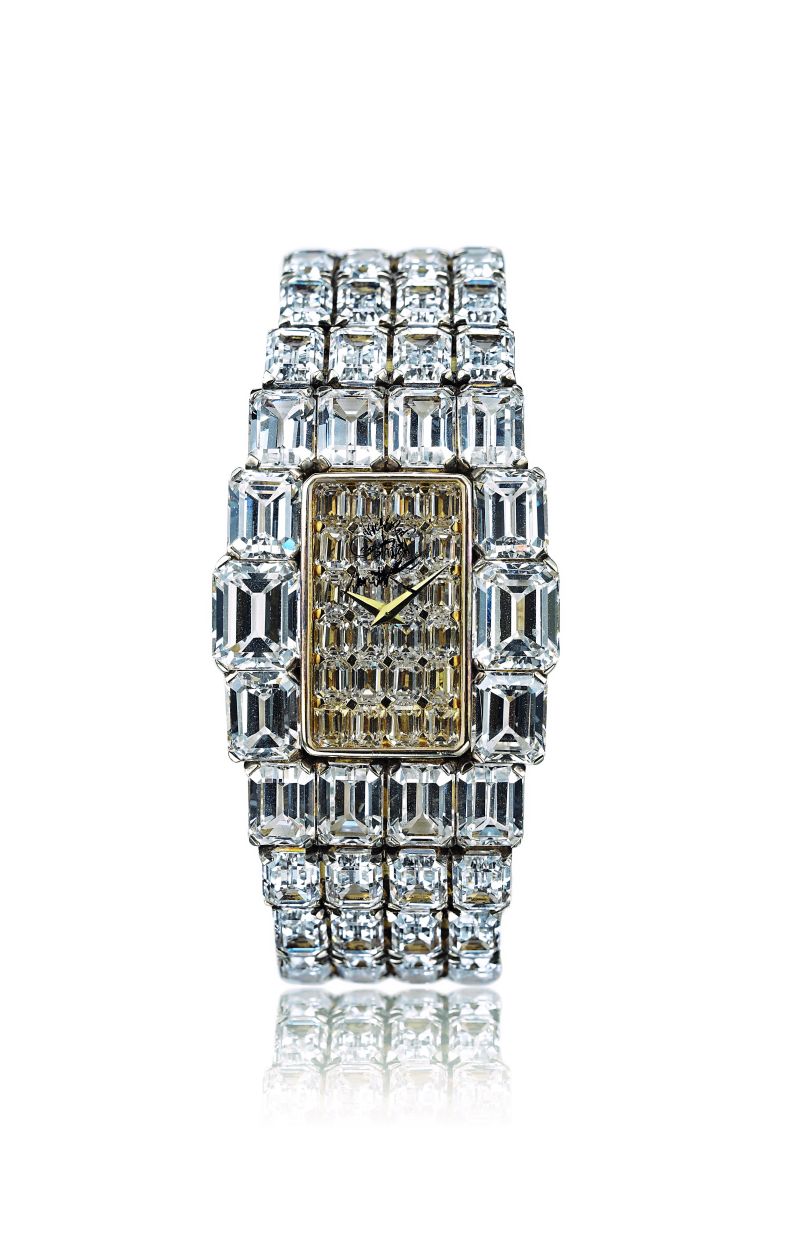
The presentation of the Kallista in 1979 represented the apotheosis of High Jewellery watchmaking: carved from a one-kilo gold ingot and set with 118 diamonds totalling 130 carats, it required 6,000 hours of work.
In 1994, Vacheron Constantin commemorated the 400th anniversary of the death of the Flemish Renaissance cartographer Gerhard Kremer with the Mercator, of which its dial features a multicoloured champleve enamel motif representing one of his hemisphere maps and the movement features bi-retrograde hours and minutes.
Celebrating milestones with exceptional timepieces
In 1955, to mark the bicentenary of its founding, Vacheron Constantin presented a series of the thinnest watches ever conceived until that time: the three models were equipped with Calibre 1003, a hand-wound movement as thin as a 20 Swiss centime coin at just 1.64mm.
The Maison also presented the Reference 6068 in a limited edition. Its dial is distinguished by the Maltese Cross emblem – and the four lugs on the 18k yellow gold case form the same cross when brought together.
In 1995, to mark its 240th anniversary, Vacheron Constantin showcased its philosophy of balancing technical prowess and aesthetic sophistication by unveiling a tonneau-shaped watch in gold or platinum. Set in a case with moveable lugs, Calibre 1127 offers a power reserve indicator along with date and small seconds displays.
In 2005, the Tour de l’Île watch marked the Maison’s 250th anniversary. The movement, Calibre 2750, united 16 complications to be read off a double-sided display, making it the most complicated ever series-produced wristwatch.
That same year, the Manufacture presented the Saint Gervais – with a record-breaking 250-hour power reserve delivered by four barrels – the Jubilee 1755, an ode to sophisticated simplicity; the Metiers d’Art Four Seasons; and L’Esprit des Cabinotiers – a one-of-a-kind secret clock concealed within an eight-petaled pink gold orb.
To celebrate 270 years and in response to the expectations of its clients, Vacheron Constantin presents the Historiques 222 in stainless steel, a model that harks back to a creation first unveiled in 1977 to mark its 222nd anniversary.
Designed by Jorg Hysek, it was an immediate departure from the sports watch conventions of the time – professional models for pilots, divers and explorers.
The 222 was a quintessentially 1970s design and introduced a new stylistic signature to the Maison.
Fitted with an integrated bracelet, its case featured a functional construction with a flat table, topped by a prominent fluted bezel and stamped with a Maltese cross at 5 o’clock.
The monobloc case, which required the movement to be fitted from the top, was water-resistant to 120 metres thanks to its screw-down bezel.
Displaying the hours, minutes and date, the 222 also boasted exemplary slenderness at just 7mm, thanks to the ultra-thin Calibre 1120; measuring a mere 3.05mm, it was the world’s thinnest full-rotor automatic movement.
In 2025, Vacheron Constantin presents a new edition of the first 222 model –nicknamed “Jumbo” by collectors and featuring a blue dial framed by a 37mm stainless steel case.
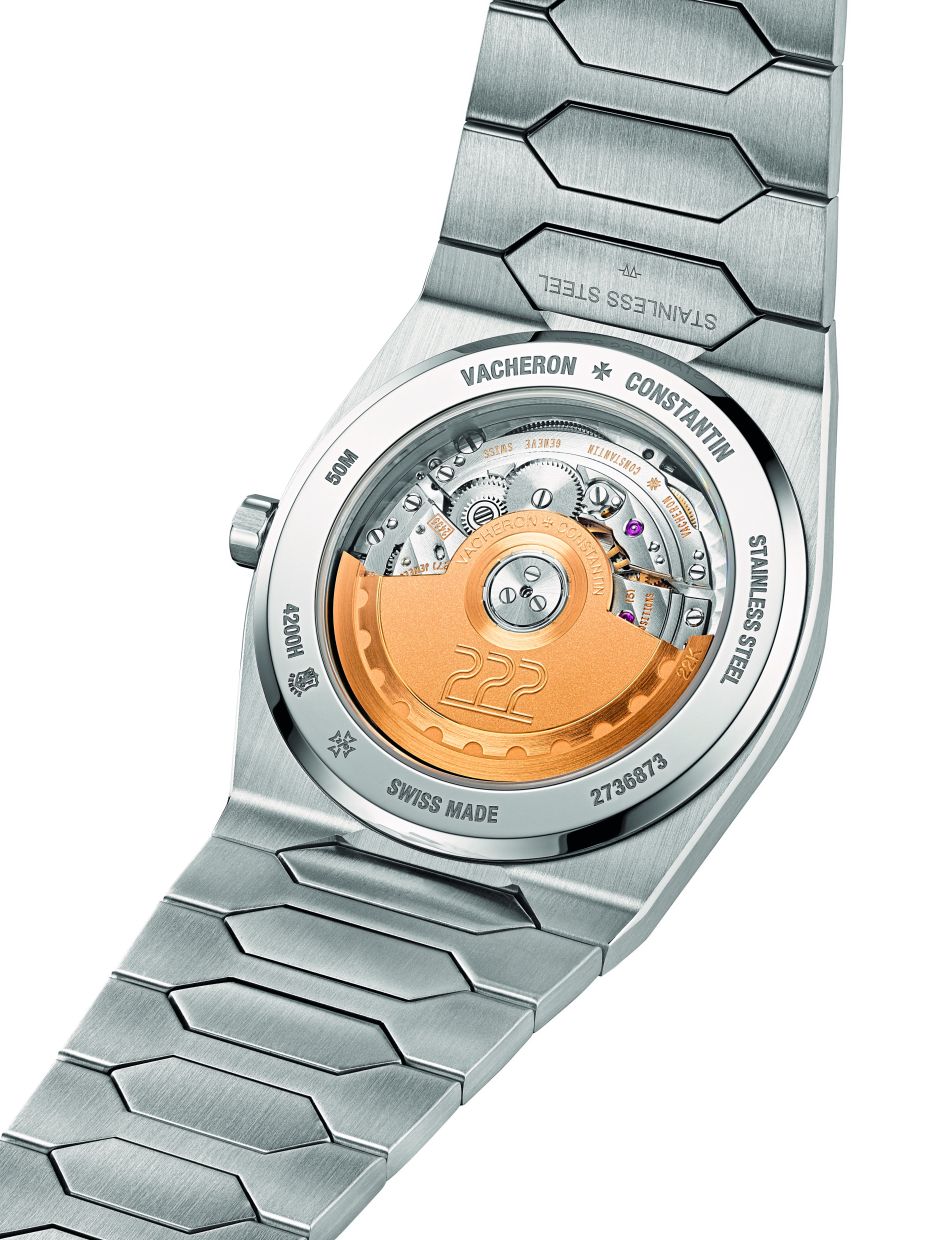
The joints of the bracelet – which is now fastened with a triple-blade rather than a twin-blade clasp – have been redesigned to hide the visible pins and improve ergonomics while the caseback has been fitted with a transparent sapphire crystal to reveal the in-house Calibre 2455/2.
Slightly smaller in diameter than its predecessor, it is still only 3.6mm thick and the oscillating weight of this high-precision movement is engraved with the original 222 logo and edged with a fluted motif reminiscent of the bezel.
Thanks to its frequency of 4 Hz (28,800 vibrations per hour) – compared with 2.75 Hz on the original model – the movement offers enhanced precision and is endowed with a 40-hour power reserve.
On the dial, the date window has been moved towards the centre so that it no longer encroaches on the minutes track.
The vintage font of the “AUTOMATIC” inscription and the Super-LumiNova coating of the hands and hour-markers (off-white by day and lime green by night) are a nod to the hue of the tritium used in historical timepieces.
Like all of the models in Vacheron Constantin’s Historiques collection, the 222 marked an important point in the Maison’s history.
While retaining the distinctive design of the original, the 2025 re-edition in stainless steel is absolutely contemporary, embodying the Maison’s core values with sophisticated refinement, a sense of casual ease and uncompromising commitment to the quest for excellence.
Technical accomplishments and horological innovation


In 2025, Vacheron Constantin presents a new edition of the first 222 model – nicknamed ‘Jumbo’ by collectors and featuring a blue dial framed by a 37mm stainless steel case. — Photos: Vacheron Constatin
The le tuyau, a forerunner of the baguette movement, was used in a curved version for an absolutely stunning wristwatch, commissioned by Sir Bhupinder Singh, Maharaja of Patiala.
Pocket watch with chronograph and chiming mechanism created in 1918 for American industrialist James Ward Packard.
The Kallista was carved from a one-kilo gold ingot and set with 118 diamonds totalling 130 carats.
The Mercator’s dial features a multicoloured champleve enamel motif representing one of his hemisphere maps.
Francois Constantin urged the founder’s grandson, his business partner Jacques Barthelemi Vacheron, to ‘do better if possible, and that is always possible’ – a maxim that remains the motto of the Maison to this day.
The Historiques 222’s caseback has been fitted with a transparent sapphire crystal to reveal the in-house Calibre 2455/2.
A model that harks back to a creation first unveiled in 1977, the Historiques 222 in stainless steel marks the Maison’s 270th year.
On the dial, the date window has been moved towards the centre so that it no longer encroaches on the minutes track.
Jean-Marc Vacheron’s signing of his watchmaking apprenticeship contract in 1755 is regarded as the founding act of the Maison.
As men began to adopt wristwatches, Vacheron Constantin introduced the American 1921, an avant-garde wristwatch which captured the spirit of the Roaring Twenties.