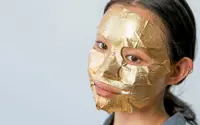
Not that long ago – give or take five years – skincare routines that involved 10 steps or more were all the rage.
The 10- and 12-step Korean skincare routines which first started gaining traction in 2011, involved a balm or oil cleanser, a foaming cleanser, an exfoliant, a toner, an essence, an ampoule or serum, a sheet mask, an eye cream, a moisturiser, and then either a thicker night cream or sleeping mask or an SPF.
Other options to include are another essence, serum, or elixir, with the general idea being that after cleansing, you’d start with the lightest formula and end with the thickest.
Over the years, however, skincare routines that involve 10 steps or more have slowly begun to decline in popularity, especially after the Covid-19 pandemic began.
During lockdowns with little need for makeup, a lot more time went into thinking about skincare and trying out different products and really understanding our skin’s needs.

Read more: The 'clean beauty' industry is booming, but is it inclusive enough?
After all, products aren’t cheap, and the pandemic has forced us to rethink our priorities on spending, how we want to spend our time, and increasingly, how to go about reducing waste. (According to Zero Waste Week, beauty packaging amounts to 120 billion units every year, which includes plastic, paper, glass, and metals).
Consumer values have changed, and a more scaled back approach to skincare is gaining momentum – skinimalism.Pared-down approach
While many decluttered their homes during long periods of lockdown, others began decluttering their bathroom cabinets.
A component to skinimalism is using less products, and adopting more flexible ones, for example, using a hybrid toner and moisturiser or opting for a moisturiser that works for both day and night, instead of having two different kinds.
BB creams are a skinimalism solution too, as this means you don’t need a separate foundation and moisturiser, as this is like a two in one.
Another stripped-back approach is embracing moisturisers that work alone, without the need to use a serum, toner, or essence – meaning one product works well enough so that you do not have to put in as much effort (multiple step skincare is hard work and time consuming!).
Taking this a step further, some brands offer a single product that does it all, such as a product that is a proprietary cocktail of more than 40 different ingredients and aims at encouraging regeneration and healing.
Embracing your flaws
Russh.com calls skin minimalism a trend that is essentially all about loving the skin you’re in and letting that be the focus (rather than hiding behind layers of makeup).
It’s a minimal approach, by letting your skin shine through, and not hiding your perceived “flaws” such as natural freckles.
Instead, it’s about allowing your natural features and complexion be your hero look, noted the site.
Part of the idea of skin minimalism focuses on using products that really benefit your skin to negate the need to cover up, and this practice of reducing how many products you use will supposedly give your skin the ability to repair and rejuvenate on its own.
Another reason to adopt this approach to skincare is to reduce issues like skin irritation, redness and breakouts, that sometimes occur thanks to multi-step systems.
An article on Everyday Health notes that there are a few reasons why your skin might not jibe with certain skin-care products.

You may have an underlying skin condition (rosacea, for instance) or you may be allergic to an ingredient in the product, but apart from this, reactions can also be caused when certain ingredients mix, for example if you’re doubling up on products with an exfoliant effect, like salicylic acid, lactic acid, and retinols, noted the article.
These combinations can overstrip natural skin oils, leading to dryness, irritation, and redness.
By all means, exfoliation is still an important step, but it should be carried out with a gentle exfoliator, for example, and no more than three or four times a week.
And then there were four
Byrdie.com, a website dedicated to beauty whose content is written by award-winning writers and editors and which dominates Google organic searches across several market sectors, outlines four steps in a minimalist skincare routine.
The site notes that these are all the products you need to adopt skinimalism: An efficient, non-stripping cleanser, a targetted serum for your specific skin needs, moisturiser for day and night and sunscreen to apply (and reapply) every day.
When it comes to cleanser, opt for a routine that involves using a cleanser that removes makeup and residue, which also brightens to give your face that fresh feeling.
Take this a step further by embracing cleansers that can be used on your face and body and which are gentle enough for daily use on the face and body.
Look for a good serum that balances all the right ingredients to achieve results on its own where it moisturises, hydrates and protects skin.
Next, seek out a moisturiser that you can use both day and night, and while this can be challenging, these products do exist and you just have to find one that’s right for your skin.
Try a lightweight plumping moisturiser that can be used day and night.
Finally, never skip SPF, as sunscreen is the most important step in any routine, and the biggest reason to use it regularly is to reduce your risk of developing skin cancer.

It can also prevent premature skin ageing caused by the sun, including wrinkles, sagging and age spots.
No one wants to remove their makeup to reapply sunscreen, or rub it over your already-perfect makeup, so thankfully there are plenty of brands that offer mists that you can just spray over lightly throughout the day.
If four products is still too many for you, the jury is out there on what the bare minimum skincare routine is.
Read more: Your next fragrance could be made from upcycled elements
Self.com states that to maintain healthy skin, the three skincare products you need are “a gentle cleanser, a moisturiser, and a sunscreen” while other sources give various two-step combos: toner and SPF, cleanser and moisturiser, and cleanser and SPF.
Byrdie says toner and SPF are the two skincare products every dermatologist and esthetician will recommend you use, no matter your skin type; while beauty website Green Vines suggests combining a water-based serum with a facial oil.
Having said all this, while minimalist skincare is a huge trend right now, this doesn’t mean you should ditch all those other products you’ve invested in.
In addition, there will be days when you have a little extra time on your hands and you feel like indulging in self-care.
This is when you can add a few steps in, i.e. a mask, exfoliant, eye cream, spot treatments or oils.
In a nutshell, minimalist skincare saves money and is good for your skin as it reduces the risk of your skin being overloaded with products.
Already a subscriber? Log in
Get 20% OFF The Star Digital Access
Cancel anytime. Ad-free. Unlimited access with perks.