During the Covid-19 pandemic, fashion took a beating. Menswear especially, was greatly affected by the change in lifestyle.
Formal clothing, specifically suits, became redundant as men had no fancy events to go to. They did not even have to step into the office when strict lockdowns came into place.
Now, about half a year after restrictions started easing, the industry is hoping for the best.

It is the same here in Malaysia. More so, for the tailoring trade.
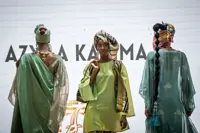
Wardrobe, a local fashion brand that focuses on bespoke creations for gents, recently showed during Mercedes-Benz Fashion Week Kuala Lumpur 2022. Seen on the runway were edgy designs.
This is far from the staid two- or three-piece suits you would come to expect from Wardrobe.
Read more: Savile Row fights to stay relevant as suits in menswear fall out of fashion
“To our customers and fans, we have always been known for what we do best – which is producing suits with fine cuts, fit and craftsmanship. This still remains our core. No doubts about this,” says the company’s CEO, Lim Fang Heng.
He explains that if viewed from the classical menswear perspective, the form of a suit remains, even if it takes a more relaxed appearance – like the lightweight linen suits typically worn in summer months for Western countries.
“This means a flattering cut to accentuate the silhouette, plus having all the elements such as design, fabrication, colour and craftsmanship in place,” Lim comments.
He does however emphasise the need for everyone to look at suits through a new “lens”.
“In my view, the form and shape are still very much similar. Very recognisable. But a much more pared down, way of wearing a suit.”
Back in business
While you may think that a suit has no place in Malaysia with its hot and humid weather, we cannot do away with this menswear essential.
The suit is a requirement for formal events, not to mention the tuxedo as a “uniform” for black-tie parties. Heads of large companies have had to dress the part too when chairing boardroom meetings.
“For a corporate man, the suit is still a must,” declares menswear designer Bon Zainal. “While it has evolved into a more easy-to-wear form, the traditional look is still needed for certain occasions.”
Bon, who is the founder of the Malaysian Bumiputra Designer Association, runs a business focusing on tailoring. He has dressed countless CEOs and business magnates.
He thinks that suits will never go extinct.
“Suits are still a key attire especially at work or formal events here in Malaysia,” he stresses.
Of course, the secret to surviving is to constantly adapt. Bespoke menswear tailors here in the country all had to change their direction – even if it means releasing casual chic collections.
“It is just the cuts and fit being different. Also a lighter construction, as well as an interesting use of colour,” Lim says.

“As with a handcrafted piece of work, what you are essentially buying is the ‘soul’ of it – the time the artisan has to spend in earning the craft and the tribulations faced during that journey,” he comments.
A lot of work certainly goes into making a suit. It can take about two and the half to three weeks for a customer to get a suit tailored from Wardrobe.
The price reflects this. It starts from RM2,500 for a basic wool blend suit and can go beyond RM9,200 for a design using luxury fabrics.
Decline and recovery
Bon laments that he had zero sales at that the height of the pandemic in 2020. Recovery came at an extremely slow pace. For example, in 2021, his business was only 20% of pre-pandemic levels.
Now, it has again been hit – but this time by inflation. Menswear tailors source their fabrics from countries like Italy, Spain or the UK.
“Bespoke has become more expensive due to the higher cost on raw material,” Bon reveals, adding that there is also the manpower crunch in finding suitable staff to run his business.
Wardrobe reported a decline of about 35% in sales between 2020 and 2021.
“There were many uncertainties during the pandemic as we had never encountered such a global catastrophe in modern times,” Lim notes.
In recent months – that is within quarter one and two of this year, his business has picked up.
He calls it “encouraging” and “positive”, and even goes so far to say that the sales figure is even greater than pre-pandemic levels.
“This is driven by the heightened momentum of the social economic activities of consumers at large,” Lim points out.
Still alive
As it’s the style industry, trends change constantly and quickly.

It is worth pointing out however, that such fashion commentators were the ones predicting the total extinction of suits during the pandemic.
“With business activities starting and events starting to take place again, not to mention borders are open to facilitate travels – all these contribute to the trend of wearing suits,” Lim says.
“Suits are here to stay, evident by the fact that this form of clothing has stood the test of time.”
Read more: From Zendaya to Gigi Hadid, women are embracing the stylish suit and tie look
Bon believes that wearing a suit is not just about the look.
“It offers a sense of confidence and authority to the wearer,” he enthuses. “To me, suits will always be around.”
After all, the purpose of a suit (in its different forms) has changed over time.
Back in the Victorian era of British history, the period between approximately 1820 and 1914, people wore two-piece suits for casual outdoor activities. They were never meant to be formal at all.
So, suits – and the menswear tailoring trade, shall survive today in Malaysia too.
“Moving forward, the reason why men put on suits may evolve, but the design will remain,” Bon concludes.
Already a subscriber? Log in
Get 20% OFF The Star Digital Access
Cancel anytime. Ad-free. Unlimited access with perks.