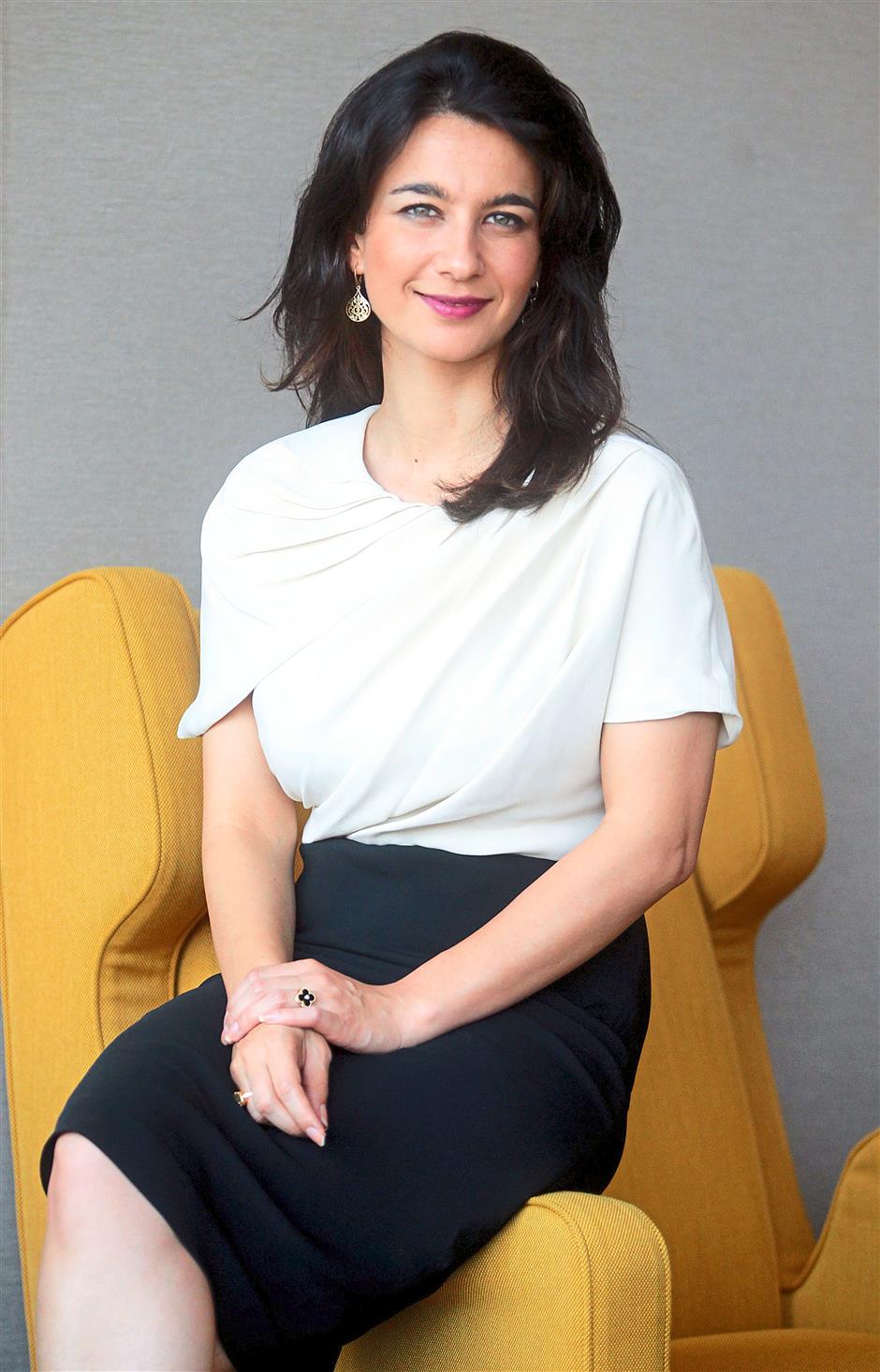
Journalism is this BBC World News presenter’s life’s calling.
I don't take “no” for an answer,” says BBC World News presenter and journalist Yalda Hakim, firmly. “When someone tells me something can’t be done, I refuse to believe it. I won’t accept it. There is always a way ... it might take a month, six months or a few years, but anything is possible if you stick to it and work at it. If I could gain access to Bagram (the maximum security prison just outside Kabul, Afghanistan), I believe anything is possible,” she says in an interview while on a brief visit to Kuala Lumpur last month.
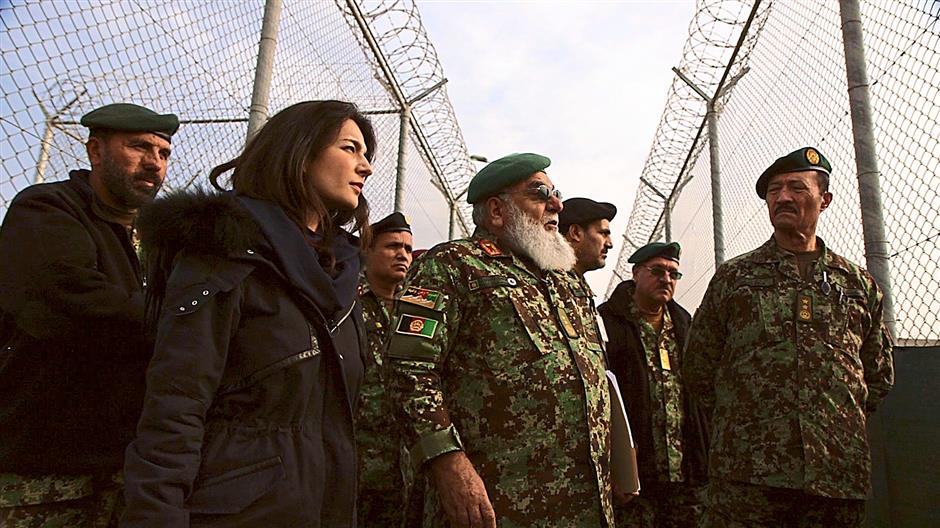
Early this year, Yalda and her news crew were given unprecedented access to Bagram, which was built and run by the Americans until late last year when it was handed over to Afghan control. Yalda not only toured the premises of the high-security prison, but spoke to inmates about their incarceration and their experiences there.
“We wanted to get access to the prison where many detainees are (believed to be) held without trial. We had to get in there and report on the situation, but it took two years of negotiations and working with the authorities to get permission. But we got in,” says the 30-year-old with unbridled pride.
Yalda’s petite frame and delicate features belie a strength which becomes apparent when she starts speaking about her vocation – journalism, she says, is not her job, but her life. Whether in the pursuit of stories or in reaching new heights in her career, she is relentless and unapologetic about it.
“My job is to give viewers an insight into the untold stories of people. To make viewers in Australia or the United States or Malaysia, for example, relate to a 19-year-old Bangladeshi woman who earns just US$1(RM3.30) a day working in a garment factory, to understand what her life is like and the conditions under which she has to work and live.
“It isn’t just about telling stories that make the headlines. I am interested in telling stories that haven’t been told or that have been forgotten,” she explains.
Yalda’s exposure to social and world issues began when she was a little girl growing up in Sydney, Australia.
“As a child, my siblings and I were encouraged to watch news and current affairs programmes on television and to be aware of the world around us. Politics and world affairs were hotly discussed topics in our household. By the time I was seven, I knew that I wanted to travel to different places and tell the world the stories of the people I’d meet. I became very focused and driven and I spent my teenage years writing stories for local newspapers,” she recalls.
Yalda’s own story of how her family came to Australia has all the makings of a fascinating news story.
She was just a baby when her architect father and midwife mother fled Afghanistan in 1983 to escape the war between the Soviet Union and the Mujahideen. With the help of people-smugglers, the Hakims and their three children (Yalda was just six months old while her siblings were seven and nine, respectively) travelled on foot and horseback for 12 days from Kabul to Pakistan where they sought refuge for a few years before they finally found their way to Australia in 1987.
(An estimated one million Afghan civilians died between 1979 and the Soviet withdrawal in 1989. Millions more were displaced inside the country or fled to Pakistan and Iran.)
Yalda was too young to remember the experience but her parents’ courage and foresight – risking everything to give their children a future – has an indelible influence on her.
“Growing up, I was always taught to be grateful for the life I had in Australia. Education was always a priority. My parents risked a lot to bring us here. You can imagine just what a dangerous journey it was leaving Afghanistan with three young children, not knowing what lay ahead and relying on the generosity of the people they encountered at the various places they stopped at.
“I do remember that every time Afghanistan was in the news we’d rush to the TV to watch what was happening. I think my family’s own journey has contributed to my desire to be a journalist,” she muses.
No shortcuts
Yalda’s journalism career began formally when she was hired as a cadet journalist at Australian public broadcast station SBS in 2008. Within three years, she was asked to co-host the station’s popular current affairs programme, Dateline which allowed her the opportunity to report both from the field as well as in the studio.
A year or so later, she joined BBC World News where she is currently a correspondent and also the host of Impact, which discusses political, business, sports and breaking news stories in the Asia Pacific.
Yalda’s quick ascent from a rookie journalist to co-host and subsequently the host of her own show is impressive to say the least, but she is quick to point out that it took years of hard work.
“I worked very hard to get to where I am now. It hasn’t been an easy ride. While I was in school I worked with different newspapers and TV stations and I spent years getting work experience. Most of my 20s was spent just working,” she says.
As a university student, Yalda spent much of her time getting work experience at local TV stations SBS and ABC. She’d spend her off days and her own money working on her own stories.
“I taught myself how to use a camera and I’d go out and film my own reports. It was a gamble because I self-funded these trips and did them on my off days without being sure whether the producers would like it,” she says.
Her hard work and perseverance paid off.
In 2007, a month before the end of her cadetship, Hakim pitched a story to the producers of Dateline: she wanted to go back to Kabul, Afghanistan and report on life there. The producers agreed and sent her to Kabul with a camera crew. Yalda’s story – her first Dateline report – was titled “Yalda’s Kabul” and aired in 2008.
Going back to Afghanistan proved to be more emotional than Yalda anticipated.
“I remember sitting on the plane and hearing the pilot making the announcement that we were entering Afghani air space. I looked out the window and all I saw was barren, mountainous terrain. At that moment, I was overwhelmed with emotion. I’d spent my entire life believing that I had a connection with this place, but when I got there, it was different from the romanticised image that I had in my mind. I’d heard the stories from my parents of their middle class life there many years ago but what I saw was a very war-weary country and people who were just so tired of war. I felt so removed and distanced from it all.
“It was very confronting and my response was to hide behind the camera and filming everything while being removed from it all,” she relates. Yalda’s news report focused on a group of young Afghani girls who were addicted to heroin to fight off hunger pangs.
“There I was, speaking to 12 and 13-year-old heroin addicts and thinking to myself that this could have been my fate too had my family stayed on in Afghanistan. We often wonder about the lives of people in unfortunate situations but for me, in that instance, it was really a probability,” she says.
Yalda has since returned to Afghanistan numerous times to work on various stories and has reconciled her feelings towards the country of her birth.
“I think my outlook has become more mature and realistic. I wouldn’t say that I feel it is my home or anything like that, but I certainly have very strong connections by virtue of it being the country of my birth,” she says pragmatically.
Yalda’s reporting has won her the United Nations Association of Australia Media Award for Best Television Documentary in 2013 and the United Nations Media Peace Prize for Best Australian Television News coverage in 2009. She was also a finalist for the Australian Young Journalist of the Year Award that same year.
What glass ceiling?
Although her work often takes her to countries like Afghanistan and Pakistan where women’s rights are restricted, Yalda has never felt disadvantaged as a woman.
“I like to look at the positive side of things. I have had more doors open for me because I am a woman. In many of these countries, women are underestimated and are therefore not seen as threats. When I go to these places, they think ‘Oh what harm can I do?’ and they let me in. When we were in Yemen, we were waved through a checkpoint when they saw me in the car.
“I am not there to change their perception of women and if I can use it to as my strength, why not?” she says.
And while male reporters will find it hard getting stories from women in these countries, Yalda finds them opening up to her quite easily.
“In a lot of these places, women and girls are invisible and are not allowed to talk to men or appear in front of the camera. But as a woman, I get automatic access.
“Also, in whatever country I am in, I visit the (beauty) salons because that is where women take off their headscarves and talk about everything – family life, politics, what they are doing in their lives ... it’s a whole other world which I otherwise would not be privy to,” she says.
Yalda feels strongly that the pioneering women in journalism who came before her, such as her idol Christiane Amanpour, have paved the way for women to succeed in the field.
“It frustrates me when I read stories about whether or not women can ‘have it all’. I can’t believe we are still talking about whether women can break the glass ceiling or if we can have a family and a career in 2014. Maybe I’m being naive, but why can’t we be leaders in our field?
“It comes down to having the strength to be where we want to be and working hard at it,” she says firmly.
> Impact airs on BBC World News (Astro Ch 512) at 9pm on weekdays.
Already a subscriber? Log in
Get 20% OFF The Star Digital Access
Cancel anytime. Ad-free. Unlimited access with perks.