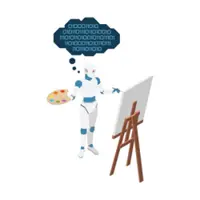
Earlier this week I had a conversation with a friend about artificial intelligence (AI) and its ability to generate images that resemble fine art, and why they typically feel flat.
We also talked about AI’s use as a companion or therapist by some people looking for a connection and how they often come to realise it falls short.
It’s an interesting topic to discuss, partly because it invites us to reflect on what it is that we actually connect with when we engage with something or someone.
In an interview, the former Archbishop of Canterbury (most senior bishop of the Church of England) Rowan Williams gave an interesting insight by saying it’s not just the work we admire, but rather the person and the story behind the work.
When the Italian artist Michelangelo painted the Sistine Chapel in the 16th century, it took him roughly four years of work, during which there were frequent tense frustrations with his boss, Pope Julius II. They would argue over money, design decisions, and the deadline for the work’s completion, to the point where Michelangelo would threaten to quit the project and leave Rome altogether.
If we look at Vincent van Gogh’s renowned The Starry Night, painted in the late 19th century, we’ll surely be taken in by the vibrant colours and the imaginative illustration of the rolling night sky.
But we might also remember this magnificent painting was created the year before van Gogh’s death, during his stay at the asylum of Saint-Paul-de-Mausole.
He would write heartbreaking letters to his brother, describing his inner pain and loneliness, and in his letters we get a sense of a man trying to find a sense of belonging and spiritual meaning through creating mesmerising artworks.
In these examples, my friend and I tried to imagine what it might have been like in the two men’s shoes – or what it might have been like for Mexican artist Frida Kahlo to express her suffering and resilience through rich, vivid and surreal imagery.
The use of AI isn’t without benefit. It can provide us with ballpark answers to questions about life and, if we ask sharp enough questions, assist us quickly in otherwise laborious tasks. But at the core of meaningful connection is a story that pulls us in. There’s a multi-layered depth to the surface of what our senses encounter, and that’s what makes it precious.
Two of my favourite songs are Suzanne by Leonard Cohen, and River by Joni Mitchell. I also love Listen Before I Go by Billie Eilish, which is melancholic and sad, but of course inspired by feelings we can all relate to. There are also plenty of upbeat songs I enjoy, and what links them all is that I can picture a time, a place, or person at some point in my past where they first meant something. And by creating something that’s touched us all in some way, there’s a feeling of interconnectedness, that we’re all on this ship together.
I’m sure everyone who’s reading this could tell me a story about a song, poem, painting, or event that led to something special in their lives, whether it brought happy or sad memories or something life-changing.
There’s a real magic to the experiences we go through. Even the bad stuff can change our way and lead somewhere we never expected, or teach some important lesson, or wake us up to the good we’d previously taken for granted.
All of it is part of a human story sculpted over time in ways that we usually don’t see immediately, like the moving and harrowing stories told to me by a war veteran which planted the seed for me to become a counsellor some years later.
If I asked AI at this point to suggest some options for a career change, it might come up with a few decent answers, but it could never have the profound effect on me that Mr Tom Rennie had when he shared stories from his life with me in 2014.
Good things are often born from trauma and tragedy, imperfection and uncertainty. It can take time for an idea or important turn to properly form, but in conversation, community, prayer, or a shared joke, new beginnings are breathed into the world.
And that’s what we can’t get from AI. I hopefully help my clients partly because I’m not perfect and I don’t have answers, but I can relate to their struggles because I’ve struggled as well and carry self-doubts in the same bucket as the willingness to keep going and see what comes of it.
Michelangelo was an irascible fellow who worked for a boss impatient with delay and who believed hovering over people was the key to getting things done. This is just as much a part of the Sistine Chapel’s story as anything else.
This is what AI can’t give us, the messy imperfections that produce anything worth having, which always begins with a “Once upon a time...” that brings people together.
Sandy Clarke has long held an interest in emotions, mental health, mindfulness and meditation. He believes the more we understand ourselves and each other, the better societies we can create. If you have any questions or comments, e-mail lifestyle@thestar.com.my. The views expressed here are entirely the writer’s own.