
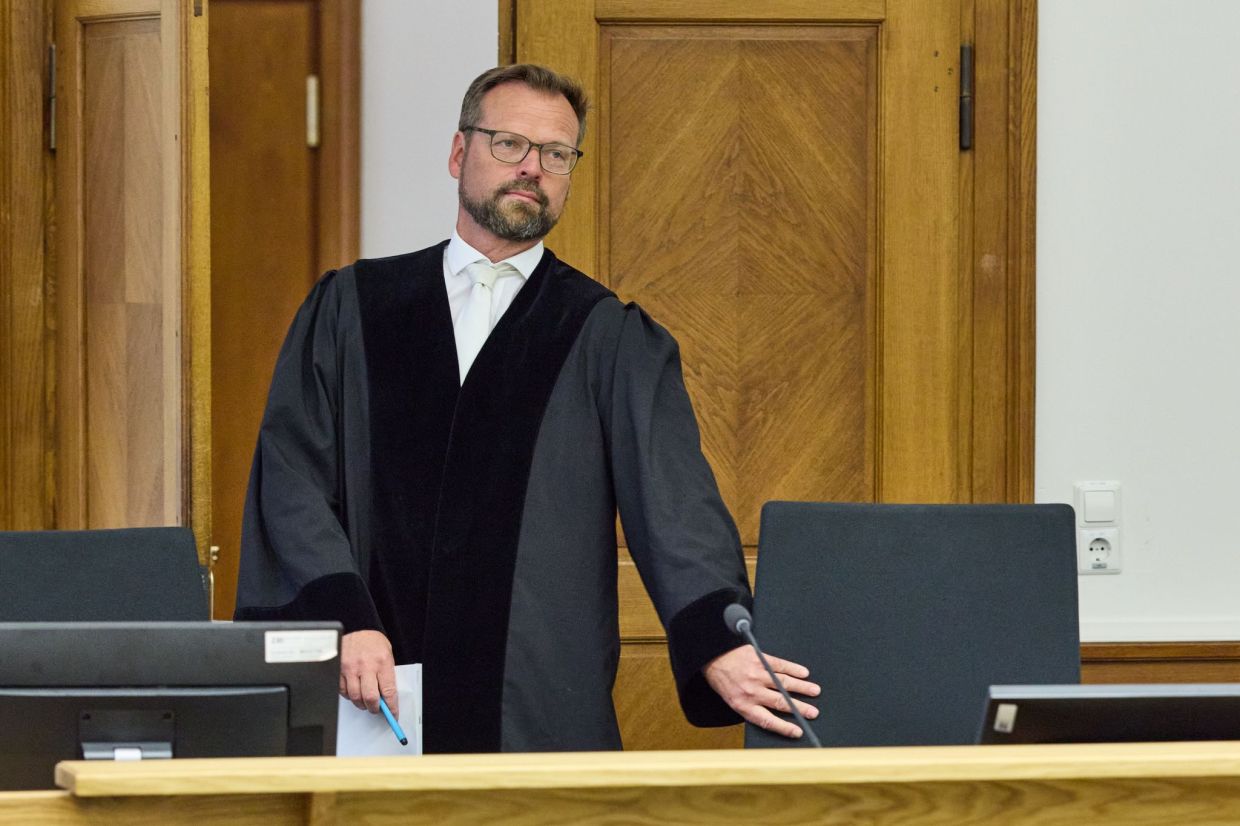
The six days he spends every year with a group of young inmates in the outdoors are an annual highlight for Judge Michael Herrmann.
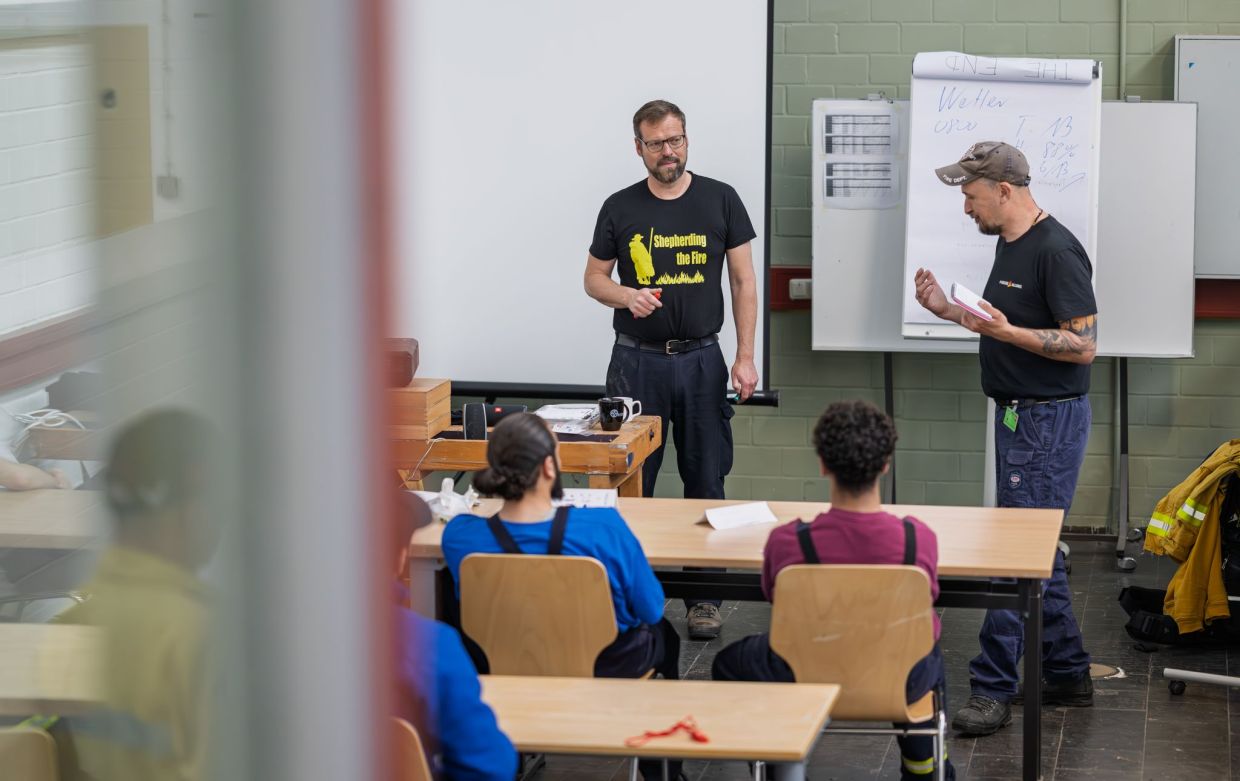
Each morning begins with a team exercise. Herrmann instructs the group of seven prisoners in their early 20s to drag away tree trunks, a task that requires them to work together.
Then the group shoulders their heavy backpacks and the actual training begins.
Under Herrmann's watch, the inmates set fire to bales of straw to practice putting out wildfires.
Mimicking conditions in difficult terrain, they don't combat the flames using water but do it all manually, using fire beaters.
The inmates, clad in firefighter uniforms, are visibly struggling with the heat, their faces covered in soot.
But at the end of the day, something in their faces has changed.
"It's great to see the sparkle in their eyes, knowing they've managed to put out the fire together," the 54-year-old judge tells dpa.
A surprising level of commitment
Many of the young men taking part in the programme have low self-esteem and lack a sense of achievement, according to Herrmann.
While he is not looking to make excuses for his charges' criminal behaviour, he has learnt that "if you look behind the façade of the tough blokes, you usually find a terribly wounded ego."
The hours spent together battling the flames allows him to reach out to the young felons in a much more meaningful way than would ever be possible during a criminal trial.
The idea for the project was born in 2011, when prisoners at the Hameln youth detention centre in central Germany, the largest of its kind nationwide, were asked to fill sandbags during a flood response operation, the facility's fire safety officer Heinz Brand recalls.
"We were surprised by the inmates' commitment; we'd never seen anything like it before," says the 58-year-old, who has long been involved with the local fire brigade and helps run the programme alongside local volunteers.
Before Judge Herrmann came along, they provided basic fire safety training to the inmates.
The practical module on tackling real-life fires was introduced last year, teaching skills that could prove more and more crucial as Europe's wildfire seasons have become increasingly devastating over the past years.
"I was a bit sceptical at first, but now it's my favourite part too," Brand says about teaching inmates how to fight wildfires.
The module teaches the prisoners "just how much can be achieved as a team," he says. "They realize, 'I'm actually useful here.'"
Before tackling real fires, the inmates complete a basic training course taught by firefighters and international experts.
Once they have finished their training, they can take additional classes to refresh their fire safety knowledge or learn new skills.
A long list of benefits
The main aim is to teach the young men perseverance and discipline, alongside manual skills, Brand says.
"Most of them are shy at first; there are some silly comments when they set off in their jackets, trousers and helmets," the fire safety officer says.
But when they return, the feedback is nothing but positive, he says proudly. Prison management describes the initiative as the best there has ever been.
The project also successfully teaches inmates the ability to take responsibility and work as a team, according to the fire safety officer.
"After two weeks, the lads are more reliable, more willing to work and better at communicating," says Brand.
Of the seven to 10 participants each year, around one joins the volunteer fire brigade after having served their time, he says.
Judge Herrmann is convinced that putting out fires is a great way to help the prisoners to cope better in real life, particularly in high-pressure situations.
It also allows them "to recognize their own abilities," he adds.
"I can see how much potential there is in the life stories of people whom society has already given up on." – By Britta Körber/dpa