



The air raid alert in Kyiv, Ukraine was live, warning of approaching Russian jet-propelled drones, but fortunately there were no explosions nearby during the final phase of Alyona Bohatyrenko's labour.
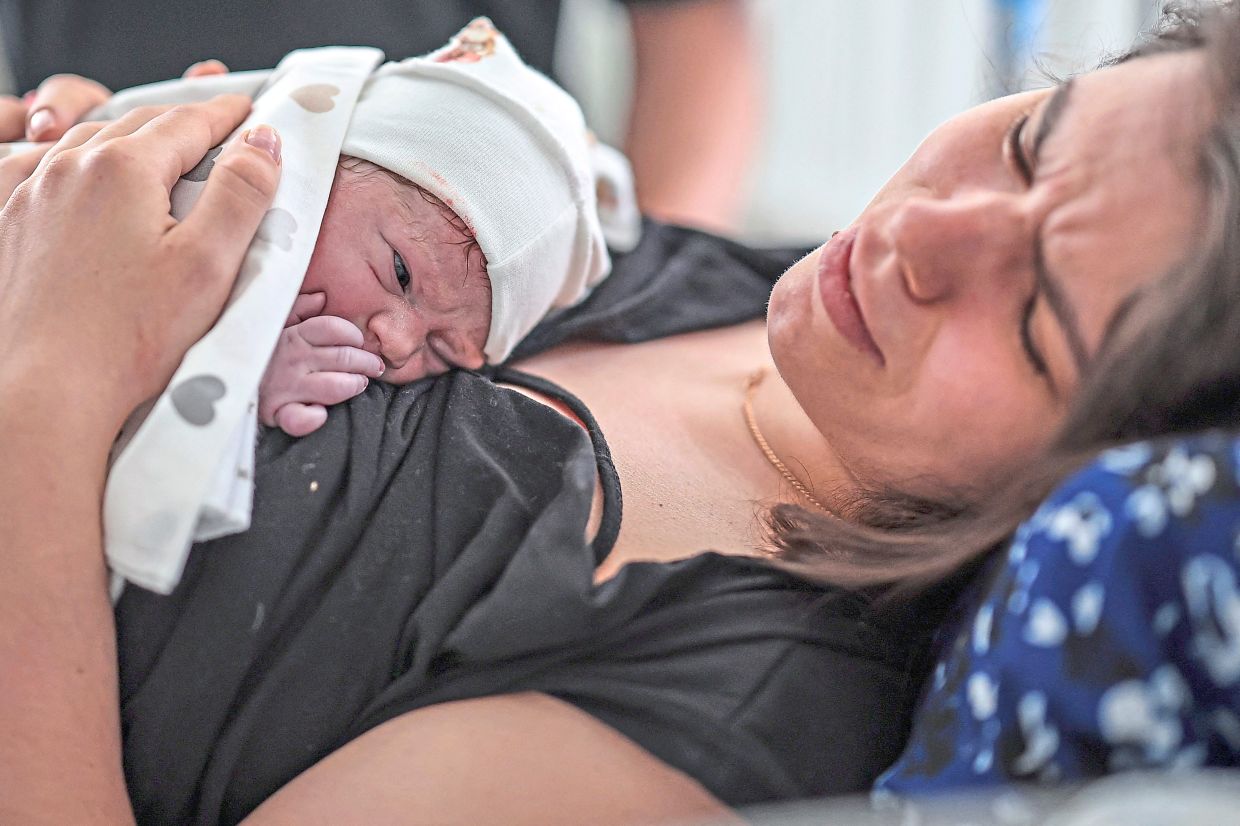
"I gave birth during an air alert!" beamed the 32-year-old, as she lay in her hospital bed cradling her baby daughter minutes after she was born. "None of this is normal, but ... you get used to it somehow."
Doctors at Kyiv City Maternity Hospital No.2 took a calculated risk by delivering Bohatyrenko's baby on the ward while the skies over the city were under threat.
The same was true for Yuliia Ishchuk, 26, who also gave birth there recently.
Her husband, 30-year-old serviceman Vitalii Ishchuk, recalled the moment the couple knew the baby was close.
"At 3am, the waters broke, but we hadn't packed anything, and nothing was ready," he said. Kyiv was under attack, as it has been almost non-stop since Aug 27, when Russia significantly escalated its bombing campaign.
"We thought the house was going to be blown to pieces. We called an ambulance; they came, and everything turned out fine."
In an escalating air war between Ukraine and Russia, in which each side is pounding the other's energy and logistical assets to force an advantage, Moscow has fired swarms of high-speed jet drones that are more destructive than older models.
In the last fortnight, air attacks in Kyiv and the surrounding region have been round-the-clock rather than mainly at night, disrupting everyday life for millions of residents.
Officials say conditions are likely to worsen as winter sets in and Russia targets Ukraine's energy system that provides electricity, heating and running water.
Russia says its attacks have a military purpose; Ukraine says they are designed to break civilian morale and persuade the government to give up territory.
For both young families at the hospital, growing threats are forcing them to consider moving into safer accommodation in Kyiv or away from the city altogether.
"We'll have to move somewhere to find better shelter – not a basement in a school or a store – that's no shelter at all," said Vitalii Ishchuk.
Bohatyrenko ruled out moving overseas, but added: "We're thinking about going somewhere this winter after all. We'll have to see how things go, because based on the forecasts, it'll be very difficult to stay in Kyiv this winter with a small child."
Beneath the hospital, several pregnant women walked into a shelter with their partners in response to a fresh air raid warning.
Yuliia Kukhar, 29, said that she had only noticed a handful of women with her on the maternity ward.
"No one wants to give birth," she said. Ukraine is facing a demographic crisis, with birth rates plunging because of economic factors before the full-scale invasion and, since February 2022, due to partners serving in the military and concerns over the country's security.
Kukhar was expecting her third child. After two daughters, she had thought it would be good to have a boy, but the war, and the risk men faced of being called up to serve, made her think twice.
"We wanted a boy. But there's a war going on, and I don't need a boy. Let's just have girls." – Reuters

