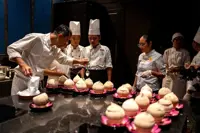
In Mumbai, India, officegoers gather around lunch trucks as vendors ladle bubbling paya, a slow-cooked goat trotters soup, into bowls, steam rising into the already humid air.
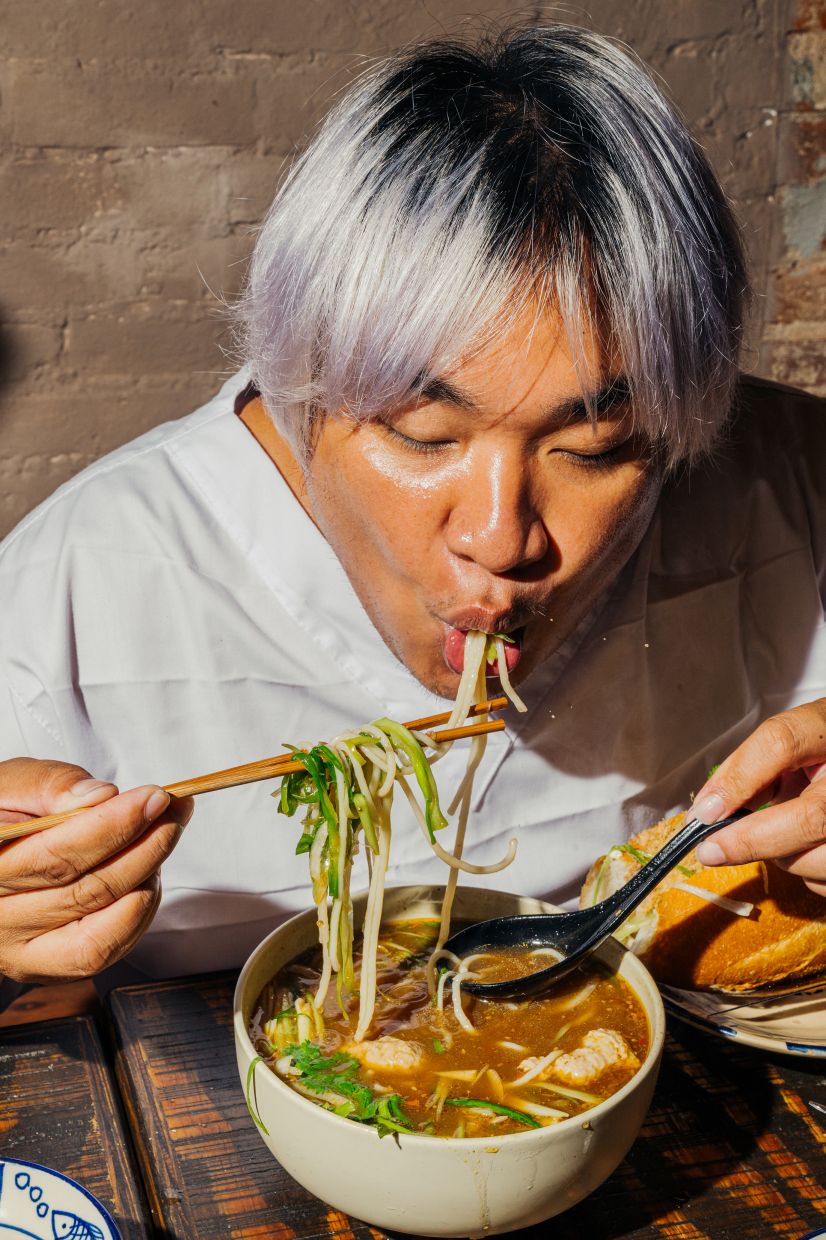
Hunched over stools in Hanoi, Vietnam, people slurp scalding pho at noon. The heat outside is brutal. Nobody seems to mind.
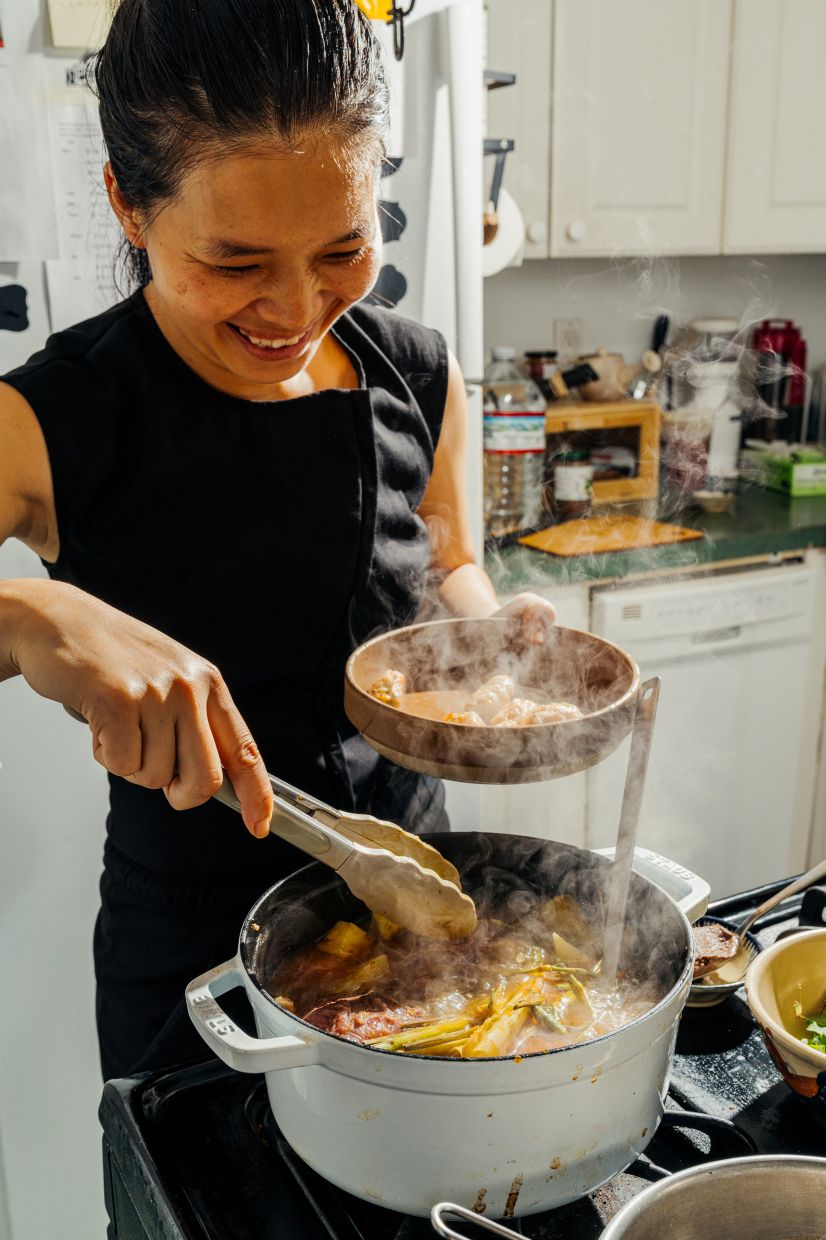
In New York, chef Nhu Ton is one of those people. She grew up in Central Vietnam, where there are only two seasons: the rainy one and the hot one. “We eat hot food all the time,” she said. “It’s always soup.”
She has never once taken soup off the menu at her restaurants, Bánh Vietnamese Shop House on the Upper West Side and Bánh Anh Em in the East Village. This summer at Bánh Anh Em, Ton has had to make three batches of bún riêu and two of bún bò huế every Friday, Saturday and Sunday to keep up with demand — which she described as unusual for the season.
She sells around 150 to 200 quarts (142-189 litres) of bún riêu daily on weekends. “My line cooks are always surprised and ask, ‘Why are people eating so much soup when it’s so hot?’” Ton said.
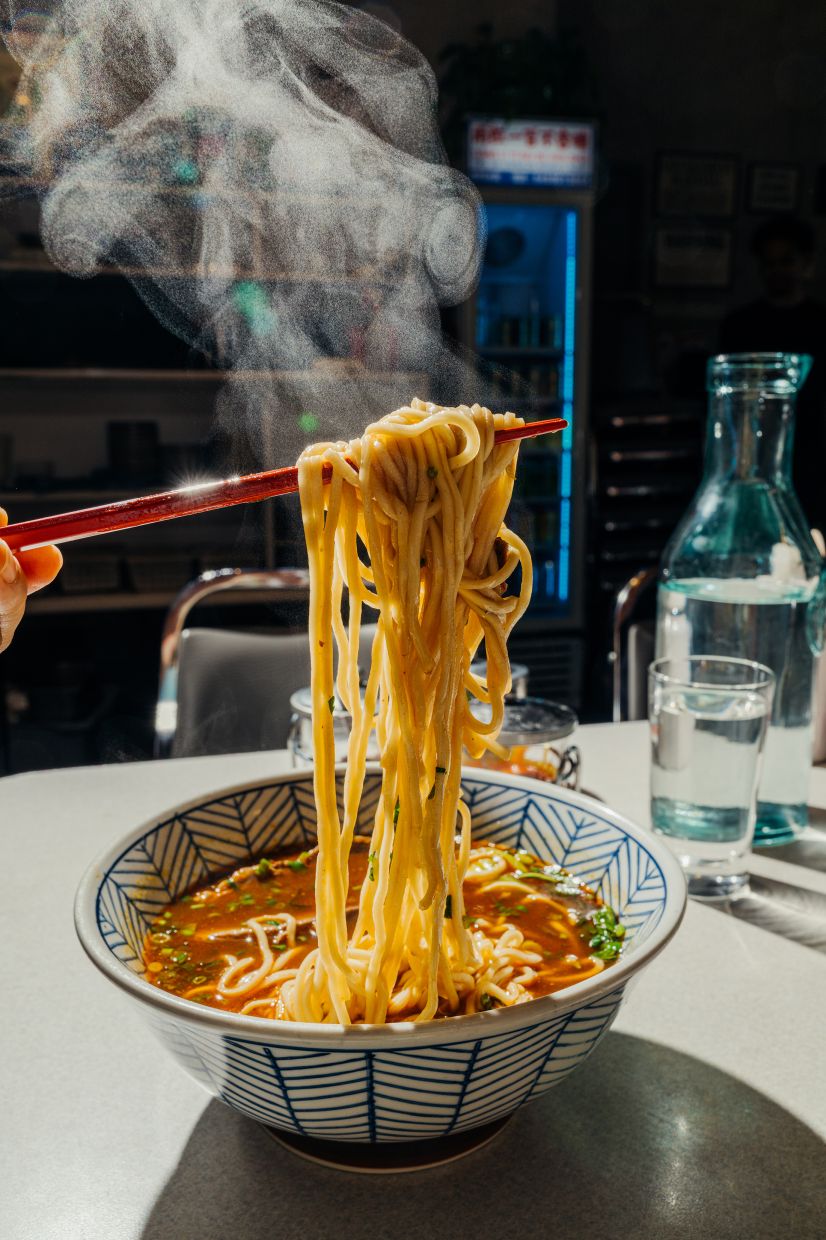
Eating a bowl of scalding soup in 38°C heat is, to the uninitiated, indistinguishable from punishment. But across South and Southeast Asia, the Caribbean, parts of Africa and the Middle East, the practice of eating hot food in summer is the tastiest way to cool down.
“In many places where this is practised, the traditions derive from forms of knowledge that understand bodily balance as key,” said Hanna Garth, an anthropologist who has conducted fieldwork in Cuba, where eating hot soup like caldo de pollo on a sweltering day is entirely unremarkable.
Ancient wellness frameworks like Ayurveda and traditional Chinese medicine all arrived at consistent conclusions about temperature. The logic, she said, is twofold: The warmth of the meal won’t overheat the body, and it sets off our natural cooling mechanisms — sweating and thirst — which, in turn, drive hydration.
Koreans even have a name for the practice. “Yi yeol chi yeol,” or “fight fire with fire,” is the principle behind samgyetang, a soup of whole chicken stuffed with ginseng, rice and red dates, served piping hot on sambok, the three hottest days of the lunar calendar: July 15, July 25 and Aug 15. Koreans seek out roiling bowls of the soup, believing it replenishes nutrients and balances the body’s internal and external temperatures.
There’s some science to back this up. Jessica Jones, a dietitian, pointed to a 2012 study at the University of Ottawa that found the body stores less heat when ingesting warm liquid.
“Scientists think this happens because there are heat-sensing mechanisms in your gut that help your brain decide how hard to work at cooling you down,” she said. “The exact wiring of that system is still being studied.” We sweat, and as it evaporates, it carries heat away from the body, helping to regulate temperature.
Spice adds another layer entirely. Capsaicin, the compound that makes chilli hot, activates a receptor in the body that also detects temperature increases.“Your body reacts to spicy food the same way it would react to something genuinely hot — by triggering a warm, sometimes burning sensation and kicking off your body’s usual cooling response, like sweating,” Jones said.
Daily Eastern wellness practices such as drinking hot water in the morning have found new audiences on social media. But Genevieve Yam, a senior editor at Serious Eats who grew up in Hong Kong, doesn’t need a trend to tell her this. There has always been an electric kettle on her family’s counter, ready at all hours.
“Hot water is comforting,” she said. “It feels like a warm hug.” Cold beverages, by contrast, “feel like a shock to the system.” Hot soup is how a traditional Cantonese meal begins, always.
For Brandon Tan, a 30-year-old a fashion director who is Ecuadorian and Burmese, hot soup was a fixture of his Queens childhood. “Before every dinner, we would sit down and have a bowl of soup, no matter the season, every single day.”
A soupy, stewy meal is a comfort to Isha Sharma, a culture writer in Brooklyn, at all times, no exceptions. Having grown up in an Indian household in Naperville, Illinois, she thought little of her own warm-weather soup consumption until her mid-20s. “I realised that many people stopped eating hot foods in the summer,” said Sharma, 34. “That was crazy to me.”
Thu Buser, a food stylist who grew up in Vietnam, recalls wandering the alleyways near her house as a child, cash in hand, and returning with piping hot bowls of hu tieu, a clear pork bone broth with noodles, shrimp and quail eggs, her parents’ favourite.
Her mother followed the five-elements philosophy, ensuring each meal balanced the five energetic temperatures of food: cold, cool, neutral, warm and hot. “A light broth,” Buser said, “is considered cooling, even when served hot, because it counters the spice of the chilli.” A hot, spicy soup would always be followed by something cooling, like a caramel flan, fresh fruit or a can of lychee.
It wasn’t until she left for an international college in Ho Chi Minh City that anyone ever questioned the habit. “In my mind, I was like, when do you expect us to enjoy a hot soup?” she said. “There isn’t exactly a winter here.”
In New York, she comes home from shoots to broths heated by her husband and has worked hot soup into nearly every iteration of her Ăn Cỗ supper club series — summer included.
Eric Sze, the chef and an owner of 886 in Manhattan’s East Village and Wenwen in Greenpoint, Brooklyn, grew up in Taiwan, where he’d sneak out to night markets with his uncle and eat oyster noodle soup in the humid darkness.
“There’s always been something pretty magical about sweating your butt off with your friends and family while drinking hot broth in 38°C weather,” he said.
At Wenwen, his beef noodle soup sales drop by half in summer. But when he tried to pull it from the menu during the pandemic, he received 10 complaints a day. “We’re never doing that again.” – ©2026 The New York Times Company