Muddy, sweat-soaked and occasionally bloody, the dedicated staff at a wildlife centre in Mississippi, United States are drill sergeants. And their soldiers? Baby raccoons.
Welcome to raccoon boot camp, where the goal is to help sick or injured animals learn to survive in the south Mississippi wilderness – a skill set they would have learned from their mothers, most of whom died or were separated from their kits by storms, traffic accidents or other traumatic events.
It's a challenge that has left Woodside Wildlife Rescue’s founder, Paula Woodside, with cuts from scared, defensive raccoons and their sharp claws, and when she isn’t able to save a kit, emotional scars too.
"When these babies come in, and they’re so desperate, it’s heartbreaking,” said Woodside, who most days is covered in sweat from caring for the animals in the Mississippi heat, and dirt from curious kits crawling up her legs and onto her shoulders.
"It’s really important for them to get a little bit of a head start.”
Woodside, a former US merchant mariner, opened the rescue in 2019 after she helped rehabilitate a baby raccoon found aboard her ship. The rescue in the coastal city of Pass Christian typically raises dozens of kits each year, 76 so far this year, alongside other Indigenous wildlife.
City animal control and citizens call Woodside, or the rescue’s director, Raquel Priest, when they find a raccoon in need of saving. Together, they attempt to reunite the kits with their mothers, if they can find them, or bring the kits to the rescue.
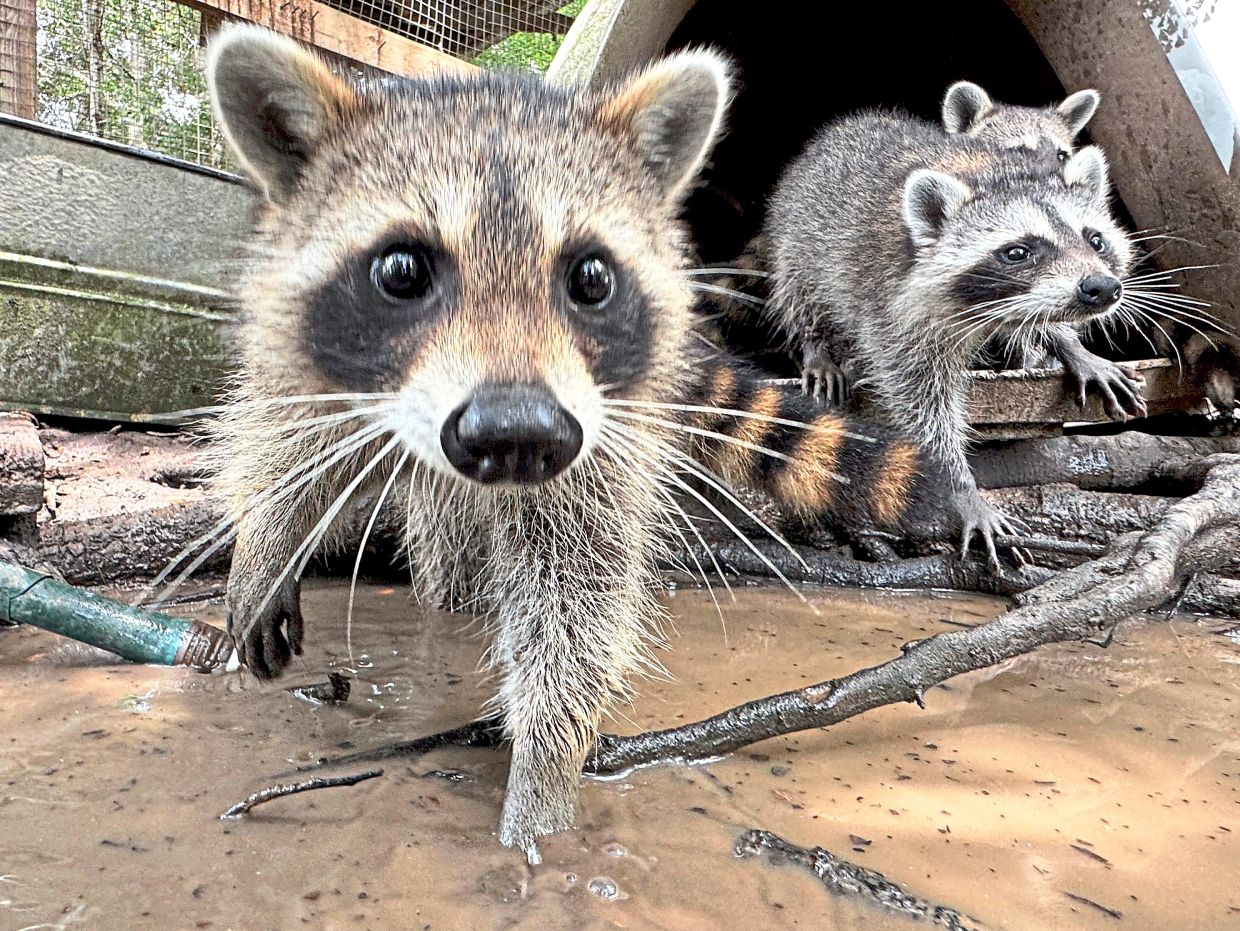
The youngest raccoons will spend a few weeks mostly indoors being bottle-fed by "rehabbers" until they’re vaccinated for diseases carried by cat colonies and dogs and are ready to move to outdoor pens.
Though the kits stay close to their adoptive human parents, they’re eventually allowed to roam free during the day on the rescue’s rural 8ha property, a sprawling mix of meadows and thick forest spotted with ponds and a nearby river.
Thanks to that setting, Woodside and Priest can take their troops on learning excursions, a luxury many wildlife rescues don't have, Woodside said.
Woodside and Priest teach by example. They hide worms in the dirt to show the kits how to dig for food, and break open pine cones or acorns to reveal the seeds inside.
The raccoons' eyes light up when they encounter a new tasty food, and they run to show their discovery to their rehabbers before hurrying back to fend off other kits who might try to steal their find.
Where a drill sergeant might yell, "Attention!", Priest and Woodside give a shrill trilling sound, mimicking the raccoon call for danger, that sends the kits running up trees to safety. A short whistle lets the troops know the coast is clear.
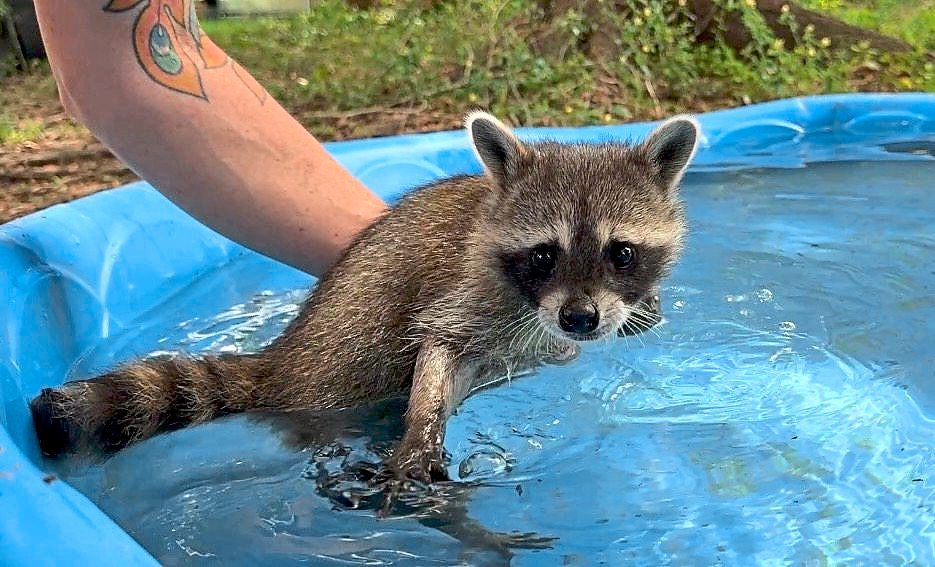
The kits also practice fishing in shallow pools, their uncoordinated paws tentatively patting the water until they're quick enough to snag a snack. A live quail hunt provides hunting experience.
While these are skills raccoons would likely learn on their own, Woodside’s staff hopes the training gives the kits a greater chance of survival.
On the property's pond, the raccoons learn to swim, a critical skill in hurricane-prone south Mississippi. The rehabbers take to kayaks and encourage the kits to swim back and forth.
They also take trips to the deep woods, where kits learn to run from tree to tree to avoid being seen by birds of prey and to have a quick escape route from snakes or other dangers on the ground.
For their final lesson, a volunteer – who isn't Woodside or Priest – traps the raccoons in cages, scaring them enough to encourage them to avoid traps and humans. The experience helps the young raccoons wean themselves from their human rescuers, a process Priest said naturally occurs as they mature.
When a group of kits is ready for release, about six months after their rescue, Woodside and Priest host a graduation ceremony. They play Edward Elgar’s Pomp And Circumstance Marches, and read a roll call of each graduating kit's name.
A reverend then blesses their journey as they're released onto a different section of the rescue's forest-covered property. For kits that die in care, the staff holds a second ceremony to bless and scatter their ashes.
"It's like watching your children leave home,” Priest said. "It's important to see them prosper and go and be the mischievous creatures they were meant to be.” – AP