



FOR more than three decades, Noboru Watanabe wore the uniform of the Japanese salaryman: trousers, a starched shirt, a jacket and a necktie.
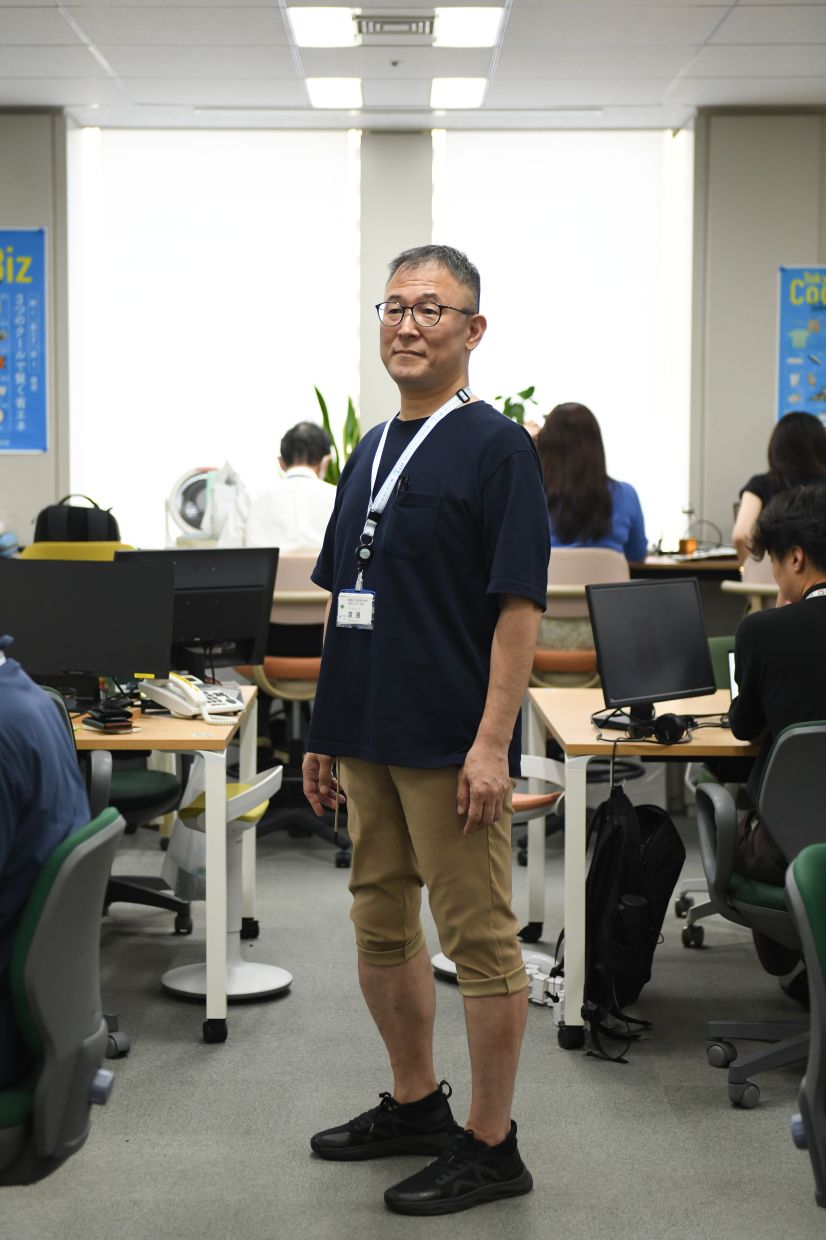
But recently, Watanabe, 53, an environmental official in Tokyo, ditched the outfit for the unimaginable: a T-shirt and a pair of khaki shorts. He was taking advantage of a new policy by the Tokyo government to allow its workers to wear shorts in the office, after successive summers of record-breaking heat.
“Everyone says I look younger,” Watanabe said near his desk on a recent afternoon. “I seem more approachable. I feel I am helping relax the whole office.”
The policy is the latest attempt by Japanese officials to persuade the country’s millions of office workers to dress down in the summer to make office life more comfortable, reduce the use of air-conditioning and save energy.
Under the “Cool Biz” initiative, the government encourages workers to forgo heavy suits in favor of polo shirts, linen tops and sneakers in hot weather.
But shorts, newly allowed this summer, are a bridge too far for some. The policy has prompted debate in Japan – and inspired delicate conversations at the office about etiquette and how to deal with the sight of a colleague’s hairy legs.
The Japanese news media has even coined a new term – sune-hara, or “leg-hair harassment” – to describe the sense of grievance some women feel when they are forced to observe their male co-workers’ legs.
Ruai Sajiki, 23, an employee at the Tokyo government offices, acknowledged that seeing bare legs in a professional setting could be jarring for women. But she offered her blessing when Watanabe, her supervisor, asked if she minded if he wore shorts in the office.
“I’ve seen my own father’s legs, so I’m personally comfortable with it,” she said. “It can’t be helped that there are many opinions, and some women who feel resistance.”
Opinion on fairness
Some commentators argue that the policy, while officially applying to both men and women, is unfair. While men are rarely judged for what they wear to work, women still face pressure to cover their legs with pantyhose, which are still common in Japan, or long skirts.
Atsuko Tamada, a professor of French literature at Chubu University in Japan and online commentator, said that women were expected to spend considerable time and money on hair removal, foot care and apparel.
“If men are now encouraged to wear shorts or sandals,” she said, “should the same standards of appearance apply to them?”
“Cool Biz” was introduced by the country’s Environment Ministry in 2005, and it has now spread to almost every workplace in Japan, with varying degrees of enthusiasm. The initiative coincided with commitments Japan made under the Kyoto Protocol, the 1997 international agreement to reduce greenhouse gases.
Yuriko Koike, who led the ministry at the time and was elected Tokyo’s governor in 2016, said it was important because of rapidly rising temperatures and energy disruptions caused by the war in Iran.
“We have gradually run out of layers to remove,” she said at a news conference in April, “reaching a point where we are down to wearing shorts.”
In Japan, government workplaces set thermostats to 28°C, in line with national standards, from May through September. Last summer was the hottest on record, with temperatures about 4 degrees above historical averages. The Japanese Meteorological Agency this year introduced a new term for sweltering days above 40°C: kokushobi, or “cruelly hot” days.
Business boon
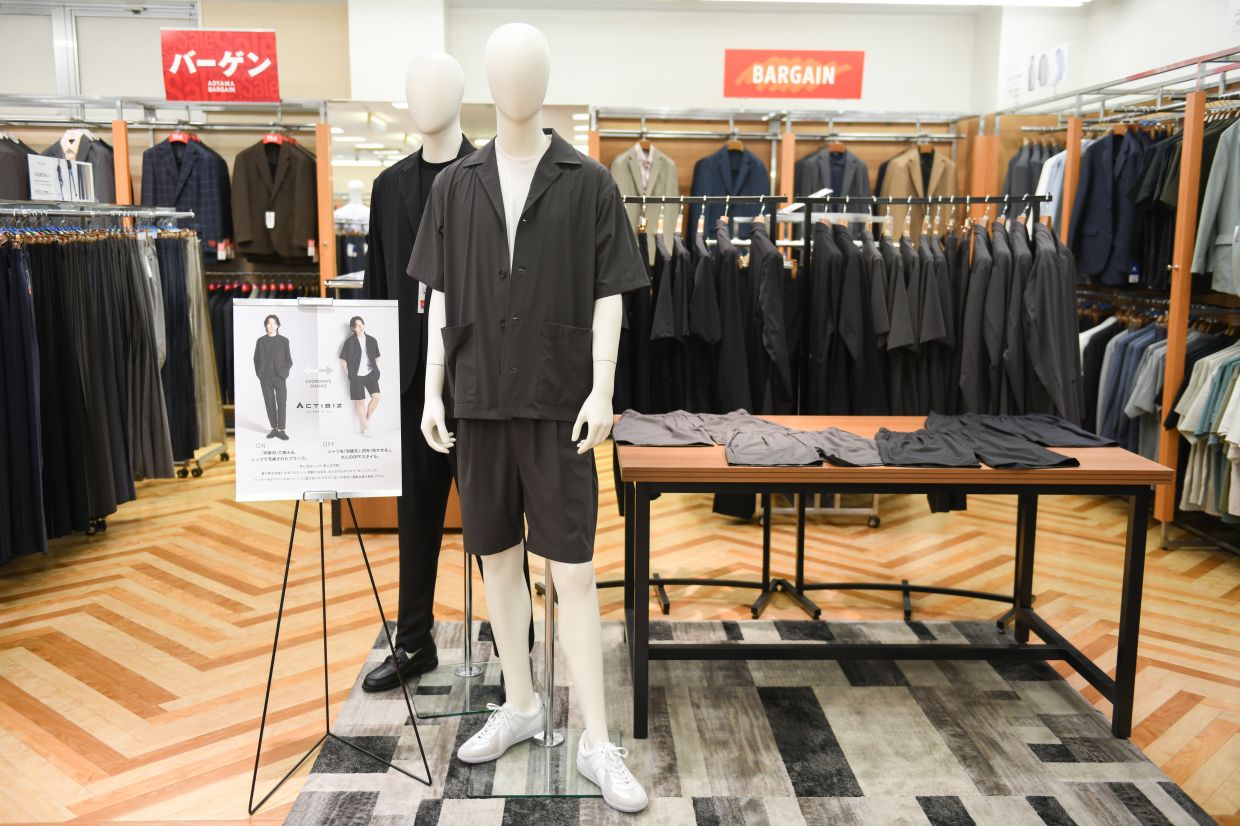
The embrace of shorts has provided a boon to retailers. Some stores have started marketing shorts specifically for the office, with lightweight fabrics, formal styles and neutral colors.
Yofuku no Aoyama, a prominent Japanese retailer that sells business attire, is marketing a “Cool Biz” line of clothing this summer, including nylon shorts.
Yui Hamano, a spokesperson, said the company had taken special care to ensure the shorts were office-appropriate, testing how they would look while sitting down.
“We paid close attention to the length to ensure it didn’t show too much skin,” she said.
Officials acknowledge that it will take time before shorts catch on in Japan’s offices. During a recent visit to an office at the Tokyo Metropolitan Government Building, on a sultry afternoon, only 11 of 70 male workers were wearing them.
Toshio Suzuki, 57, is among those taking a cautious approach.
Suzuki, a public relations employee, wore a pair of athletic stretch pants to work on a recent day. He had shaved the parts of his ankles that were exposed, saying he wanted to show that he cared about hygiene and grooming.
Suzuki said he did not yet dare to wear shorts because he did not want to offend his female colleagues. His wardrobe choices are guided by his wife, he said, who has advised him to maintain proper skin care and dress appropriately for his age.
“In Japan, people don’t have a positive, macho image of hairy legs,” he said. “I’m not so hairy. But I’m mindful. I don’t want to be seen as sloppy.” – ©2026 The New York Times Company
