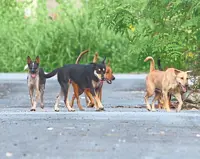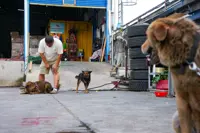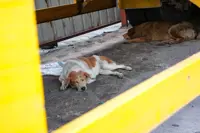
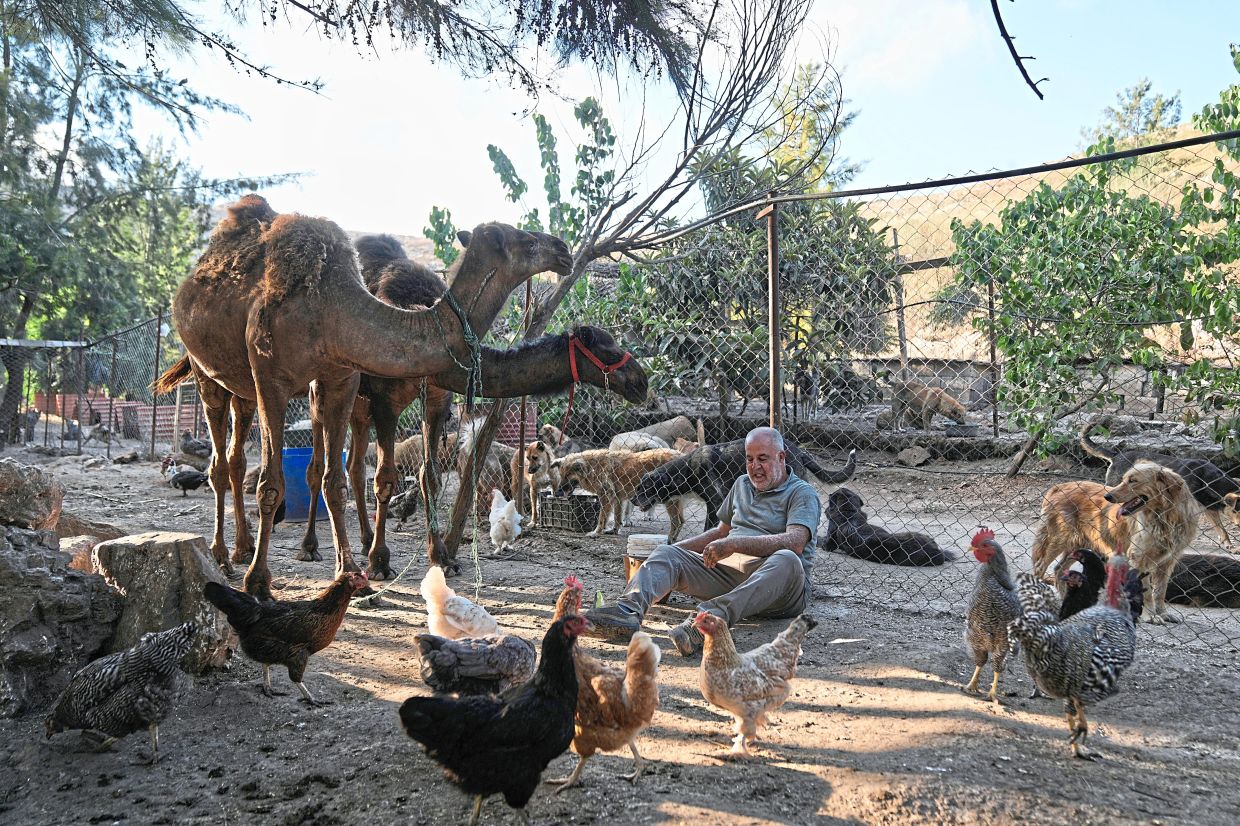
In the village of Kfaroue in southern Lebanon, Hussein Hamza makes his daily rounds to feed and check on his furry and feathered charges.
The number of animals in his care has multiplied since the outbreak of the latest Israel-Hezbollah war, as hundreds of thousands of southern Lebanon residents fled and were unable to take their pets or farm animals.
In other cases, the owners were killed in Israeli airstrikes. Some animals came to him wounded.
The war in Lebanon began March 2, when the Iran-backed Lebanese militant group Hezbollah fired missiles into Israel after the United States and Israel attacked Iran.
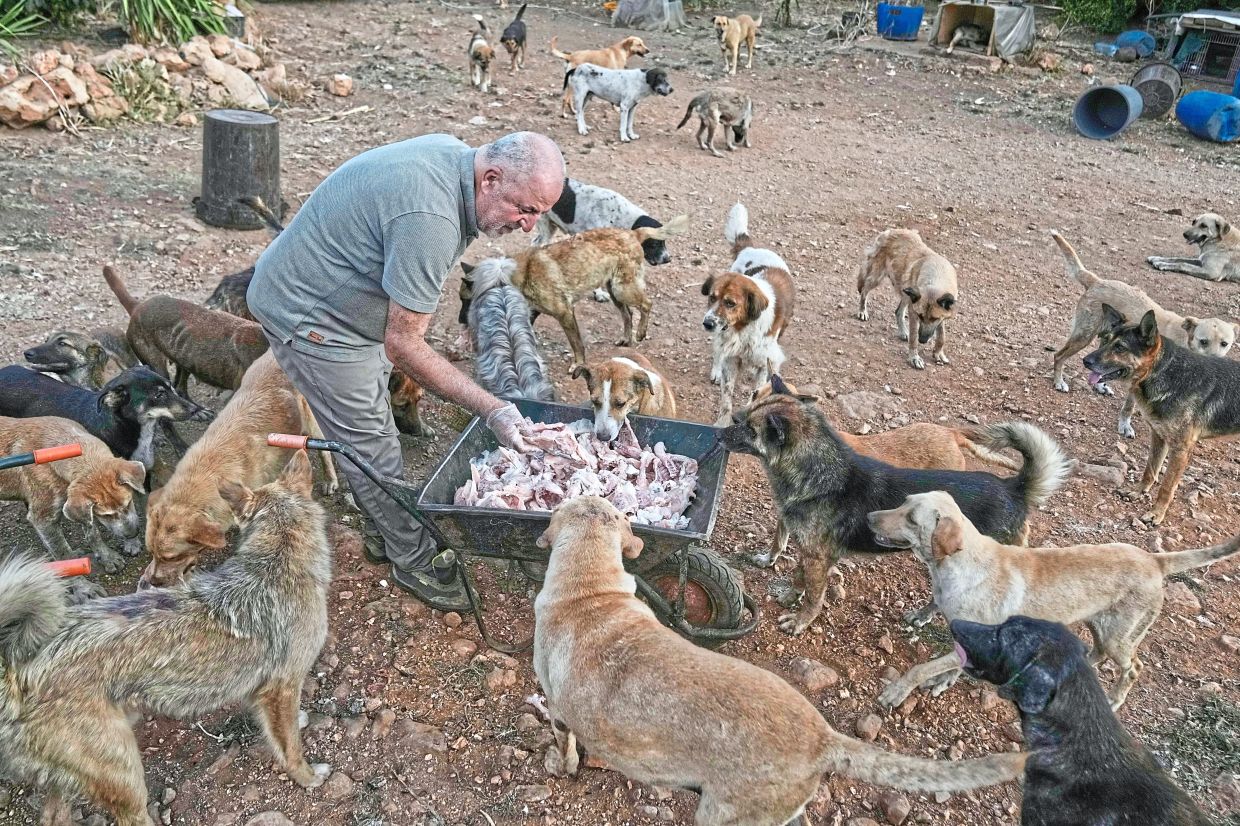
Dozens of dogs gather around Hussein, tails wagging in anticipation, as he pushes a wheelbarrow loaded with pieces of chicken to distribute among them.
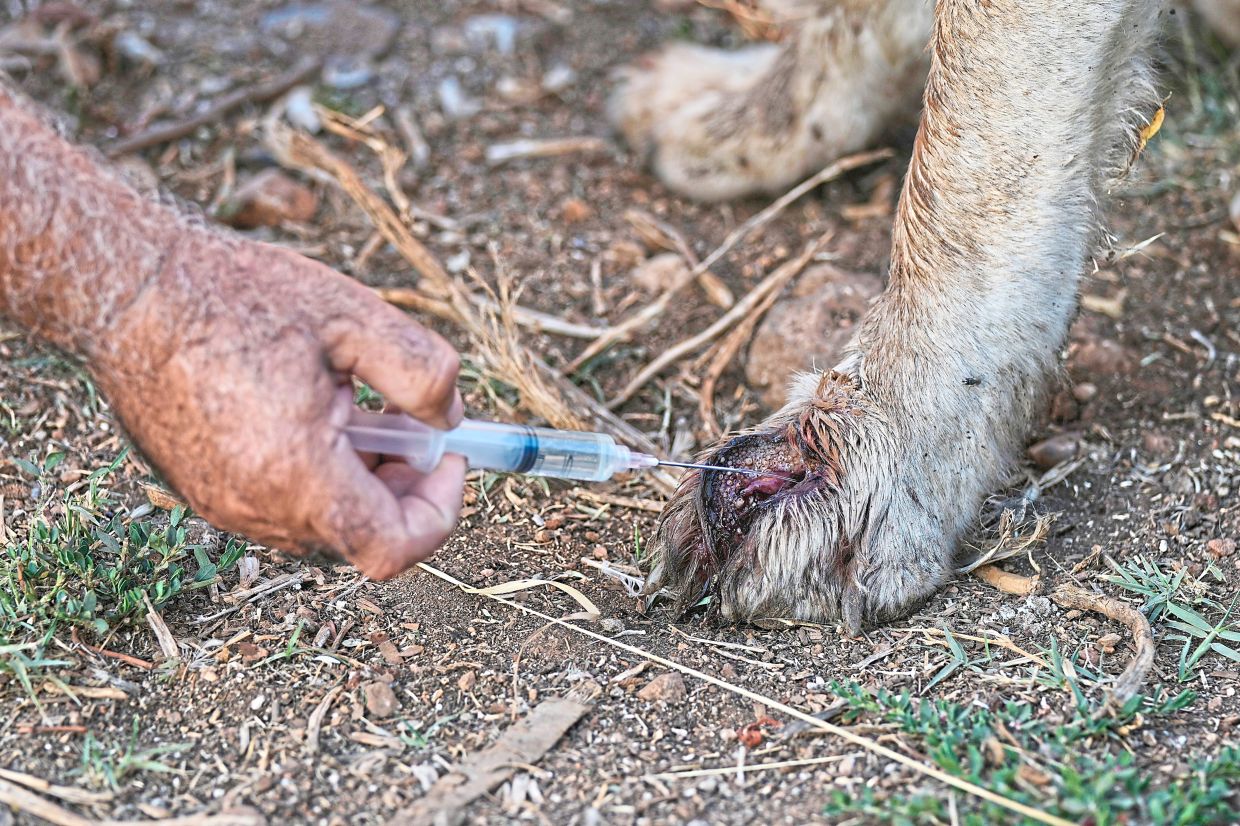
Some of the dogs are missing limbs. One has an infected wound on its foot that Hussein cleans. He continues his rounds, carrying buckets of water into a pen holding chickens and a pair of camels.
"During the war, people contacted us and told us they had left their chickens behind because everyone had to evacuate suddenly,” Hussein said.
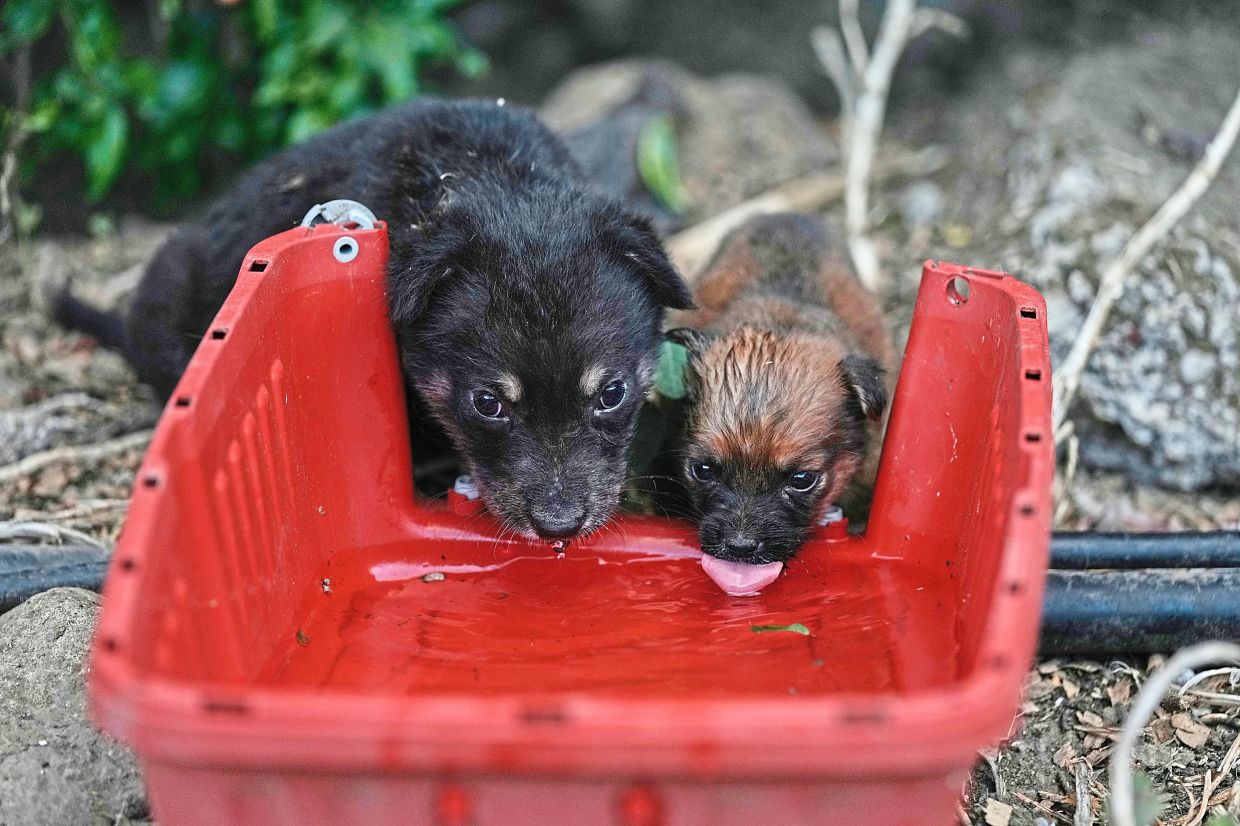
Although there were some airstrikes around Kfaroue, the area was relatively calm compared to areas closer to the border with Israel, where entire villages have been demolished and large swathes of land occupied by Israeli troops.
"They asked us to bring the chickens here, because if they were left roaming free, foxes might eat them, and otherwise they would die from hunger and thirst,” he said.
"We managed to rescue only the chickens we could reach – not all of them. There were areas where the fighting was too intense and we couldn’t get there.”
As the situation in the south has calmed under a tentative truce, Hussein is waiting for the animals’ owners to return and reclaim them.
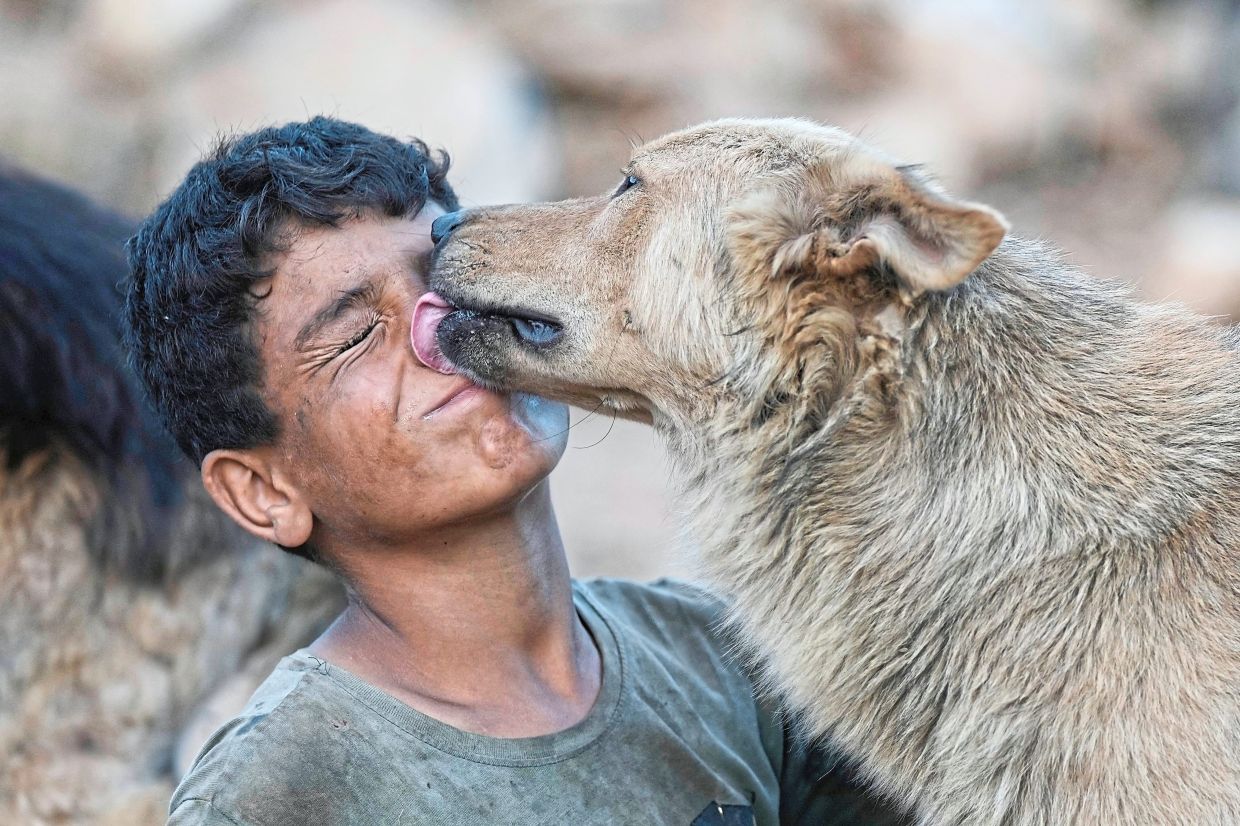
Hamza has been caring for animals since 2006. His shelter named Mashala, meaning "what God has willed”, has been in its current location for seven years.
As the war has increased the needs, it also has put more pressure on his limited budget.
"When I first started, I paid for everything myself,” Hussein said. "I had an agricultural business, and I kept spending from my own money until I went bankrupt.”
Then he created a Facebook page to solicit donations.
Hamza spends about US$400 (RM1,630) to US$500 (RM2,037) daily on food, medical care, spaying and neutering, workers’ wages, fuel and repairs, he said.
It has become difficult to raise money with the country's many pressing humanitarian needs.
Many who have funds prefer making donations to initiatives that help displaced or wounded people, he said.
Hamza understands, but said humans have an obligation toward the animals that are dependent on them.
"We shouldn’t neglect these responsibilities because of wars or because of the poverty we face,” he said.
Ongoing uncertainty about the situation in Lebanon and fears of a new escalation have dissuaded many would-be pet owners from adopting, but some of Hussein's dogs have found new homes.
Abbas Shoeib took home a handsome black pit bull mix whose owners were killed in an airstrike.
"A dog needs someone to take care of him, and when you take care of him, he will take care of you,” Shoeib said. – AP