




Animal welfare groups in Hong Kong have called for a legal loophole in pet ownership laws to be closed to better protect public safety, after authorities pledged to review stray dog policies following Sunday’s suspected fatal mauling of a woman.
The groups said that, based on their experience, the 27-year-old victim was more likely to have been attacked by former warehouse guard dogs than strays.
But existing legal provisions made it difficult to prosecute owners who failed to microchip or properly secure their animals, they said.
Police suspect a pack of dogs attacked the woman, who was found unconscious beside a bicycle in Yuen Long on Sunday and later died, less than a month after a similar canine-related case.
The victim suffered lacerations to her head, face, neck, arms and legs. Police said that, in addition to stray dogs, wild boars had also been spotted in the area.
The incident prompted police and the Agriculture, Fisheries and Conservation Department (AFCD) to round up strays in the area. At least three mongrels had been captured by Monday evening.
A source said that bite-mark analysis and DNA tests were being carried out to determine whether any of the captured dogs were involved in the attack.
Secretary for Environment and Ecology Tse Chin-wan pledged on Monday to review policies on stray dogs and further reduce the risks they pose.
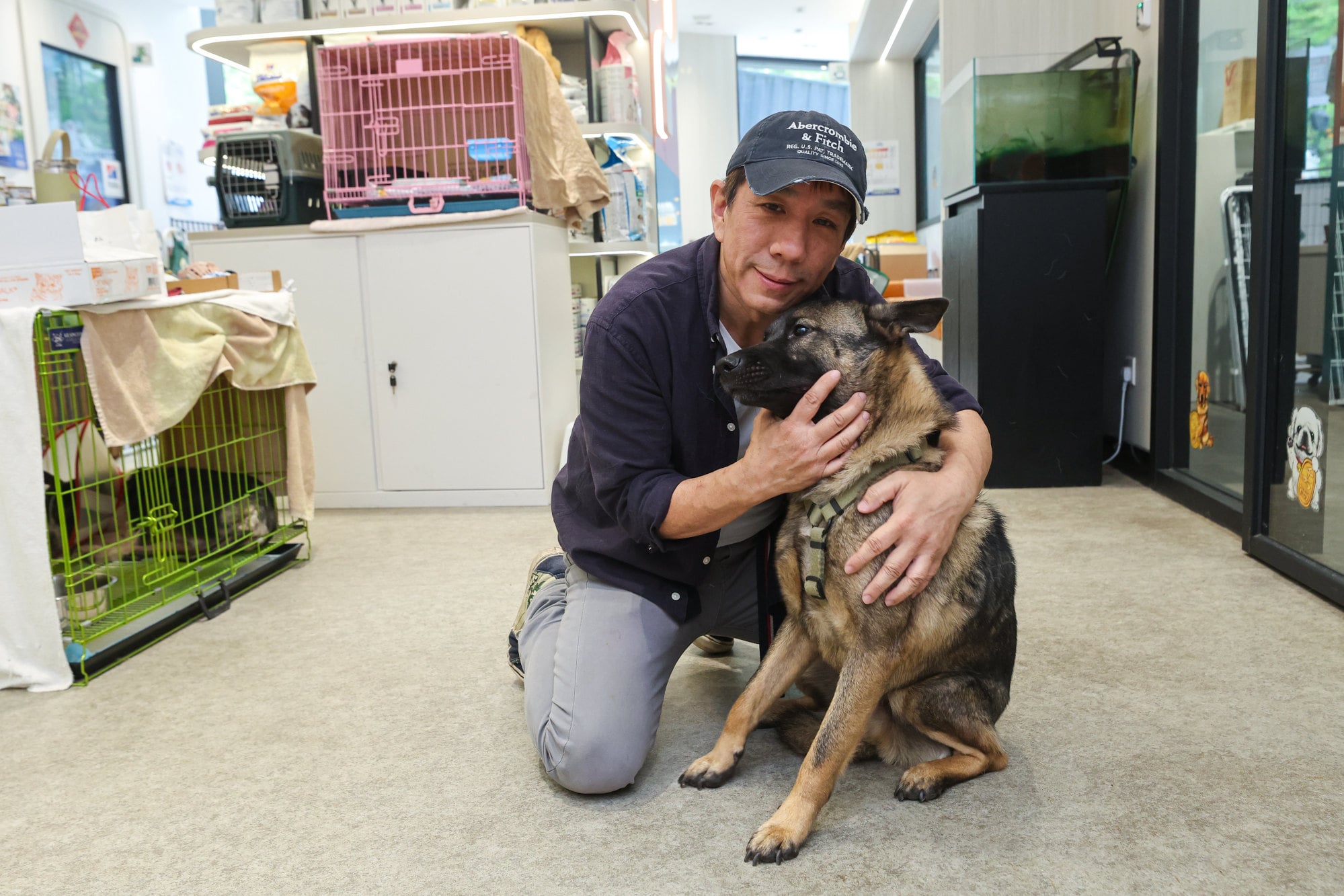
But Kent Luk Ka-chit, founder of Paws Guardian Rescue Shelter, argued that dogs born as strays rarely attacked humans, while former warehouse dogs were highly protective of their territory.
“Stray dogs in Hong Kong rarely attack people as they are very scared of humans,” Luk said. “Many strays constantly cower and shrink back as many have been bullied and are afraid other dogs will attack them.”
Luk said he had been barked at and chased by warehouse dogs while travelling through rural areas to carry out rescues, although he noted that the animals were merely trying to drive him away from their territory.
“Dogs bark out of fear,” he said.
Luk said warehouses had previously operated near the site of the attack, but it was unclear whether guard dogs had been rehomed after the facilities were demolished or had become abandoned, free-roaming dogs in the area.
Mark Mak Chi-ho, executive chairman of the non-profit Veterinary Services Society, also said that, while authorities had yet to identify the animals involved, warehouse dogs had strong territorial instincts that could trigger defensive or retaliatory aggression against trespassers.
Mak said the primary distinction was between dogs socialised as pets and those that were not. Domesticated pets were cherished by their owners, did not have to fight for basic survival or food, and rarely attacked or bit people without provocation, he said.
Dogs that had not been socialised tended to live in packs led by a dominant animal and could be aggressive at times, he added.
“They are forced to live this kind of life in society with these capabilities just to survive,” Mak said.
Mak said a legal loophole made it difficult to prosecute the owners of free-roaming dogs, because they had little incentive to microchip the animals.
“As long as one does not microchip the dog, one can deny abandoning it,” Mak said.
He urged the government to incorporate a strict “duty of care” into the Prevention of Cruelty to Animals Ordinance – requiring owners to ensure their dog’s safety, walk them responsibly and fulfil basic care obligations – to hold negligent owners accountable.
“If you have possession of a dog without microchipping, and without fulfilling your duty as a keeper, that should directly constitute an offence,” Mak said.
He noted that free-roaming warehouse dogs were unique to Hong Kong.
“These are not stray dogs, but unrecorded, unregistered free-roaming working dogs; they come and go without a trace,” he said.
Luk said he had experienced warehouse dogs chasing his car, possibly because they had been traumatised after being hit by vehicles. He also cited cases in which cyclists startled by barking had thrown stones at dogs, potentially conditioning the animals to associate bicycles with threats.
He said the AFCD had told him that one of the three dogs caught on Sunday carried a microchip registered in his name, and that he had been asked to give a statement on Wednesday.
He explained that it was common practice among dog rescuers to microchip animals under their own names after treating their injuries or spaying them because unchipped dogs would otherwise have no registered keeper and could face euthanasia if they bit someone and were captured.
Some owners were reluctant to have their dogs microchipped, and even claimed that the animals were not theirs and that they merely fed them, so as to avoid legal responsibility, Luk added.
According to the AFCD, the number of strays captured fell from 463 in 2023 to 398 in 2025. Complaints involving stray dogs rose from 1,230 in 2023 to 1,554 in 2024, before declining slightly to 1,232 in 2025.
There were 482 complaints in the first three months of 2026.
Under Section 22 of the Rabies Ordinance, an animal keeper who abandons an animal without reasonable excuse commits an offence punishable by a maximum fine of HK$10,000 (US$1,274) and six months’ imprisonment, an AFCD spokesman said.
But no prosecutions have been brought under that provision.
“While the evidential threshold for prosecution against abandonment is high and may be difficult to achieve, the AFCD will generally proceed to prosecute keepers failing to keep their animals under control and causing that animal to wander into a public place, where prosecution shall be pursued in accordance with Section 23 of the Rabies Ordinance or Section 9 of the Dangerous Dogs Regulation,” the spokesman said.
Prosecution figures in the past three years in accordance with Section 23 or Section 9 stood at 258, 215 and 206.
The spokesman added that anyone who caused unnecessary suffering to an animal, whether through an act or omission, could be prosecuted for animal cruelty and face a maximum fine of HK$200,000 and three years’ imprisonment. -- SOUTH CHINA MORNING POST



