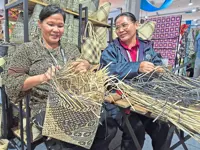
Wherever you look, it seems, you see youngsters knitting and crocheting, whether at home or in public, working on sweaters and scarves.
It is not just social media hype, as hobbies and activities once associated with seniors are now all the rage.
While polls like the 2024 Shell Youth Study says the trend towards more digital activities among 14- to 25-year-olds rages on, we are seeing more posts about tried-and-tested hobbies on social media – especially knitting.
From homemade blankets to cuddly toys and bright-coloured tops, handicraft fans are eager to show their achievements, dubbed grannycore online.
Knitting swimwear in Scotland
From the US and Britain, where young people are crafting, embroidering, sewing and knitting, the enthusiasm for traditional hobbies appears to know no bounds.
Some even knit and sew in movie theatres, a sub-trend found from the US to South Korea and beyond.
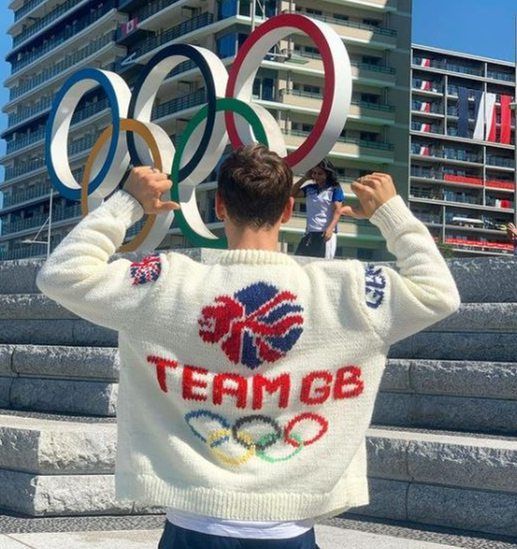
In Britain, Olympic diver Tom Daley even hosts a television show dedicated to finding Britain's best knitter.
An avid knitter, he hosts Game Of Wool, a knitting competition show set in rural Scotland and featuring contestants tackling complex challenges, including garments and even knitted swimwear.
People of all ages compete using tools and approaches from traditional Breton patterns to artificial intelligence in intense competitions to complete their creations.
Meanwhile, in the US, one knitter, known as JaneOfTheCows online, took to social media platform reddit to reflect, "I started knitting in the 1970s, the popularity seemed to decrease in the 1990s, picked up again after 2000 when knitting socks became popular."
"It used to be sweaters and clothing, now it seems to be more hats, scarfs and toys."
SuitGroundbreaking49 described her motivation as "based on how screens/electronics have basically permeated every single aspect of daily life. I work on a screen, and then before and after work I was either looking at the big screen (TV) or the little screen (smartphone). It is just too much for my nervous system to handle".
"There is something satisfying about making something and the time/effort it takes."
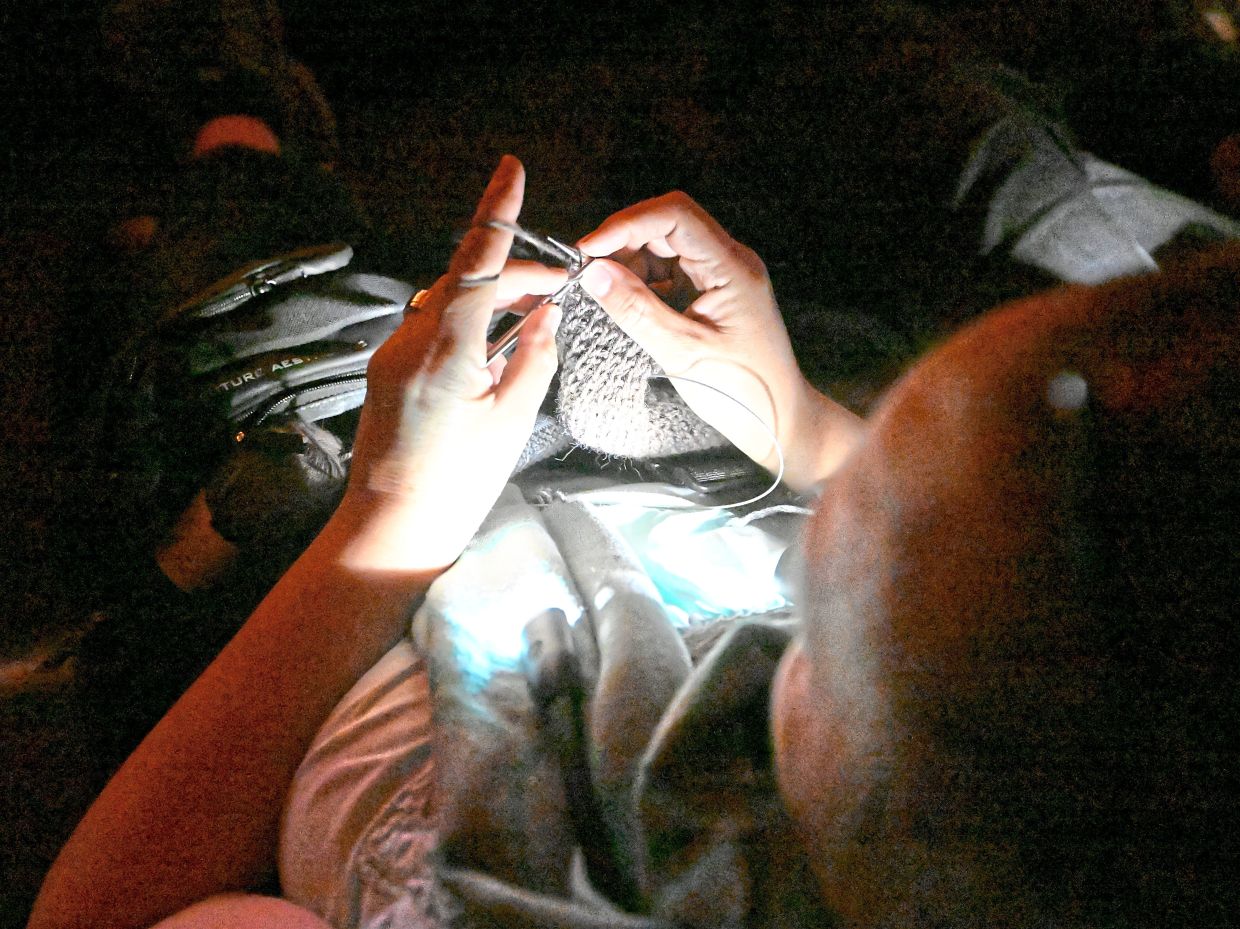
In Germany, take Lilly and Julia Schwarzkopf, two sisters from Aschaffenburg in Bavaria. They have some 93,000 followers on their Instagram account, Lesfillesducoeur, and have made knitting a job, fitting it in between studying and part-time work.
"It's not off the rack, but tailored individually to you."
But for her, it's more than that. She feels proud when she can realise a vision and wear something that requires a lot of time and patience, she enthuses.
The knitting community is also very welcoming, says Julia. Together with her sister, she runs meetings in parks and cafes.
They got into crocheting and knitting through their grandmother, Julia says. Her sister could only crochet at first, but then wanted to make her own clothes so both embraced knitting. They share their projects online and have also published a book about their hobby.
There is a connection between age and hobbies, says leisure researcher Ulrich Reinhardt. While older people tend to find their hobbies calming, fulfilling and beneficial and invest more time in them, younger people switch between activities more frequently, "more inspired by trends or social media".
In times of uncertainty or overload, people specifically seek out hobbies that slow them down and give them strength – such as gardening, hiking or knitting, says Reinhardt.
"That's exactly what makes them so valuable." – dpa