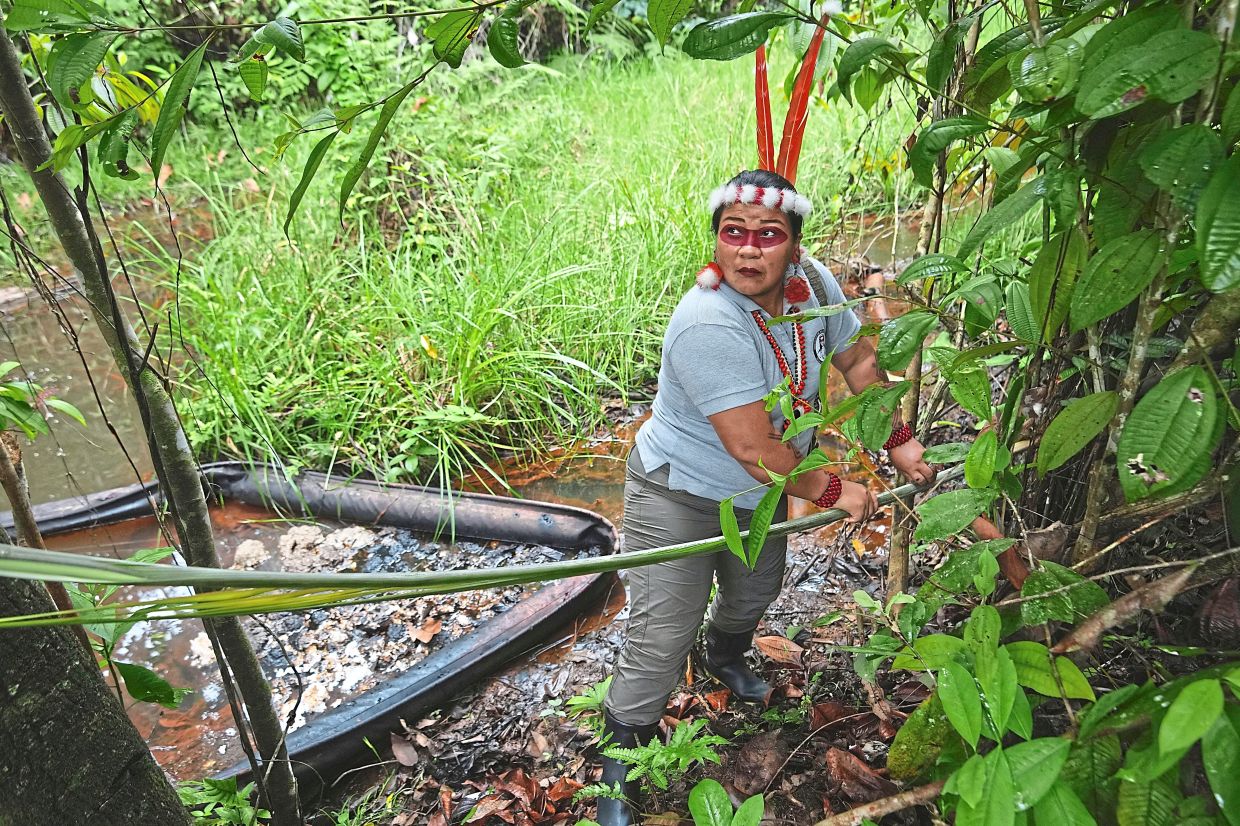
Standing beside a stream stained dark with oil in Ecuador’s northern Amazon, an Indigenous woman shook her head in disbelief as she stared at the oily sheen drifting across the water and broken pipes cutting through the forest.
Nearby, gas flares burned above the treetops. Julia Catalina Chumbi, a 76-year-old leader from the Shuar ethnic group in the southern Amazon province of Pastaza, had travelled hundreds of kilometres to see the damage for herself – the legacy of decades of oil and gas production in the northeastern province of Sucumbios.
"Everything is contaminated, even the air,” she said quietly.
Moments earlier, she had learned something that shocked her. In communities near the oil fields in Sucumbios, residents can no longer safely drink from local rivers and instead must buy water because of contamination and health fears.
"Seeing this makes me want to cry,” she said, adding that in her territory rivers are still drinkable.
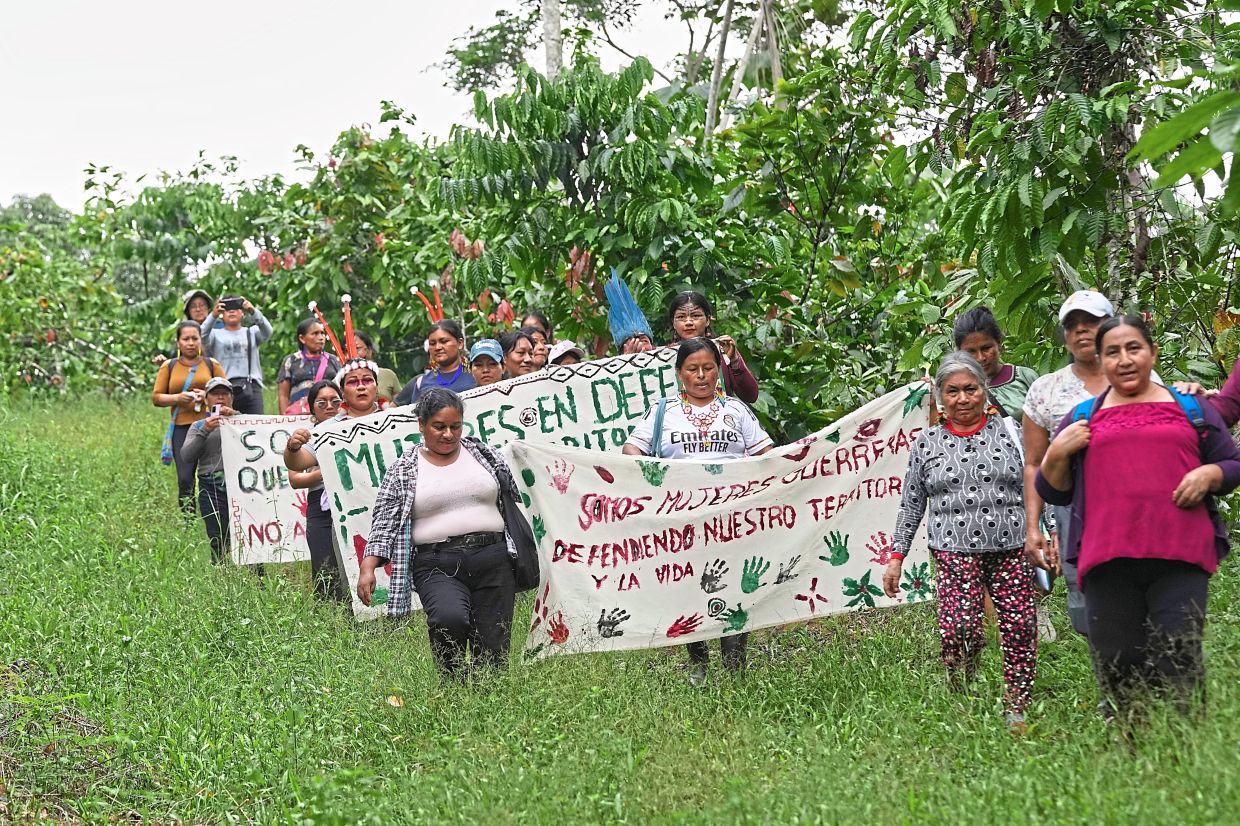
Organisers said the trip aimed to connect women from areas facing proposed oil projects with communities that have lived alongside the industry for decades. Because many oil blocks overlap Indigenous territories, communities are often among the first to experience contamination of rivers, forests and food sources.
The women – representing seven Indigenous communities – gathered for several days in the city of Nueva Loja for workshops to share experiences and discuss the growing threat of oil expansion in their territories.
Nueva Loja is widely known as Lago Agrio, a name workers from United States oil company Texaco gave the settlement in the 1960s after the Texas oil town of Sour Lake. The city later became the centre of Ecuador’s early Amazon oil boom.
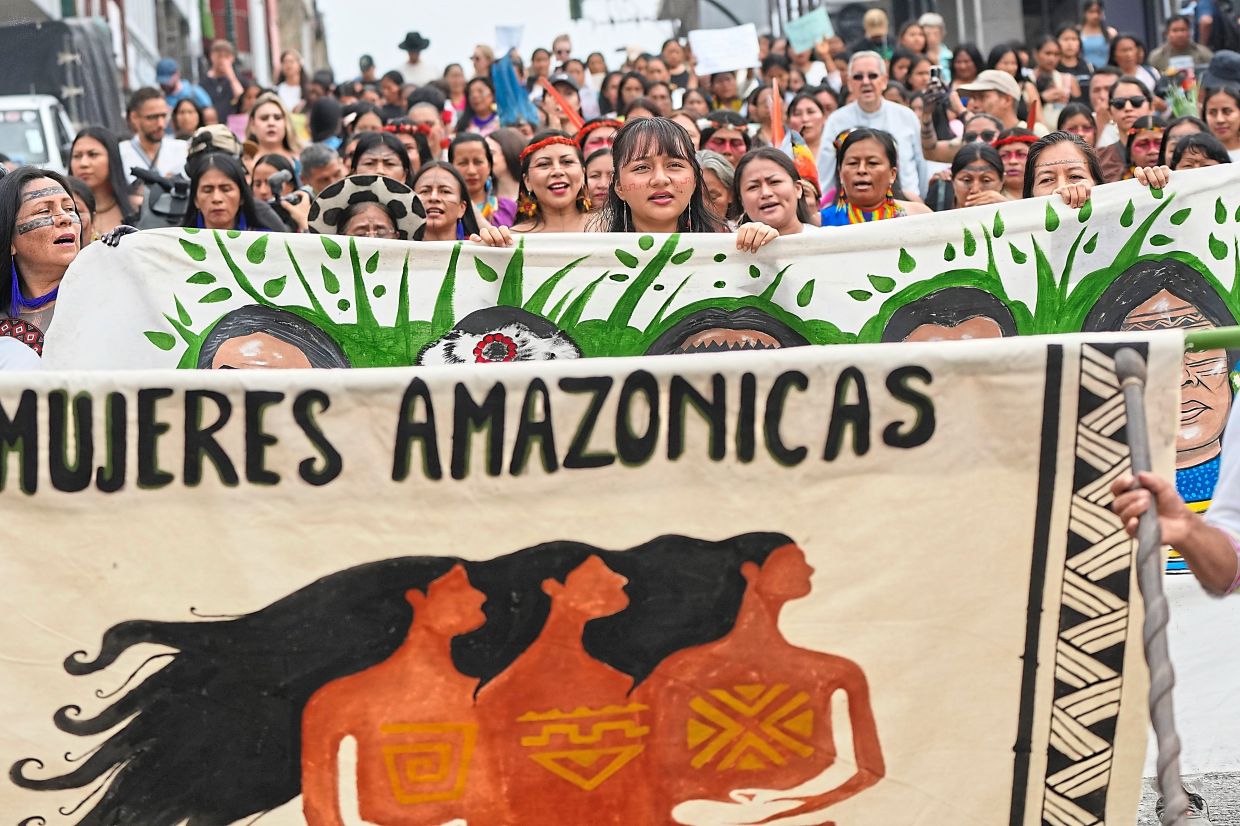
Once there, they made banners to carry during the walk, including one that read: "Amazon free from oil and mining.”
The Associated Press was present as they quietly entered parts of the oil-producing area to witness the impacts first hand. Polluted streams ran near pipelines and well sites, vegetation appeared contaminated and wildlife was notably absent.
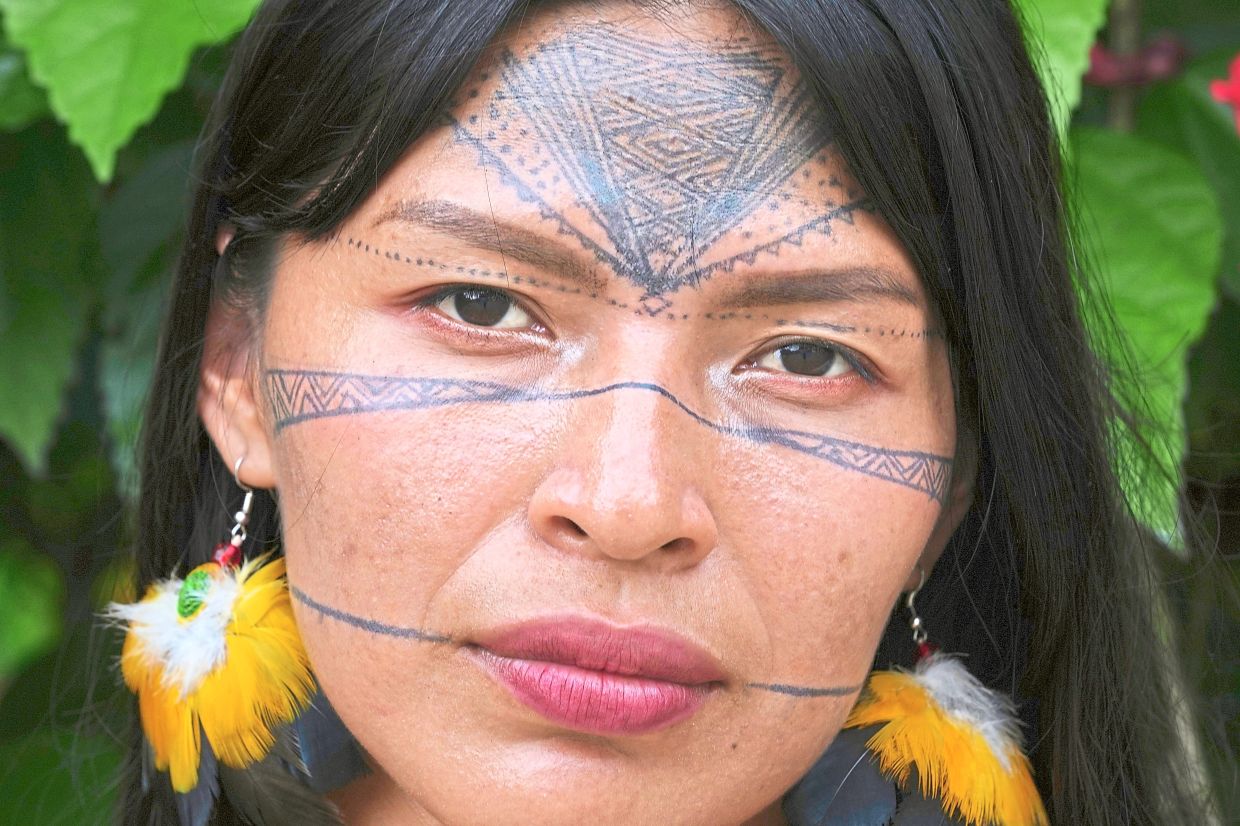
Standing nearby in front of a roaring gas flare, Salome Aranda, 43, from the Kichwa community of Morete Cocha in Ecuador’s central Amazon province of Pastaza, wore elaborate face paint across her cheeks and forehead.
Aranda said the visit allowed her to see impacts she is rarely able to observe near oil operations in her own territory.
"In our area we are not allowed to enter,” she said.
Seeing the contamination up close confirmed concerns she already had about oil activity near her community.
Planning for future
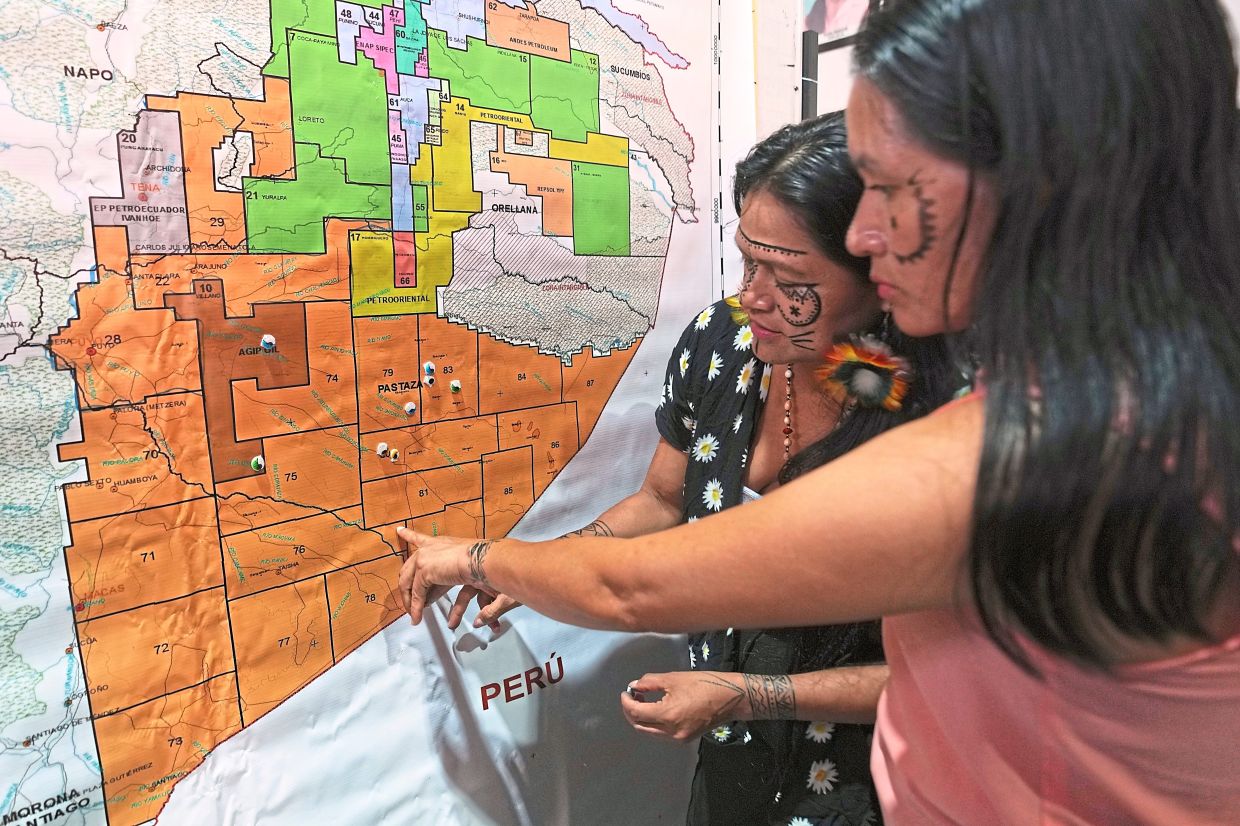
After the tour, the women returned to Nueva Loja, where they spent hours in workshops and group discussions reflecting on what they had seen and sharing experiences from their own territories. By the end of the meetings, they had begun outlining strategies to strengthen resistance to potential new oil concessions in their regions.
"The idea is that those experiences and lessons can be shared with women from the centre and south who are now facing these new threats.”
Last year, Ecuador’s government unveiled a sweeping "hydrocarbon road map” proposing a major expansion of the country’s oil and gas sector, worth about US$47bil (RM184.14bil) and new licensing rounds for exploration blocks in the Amazon and other regions.
Many of them are located in the provinces of Pastaza and Napo, where Indigenous communities live.
Officials say the plan is designed to modernise the industry, attract foreign investment and boost oil production.
But environmental groups and Indigenous leaders say the projects could open large areas of rainforest to drilling, pipelines and gas flaring. They also warn that many communities have not given the free, prior and informed consent required under Ecuador’s constitution and international human rights agreements.
Ecuador’s Ministry of Energy and Mines did not respond to a request for comment.
The meeting will bring together governments, Indigenous leaders and civil society groups to discuss pathways to transition away from oil, gas and coal following last year’s United Nations climate summit in Belem, Brazil.
For some women on the tour, the visit reinforced battles they are already fighting at home.
Dayuma Nango, 39, vice president of the Association of Waorani Women of Ecuador, said the contamination she saw strengthened her determination to keep oil companies out of Waorani territory.
"Our forest is our mother,” said Nango, who has received death threats for her advocacy. "That's why we protect it.”
The Waorani have already fought major oil developments in Ecuador’s Amazon. In 2019, Indigenous leaders won a landmark court ruling that blocked oil drilling in Block 22 in Pastaza after judges found the government had failed to properly consult communities as required under Ecuadorian law. In a separate decision in 2023, Ecuadorian voters approved a referendum to halt oil drilling in Block 43 inside Yasuni National Park, an area that overlaps with Waorani ancestral territory.
After seeing the pollution in Sucumbios, Nango said she fears her community could face similar consequences if new projects move forward.
"We don’t want to live the same story that our brothers and sisters are living here,” she said.
Toa Alvarado, 30, a Kichwa leader from the Pastaza province, said the visit also strengthened her determination to protect her territory. She recalled how her late father, a longtime community leader, once stood in the middle of a road holding a spear to stop a group of gold miners from entering their land.
"He told me our generation may be the last with the chance to protect our territories from contamination,” she said.
The following day, many of the women who joined the toxitour gathered in the Amazon city of Puyo for International Women’s Day demonstrations.
"Today is about reporting to the world about the violation of rights that us Indigenous women have to endure – specifically the rights of nature,” said Ruth Penafiel, 59, from a Kichwa community in Ecuador’s northern Amazon.
"We want to live in a healthy environment and in harmony with the forest,” she said.
For Chumbi, the visit to Sucumbios reinforced the message she plans to bring home to her Shuar community, deep in the Amazon.
"What we are going to do is fight,” she said, referring to the possibility of oil drilling in her territory. "Even if it costs us our lives.” – AP