



This year’s Police Day carries special significance. As the Royal Malaysia Police marks its 219th anniversary on March 25, the occasion coincides with the United Nations’ International Year of Volunteers for Sustainable Development 2026.
Both occasions point to a simple truth: Public safety is best achieved when policing is carried out hand in hand with the community, drawing on the skills, commitment and support of the society.
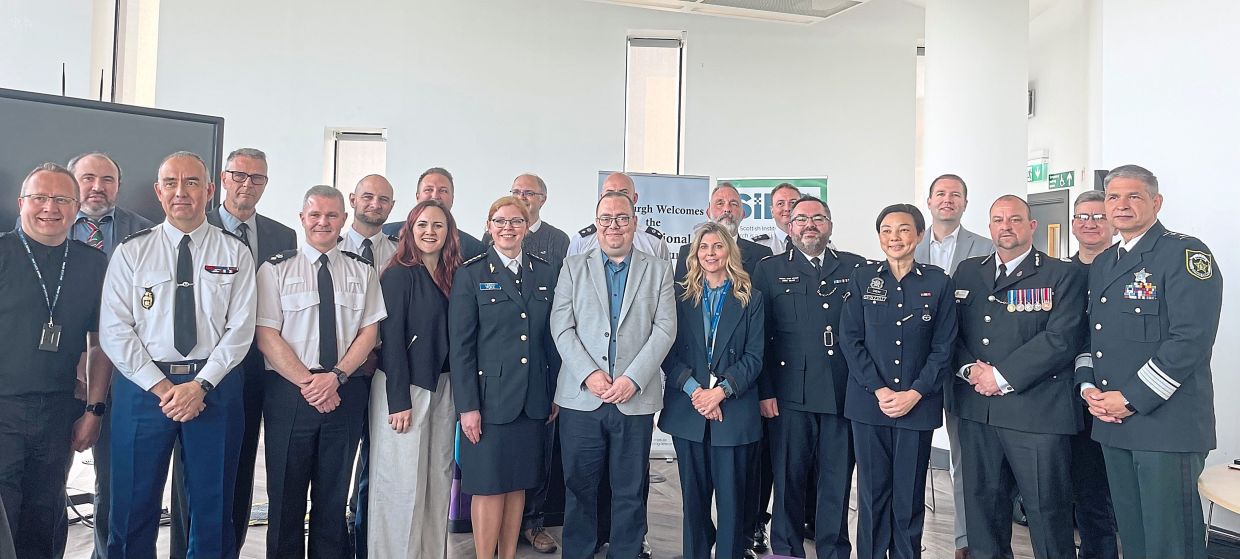
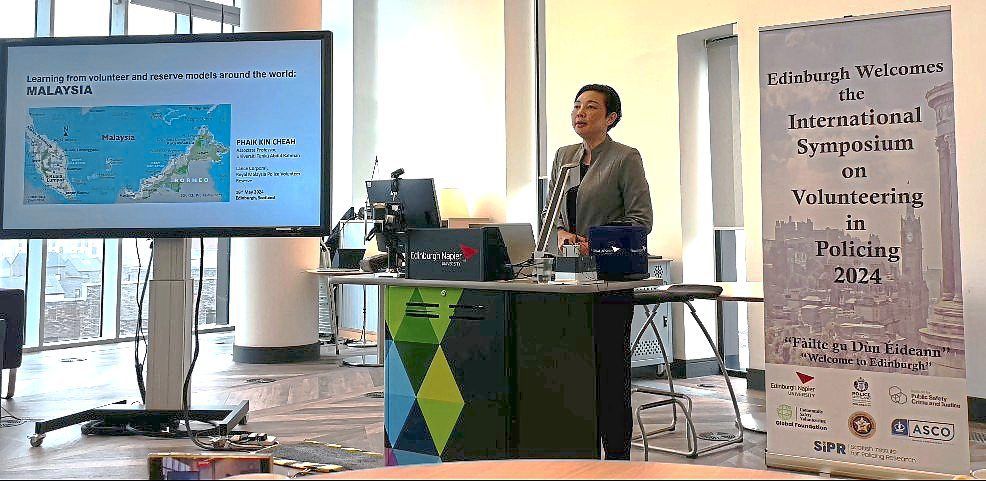
This is also the central idea my team presented in our article, “Policing Together”, published in Policing: A Journal of Policy and Practice following discussions at volunteer policing conferences in Edinburgh and Birmingham, Britain, in 2024.
Our point was modern policing needs better ways to identify and engage who can contribute, how they can contribute, and how those contributions can be organised so they are useful, sustainable and suited to real operational needs.
At the 2024 Paris Olympics
This became clearer during the 2024 Paris Olympic Games. More than 1,800 international police officers from 43 countries were deployed to support the French authorities as part of a wider security operation involving over 35,000 police officers each day and 10,000 soldiers.
For athletes, spectators and visitors, the benefits were obvious. There was more visible order, more accessible help, and a greater chance of finding someone who could communicate with them when assistance was needed.
At an event of that scale, reinforced policing support does more than strengthen security; it also improves communication, reduces confusion and reassures the public.
How society supports policing
Around the world, police forces have developed practical ways to draw on the time, knowledge and abilities of the wider public. This can include reserve officers, specialist volunteers, youth programmes, community partnerships and support from employers and local organisations.
Digital platforms are also used to connect police with skilled individuals who can contribute as virtual volunteers.
This idea is not new in Malaysia. On May 3, 1956, subsidiary legislation published in the Federation of Malaya Government Gazette under the Police Ordinance 1952 formally established the Police Volunteer Reserve in the Federation.
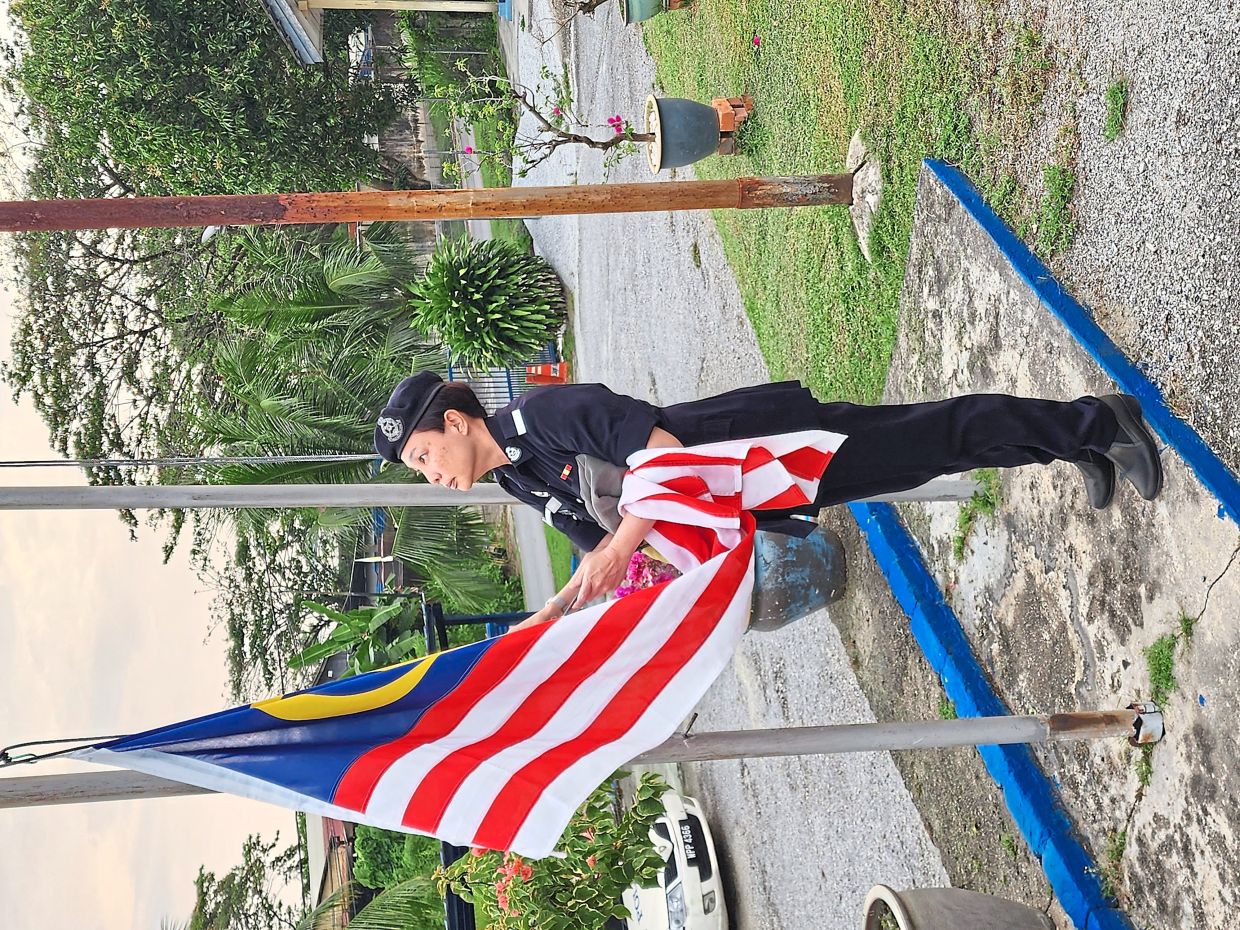
It stated that the force included 58 gazetted reserve police officers, 124 superior reserve police officers, 379 subordinate reserve police officers and 2,289 reserve constables.
As the Federation of Malaya moved towards independence in 1957, public participation in policing had already been formalised and organised as part of new nation building.
In some ways, our history prepared us for the demands on policing today. Public safety is no longer shaped only by what happens on the streets. Today it involves digital risks, public communication, major events, cross-border movement and the need to respond to increasingly diverse communities and situations.
Some of these challenges go beyond what police officers are trained to handle on their own. This is why it is important to recognise the wide range of skills, knowledge and support that volunteers can bring, and to find practical ways to channel them where they are needed.
Volunteers bring fresh perspectives and different strengths and skills that can help policing connect, communicate and respond more effectively and strategically.
Volunteerism in universities
University students are young, bright, quick to learn, open to new ideas and ready to apply their skills in meaningful ways.
My students are future communication professionals. They are full of energy, curious, enthusiastic, creative, resourceful and empathetic. They also fall within the group most exposed to job scams, as they actively look for internships, part-time work and future employment.
That placed them in two roles – as a group most vulnerable to job scams, and as communication professionals in training who could use their skills to turn knowledge into public education in the service of civic duty.
This was how the “Avoid Job Scams: V.E.R.I.F.Y.” video project took shape as a structured service-learning assignment in my Corporate Social Responsibility course.
The then executive director of Asean Chiefs of National Police (Aseanapol) Pol Col David Martinez Vinluan and his team played a significant role in the initiative, helping to shape it, champion it, present it and support its use as a training tool for police officers and public education and outreach.
It was further strengthened by Aseanapol and the Malaysia Crime Prevention Foundation as co-organisers, together with PolicingTV (UK), the Global Foundation for Community Safety Volunteering (UK) and the Center for Public Safety and Justice at the University of Virginia (US) as partners.
Content development was informed through consultations with partners, cybercrime officers, policing practitioners, Royal Malaysia Police crime prevention partners and expert reviewers. This ensured that the video was accurate and grounded in the actual tactics used in job scams.
When student skills support policing
Following that, the project went beyond the university setting. It was shared through policing and public education platforms, presented on the Philippine National Police television programme, featured at the 2025 Asean Law Forum and the Interpol Asia Regional Conference, and used in training contexts including the International Senior Police Officers’ Command Course at the Royal Malaysia Police College Kuala Lumpur. The work is still ongoing.
Because the students themselves were among those most exposed to job scams, they brought the perspective and mindset of the very group the outreach was meant to reach.
As communication students, they used persuasive communication, micro-learning techniques, AI tools and communication technologies to produce videos that would appeal to that same audience. This shows how, with the right support and partnerships, volunteer contributions can help police engage the public strategically.
Perhaps that is what this year’s Police Day brings into sharper focus for me. The police force remains central, as it should.
However, keeping society safe does not rest on the shoulders of the police alone. It is a shared responsibility. This year’s recognition of volunteers for sustainable development reminds us that public safety is better served when more of us step forward and play a part.
Selamat Hari Polis!
Prof Dr Cheah Phaik Kin is a full-time academic at Universiti Tunku Abdul Rahman (Kampar Campus) and serves as a Royal Malaysia Police Volunteer Reserve officer at PDRM Bukit Aman. The views expressed here are entirely the writer’s own.
