




A visit to the doctor, a trip to the shops, or even a simple chat with a granddaughter – everyday tasks can become major obstacles if you don’t speak the language.
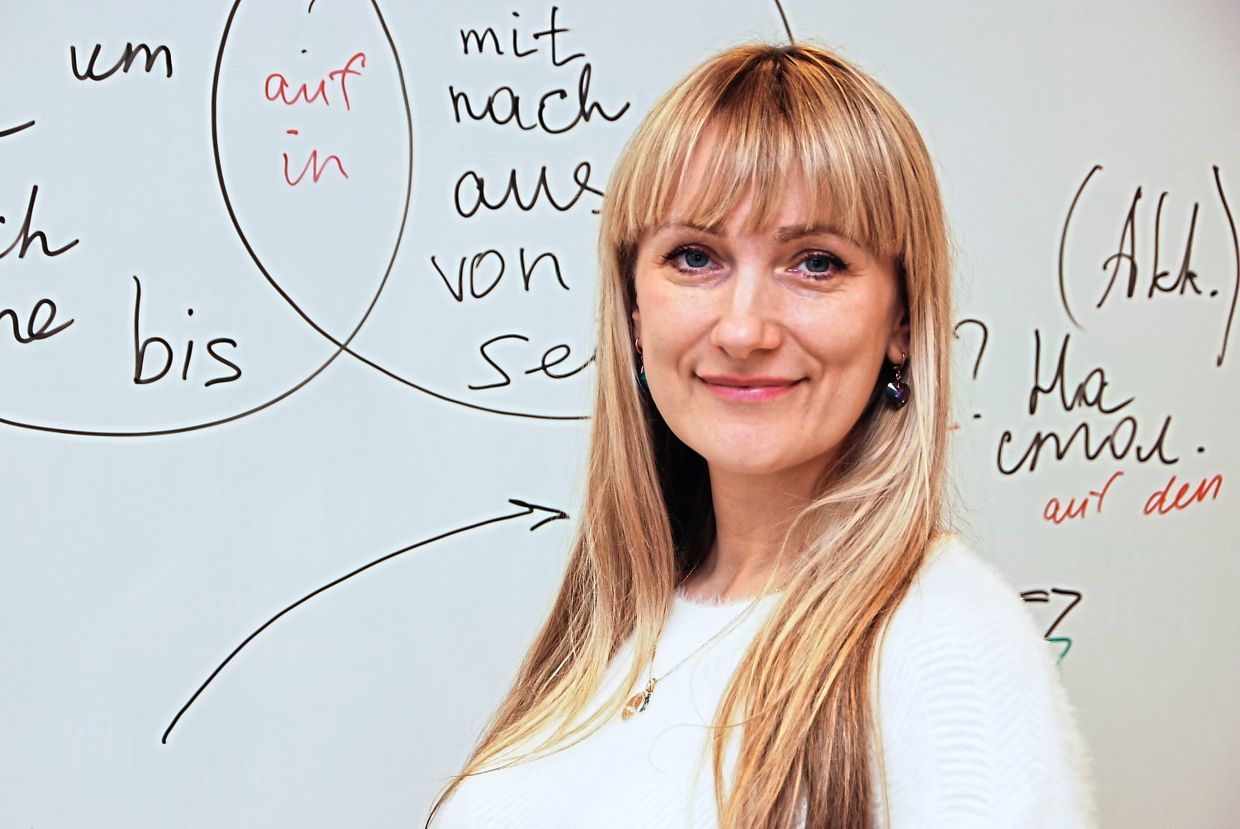
In Berlin, Ukrainian teacher Oksana Hryb helps older compatriots in particular to overcome this hurdle.
Her students all fled the war and are now trying to rebuild their lives in a new country.
Ukrainians make up the largest group of refugees in Germany, with around 50,000 having settled there since Russia launched its full-scale invasion of Ukraine in 2022, according to Berlin’s migration commissioner.
A teacher from Odessa
“There are people in my course who didn’t manage to complete the integration courses because everything went too fast. Others are not even entitled to a course. And then there are younger people who want to improve their German,” says Hryb, 41, who came to Berlin with her two children in 2022, and worked as an English teacher in Odessa.
She now speaks fluent German and volunteers to pass on her knowledge.
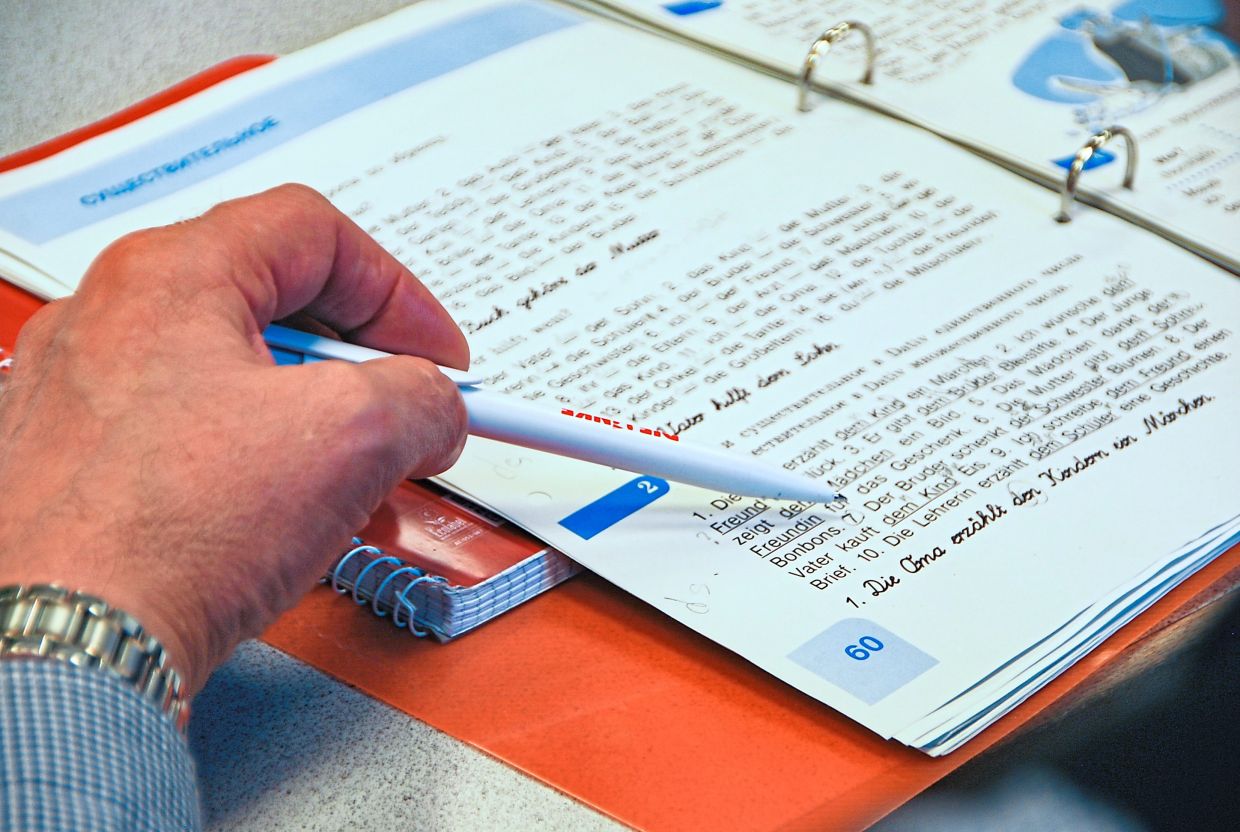
“I see a dog”, “Mrs Muller has a car”: one after the other, the students – mostly senior citizens – read sentences from their worksheets and practise the accusative case, one of the four in the German language.
The small group of about a dozen women and men sit together at a large table in a room at the Kiez-Klub Vital, as they do every Tuesday. They meet there twice a week to learn together.
Bonding with his granddaughter
“I just want to get by in the country that has taken us in, I want to be able to listen to the radio, watch television or read the newspaper. I would also like to be able to talk to my almost three-year-old granddaughter or my neighbour,” says Volodymyr Yushin, 62.
His granddaughter was born here and is speaking her first words in German. His neighbour often gets in touch, but conversations are very complicated. Even going to the doctor is very difficult.
“My doctor has to use a translation programme on his computer,” he says.
“Even shopping or travelling by bus and train is difficult without a good knowledge of German,” adds Olena Chyzhevska, who is Hryb’s mother and also attends the school twice a week as a volunteer.
“Unfortunately, we have no contact with Germans. Our knowledge is not yet sufficient for language cafes where we could talk to them,” she says sadly.
Idea for the course
“We met at an event,” recalls Daria Morozova.
She is the coordinator of SAFE, a local support group in a district of Berlin.
“Olena told me how urgently she and others needed a course – and that she already knew a teacher: her daughter,” says Morozova.
The Stephanus Foundation’s SAFE project offers support and a safe environment for refugee families from Ukraine, including psychosocial support, counselling and group activities for children and adults.
The German course is now also part of the programme.
The students say the course is more than just vocabulary and grammar: “We feel like a family here. Oksana is more than just a German teacher. She is always very friendly and also helps us with other questions and problems, for example with bureaucratic matters,” says Yushin.
No one forgets homework
Learning German is not easy for her students, especially because of the grammar.
“In German, there are also very long words that are difficult to learn,” says Hyrb.
But everyone is highly motivated: “The seniors always do their homework. It’s only when someone is ill that they can’t do it,” she notes.
She herself dreams of teaching at a school again.
“But to do that, I have to go back to university,” says Hryb, who is currently putting together all the documents for her application. “It’s not that easy.”
And her language students?
“They definitely don’t want me to leave them,” says Hyrb.
She is sure that her future is in Berlin.
“My daughter in particular can hardly remember Ukraine, and all my friends now live abroad,” says Hyrb, a single mother of a 14-year-old son and an eight-year-old daughter.
Between 2022 and 2024, a total of 22,560 people with Ukrainian citizenship will have started an integration course in Berlin: 10,645 in 2022, 7,629 in 2023 and 4,286 in 2024, according to the Federal Office for Migration and Refugees.
The courses conclude with the standardised German Test for Immigrants (DTZ), which does not have a traditional pass or fail system, but reflects the language level achieved.
Those who reach level B1 and also pass the Life in Germany test are formally considered successful. – dpa
