As a quartet of astronauts make their way to the far side of the Moon, far-fetched notions of human colonies on the satellite or even Mars - a three-year return trip - are again getting an airing.
Such ambitions are being aired despite the Artemis II mission being the first in 50 years to take humans out of Earth’s orbit. But the team will not set foot on the Moon, much less surpass half-century-old space travel achievements.
The lunar surface is covered in fine-particle glassy dust that can shred clothes and lungs, while neither the Moon nor Mars has anything like the atmosphere and magnetic field Earth has to protect against the fearsome forces of solar wind and radiation.
And even if such formidable hurdles can somehow be overcome and human colonies established, their sustainability faces another potential barrier: sperm does not seem to swim properly in space, according to scientists at the University of Adelaide.
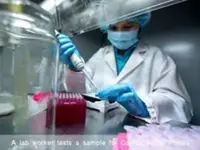
The researchers put samples through a simulation mimicking both the female reproductive system and the zero-gravity conditions of space and found that the usually inerrant swimmers quickly lost their bearings.
"We observed a significant reduction in the number of sperm that were able to successfully find their way through the chamber maze in microgravity conditions compared to normal gravity,” says Nicole McPherson of the university’s Robinson Research Institute.
"This is the first time we have been able to show that gravity is an important factor in sperm’s ability to navigate through a channel like the reproductive tract,” McPherson says.
The team found that boosting the level of progesterone, a hormone that acts as a kind of beacon for sperm trying to navigate to an egg, helped "overcome the negative effects that simulated microgravity had on navigation.”
In a paper published in the science journal Nature Communications Biology, the team says their findings "underscore the resilience and vulnerability of reproductive processes under altered gravitational conditions” and emphasize a "critical need to optimise peri-conception environments for successful reproduction for future space missions.”
"As we progress toward becoming a spacefaring or multi-planetary species, understanding how microgravity affects the earliest stages of reproduction is critical,” says John Culton, director of the Andy Thomas Centre for Space Resources, another University of Adelaide research unit.
In 2023, scientists uncovered another potential hurdle for extraterrestrial human reproduction - one that would prevent sperm from even getting the chance to get lost en route to a waiting egg. A Florida State University team published indications that space travel could undermine erectile function. – dpa