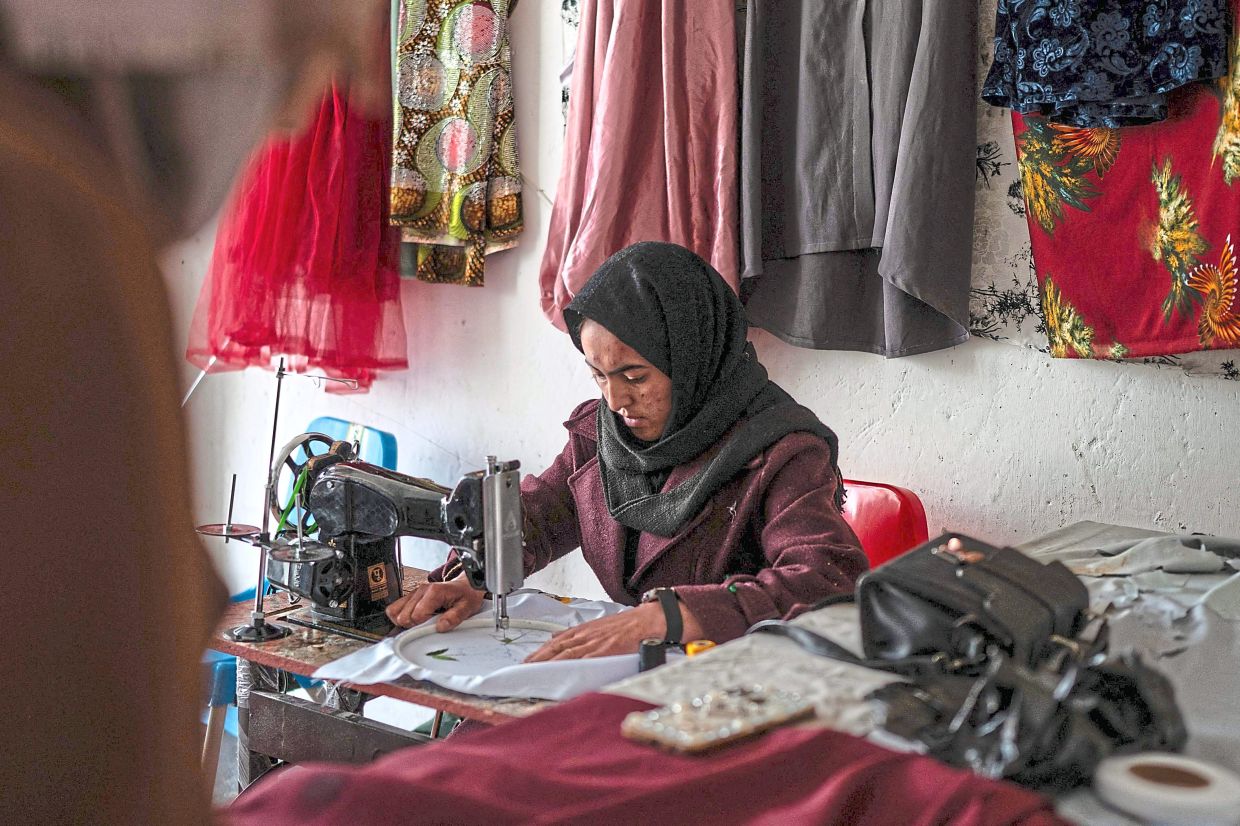
With women banned from most jobs in Afghanistan, an embroidery boutique run by 22-year-old Rahima Alavi is a surprising and treasured sight in Bamiyan.
"Spring flowers, tailoring and embroidery", reads a sign outside Rahima's small store, which opened in January after a months-long search for work.
"I really feel proud because I can support my family, my parents and three sisters. I can pay the rent," said Rahima, who was wearing a burgundy coat which had a few pieces of leftover coloured thread stuck to it.
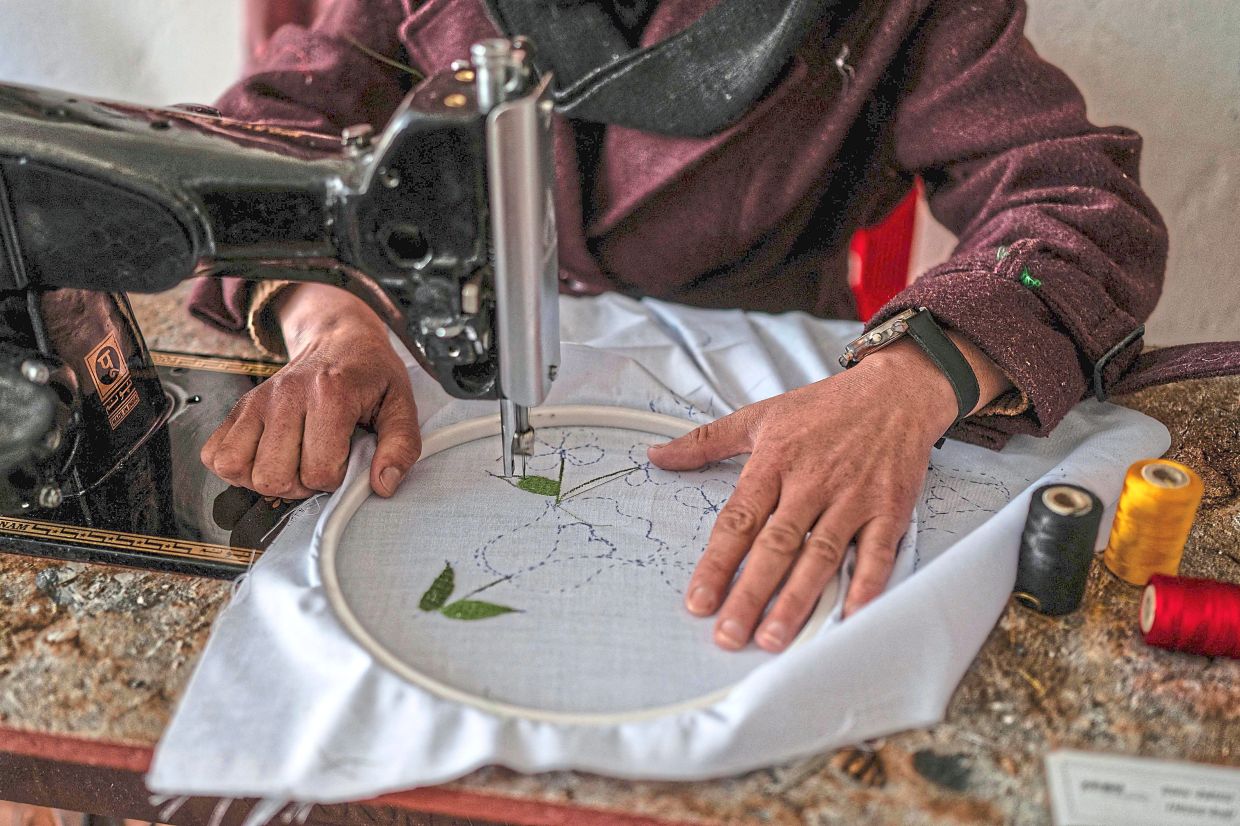
Demonstrating her new skills, she guided material through her sewing machine to create delicate silk leaves and flowers.
Rahima is one of more than five million people who returned to the country since 2023 from neighbouring Iran and Pakistan, which have been pushing back Afghans after decades hosting them.
Having grown up in rural Bamiyan province, where she helped her parents with farm work alongside school, the family moved to Iran in 2021.
"In Iran, there were more job opportunities, and there, men and women can work," she said.
They picked cabbages for a living near the central city of Isfahan, before returning to Afghanistan in 2024.
"My father couldn't find a job, nor could I or my sisters. I was very hopeless, because there were no jobs in Bamiyan," she said, her smile fading.
Only 1% of women who returned from Iran or Pakistan have found full-time jobs, while 2% have a business, according to a survey by the International Organisation for Migration.
Rahima struggled for months, before being picked along with 25 other women for embroidery training under a programme backed by the United Nations refugee agency (UNHCR).
"I started to have hope, and my hope grew bigger with the course," she said.
No work for women
Rahima was given a range of equipment including a sewing machine, fabric and cash for a solar panel – essential in a country where power cuts are commonplace.
Her teacher, Rayhana Darabi, described Rahima as "very capable, very talented".
"She was so dedicated that she would not miss anything and learned everything that same day," said Rayhana.
The embroidery teacher lost her job in December when the programme was discontinued, as part of broader aid cuts hitting people across Afghanistan.
Rahima is the only woman from the programme to have successfully opened a business so far, with her best friend's support, bringing great pride to those around her.
"We were truly very happy. Women in Afghanistan today – not only in Bamiyan but all over the country – face many challenges, and rules and regulations," said her teacher.
By law in the country, women are prohibited from working in the majority of businesses while permitting some to work in industries such as handicrafts.
Rahima appealed to donors to restart the training programme. "Because there is no work for women here," she said.
Last year, women were the majority among nearly 2,400 people trained under UNHCR programmes.
The agency said this month it needed US$216mil (RM842mil) this year to support displaced people and returnees across the country, but its appeal was currently just eight percent funded.
With opportunities increasingly limited, Rahima encouraged her fellow returnee women to seek out any chance available.
"Don't sit at home," said the entrepreneur, surrounded by embroidered dresses, scarves and tablecloths.
Decorated across one of the scarves, which Rahima said she would like to wear, she had embroidered purple butterflies taking flight. – AFP