
Standing on the coast and looking out to sea, you cannot detect the changes with the naked eye.
But here in northern Germany, sea levels are rising as is the risk of flooding for the lower-lying coastal regions.
Germany has three main coastal states: Schleswig-Holstein, Lower Saxony, and Mecklenburg-Vorpommern, along with the city-states of Hamburg and Bremen.
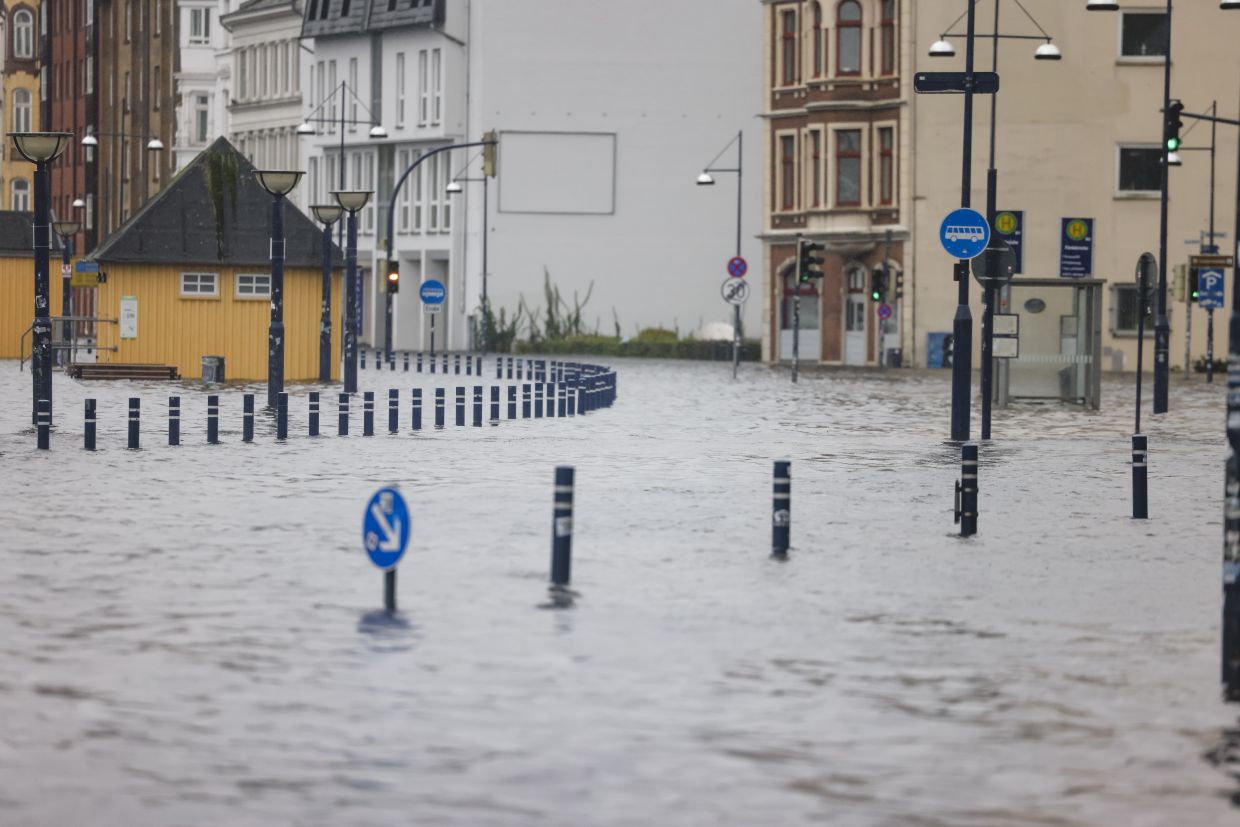
A devastating storm surge in October 2023 showed rising seawaters affect the North Sea coast as well as regions on the Baltic alike and many remember the extensive damage to the Baltic Sea coast of Schleswig-Holstein and Mecklenburg-Vorpommern back then.
And the sea level has risen some 20 centimetres on average along the German North Sea coast over the past 100 years, say Insa Meinke and Ralf Weisse from the Institute for Coastal Systems at the Helmholtz Centre Hereon in Geesthacht, pointing to measurements at Cuxhaven and Norderney.
How much sea levels will continue to rise depends largely on global emissions and their impact on the climate, they say.
"Depending on greenhouse gas emissions, we can expect an increase of around 30 to 120 centimetres by 2100 for the German North Sea coast compared to the period from 1995 to 2014." And even after 2100, sea levels will continue to rise, they add.
Storm surges threaten coastal residents
The rising coastal waters will worsen storm surges as forecasters say they will become higher and more frequent in future.
Even in the past, flooding was always one of the greatest threats to coastal residents. More than 1,000 years ago, settlers built the first earthen walls to protect themselves from the floods.
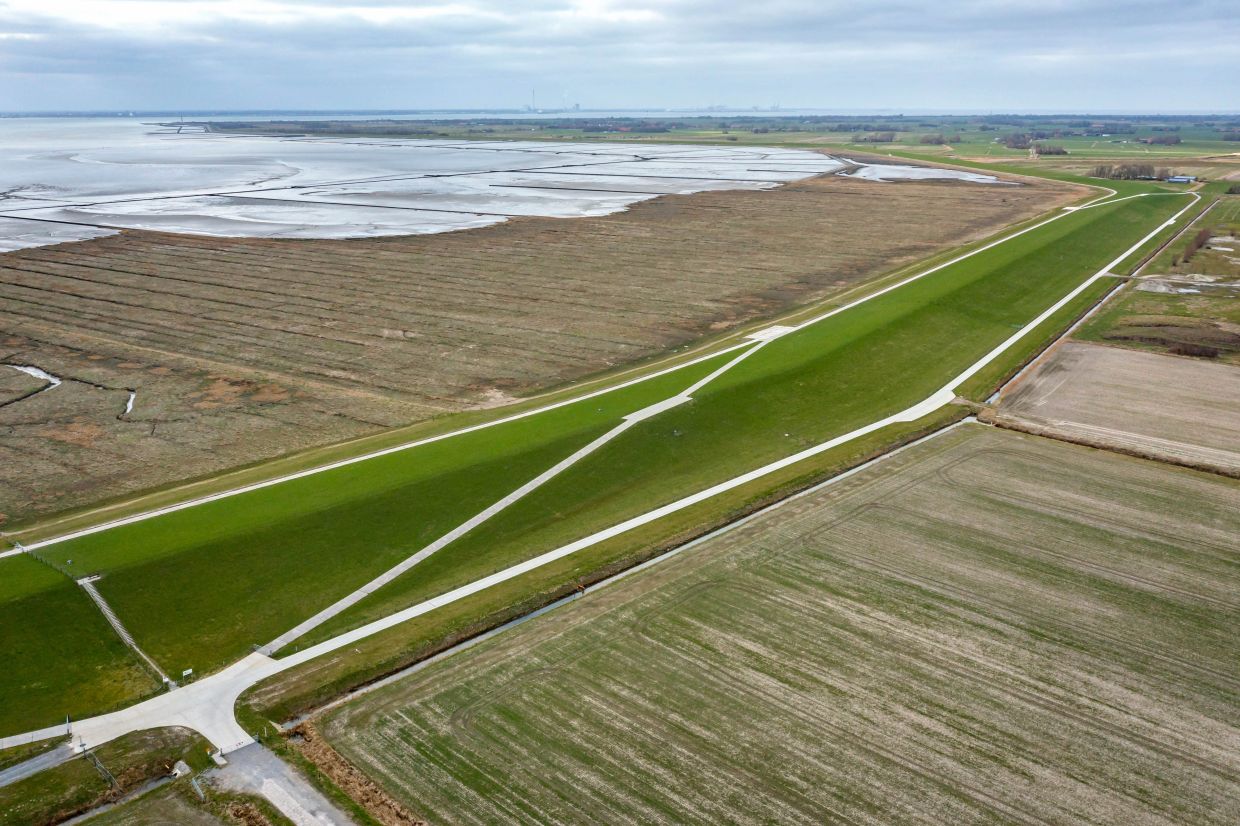
Over the centuries, coastal residents developed an effective system of dykes, sluices and drainage channels to protect themselves from storm surges. The last major storm surge, which caused many dyke breaches and deaths, occurred in February 1962.
After that, many dykes were recalculated and reinforced. Thanks to that sweaty work, a very severe flood in 1976 ran significantly higher, but caused hardly any damage to the new dyke line.
People are still labouring to improve dyke construction, using computer models and wave channels.
The climate dykes being built on the North Sea coast are wider and can be raised if necessary. The German Environment Ministry says the highest climate dykes in Lower Saxony will reach about 10 metres above sea level.
Wadden Sea situation worse than assumed
In the North Sea, the shallow Wadden Sea areas also have a natural coastal protection function, reducing the energy of storm surges and waves.
These areas serve as a natural buffer that reduces the load on coastal protection structures, says Wenyan Zhang from the Institute for Coastal Systems at the Helmholtz Centre Hereon.
The more sediment is deposited, the better the Wadden Sea can fulfil this function. "The situation becomes critical when sedimentation falls below the rate of sea level rise."
But this is precisely what a recent study co-authored by Zhang shows. Sedimentation in the German tidal basins is no longer sufficient to counteract rising water levels.
Only nine of the 24 basins in the German Bight showed an increase in height that exceeded the relative sea level rise over the study period from 1998 to 2022, the study shows. In the past decade, that figure was four.
"The previous assumption that the Wadden Sea could withstand sea level rise is being challenged by new scientific findings," says Zhang, adding that the situation is far more serious than previously thought.
Move away from low-lying coastal regions?
The German Meteorological Society (DMG) and the German Physical Society (DPG) recently made a different proposal on how to address sea level rise.
At the Extreme Weather Congress in Hamburg in September, professional associations issued a joint appeal to political actors to mull retreating from low-lying coastal regions on the North Sea and Baltic Sea as part of adapting to climate change.
"This may come as a surprise, but we are natural scientists, and scientists think in the long term on long time scales," says Klaus Richter, president of the German Physical Society. And that is what sea level rise is all about - people must weigh these issues in good time.
Protection association is sceptical
Others doubt this approach. The German North Sea Coast Protection Association (SDN) recently expressed scepticism in a statement, though expressing its conviction that dyke construction is necessary.
While severe storm surges have recently reached higher water levels, they have caused less damage, the association says.
Life behind the dykes is safer today than ever before, says civil engineer and SDN board member Marcus Rudolph. There is therefore no need to consider retreating from lower-lying regions, says the SDN.
But given rising sea levels, the association proposes strengthening dyke lines, establishing clay storage sites and considering a second dyke line in endangered dyke sections.
States' views differ
A general withdrawal from coastal areas is not up for debate in Lower Saxony and Schleswig-Holstein. In Lower Saxony alone, this would affect around 14% of the state's area, 1.1 million people and property worth an estimated €200 billion ($233 billion), which are currently protected by dykes, says the Environment Ministry.
Instead, a new dyke line would have to be built. "A retreat would be significantly more expensive in human, ecological and economic terms than defending the existing coastline," the ministry says.
There is also scepticism in Schleswig-Holstein. "On the North Sea coast and along the Elbe, an almost continuous line of protective dykes protects the extensive coastal lowlands.
Relocating dykes in individual places would only be feasible and sensible in very few cases," says a Climate Protection and Environment Ministry spokeswoman.
But on the Baltic Sea coast, on the other hand, there are many smaller lowlands. "Where there are neither settlements nor critical infrastructure, the coast should be given more space for natural development in the future," says the spokeswoman, citing climate dykes as support.
Spending millions on coastal protection
Instead of retreating, the German states are focusing on maintaining and upgrading their coastal protection systems consisting of islands, forelands and dykes. Together with the federal government, they are spending millions every year on these efforts.
In Lower Saxony, this is expected to amount to around €86 million per year from 2026 onwards. In Schleswig-Holstein, the average annual expenditure has recently been around €76.4 million, the spokeswoman says.
The vast majority of this money is spent on measures on the North Sea and the Elbe, as 90% of the inhabited areas at risk of flooding are located in Germany's northernmost state.
Both coastal states expect investment in coastal protection to increase further in the coming years – not least to upgrade flood barriers and pumping stations in addition to dykes.
As a consequence of the October 2023 floods, new climate dykes are also to be built on the Baltic Sea, according to the spokeswoman. Cities that have not been protected until now, such as Flensburg and Lübeck, will have to build coastal protection structures.
The Baltic Sea different
The Baltic Sea is connected to the North Sea by the Danish straits and thus its average water level broadly follows the global water level, which has risen by more than 20 centimetres since 1900.
But this is no typical waterway. The Baltic is a large, semi-enclosed waterway with very weak, almost negligible, astronomical tides due to its limited connection to the Atlantic, unlike other oceans where lunar gravity causes significant tidal swings.
But its water levels are dramatically affected by wind, air pressure, and inflows from the North Sea, creating large, unpredictable sea-level changes, especially storm surges, which can be far greater than normal tides.
"The Baltic Sea is special in many ways," says Markus Meier, physical oceanographer at the Leibniz Institute for Baltic Sea Research in Rostock-Warnemünde.
There is land uplift along the coast, which is close to zero in the southern Baltic Sea and the coastal states of Mecklenburg-Vorpommern and Schleswig-Holstein, but considerable in the Gulf of Bothnia between Sweden and Finland.
"The maximum measured is one metre of land uplift over the past 100 years near the northern Swedish city of Skellefteå," he says.
This phenomenon is not found in the North Sea, where the tides are much more pronounced, meaning the risk is greater there.
"Especially when events coincide, meaning global sea level rise, a flood plus an extreme wind event, extreme water levels can develop," he says. "We don't have that to the same extent in the Baltic Sea because we don't have such a high tidal range."