
Amran Abdullah, 21, has learning disability but that hasn’t dampened his thirst for knowledge and his diligence in developing new skills.
In the last two years, the young man from Kuching has been learning the art of sewing keringkam – Sarawak’s centuries-old embroidery style that uses gold or silver thread.
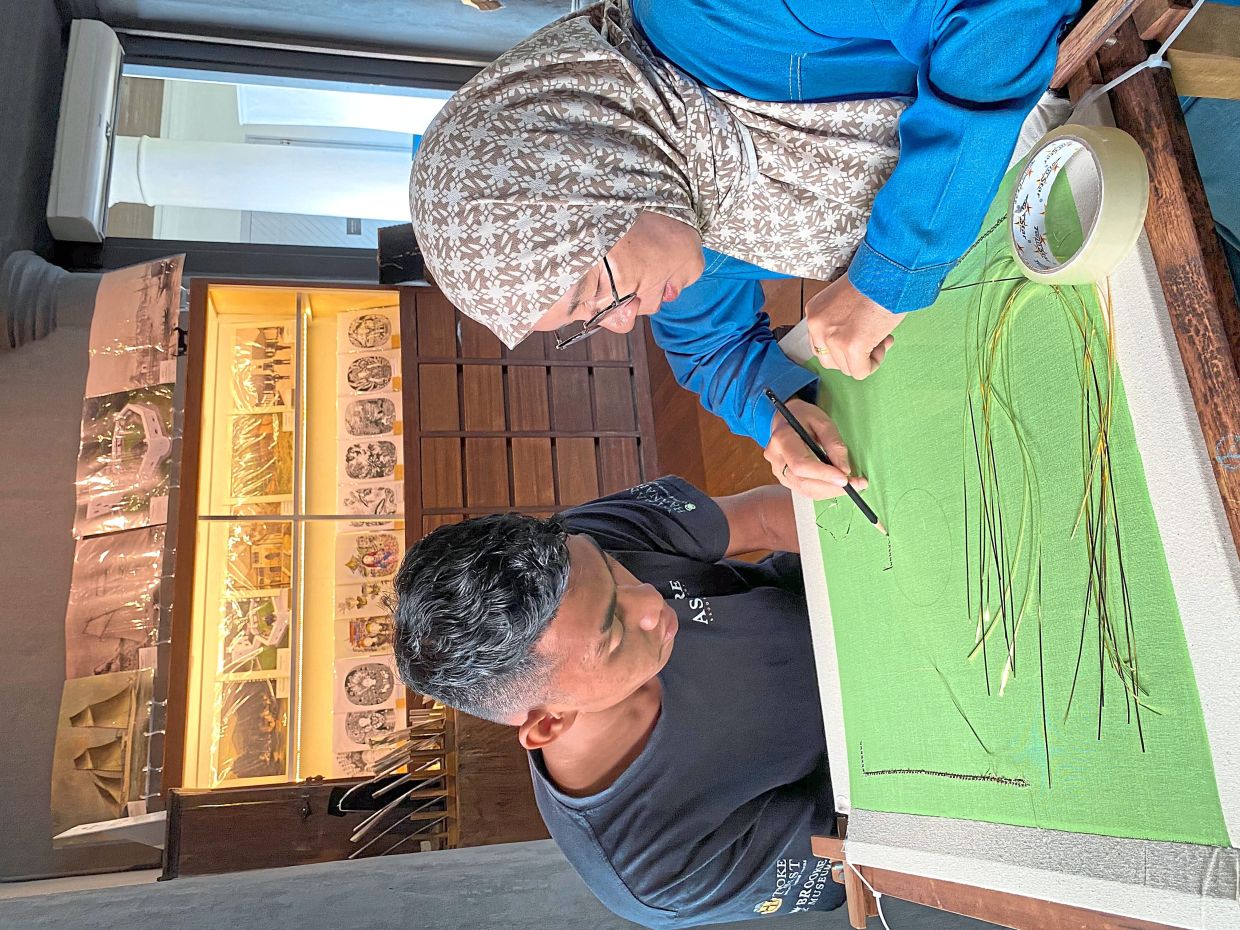
During a video call, his eyes beamed with excitement as he spoke about his interest in this handstitched craft, traditionally used to embellish sheer fabrics such as Swiss voile and rubia cotton.
The fabrics are made into selendang (shawl), selayah (veil) or tudung (head covering) worn during weddings or other important ceremonies. In Kelantan, this embroidered piece of fabric is known as kelingkan.
In August, Amran was one of 50 trainees who graduated from the Aspire programme – a youth development initiative aimed at preserving keringkam embroidery while empowering young people in juvenile institutions.
Launched in June 2023 by the Brooke Museums, which manages the Brooke Gallery and the Ranee Museum in Kuching, with support from Yayasan Hasanah, the 24-month programme involved incarcerated youths from Sekolah Henry Gurney Puncak Borneo Kuching (SHGPBK), Sekolah Tunas Bakti (STB) and Taman Seri Puteri (TSP) in Kuching.
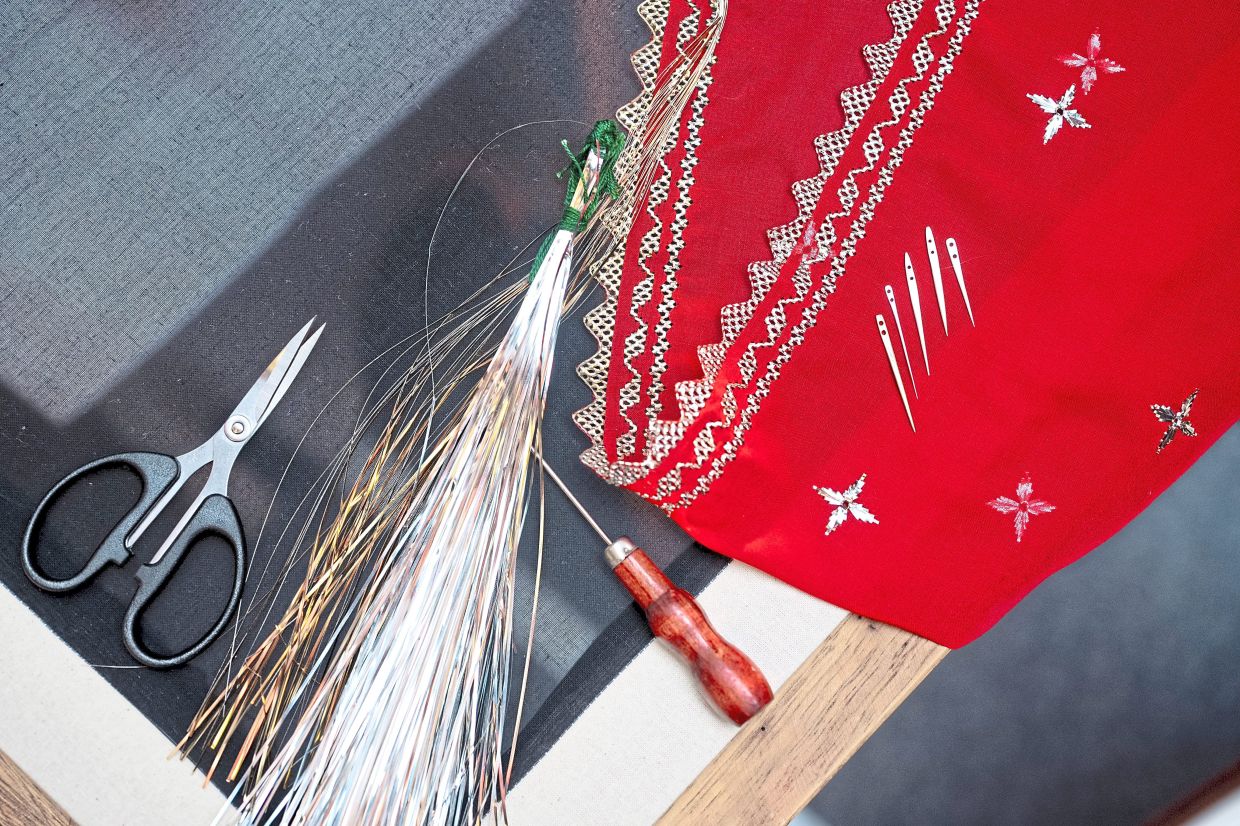
During the course, Amran and other trainees learned keringkam embroidery under the guidance of master artisans like Ros Salleh, Siti Mariam Wahab and Faruq Kadir.
“My teachers have guided me immensely. Once you’ve mastered the basic stitches, especially the tali air (water canal), it usually takes about three months to learn other stitches,” explains Amran in a mix of Bahasa Malaysia and Bahasa Melayu Sarawak.
Hope for a better future
International Day of Persons with Disabilities (IDPD), celebrated annually on Dec 3, aims to promote awareness, understanding and the rights of people with disabilities.
This year’s theme, “Fostering disability-inclusive societies for advancing social progress” is meaningful for people with disabilities like Amran.
According to a 2023 study titled “Teaching Vocational Skills to Students with Low-Functioning Disabilities”, effective teaching practices can enhance cognitive development and improve students’ post-school outcomes.
The study also highlights how consistent encouragement helps learners maximise their potential and abilities during training sessions.
Training is especially important for people with disabilities, as it helps them build independence and develop essential life skills for the future.
Learning keringkam is no small feat, especially for someone with learning difficulties. But Amran isn’t easily discouraged.
“At first, it was difficult, but over time, it got easier. I find that the pucuk rebung (bamboo shoot) and tali air motifs are more challenging because they take a long time to complete.
“One of the problems I faced was when the gold or silver thread snapped. It was stressful since the thread is expensive, so I had to be more careful. But as I became better at stitching, it wasn’t as difficult anymore and I could complete my keringkam pieces faster and with better quality too,” says Amran, who was released from SHGPBK in 2023.
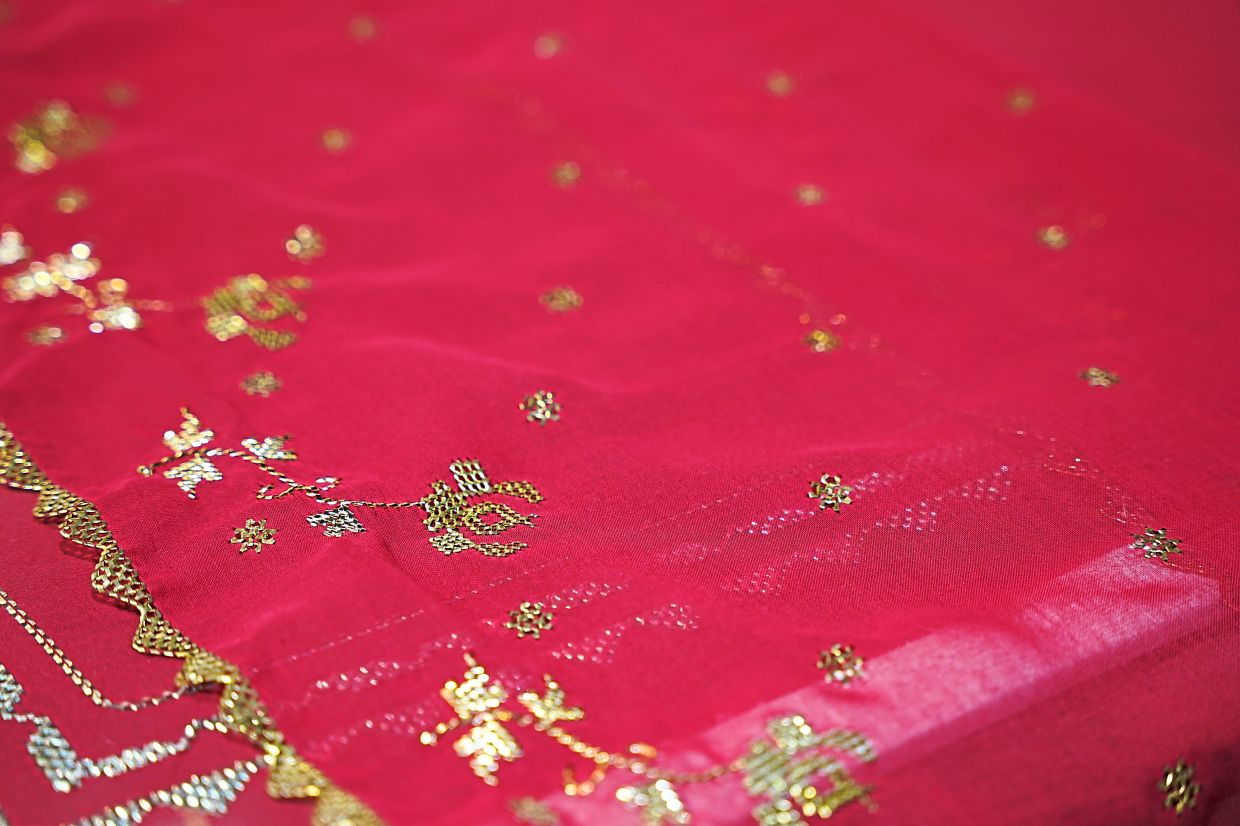
Keringkam is known for its intricate designs, painstakingly embroidered by hand using delicate gold or silver thread.
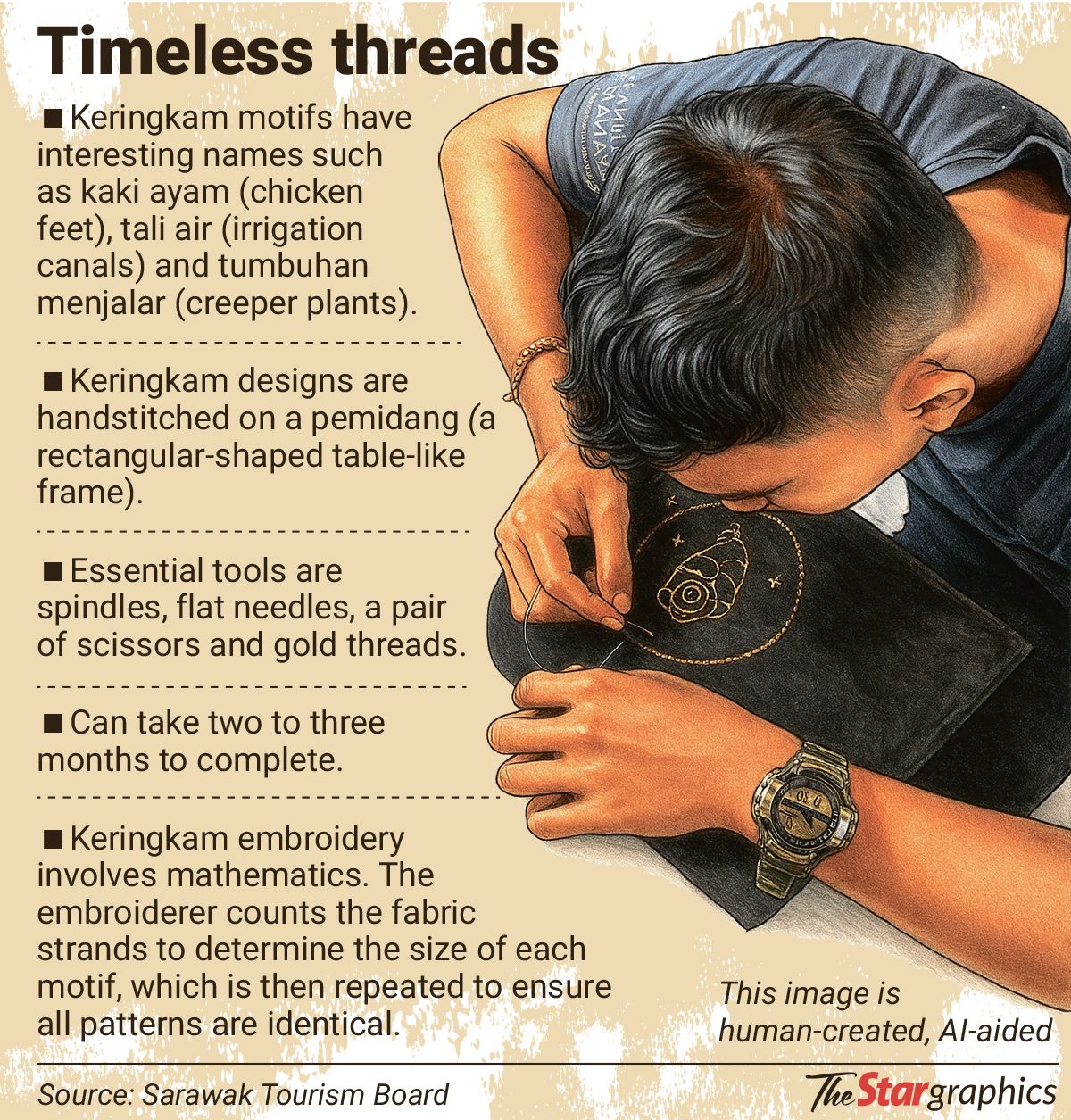
The fabric is stretched over an embroidery frame and the artisan threads a fine gold or silver ribbon through a flat double-eyed needle (jarum pipih), taking care to keep it flat and untwisted.
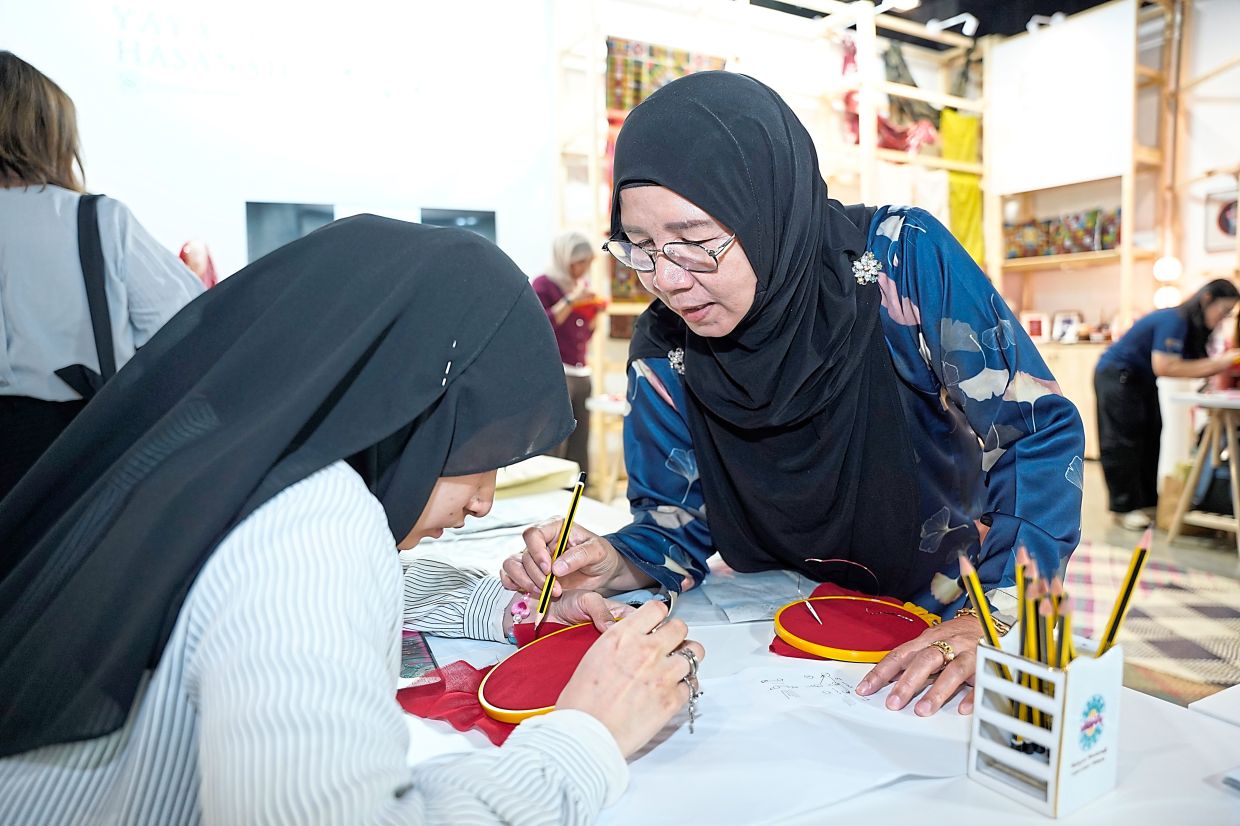
The needle is then pierced through the fabric, the metallic strips forming intricate patterns. The most important basic stitch is tali air (water canal), a continuous line used to outline the edges of a keringkam piece.
Once you’ve mastered this, you can learn other stitches like tali air kaki lipan (centipede legs) and tali air gunung berkaki (mountain range). Motifs like bintang (star) and bunga (flower) are often used on scarves and shawls.
Through practice, Amran says he has learned to be patient.
“I wasn’t as patient as I am now, especially when the gold or silver thread broke during the process. But over time, I learned to be calmer. Seeing the finished embroidery gives me great satisfaction. For me, it doesn’t matter whether the process is slow or fast, as long as the final result is of high quality.”
His favourite motif is the tabur bintang (scattered star). “Its shape is beautiful, like the stars. It looks perfectly placed and very attractive on the keringkam fabric.”
The time taken to complete a piece varies, Amran says. “Sometimes, it takes me a month or two to finish a single piece. If I work faster, it can be done in just over a month.”
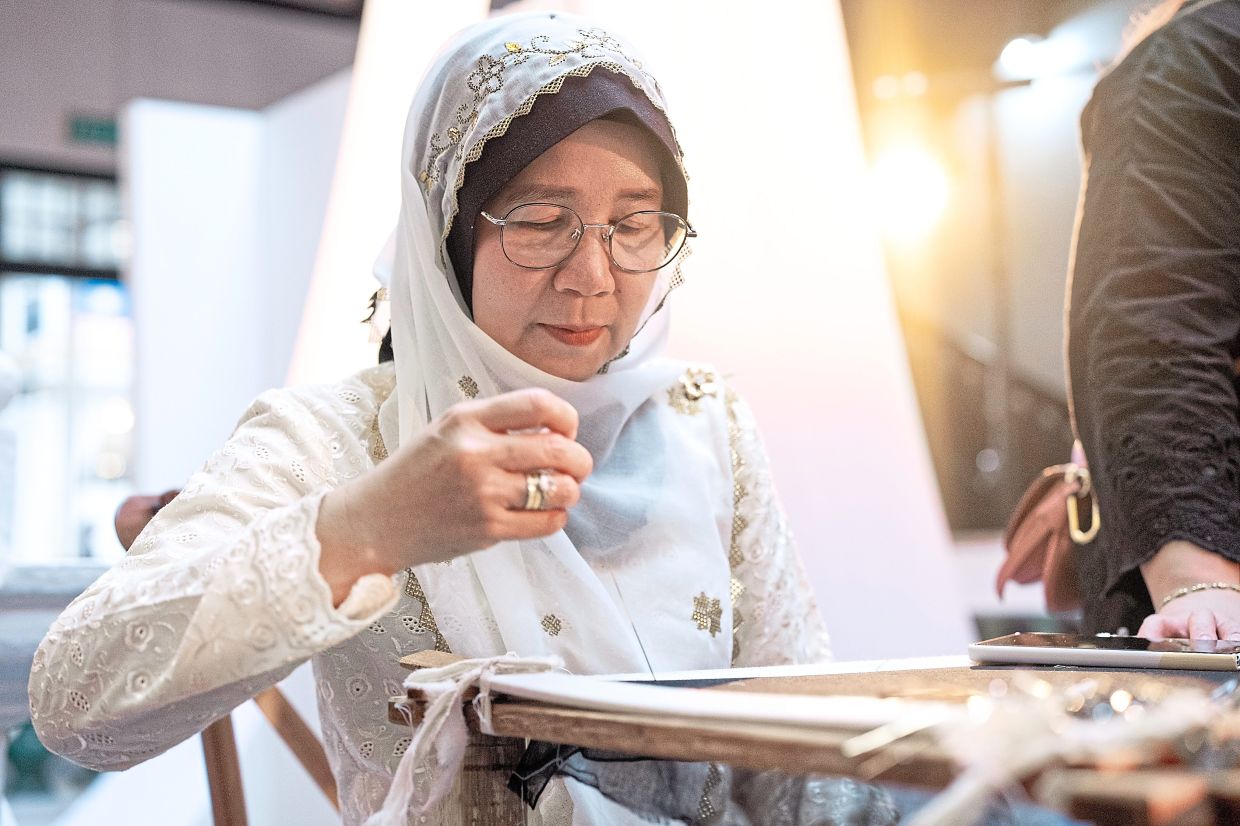
Crafting confidence
Ros, who trained students from SHGPBK, TSP and STB says all her students have made impressive progress.
She is especially delighted by Amran’s enthusiasm for this traditional craft.
“The boys at SHGPBK surprised me the most. They are very focused and detailed in their work,” she says.
Ros is also pleased that more young men are now learning keringkam, a craft traditionally practised by women.
“It doesn’t matter whether it’s a male or female student – what matters most is their interest in keeping this heritage alive. There are very few keringkam crafters left, and we need the younger generation to continue this legacy,” she adds.
Ros, who hails from Siburan, Sarawak, was once a homemaker running a small home-based business sewing traditional Malay outfits.
She learned keringkam in 2007 when she joined a workshop organised by the Federal Land Consolidation and Rehabilitation Authority (Felcra). She never imagined that the course would lead her to change her career path entirely and became a full-time keringkam crafter.
“Initially it was difficult because everything was new to me,” she recalled. “I struggled with the fine art of keringkam – especially calculating the knots and tracing the designs onto the cloth. But after a few weeks, I began to get the hang of it.”
Ros estimates that there are only about 30 active keringkam crafters left in Sarawak, and she is eager to train more people. To date, Ros has trained over 50 individuals in rural areas through keringkam workshops sponsored by Yayasan Hasanah. Most participants are between 40 and 60 years old.
“The youth aren’t very interested because they find it to be tedious. And the cost of silver and gold thread is expensive. A roll of gold thread costs about RM200. And it takes about six rolls of thread to complete a simple selayah. A lot of effort is needed to make one piece, and one requires years to perfect the craft. That’s why young people prefer office or online jobs... they pay better,” she said.
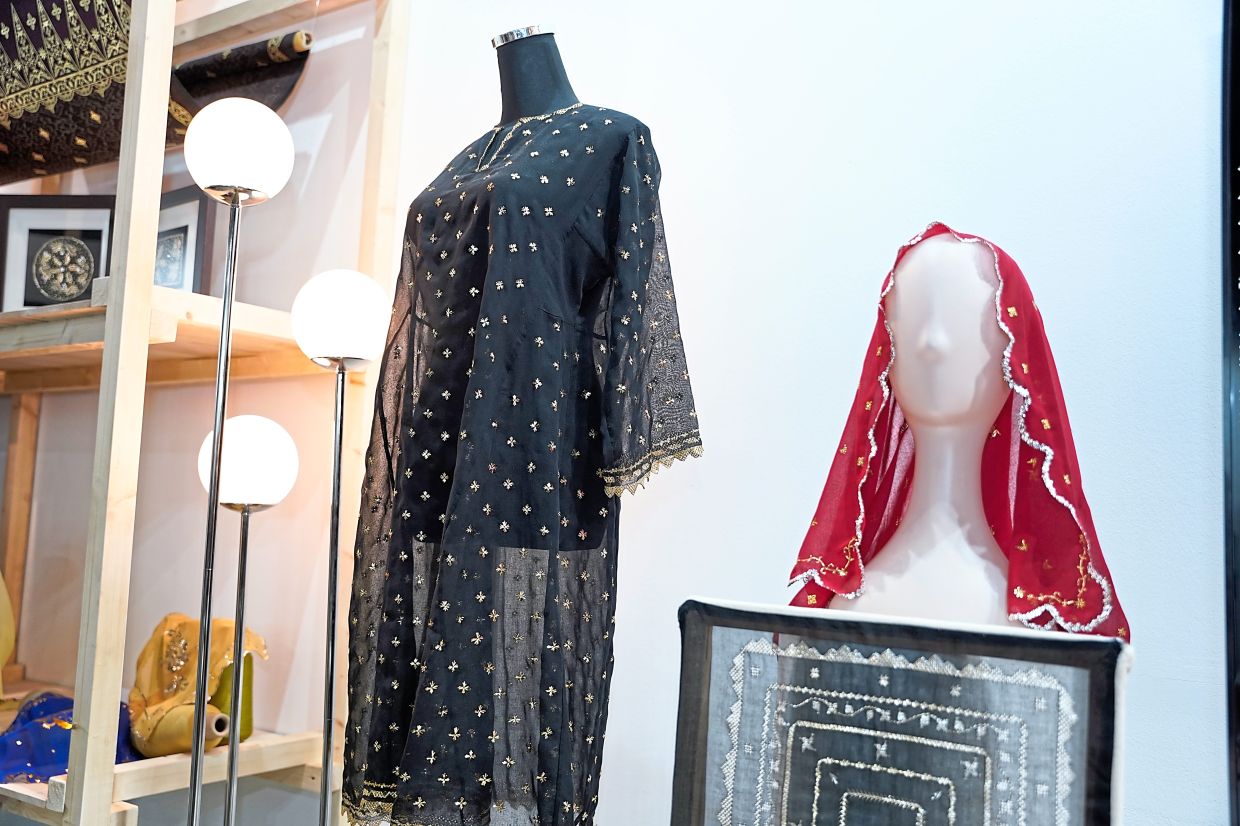
Depending on the complexity of the design, Ros says a single selendang keringkam can take up to three months to complete and is priced between RM5,000 and RM13,000. Her clients include brides, teachers who are about to retire and affluent individuals.
On a good month, she can earn a five-figure income as a keringkam maker. In fact, she has employed three staff to help with her growing home-based business. She has also showcased her skills internationally, including during London Craft Week.
She sees the potential in this craft and hopes to help more people, including the disabled, to hone their skills.
“This craft has given me a livelihood, and I want others to feel that same pride too. If we keep teaching and sharing, keringkam embroidery will never die,” she concludes.
Gold threads, new horizons
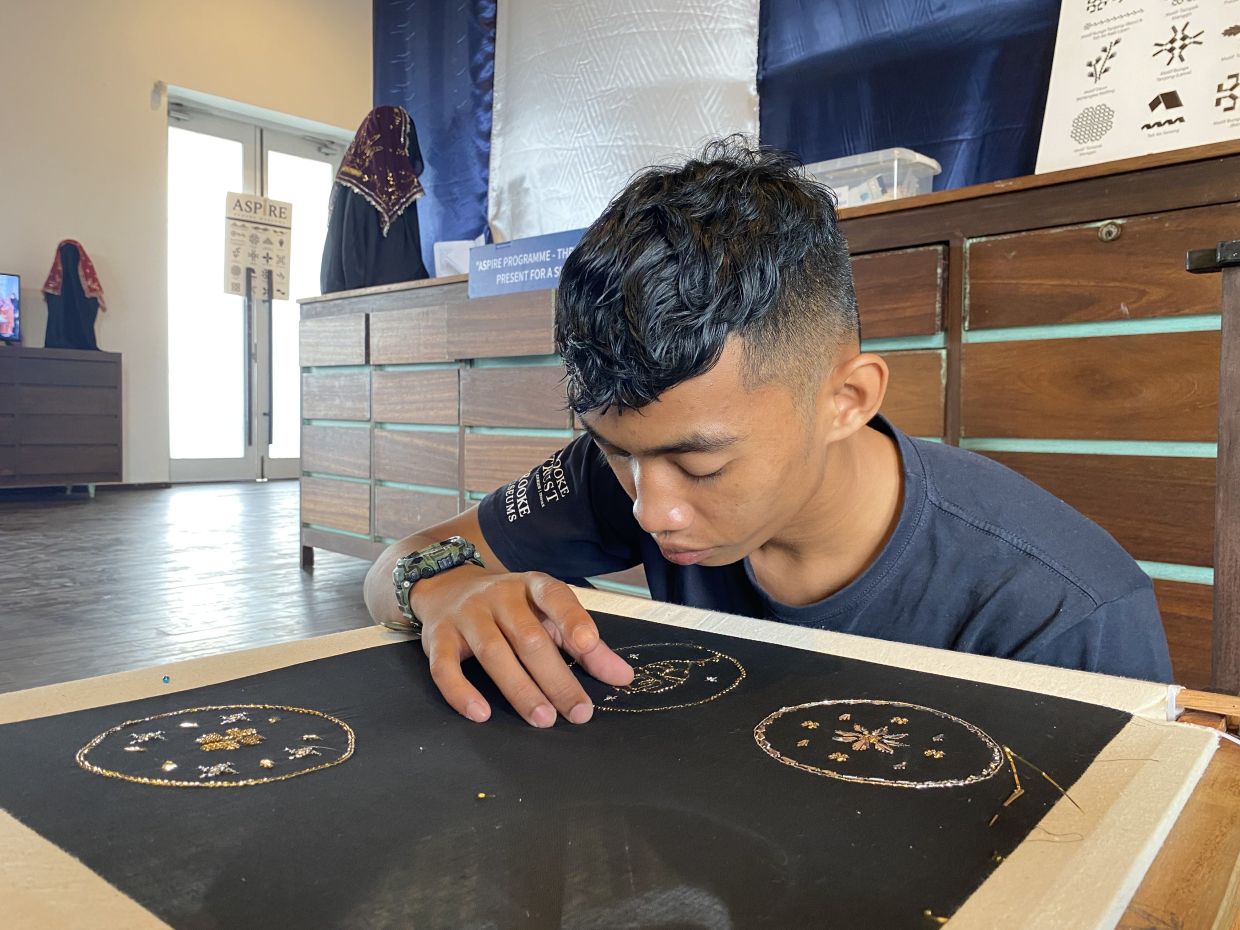
Amran is learning keringkam as a craft and a skill that will help shape his future. Photos: Brooke Museums
Ros (right) mentoring Amran to ensure the centuries-old craft of keringkam remains.
Photo: Brooke Museums
'With only a few crafters left, keringkam is a heritage art that needs the younger generation to keep it alive,' says Ros (right).
Photo: Brooke Museums
One shawl with keringkam embroidery can take months to make, using threads worth hundreds of ringgit. Photo: Yayasan Hassanah
Ros wears her handmade keringkam head covering, called Keringkam Datuk Siti Nurhaliza, featuring pucuk rebung motif at the tip and bunga tampuk manggis, inspired by the mangosteen. Photo: Yayasan Hassanah
Each keringkam shawl takes months of meticulous work; a true test of patience and precision.
Photo: Brooke Museums
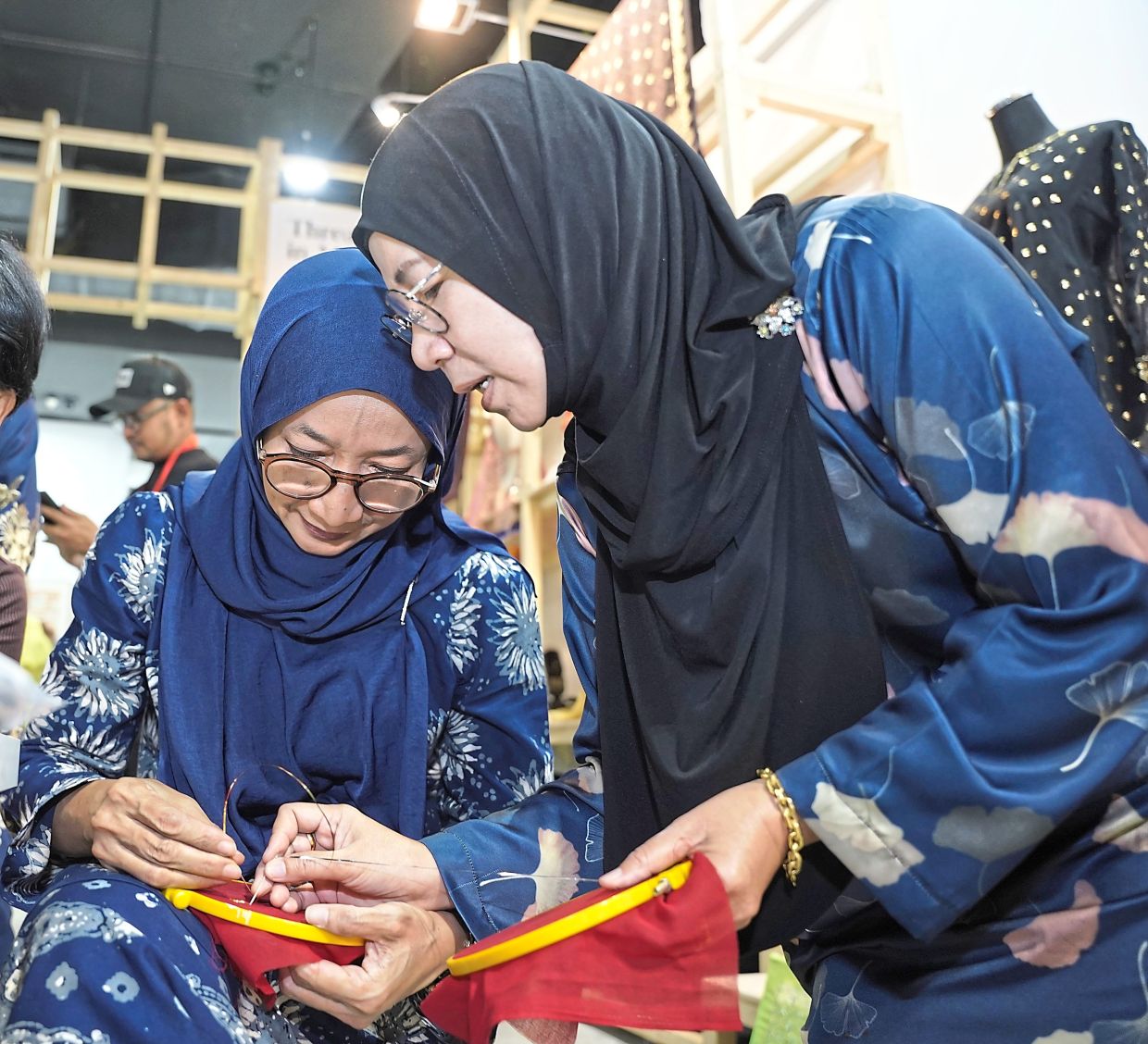
Ros (right) works on a keringkam embroidery piece with Nik Marhammah Nik Megat (left), one of the few crafters in Kelantan. Photo: Yayasan Hassanah
Keringkam is one of the few traditional crafts from Sarawak that is at risk of fading away. Photo: Yayasan Hassanah