In China, some seniors hoping to stay fit and live longer are taking up weapon training – but not for lethal purposes.
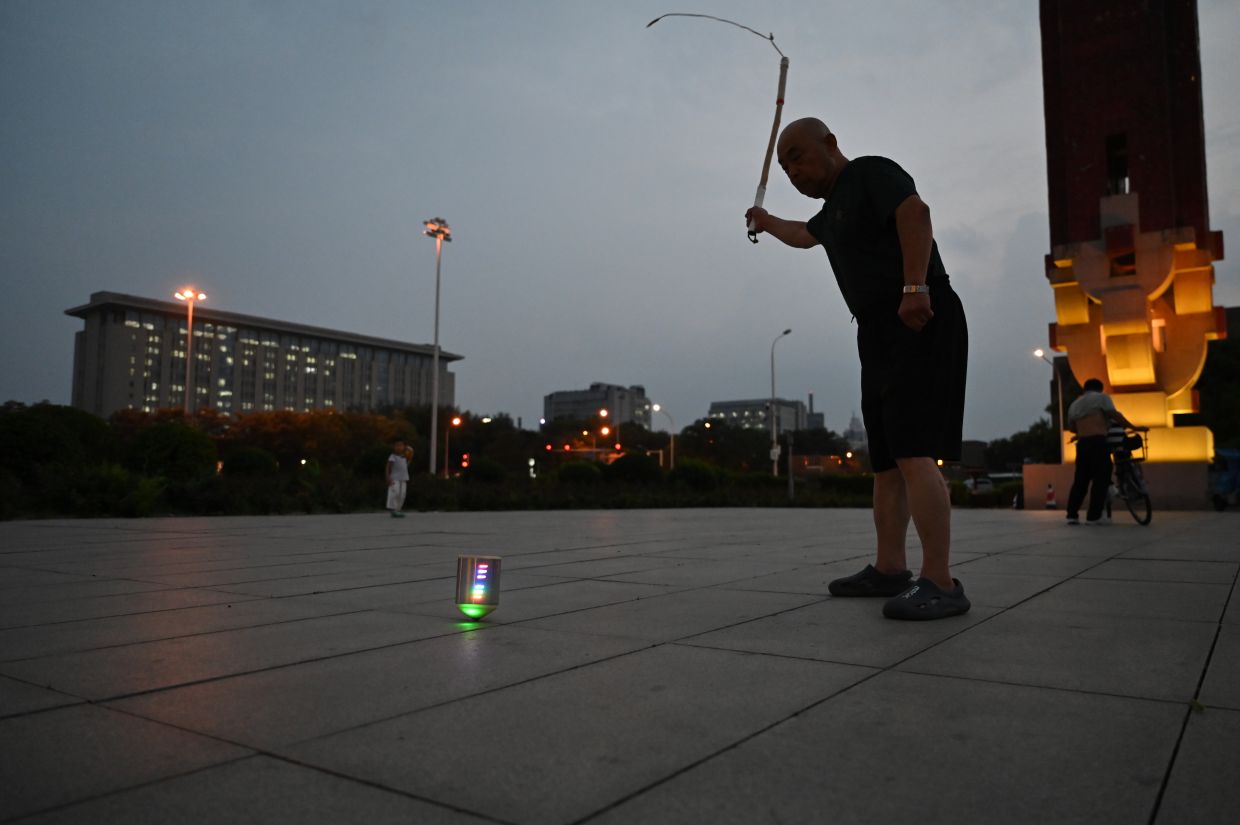
For some retirees, these unconventional sports tools are part of their daily routine. Take Wang, for instance: In a park near Beijing’s Olympic Centre, he swings his whip with steady, focused precision.
With each sharp crack, he drives a colourful spinning top through the humid summer night.
Wang recalls that years ago, his doctor advised him to exercise more due to his stiff shoulder. After some consideration, he decided to buy a whip.
“An old man in our home town told me to buy one. I can’t do any tricks. I just swing it back and forth twice,” says Wang, who, like some others, prefers not to give his full name.
More time for new things
“Older people today pay more attention to self-care. They exercise and lead a healthy lifestyle,” said Liu Yajun, a doctor of traditional Chinese medicine.
Exercise strengthens muscles and bones, improves coordination and balance – all of which are especially important in old age. Liu considers early retirement a great opportunity, as it allows people to try new things.
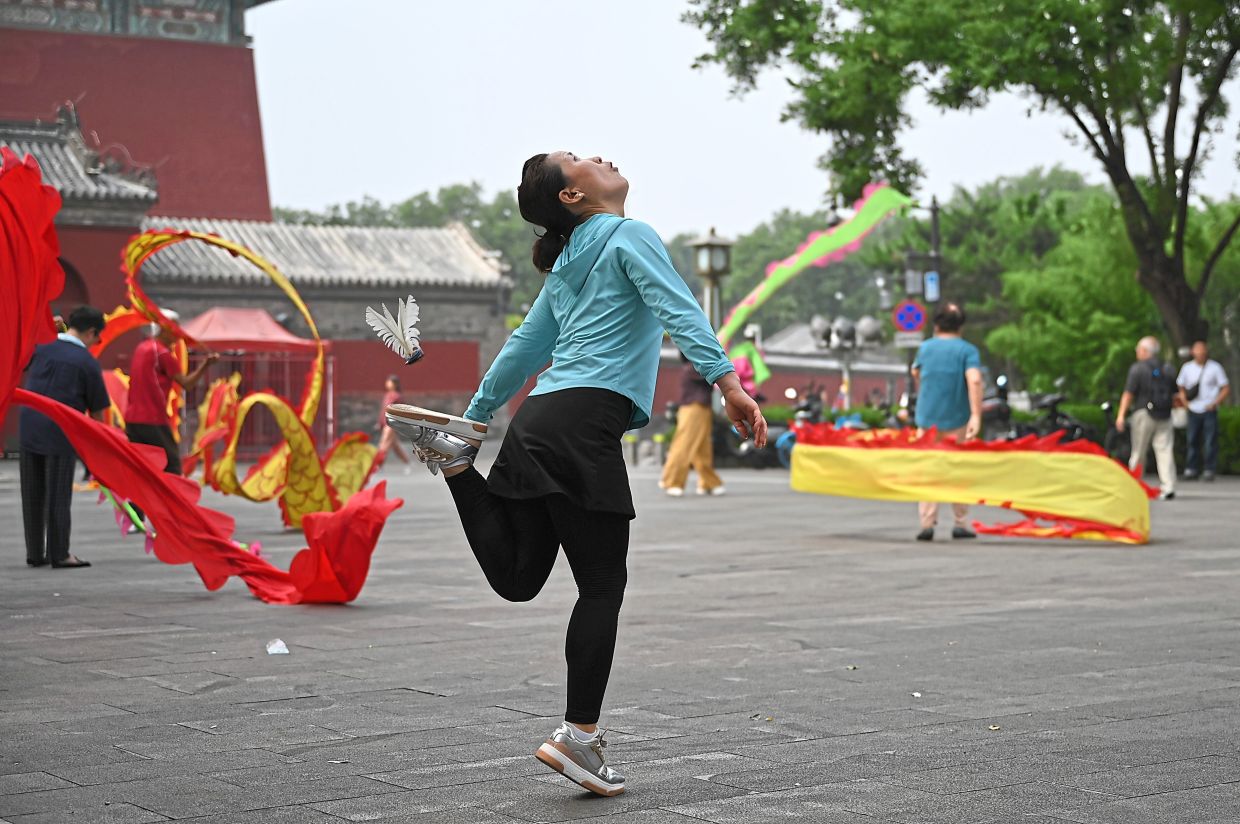
Wei seized this opportunity. The 51-year-old retired early and now trains almost every morning with other retirees in the square in front of the famous Drum Tower in central Beijing, practising Tai Chi with swords and fans.
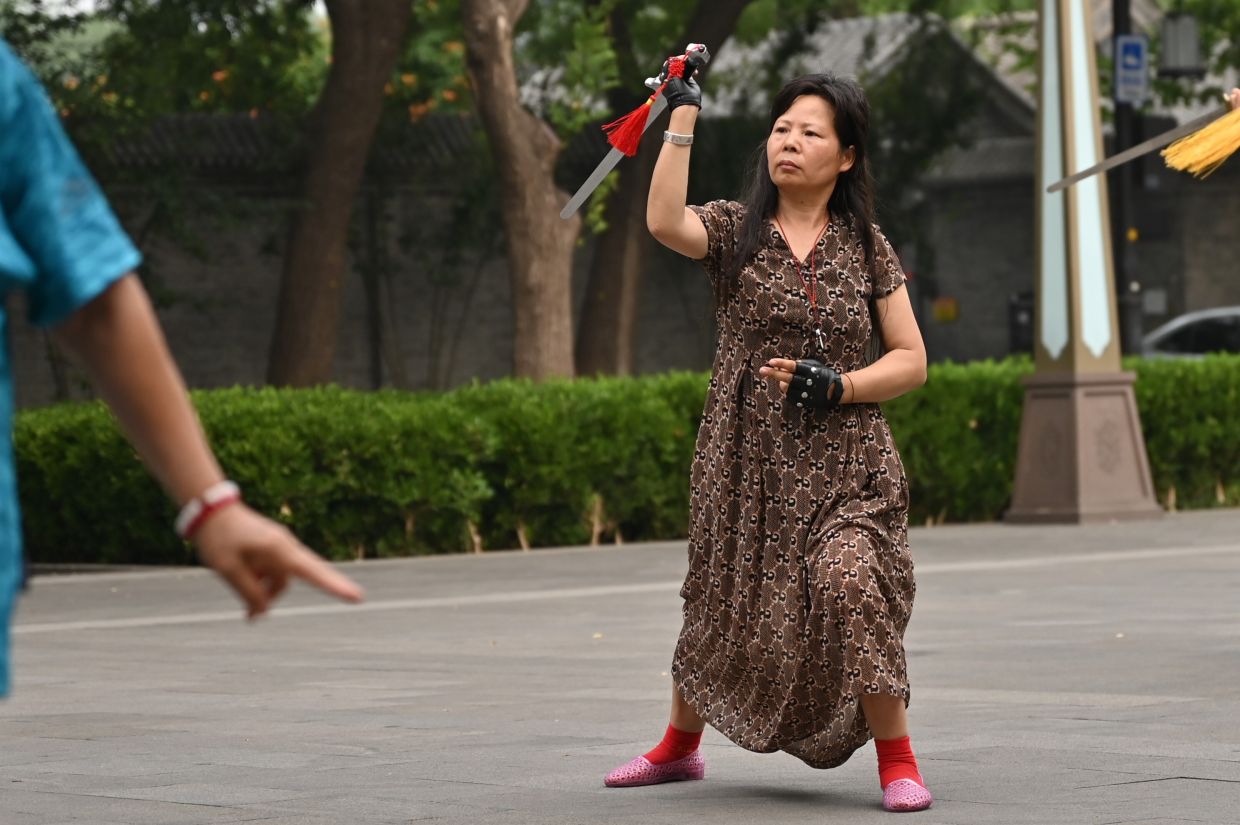
“It promotes blood circulation and helps with minor physical ailments,” she says. She dedicates one to two hours per session to the meditative martial art.
China’s population is ageing rapidly. With the baby boomer generation now retiring, the number of pensioners is increasing.
At the same time, a declining birth rate is putting pressure on the pension system and the labour market.
Experts estimate that China’s population, currently around 1.4 billion, could halve by 2100. As a result, Beijing has been gradually raising the retirement age since this year – from 60 to 63 for men and from 55 to 58 for women.
China’s economy, which is struggling with weak consumption, sees opportunities in catering to the elderly. Specially adapted trains for retirees are available for travel.
These “silver hair” train journeys not only provide meals on board but also include medical stations. By 2035, the government expects the “silver economy” to contribute 9% to growth, up from the current 6%.
Beijing promotes fitness
Sports products are also in demand, supported by state initiatives. Nearly half of all adults are considered overweight.
According to state media, demand for sports equipment and fitness programmes among retirees has risen. Surveys suggest that about half of retirees exercise at least once a week.
The ideas are endless: Online videos show elderly athletes performing unusual exercises. Some push their backs against tree trunks to stimulate blood circulation. Others hang their heads in a type of swing and sway back and forth.
However, the “neck hanging” exercise is not without risks. After reports of fatal accidents, authorities banned the practice in some parks.
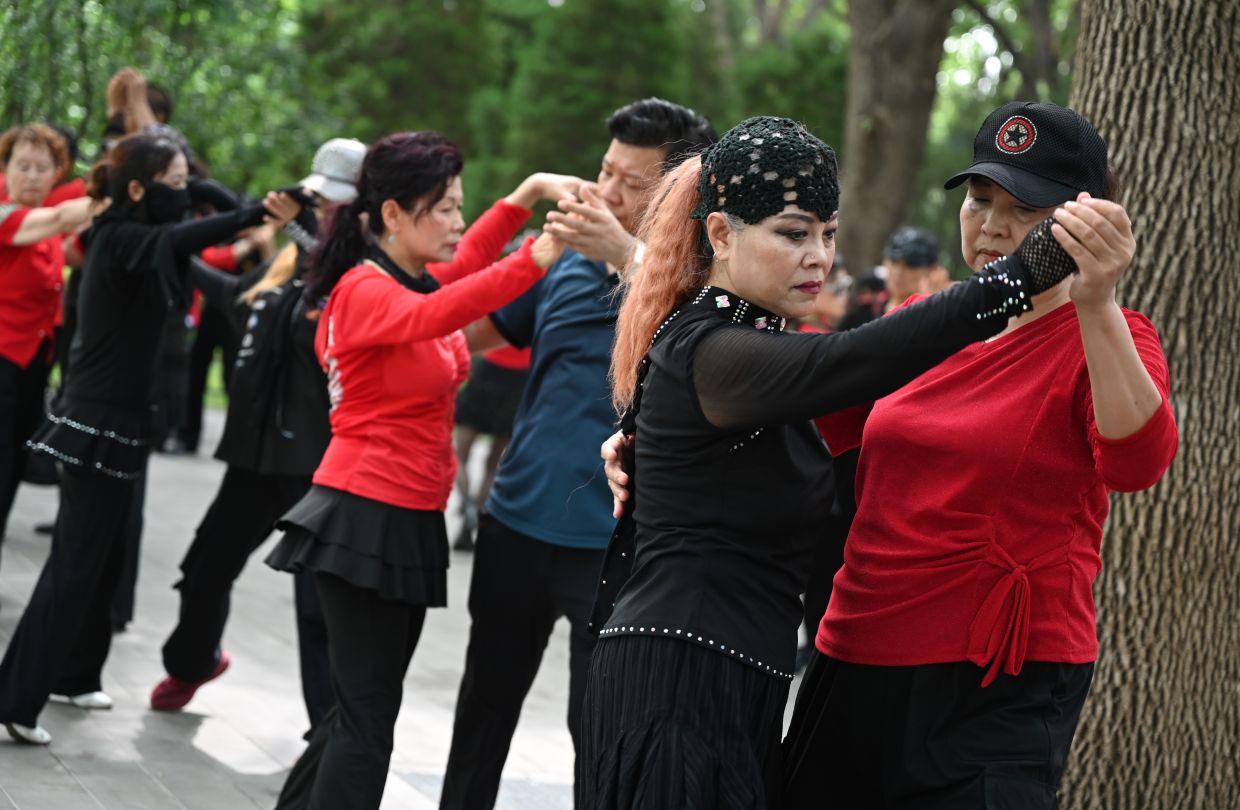
Dancing is less dangerous. Anyone strolling through Chinese cities in the evening will often see large groups of women dancing in public squares to loud Chinese techno music.
In Beijing’s Taoranting Park, Ge Fang prepares for her dance group’s training on a sweltering morning.
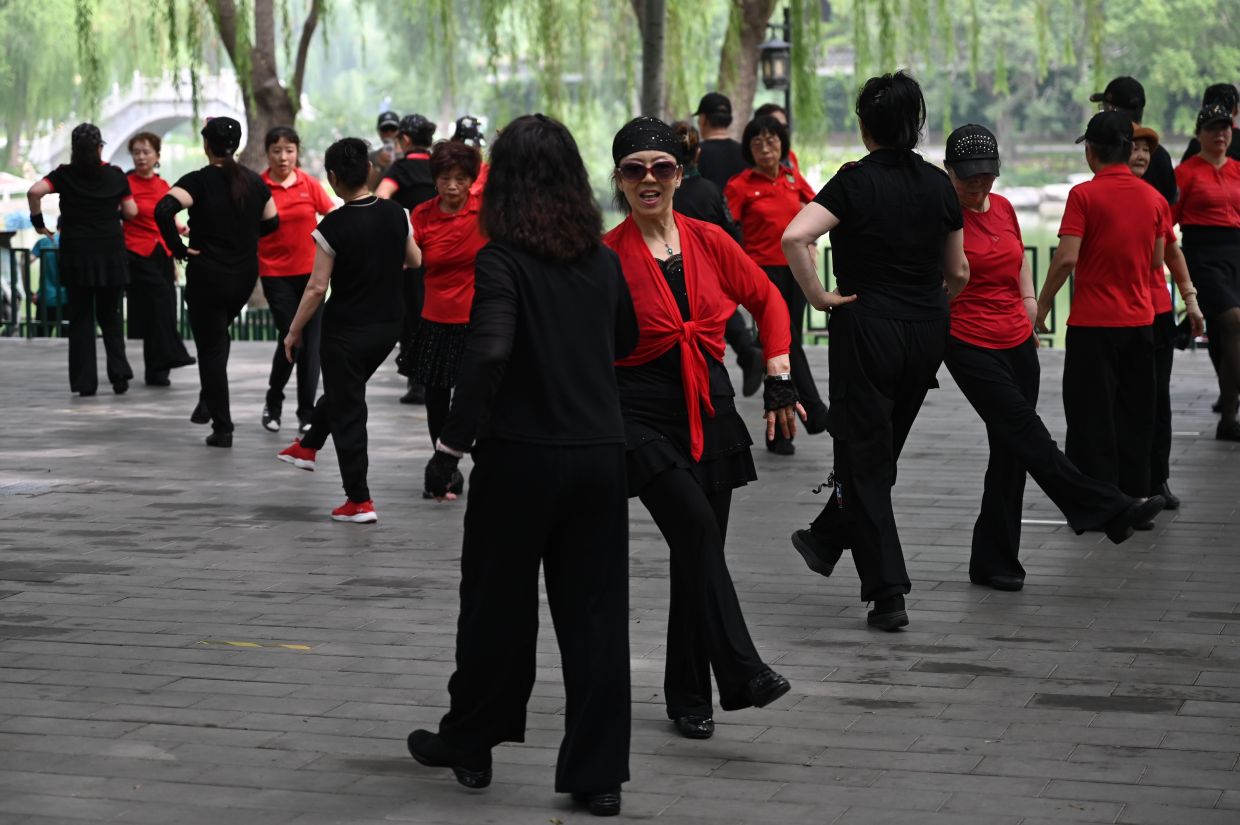
“I come here every day,” says the 68-year-old. She discovered the hobby in retirement. Her group dances the “sailor dance” – a type of Chinese swing.
“This activity has a great impact on the health of older people,” says Ge, pointing to a fellow dancer who is already over 80 years old. After so many years of dancing, she feels happy and healthy.
“Dancing is the most wonderful thing,” Ge says.
Another popular activity in China is “Jianzi,” a feathered shuttlecock that is kept in the air, sometimes with acrobatic skill.
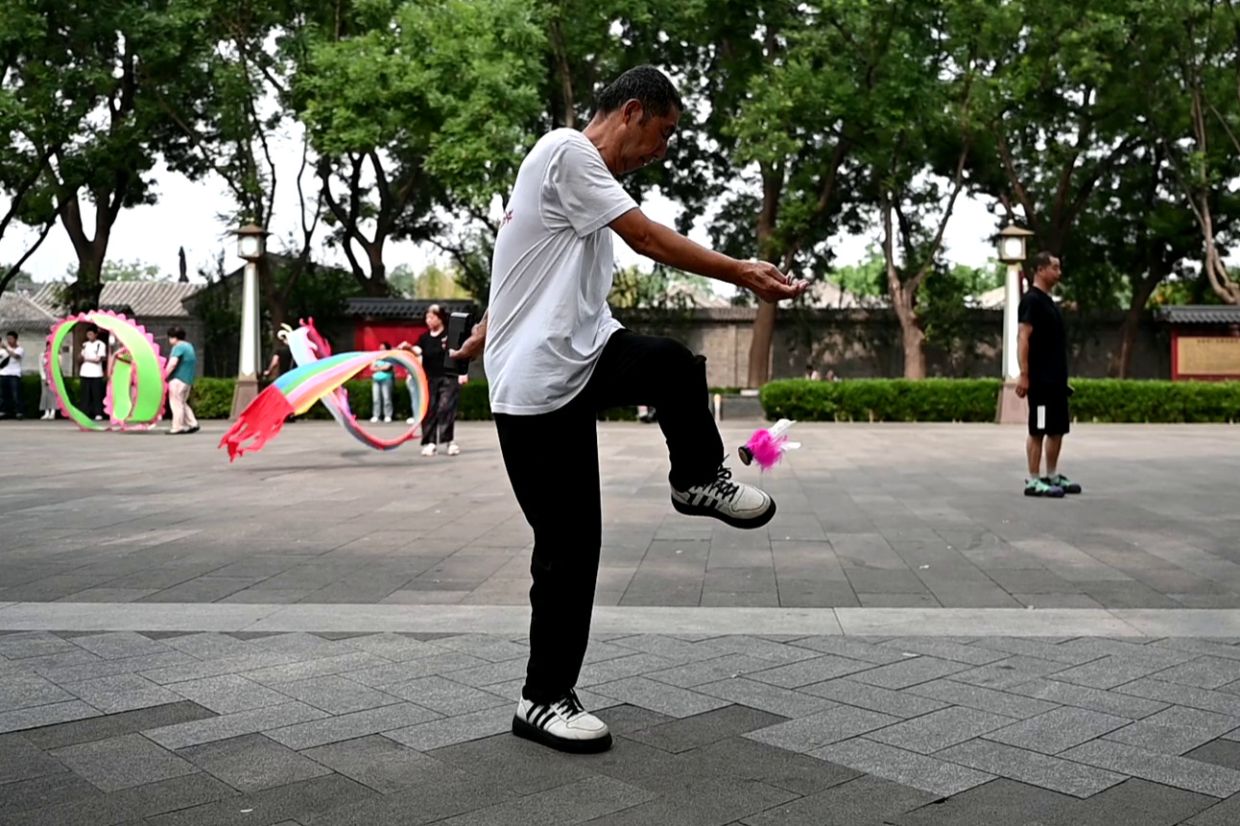
At the Drum Tower in Beijing, retirees mention Lao Fan as the best player. The 70-year-old explains that Jianzi has been played since the Eastern Han Dynasty (206 BC to 220 AD).
He started playing seven or eight years ago. “Feathered shuttlecock is exercise, and while exercising, it serves as a bridge of friendship because strangers can meet and become good friends,” he says.
Lao Fan sees another benefit: by staying healthy through Jianzi, his children worry less about him.
“It’s a win-win situation for everyone,” he says. – dpa