
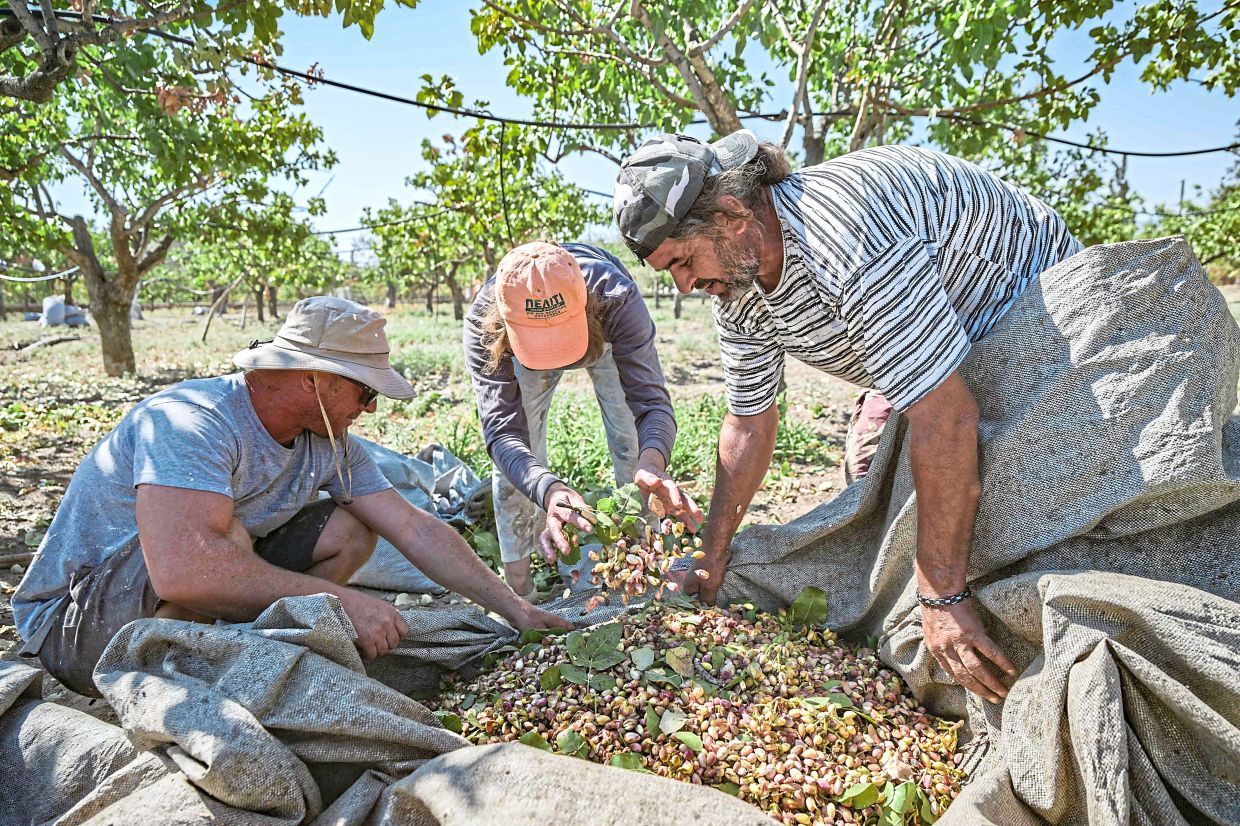
Four farmhands whacked a pistachio tree with sticks, and ripe nuts rained down onto tarpaulins. The bounty seemed plentiful but the crew was unimpressed.
"Few pistachios," Albanian worker Daso Shpata, 47, said under a blazing sun on Greece's Aegina island, among leafy trees bearing clusters of the red fruit and against a backdrop of chirping cicadas.
Climate change has slashed harvests. But there were other headaches too: children disinclined to continue the family business, trees replaced with holiday homes.
"The pistachio culture that we know is no longer viable," said Eleni Kypreou, owner of the orchard on Aegina.
"If we want to save the trees, we need to decipher what they need... Otherwise it'll be something for the museum," she said. Aegina is nowhere near the biggest pistachio producer, a distinction that goes to the United States and Iran, which produce several hundreds of thousands of tonnes each year.
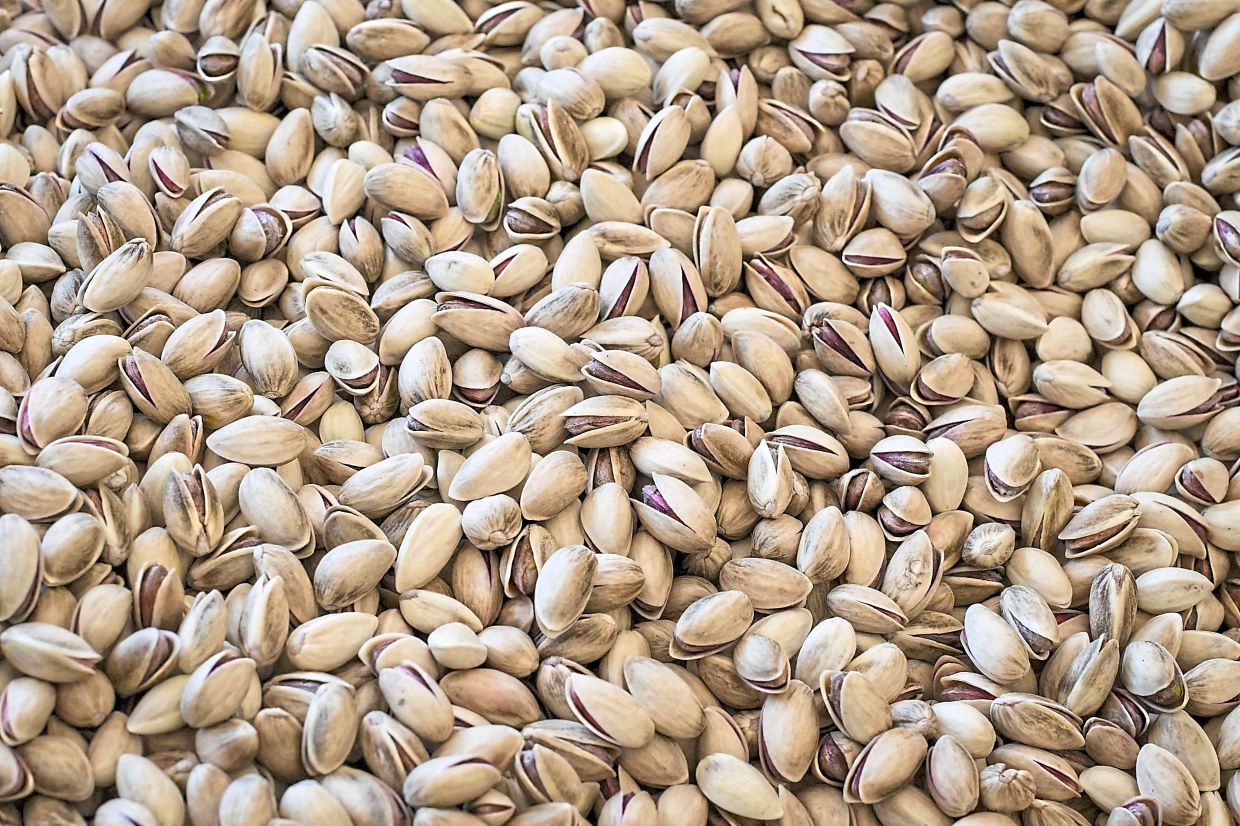
But the tourist-heavy island – an hour by ferry from Athens, escorted by seagulls prowling for food – is said to have Greece's tastiest pistachios.
The "special flavour ... comes from the ground, from the water. The water is a little salty," said Kypreou.
The 88-year-old treasures her 750 pistachio trees, known as roots ("riza") in Greek. She sings and speaks to them, hoping for a good season.
"The last couple of years, we had almost nothing. Twenty kilograms last year, 100kg in 2023. So we were expecting a good harvest this year. But it's not (happening)," she said.
In 2023, Greece produced nearly 22,000 tonnes of pistachios, up from 12,000 in 2015, according to the Hellenic Statistical Authority.
But Aegina's share fell from over 2,600 tonnes to 2,300.
Its number of trees in productive age and hectares of utilised land also steadily dropped – unlike for Greek pistachio production overall.
"The last two years were bad mainly due to climate change," said Kostas Peppas, president of Aegina's cooperative of pistachio producers.
The trees need "... certain hours of temperature below 10°C-12°C. To sleep, to rest. So if the winter is mild, it's not good," he said. The cooperative buys pistachios from its producers and sells them to shops and supermarkets and from its own kiosk at the port buzzing with tourists.
Peppas said he believed most sellers at the port had "bought pistachios from other places" because there was not enough on the island.
He himself has 230 trees – mostly females, which make the pistachios, with two bigger males for pollination. His father swapped the family vineyard for pistachios 80 years ago.
"There is no room to plant more. But there is no room in Aegina... They're cutting trees and planting houses," the retired sea captain, 79, said.
He was "sad, angry, surprised" when a childless acquaintance cut up his best pistachio tree to build.
With Greek tourism booming – the European Union member breaks visitor records each year – short-term rentals have multiplied across the country, particularly in Athens but also on the islands.
Nothing you can do
Thanasis Lakkos, 53, held up a branch of one of his 3,500 pistachio trees. It was laden with pristine fruit which, when peeled, revealed the nut.
He decided that watering it with rain water collected in winter had helped it thrive.
Most of the producers "follow what their grandfather did ... but that's not how it works," he said, adding he believes one must seek to improve.
Nearby, a machine stood ready to sort harvested pistachios. The fruit with empty shells float to the water's surface while the good ones sink.
Lakkos vowed to "continue as long as I can", even if others see it as a senseless sacrifice.
They say "better to sell my land and make a million euros, and rest for the rest of my life", he said.
Lakkos's son left to become a DJ. The young who farm are few and far between.
"You can count them on the fingers of one hand," Lakkos said, adding that his cohort talk about being "the last generation".
He said it was sad and getting worse but "there is nothing you can do".
"The tradition will be lost." – AFP