




Sweating and out of breath, young Poles throw grenades and practise evacuating the wounded at a training ground outside Warsaw, Poland.
Instead of relaxing at the beach, they have chosen to do army drills over the summer holidays.
Nearly 10,000 men and women have volunteered for the month-long, paid “Vacation with the Army” programme, which the defence ministry launched to promote military service among young people as Poland beefs up its security.
The EU and Nato member – which borders Belarus, Russia and Ukraine – has been strengthening its defensive assets since Russia invaded Ukraine in February 2022 out of fear that it could be next.
“The training includes shooting and tactics classes, field studies and general air defence,” said lieutenant Patrycja Adamska, spokeswoman for the army’s 10th Car Regiment, one of the units involved in the programme.
“The recruits have an opportunity to experience the discipline of soldier life,” she said.
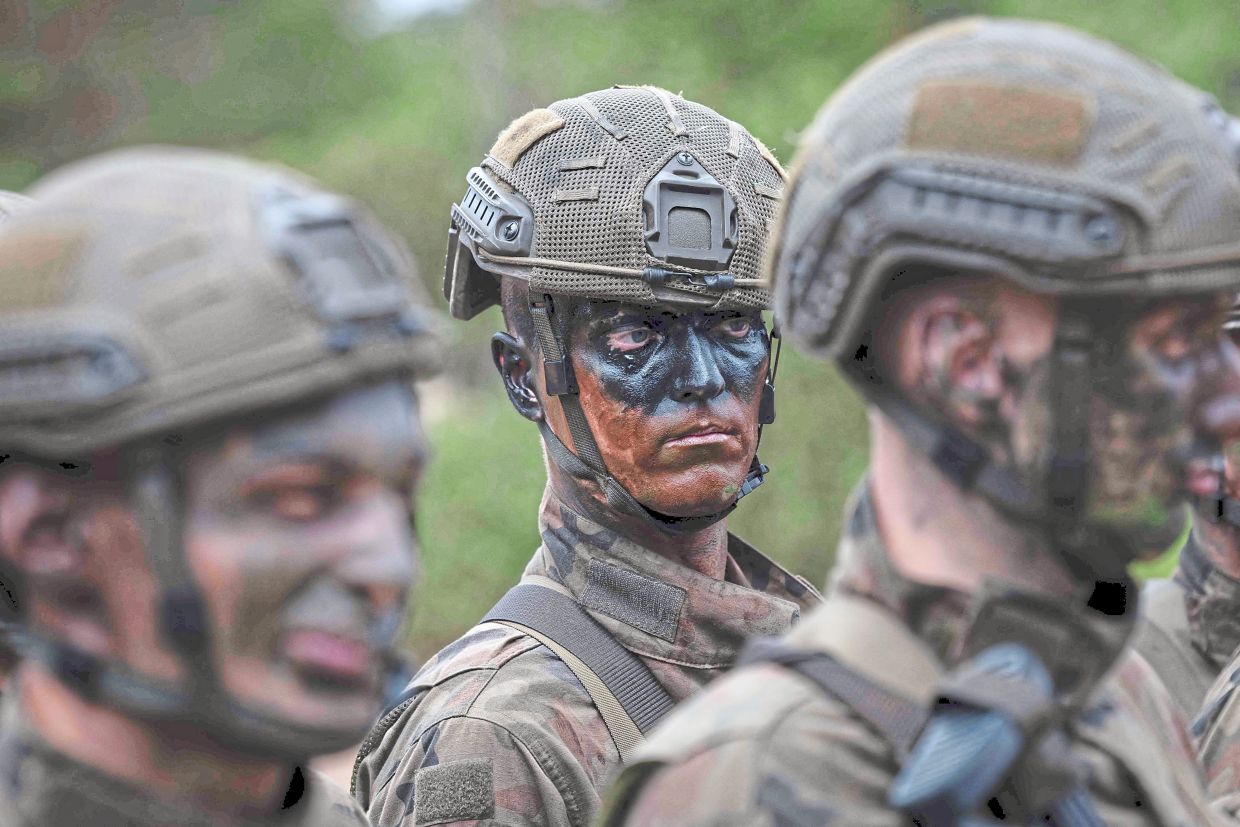
The participants, most of them 18 to 20 years old, spend 27 days in a unit, after which they are awarded a rank and can continue service or become part of the reserve personnel.
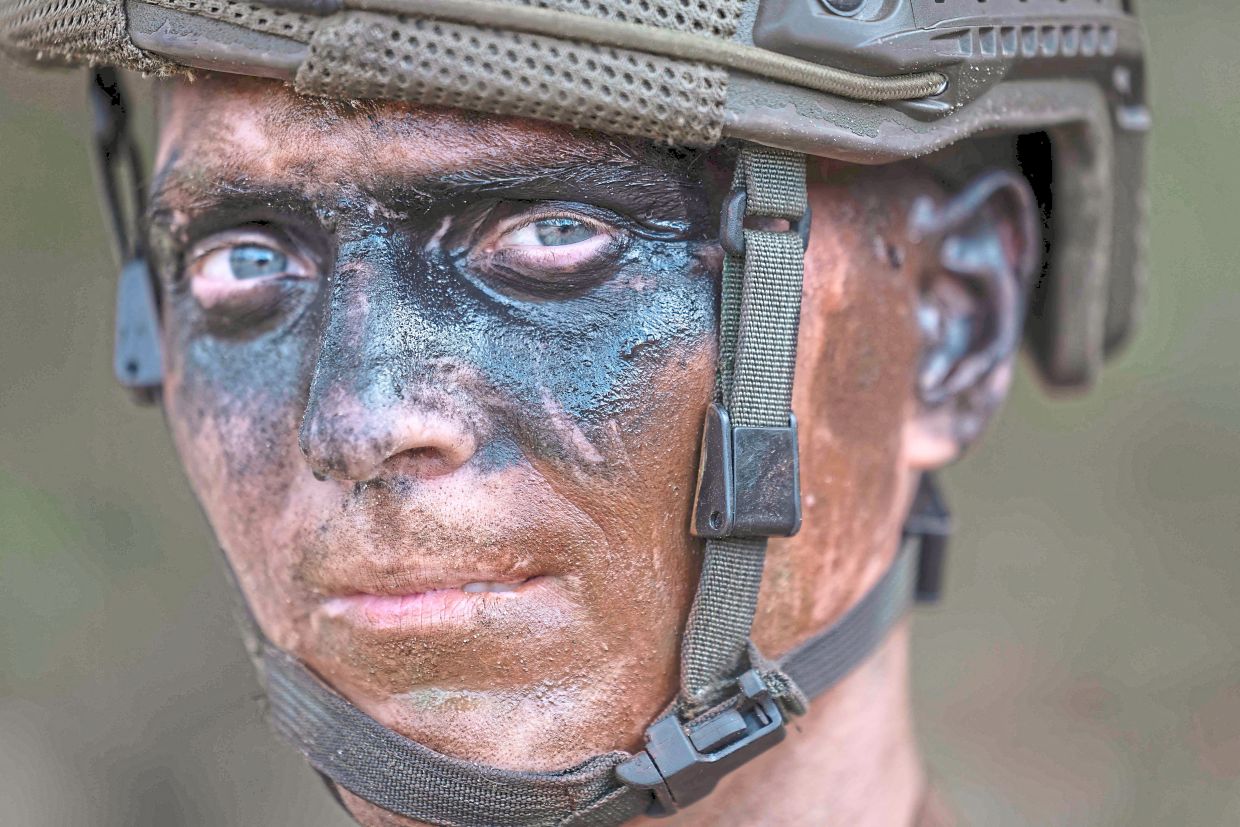
Michal Piekut, a master’s student in international security, was surprised by the rigour of the drills. Sporting camouflage paint and in full uniform, the 29-year-old was barely standing from the exertion.
“This is no vacation, it’s intensive military training. I thought I wouldn’t make it,” he said after dragging a heavy munition chest across many metres of sandy terrain.
“Nobody fainted yet, but the day is young,” he deadpanned.
Lieutenant Michal Gelej from the army recruitment office said the programme “constitutes a wonderful alternative to summer jobs”, as a payout of €1,400 (RM6,850) awaits those who complete it.
Goran Meredith, a 19-year-old American studies student at the University of Warsaw, said the money and summer timing allowed him to participate, otherwise he “wouldn’t have time to be here”.
The ongoing war in Ukraine was another incentive.
Piekut said he was considering a future military career: “I want to become a reserve soldier, and if need be, serve my homeland.”
Learning from Ukraine
Just after Russia’s Ukraine invasion, Poland adopted a homeland security law that included the goal of “enlarging military personnel”.
It also updated its voluntary conscription programme in 2022 with an eye towards increasing the army reserve. It drew nearly 90,000 candidates over the years 2023 and 2024.
The defence ministry launched the “Vacation with the Army” programme last year, along with exercises in schools and weekend boot camps for civilians, promoted by a large-scale social media campaign.
“The Ukrainian example teaches us that the professional army gets used up in about a year” if it cannot draw on adequate reserves, said Bartosz Marczuk, a Sobieski Institute expert who co-authored a report on the idea of introducing mandatory military training in Poland.
“We are the largest country on Nato’s eastern flank, and its keystone of security,” he added.
Marczuk said that any reintroduction of mandatory army service – which Poland ended in 2009 – would need to be preceded by voluntary programmes.
“That’s why all initiatives of this sort have to be supported,” he said.
In March, Polish Prime Minister Donald Tusk announced that by 2027, Poland will expand its voluntary military training programme to accommodate 100,000 recruits per year, in order to create “an army of reservists”.
Piekut doubted whether his compatriots were up to the task.
“Most adults could not handle it. There are very high requirements, physically, psychologically and in terms of discipline,” he said.
Meredith agreed: “We’re in our first week and 10 people have quit already, so it speaks for itself.” – AFP
