




Surrounded by the rubble of demolished homes, Chen Tianming’s ramshackle tower of faded plyboards and contorted beams juts into the sky in southwestern China, a teetering monument to one man’s stubbornness.
Authorities razed most of Chen’s village in Guizhou province in 2018 to build a lucrative tourist resort in a region known for its spectacular rice paddies and otherworldly mountain landscapes.
Chen, 42, refused to leave, and after the project faltered, defied a flurry of demolition notices to build his family’s humble stone bungalow higher and higher.
He now presides over a bewildering 10-storey, pyramid- shaped warren of rickety staircases, balconies and other add-ons, drawing comparisons in Chinese media to the fantastical creations of legendary Japanese animator Hayao Miyazaki.
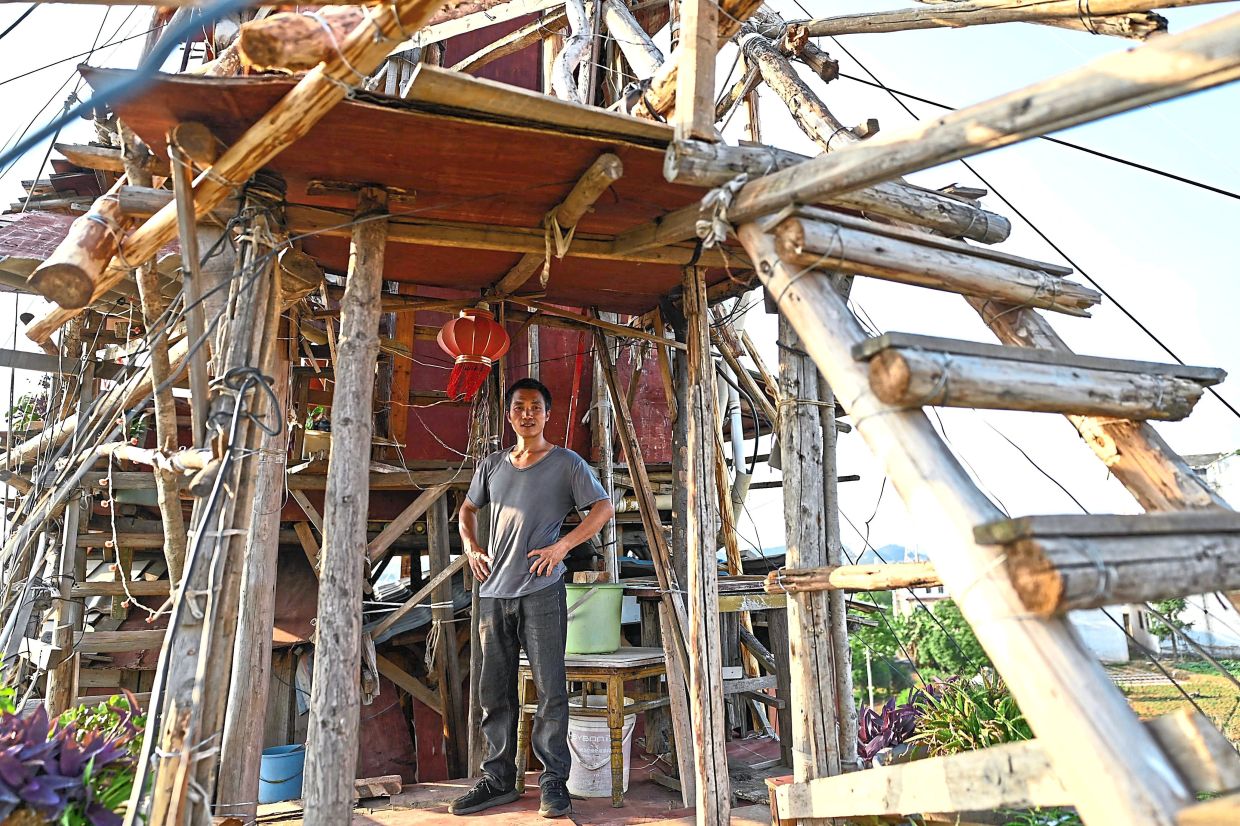
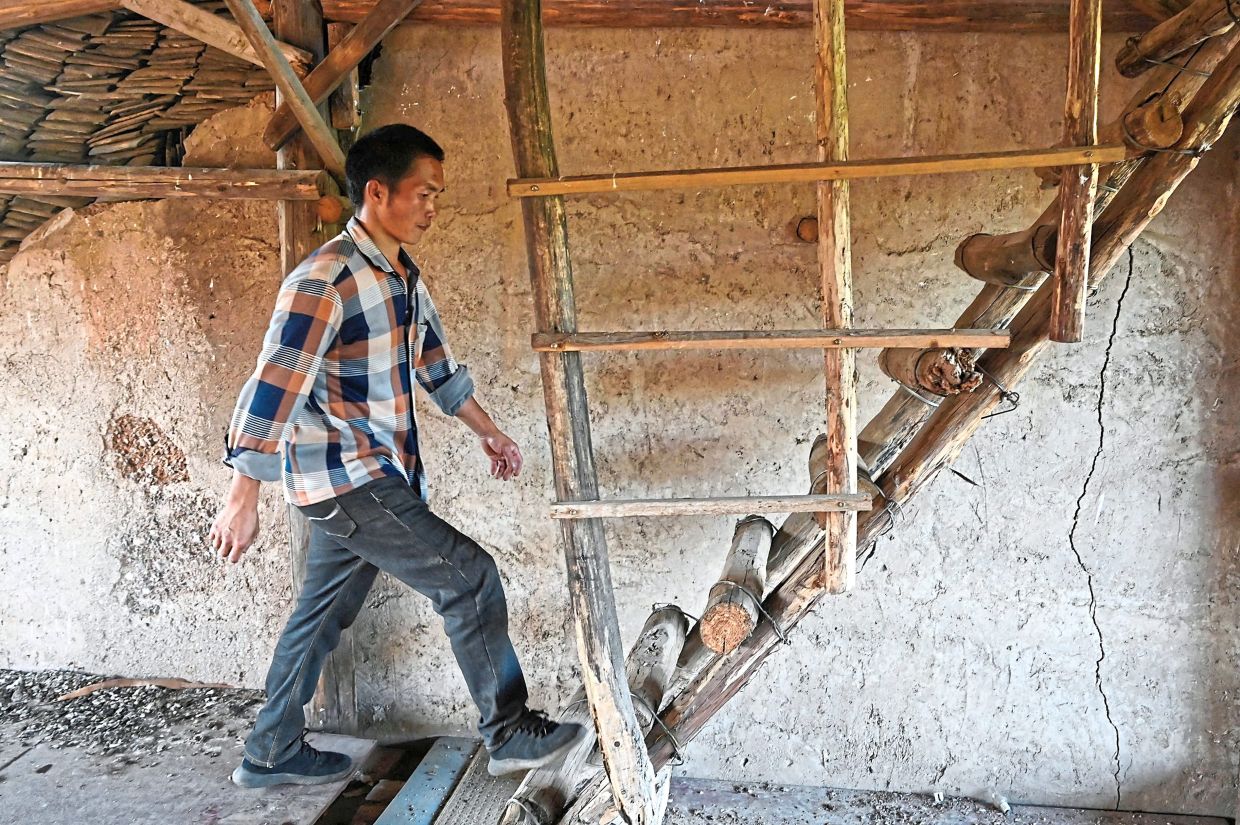
“I started building out of practicality, trying to renovate and expand our home,” Chen said on a sweltering May afternoon as he climbed ladders and ducked wooden beams in his labyrinthine construction.
“But then it became more of an interest and hobby that I enjoyed,” he said.
Chen’s obsessive tinkering and lack of building permits continue to draw ire from the local government.
The higher floors where he sleeps sway in the wind, and dozens of ropes and cables tether the house to the ground as if the whole thing might one day float away.
“When I’m up here... I get the sense of being a nomad,” Chen said, gazing out at apartment blocks, an airport and distant mountains.
“People often say it’s unsafe and should be demolished... but I’ll definitely never let anyone tear it down.”
Nail house
Local authorities once had big plans to build an 800-acre (323.7 hectares) tourist resort – including a theatre and artificial lake – on Chen’s native soil.
They promised to compensate villagers, but Chen’s parents refused, and he vowed to help them protect the home his grandfather had built in the 1980s.
Even as neighbours moved out and their houses were bulldozed, Chen stayed put, even sleeping alone in the house for two months “in case (developers) came to knock it down in the night”.
Six months later, the resort was cancelled.
Virtually alone among the ruined village, Chen was now master of a “nail house” – a Chinese term for those whose owners dig in and refuse to relocate despite official compensation offers.
A quirk of China’s rampant development and partial private property laws, nail houses sometimes make headlines for delaying money-spinning construction projects or forcing developers to divert roads or build around shabby older homes.
Even as Chen forged ahead, completing the fifth floor in 2019, the sixth in 2022 and the seventh in 2023, he continued to receive threats of demolition.
Last August, his home was designated an illegal construction, and he was ordered to destroy everything except the original bungalow within five days.
He said he has spent tens of thousands of yuan fighting the notices in court, despite losing several preliminary hearings.
But he continues to appeal, and the next hearing has been delayed.
“I’m not worried. Now that there’s no one developing the land, there’s no need for them to knock the place down,” he said.

Tourist attraction
In recent years, ironically, Chen’s house has begun to lure a steady trickle of tourists itself.
On Chinese social media, users describe it as China’s strangest nail house, likening it to the madcap buildings in Miyazaki’s Studio Ghibli masterpieces Howl’s Moving Castle and Spirited Away.
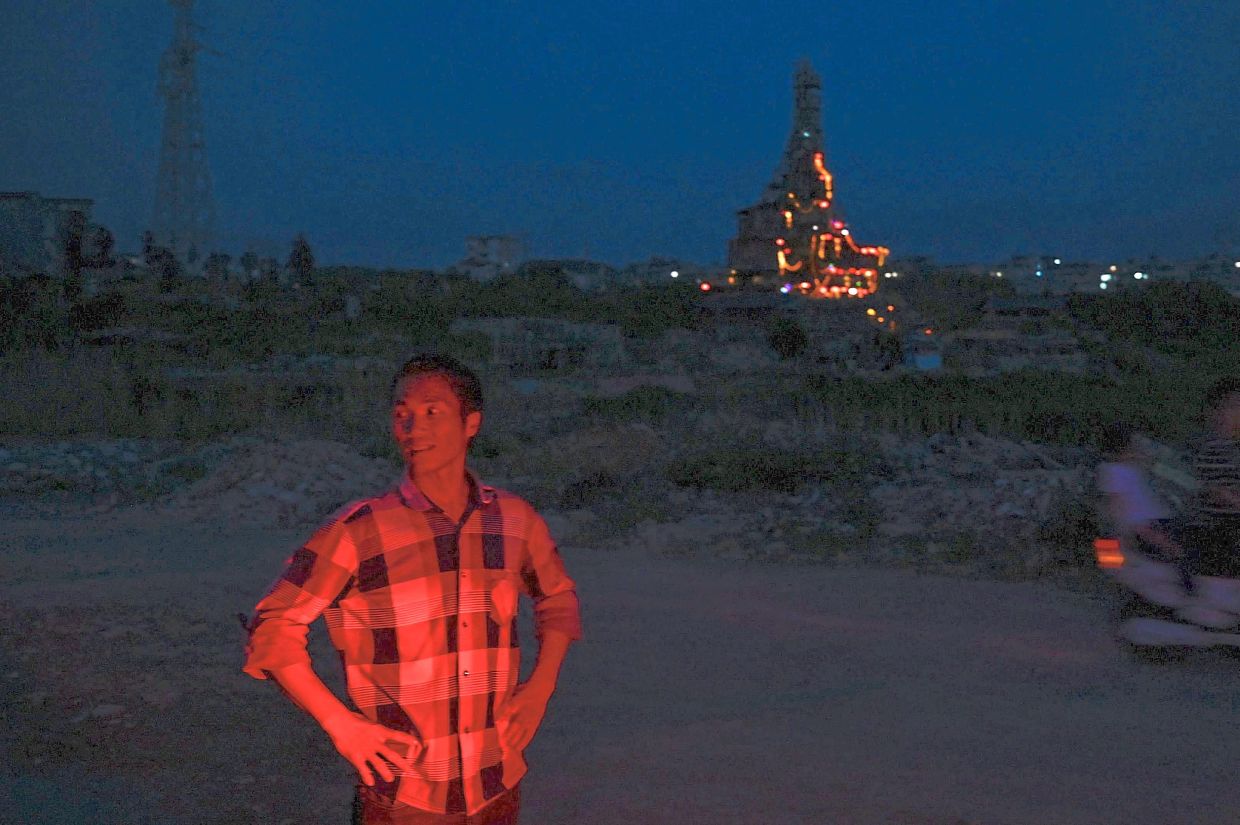
As dusk falls, Chen illuminates his home with decorative lanterns, and people gather on the nearby dirt road to admire the scene.
“It’s beautiful,” local resident He Diezhen said as she snapped photos.
“If there are no safety issues, it could become an (official) local landmark,” she said.
Chen said the house makes many visitors remember their whimsical childhood fantasies.
“(People) dream of building a house for themselves with their own hands... but most can’t make it happen,” he said. “I not only thought of it, I made it a reality.” – By SAM DAVIES/AFP


