

Lifespan is a word that describes the length of time a person lives. According to data from the World Bank, the average life expectancy of Malaysians has increased from 68 years in 1980 to 76 years in 2020.
And as life expectancy increases, individuals look to add more years to their life and that starts with healthy living at a younger age. This period in which people live in good health is known as healthspan.
It is a concept that focuses on the number of years where a person has a better quality of life, free from debilitating illnesses.
“Individuals can reap the benefits of living a healthy lifestyle by focusing on their overall health instead of just their nutritional needs,” says senior geriatrician and acute internal medicine specialist Dr Sharath Swaminathan.
“Sleep, exercise and a sharp mind are necessary factors for people to enhance their healthspan,” he continues. “You do not have to be of a certain age to live a healthy life... what matters is that you start somewhere.”
Movement matters
According to Dr Sharath, walking helps people improve their cardiovascular health and stamina. “It is a good form of exercise; it improves and maintains mobility and function as we age,” he adds. A 2022 study on the benefits of sitting less and moving more found that being physically active plays an important part in a person’s health.
Published in the National Library of Medicine – a digital archive for scholarly articles – researchers noted that sedentary behaviours such as sitting for long periods of time could cause health complications like fatigue and irregular heart functions in adults as they age.
Former human resources director Ganapathy Ramasamy was 37 years old when he started prioritising his healthspan after his Type-2 diabetes diagnosis, following his move to Kuala Lumpur from Penang.
Before he started working, the 83-year-old often spent his school days participating in sports activities such as cross-country runs, pole vaults and long jumps.

However, staying active became a passing cloud for the Penangite due to his work’s hectic nature. “I neglected my well-being because at that time, work was more important to me,” he explains.
“After retiring in 1999, I paid more attention to my health by going for 5km daily walks in parks and around my neighbourhood,” he continues.
Language specialist Chew Sean Thong who works a 9-to-5 office job says she tries to move around as much as she can.
Chew, 23, stays active by incorporating small movements daily such as standing during her commute to and from work, taking the stairs and opting for the longer walking path.
She performs cardio exercises using a fitness device called a mini stepper for 40 minutes after work and goes on intermittent fasting – a nutritional practice in which people eat at a set time period – to reach her goal of losing 10kg next year.
“I am making an effort to improve my health now because the pain of discipline is better than the pain of regret,” she says.
Socialising for a healthy mind
Mental health is as important as physical health because both play an important role in a person’s life.
“Having time for leisure activities and being surrounded by family and friends are necessary even when you are still young as this helps maintain mental sharpness and reduces feelings of isolation,” Dr Sharath says.
Ganapathy would cope with work-related stress by spending time with his family and friends.
“I used to get back home after work and talk to my wife and three children. I also had colleagues who believed in relaxing after office hours back then,” he says.
In a 2013 research on the advantages of being mindful, researchers found that individuals who are good at emotional regulation have a healthier outlook on life.
As seen in Science Direct – an online platform for scientific, technical and medical research – the findings observed how those who focus on the present and adopt a kind, non-judgemental outlook on life were less likely to experience mental health issues like depression and anxiety.
“Practising mindfulness-based strategies like meditation, journalling and talking to trusted adults were effective at reducing distress and avoidance behaviours,” it says.
Chew spends time with her loved ones as she prefers to air out her frustrations and ask for their advice.

“Getting a reality check from my parents or talking about an incredibly stressful day at work with my friends have provided me with a lot of mental support,” she says.
“The advice they give me helps with introspection; I believe that self-awareness is the first step to emotional health.”
Good sleep is necessary
In a WebMD article called Suprising Reasons to Get More Sleep, sleeping well results in a sharper brain, a boost in mood and a healthier heart.
“Sleeping for more than nine hours a day is more harmful than good, so it’s best to sleep for seven to eight hours a day for peak health benefits,” it says.
Dr Sharath agrees, stating that quality sleep is vital for people’s physical and mental well-being. “Poor sleep increases the risk of cognitive decline, heart diseases, depression and obesity,” he says.
As a believer of good sleep, Ganapathy always gets in bed by 11pm and does so by keeping himself active throughout the day.
“I always sleep early so I can wake up before 8am to go for walks around my neighbourhood, visit the shopping mall near my house and potter plants in my garden,” Ganapathy says.
However, not everyone is a morning person like him. Chew finds it challenging to sleep early at night.
“Sleeping early is difficult for me so I spend that time reading,” she says. “But due to my early shift at work, having an unorganised sleep schedule ruins my overall productivity,” she admits.
Now, Chew reserves her hobbies for Fridays and Saturdays to make sure she gets seven hours of sleep on weekdays. “The fear of oversleeping is a motivation for me to sleep early,” she says.
Despite prioritising his well-being only in his late 30s, Ganapathy is glad that his positive habits have allowed him to be healthy now that he is older. He says it is important for young adults to embrace a healthy lifestyle so they can avoid certain chronic diseases in their later years.
“Have regular meals, exercise well and have a good balance between work and leisure to reap the benefits of these habits when you age,” he explains.
Chew echoes this practice as she hopes to live healthily as she ages. “I’m taking advantage of my stamina while I am still young to help be age healthier,” she says. “I am doing it to improve my present health and to lay the groundwork for a healthier future,” she concludes.

Dr Sharath says older adults should engage in social interactions to reduce feelings of isolation and depression. Photo: Freepik
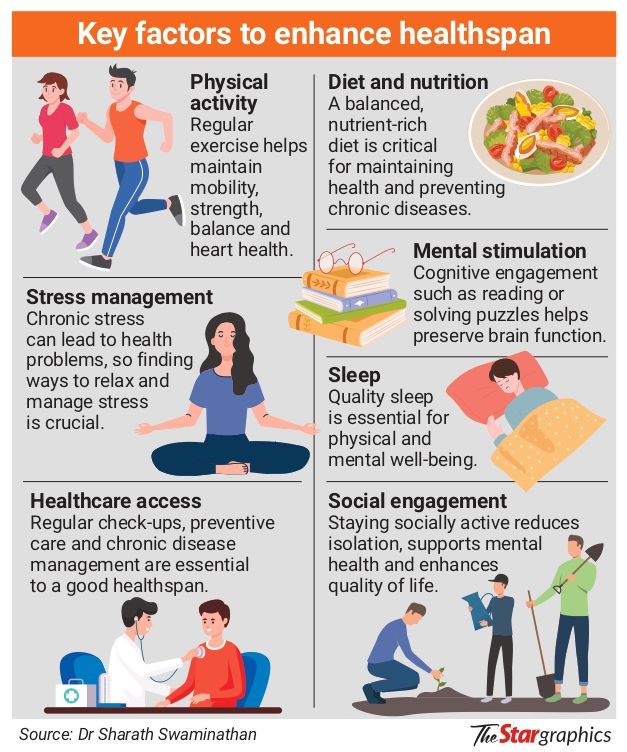
Key factors people should consider to increase their lifespan. Photo: The Stargraphic
Ganapathy advises young people to strive for a good balance between work and leisure. Photo: Ganapathy Ramasamy
Chew says she takes exercise tips from Xiao Hong Shu – also known as China’s Instagram – to keep herself fit. Photo: Chew Sean Thong
