Replanting the ecologically crucial Central Forest Spine of Peninsular Malaysia


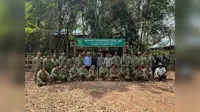
The Kampung Sungai Klewang nursery in Royal Belum State Park, Perak, was set up in 2020 and is fully operated by the Jahai Orang Asli. — Tropical Rainforest Conservation and Research Centre

At the Kampung Sungai Klewang nursery in Royal Belum State Park, Perak, over 1,000 forest tree seedlings nurtured for more than a year and a half are being transported carefully in wheelbarrows to waiting boats. They will be taken to an area where local communities had previously practiced shifting agriculture and replanted.

Established in 2020, the nursery is fully operated by the Jahai Orang Asli.

The project is the brainchild of Perak State Parks Corporation director Mohamed Shah Redza Hussein, 59, as well as the Tropical Rainforest Conservation and Research Centre. Mohamed Shah is responsible for conserving protected areas in Perak, such as Royal Belum which is part of the Belum-Temenggor Forest Complex, the second largest remaining block of virgin rainforest on Peninsular Malaysia.

His aim is to reintroduce indigenous species not only in degraded areas in the state park but also in the Amanjaya Forest Reserve which flanks the Gerik-Jeli highway.

Considered an ecological corridor linking Royal Belum with the Temenggor Forest Reserve, Amanjaya will help to facilitate the movement of some of Malaysia’s iconic wildlife – the highly endangered Malayan tiger and Asian elephant as well as most hornbill species – into adjacent blocks of forests. This will extend the animals’ breeding and feeding home range and, hopefully, help their survival.

Under the Federal Government’s Central Forest Spine (CFS) Masterplan, the idea is that ecological corridors will link four forest blocks together, an important step forward not only for Malaysia’s wildlife but also essential for human life. More than three quarters of the CFS is a critical water catchment area, supplying water to 90% of the population on the peninsula.

“Any restoration is best done by using local indigenous species,” says Mohamed Shah.

“As much as possible, we do not want to bring species from other states and other areas into Royal Belum, not even the same species.”

But this strict policy of safeguarding Royal Belum’s strong gene pool has created a problem: “There is a shortage of seedlings,” admits Mohamed Shah.

“So we had no choice but to build our own seedling nursery so that we can replant.”

Seeking a sustainable, long-term solution, Mohamed Shah partnered with Afzaa Aziz, 29, a project manager at the Tropical Rainforest Conservation and Research Centre, to see how the Jahai could help restore degraded areas within the ecological corridor.

“We saw this opening, that if the Orang Asli can be upskilled, can be given the technical knowledge of building nurseries, they can provide the seedlings for restoration and earn some income,” Mohamed Shah explains.

Masting (or flowering) happens every five to seven years producing flowers in synchrony with many other tree families. When collecting the seeds from the trees, half are left behind to allow natural propagation to continue. — Tropical Rainforest Conservation and Research Centre
After months of training provided by the conservation centre, the ultimate test was a mass flowering in mid-2021 when many different tree families produced flowers in synchrony. This natural phenomenon, known as masting, happens every five to seven years. By then, the Jahai knew what to do to successfully collect and propagate the seeds.

The research centre then buys the seedlings from the Jahai and replants them in the ecological corridor.

The Perak State Forestry Department has tasked the centre with restoring the site.

The seedlings are transported by boat to degraded areas that need replanting. — Tropical Rainforest Conservation and Research Centre
“The restoration strategy is to maintain a similar forest composition, and in this particular instance, we will focus on enrichment planting,” says Afzaa.

Moving forward, Mohamed Shah hopes to work more closely with the state’s forestry department and replicate the nurseries in other Orang Asli villages within Royal Belum for the CFS forest rehabilitation programme.

Get 20% OFF The Star Digital Access

Monthly Plan

RM 13.90/month

RM 11.12/month

Billed as RM 11.12 for the 1st month, RM 13.90 thereafter.

Best Value

Annual Plan

RM 12.33/month

RM 9.87/month

Billed as RM 118.40 for the 1st year, RM 148 thereafter.

Follow us on our official WhatsApp channel for breaking news alerts and key updates!
reforestation , Orang Asli , conservation

Next In Living

Security education should start early, especially for girls, say experts
Sunny Side Up: None of us can be blank slates
De-extinction company hatches live chicks from an artificial eggshell
Food vendors across Asia struggle over rising costs of plastic
Solar-powered charging station in central Cuba brings life to a darkened island
'Wiped out': Ukraine's bird lovers long for peaceful skies
Are rapeseed oils safe? Scientists and nutritionists say they are
Large-scale restoration effort of California's giant sequoias launched
Contradictheory: When science goes to the cats and dogs
Sucker fish are hiding in manta rays' rear ends, new study reveals

Others Also Read