How community gardens benefit Malaysians beyond offering healthy produce


Chairperson Lee (second from right) with Kernail Singh (garden manager, standing second from right) from the TTDIECG committee with volunteers at the community garden before the pandemic. Photos: TTDIECG

The aim was simple – to grow their own chemical-free food, create a place to compost food waste, and build community togetherness.

The Taman Tun Dr Ismail Edible Community Garden (TTDIECG) in Kuala Lumpur today is a 15,000sq ft (1,393sq m) space with 200 to 300 types of plants including fruits, flowers, herbs and vegetables.

It is located on Lorong Burhanuddin Helmi 11, next to the neighbourhood’s community centre.

The community garden was started by another group back in 2013. However, the project was later abandoned for various reasons.

Then, in 2017, the current committee – comprising chairperson Margaret Lee, garden manager Kernail Singh and liaison manager Kee Joo Yee – stepped in to re-establish it.

The TTDIECG is approximately 15,000sq ft (1,393sq m) in size and accommodates about 200-300 types of plants including various fruits, flowers, herbs and vegetables.

“We decided to revive the project because of our interests in gardening and the benefit of having our own community garden,” said Lee, a retiree in her 60s.

“It took us several tries before we got a breakthrough via support from Kuala Lumpur City Hall (DBKL). A TTDI resident who was a former DBKL officer managed to connect us with DBKL’s Local Agenda 21 (LA21) and through them, we got a significant amount of help in terms of funding, raw materials and education courses,” she said.

LA21 is a global action plan or blueprint for sustainable development at a local level.

The team then designed the garden layout, which mapped out what they wanted to do with the garden.

Food waste from fruits shops in the neighbourhood are collected for composting at the TTDIECG.

The number of volunteers, both casual and committed, steadily grew with some of them bringing in good farming practices to establish a sustainable space.

“The volunteers were committed to establishing the urban farm despite overwhelming challenges like lack of tools, top soil, water, electricity, financing, and farming and composting knowledge,” said Lee.

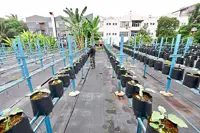
Today, TTDIECG has 32 raised beds for plants like leafy vegetables, tubers, herbs and climbers. Various other plants and fruits are cultivated in the non-bed areas of the farm such as papaya, pineapple and mango, mulberry, curry leaves and also neem trees.

TTDIECG has 32 raised beds for plants like leafy vegetables, tubers, herbs and climbers.

Pandemic hitch

Covid-19 and movement restrictions posed a big challenge to the garden’s upkeep and activities.

“During MCO1.0, the grass became so overgrown but we could not do anything,” recalled Lee, adding that many of the volunteers were not able to cross districts to reach the garden.

“We have also not been able to organise any events, which we were doing prior to March 2020. We used to have a weekly Saturday Farmer’s Market and many festive occasions which we took pride in celebrating at the garden.”

Lee said there has also been a sharp drop in resources, which has impacted the overall well-being of the garden.

“The planting, harvesting, germination and composting processes have all been affected. The programme for collecting kitchen waste for composting has slowed down due to the lack of volunteers.

Lee (left), chairperson of the TTDI Edible Community Garden committee with a volunteer at the entrance to the garden.
“Clearing of kitchen waste is critical, otherwise there will be an overflow. Compost needs tossing otherwise it tend to be pathogenic,” she explained.

The tasks in the garden were hence prioritised according to the needs of the community and the garden. Watering and irrigation were among the critical things that had to be done to improve yield.

“A skeletal number of dedicated volunteers keeps the heart of the farm beating,” said Lee, adding that there are around eight active TTDI residents maintaining the garden at present.

Vast benefits

Besides being an oasis of fresh, healthy foods, the community garden has enriched the lives of the volunteers in various ways.

“Those who volunteer at the garden obviously gain so much sunshine, exercise and knowledge about the growth and maintenance of plants as well as how to get rid of bugs and pests.

A volunteer sowing seeds on a raised bed at the community garden.

“Everyone has their own expertise and we learn to respect one another.

“The benefits also include character building, managing mental stress, and building knowledge of farming in residents’ houses and condos,” said Lee.

Essential home gardening materials are made available to residents for their use such as compost, soil, vermicast, plants and light weight slabs.

“We constantly share updates and progress via WhatsApp with the community and this encourages them to do home gardening.

“The community has been very generous and share plant cuttings with each other,” said Lee, adding that the chat group is at its maximum capacity of 256 people.

Through their common interest, the garden community also acts as a support group, sharing pertinent information on security, wellness and pandemic-related matters.

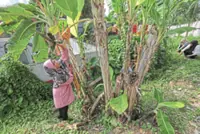
Bananas are among the many produce freshly harvested from TTDIECG regularly.

“We learned a lot from the frontliners who are in our group,” said Lee.

In addition to building a spirit of neighbourliness, the community garden also helps break down age barriers.

“Young people and senior citizens learning and working together is a rare sight in our modern world,” Lee added.

Due to their success, TTDIECG has received many requests to teach and guide students, from kindergarten right up to those in university, who are keen to learn more about gardening and composting.

Tomatoes ripening at the TTDIECG.
“We are happy that we can be of assistance and we share our knowledge with them. The garden can really be a great education platform,” said Lee.

In future, once the movement restrictions are lifted, the committee plans to green up the riverside in the area.

“We would like to grow more plants at the river as we are next to Sungai Kayu Ara.

“More trees and flowers will boost biodiversity.

“We also hope DBKL can provide us with electricity or solar power, and piped water soonest possible for us to enhance our garden,” said Lee.

For details, visit TTDIECG's Facebook page.

Get 20% OFF The Star Digital Access

Monthly Plan

RM 13.90/month

RM 11.12/month

Billed as RM 11.12 for the 1st month, RM 13.90 thereafter.

Best Value

Annual Plan

RM 12.33/month

RM 9.87/month

Billed as RM 118.40 for the 1st year, RM 148 thereafter.

Follow us on our official WhatsApp channel for breaking news alerts and key updates!

Next In Living

Lonely end for race track: 132-year-old Aqueduct runs its last race
How this Malaysian couple helps clean up hoarder homes
Why hoarding disorder deserves more understanding in Malaysia
This mental trick may help you get more exercise
China's bull wrestlers fight to keep the centuries-old tradition alive
How to spot hidden price increases or 'shrinkflation'
Feeling drowsy at your desk? A 5 minute stroll will perk you up
What’s in your dog’s food? How to make sure your pet is getting quality meals
'Dutch sashimi': Getting the young to swallow herring
Winemakers on the Greek island of Santorini try to adapt to heat and drought

Others Also Read