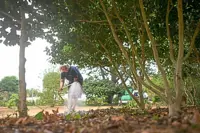
Heavy rain can damage your garden's soil, as once it's become sopping wet, the inflated soil will become rock-hard as it dries out.
You shouldn't let it get this far, and all hobby gardeners should check out how the garden is looking after a spell of heavy rain. If the ground is waterlogged, then action is needed.
Moderate flooding, or heavy rain and thunder stress the soil, as raindrops will only churn up the surface, says Marianne Scheu-Helgert, a gardening specialist.
If flooding occurs, even if the water only flows slowly, it repeatedly stirs up the soil and the problem is that the soil may later dry into a smooth layer that is as smooth and hard as concrete or cement.
This is particularly likely with soil that contains a lot of clay or loam. But make sure it doesn't get as far as this, as the solid crust can wind up being a barrier, preventing water from permeating the soil.
That is no good to the plants below, which will suffer from the lack of water. Meanwhile, future rainfall is likely to flow off, possibly causing flooding elsewhere.
All this means you need to hoe the soil – but go lightly, only working on the top layer and the next 2-3cm – ideally shortly after the rain so the crusty layer does not have a chance to form.
But don't touch the soil if it is still doughy. You can tell if it is still at this stage of drying if the soil sticks to the hoe in streaks. Avoid walking on the soil at this stage as your body weight will only compact the wet soil, making it harder for the roots of the plants below to spread, and preventing them from finding air and nutrients.
Wait until the soil has a slightly crumbly texture and doesn't stick to the tools. It should be somewhere between a yoghurt-like consistency and the concrete stage, according to Scheu-Helgert.
However, this happens at differing speeds, depending on the kind of soil you are dealing with.
"In agriculture, we talk about hourly soils or even minute soils," she says.The high rate of evaporation means you can only work on these kinds of soil for several hours.
"The sandier the soil, the longer the condition lasts."Hoeing is also the way to handle drought, that other major challenge for gardeners.
It not only reopens the soil and lets water in, but also allows it to retain moisture better during periods of heat, she says. This is the tried-and-tested method of our ancestors, she says.
"In the past, people always hoed the soil after rain or watering."Scheu-Helgert suggests you cover the freshly hoed soil afterwards – she herself prefers to use mulch. Adding the extra layer on top of the soil tends to keep its pores open and can stop water evaporation during dry periods.
"You can use whatever you have on hand – for many people it's probably lawn clippings, which also look good. Or you can use the leaves of carrots that you have just harvested," she says.
But again, go easy. Don't stack up a layer of grass mowing as thick as a mattress, she says, otherwise brief rain showers won't reach the soil. And bear in mind that slugs often move around more easily on it, too.
If you missed the opportunity to hoe your garden soil after a heavy rain or even a small flood, you should still try to break up the hard crust of soil. Ideally, you would wait for a light rain, which could improve the soil condition slightly.
"But don't hoe wildly, it's best to go carefully into the soil at intervals of two or three centimetres," Scheu-Helgert says.
"If that isn't possible any more, then provide the rain yourself – water very intensively, but not so much that you flood the soil again." – dpa
Already a subscriber? Log in
Get 20% OFF The Star Digital Access
Cancel anytime. Ad-free. Unlimited access with perks.