You can feast on the architecture of wine temples in this Argentine province


By Agency
Architects Yanzon (left) and Bormida at Alfa Crux, a winery in the Uco Valley, San Carlos Department, in the Argentine province of Mendoza. Photos: AFP

The Argentine province of Mendoza is synonymous with Malbec wine, but what's not so well known is that it has become a reference for wine cellar architecture.

In the arid climate at the foothills of the Andes mountain range, architects Eliana Bormida and Mario Yanzon have worked on more than 40 projects that conducted a "deep" dialogue with the Andean surroundings.

At the end of the 1990s, winegrowers in Mendoza decided "to make wines that could compete on international markets and they called us to decorate their wine cellars", Bormida told AFP.

"We never imagined that a decade later it would produce a boom. This group stimulated us to make wine cellars that were not just a place to produce good wine, but also to receive visitors."

The fame of the Bormida & Yanzon studio has even extended beyond Argentina to take on projects in Bolivia, Uruguay, Mexico, Portugal and Russia.

 The Alfa Crux winery was designed by the award-winning Mendoza-based Bormida & Yanzon studio, which specialises in wine architecture.
The Alfa Crux winery was designed by the award-winning Mendoza-based Bormida & Yanzon studio, which specialises in wine architecture.

Landscape architecture

Architects such as Herzog and de Meuron, Frank Ghery, Santiago Calatrava, Philippe Mazieres or Zaha Hadid may be better known but very few have made a name from specialising exclusively in wine cellars.

The cellars are converted from "production places to centres of Mendocenean wine growing interpretation, which is why we started to develop the concept of a landscape architecture that looks not only to design good buildings but also to speak deeply with the landscape of snowy mountains", said Bormida.

Landscape architecture is the name of a book Bormida wrote to describe some of her signature works such as the Salentein, O. Fournier and Diamandes cellars.

What one sees "is a great knowledge of design, of architecture, culture, climate and of the landscape", Paul Nakazawa, a professor of architecture at Harvard University, told AFP.

"Few architects in the world have the depth and the breadth of this knowledge."

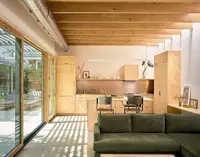
A wine-tasting room at DiamAndes, a winery in the Uco Valley, San Carlos Department, Mendoza.

Phenomenology

Framed by the majestic Andes and set on plains of xerophyte vegetation in the Uco Valley, the Salentein Bodega links a wine cellar, chapel and visitor centre along a 1.5km axis on 2,000ha of vineyards irrigated by the thawing snow-capped peaks.

Built in the style of a Greek cross, the site looks like a temple inspired by renaissance churches.

The winery produces Pinot Noir and Sauvignon Blanc, as well as the signature Malbec.

For the facade of the visitor centre, the architects used an ancient technique known as cyclopean masonry, using sand and stones taken from the surrounding earth.

The visitor centre is called Killka, which means "entrance" in the Quechua language that is still widely spoken among Andean people.

The Alfa Crux, a winery in the Uco Valley, San Carlos Department, in the Argentine province of Mendoza, designed by the Mendoza-based Bormida & Yanzon studio

It includes an art gallery and restaurant, and is included in the Phaidon Atlas of 21st century world architecture.

The Bormida & Yanzon studio describes its approach to projects as "phenomenology".

That's "architecture understood as a phenomenon that is perceived in the journey through its spaces", said Bormida.

"The sensations generated by light, textures, scale and aromas, sounds... These are experiences that build in the mind of every visitor a comprehensive image of the work."

Wine temples

Every wine cellar spread around Mendoza, which produces 70% of the country's wine, is based on the individual "interpretation" of each client and location.

At the end of the 1990s, a young Spaniard joined the studio with a clear vision: to create a cellar "that will embody the 21st century and the New World".

Detail of bottles on display at the restaurant of Salentein, a winery in the Uco Valley, Tupungato Department, in Mendoza.

The result of that vision was the Alfa Crux project – previously known as O. Fournier – that integrated different scales of external and internal spaces, on a vast and arid plain.

Mendoza has since become "a wine capital not just for the quality of its wines but also due to the architecture of these wine temples", enthused Yanzon.

But that's also "thanks to the Andean landscape, because nowhere else in the world is there this mountain range". – AFP

Dine in from the comfort of your home and snatch low-cost meals with foodpanda Voucher

Get 20% OFF The Star Digital Access

Monthly Plan

RM 13.90/month

RM 11.12/month

Billed as RM 11.12 for the 1st month, RM 13.90 thereafter.

Best Value

Annual Plan

RM 12.33/month

RM 9.87/month

Billed as RM 118.40 for the 1st year, RM 148 thereafter.

Follow us on our official WhatsApp channel for breaking news alerts and key updates!

Next In Living

Lonely end for race track: 132-year-old Aqueduct runs its last race
How this Malaysian couple helps clean up hoarder homes
Why hoarding disorder deserves more understanding in Malaysia
This mental trick may help you get more exercise
China's bull wrestlers fight to keep the centuries-old tradition alive
How to spot hidden price increases or 'shrinkflation'
Feeling drowsy at your desk? A 5 minute stroll will perk you up
What’s in your dog’s food? How to make sure your pet is getting quality meals
'Dutch sashimi': Getting the young to swallow herring
Winemakers on the Greek island of Santorini try to adapt to heat and drought

Others Also Read