Sunny Side Up: You're in the driver’s seat


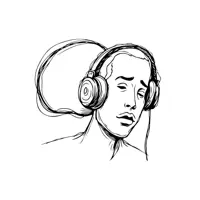
People and their judgements will come and go, so why waste energy focusing on what we can’t control? Photo: 123rf.com

Imagine you’re a bus driver. Your job is to keep driving forward to each destination, stopping once in a while to pick up passengers. The passengers that come aboard aren’t chosen by you. Some are nice, many are neutral; a few are a real pain. Regardless of the mixed bag, you have to carry on moving forward. The passengers will always be there, doing their thing.

Even if you could stop the bus and throw out the nuisances, it’d take a lot of time, you’d fall behind on where you need to go, and you’d be exhausted by the end of each day. Leaving the passengers alone as they are, pretty soon the irritating ones get off at their stop. They might return, but it’s OK – you can keep focusing on the job at hand.

Like those nuisance passengers, some of our thoughts try to grab our attention by being loud and demanding. And yet, what happens when we try to throw them out? Do they stay away? Get smaller? Leave us alone?

We don’t get to choose many of the thoughts that come aboard our minds. But we do get a choice: to engage them or let them be. We have that choice to stay focused on the road ahead, whatever goes on behind us. The bus driver metaphor is useful for dealing with negative thoughts, and it’s also helpful whenever we find ourselves being judged or criticised by others.

Particularly in family situations, younger people sometimes feel misunderstood by their parents or older siblings and this can give rise to a tiring inner struggle. On the one hand, we want to be accepted for who we are rather than who we’re expected to be. Conversely, we want to be respectful to friends or family members who might feel like we don’t align with their expectations. How do we find our own voice and honour who we are while making sure we remain respectful to our loved ones?

It’s helpful to begin by acknowledging that we all have different perspectives on how things and people should be. Unfortunately, it’s much easier to see our own perspective than it is to open up to the notion that others have their own ideas. Just like the bus driver with his passengers, we don’t get to choose how people in our lives think or behave. We can only control how we respond.

Secondly, when we’re hoping and praying for our parents and others to accept us for who we are, it’s worthwhile asking, “Am I able to accept my parents for who and how they are?” If the answer to that question is, “I try, but it’s difficult – life would just be easier if they saw things from my perspective”, it’s likely that our parents would give the same answer.

Struggling against another’s point of view is like a never-ending tug o’ war as both struggle and pull against the other with all their might in a battle of wills. Ultimately, it’s exhausting for everyone. But we have a choice. If someone struggles against who we are, if they try to pull against us at every opportunity (eg, showing their disapproval or being dismissive), we don’t have to keep pulling against them. Instead, we can choose to drop our end of the rope.

Does this mean that the tension from the other side will magically disappear? No, it doesn’t.

The other person might continue to be dismissive toward us, and we can choose to accept that they’re unable to see things from our perspective – and that’s OK.

Like the bus driver, we will have good days and bad days with our “passengers”, whether they be our thoughts or the people in our lives who disagree with our views or how we conduct ourselves. The key point to remember is that we have the choice to lead by example. If we want people to accept us for who we are, it might take less time if we drop our end of the rope and try to accept the other person, warts and all.

When we communicate with others, we often receive what we send out. If we’re trying to change other people’s way of seeing things through sheer force of will, is it any wonder that they act the same way in return?

No matter who we are or what we do, people will make some kind of judgement. Whether it’s positive, negative or indifferent, how they react to us will always be outside our control. What we can control is how we want to be as a person. What do we value? What kind of life do we want to lead? How do we want to make our mark and contribute?

We’re in the driver’s seat. People and their judgements will come and go, and we have a choice: do we focus our energies on what we can’t control or focus on the road ahead and keep moving forward?


Sunny Side Up columnist Sandy Clarke has long held an interest in emotions, mental health, mindfulness and meditation. He believes the more we understand ourselves and each other, the better societies we can create. If you have any questions or comments, email lifestyle@thestar.com.my. The views expressed here are entirely the writer's own.

Get 20% OFF The Star Digital Access

Monthly Plan

RM 13.90/month

RM 11.12/month

Billed as RM 11.12 for the 1st month, RM 13.90 thereafter.

Best Value

Annual Plan

RM 12.33/month

RM 9.87/month

Billed as RM 118.40 for the 1st year, RM 148 thereafter.

Follow us on our official WhatsApp channel for breaking news alerts and key updates!
psychology , emotional behaviour

Next In Living

Jakarta battles stray cat numbers with trap-neuter-release method
Foods that hydrate: 10 water-rich foods for your shopping list in a heatwave
Century-old Hiap Joo bakery in Johor Baru keeps wood-fired tradition alive
Former child soldiers are stitching their lives back together in Central Africa
Mosquitoes' role in flower reproduction highlighted in new study
How a KL food forest is benefitting the community, one harvest at a time
Why Malaysian restaurateurs open global outposts in Singapore, London and beyond
Malaysian scientists discover a new species of parasitic fungus in Sabah
Some facts about the Alaskan malamute
Skillet KL's new menu infuses European flavours with Malaysian ingredients

Others Also Read