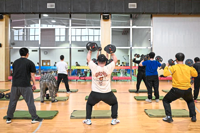
I’ve always been told that the knee and lower back are two body parts that we must be particularly careful with as they’re the most prone to injuries.
If either gets injured from general everyday routine, physical or fitness activities, you’ll have to live with it for the rest of your life unless you devote extra attention to strengthening them.
Let’s delve into the knee.
Complex anatomy
The human knee is one of the largest, strongest and most complex joints in the body, engineered to bear immense weight.
Formed by the meeting of three main bones – the femur (thigh bone), tibia (shin bone) and patella (kneecap) – this remarkable hinge joint is built for durability.
However, its intricate design and heavy workload also make it uniquely vulnerable.
These three bones are cushioned by smooth articular cartilage and two C-shaped shock absorbers called menisci.
They are all held together by four major ligaments, and powered by surrounding tendons and muscles.
Unlike the hip, which is a deep ball-and-socket joint, the knee relies heavily on soft tissues and muscular balance for stability.
Because the knee sits in the middle of the leg, it is caught in a biomechanical tug-of-war between the hip above and the ankle below.
Weakness or poor alignment in either neighbouring joint forces the knee to absorb unnatural twisting and shearing forces.
Every time we walk, climb stairs, lunge, squat or run, our knees absorb forces equivalent to several times our body weight.
Just by walking and stair-climbing, compressive loads can reach up to twice your body weight while running increases the load up to four times the body weight.
Aftereffects from an injury
You would probably have heard people, especially seniors saying, “I have bad knees”.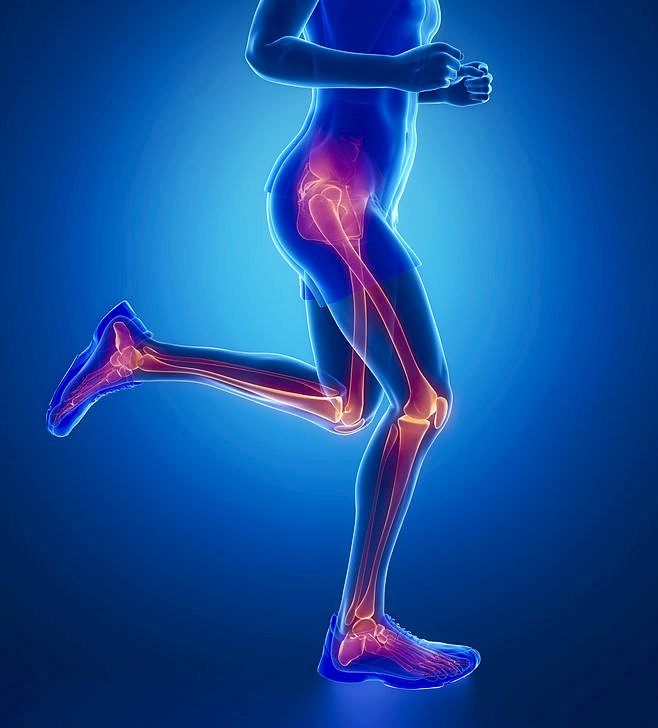
But more often than not, they don’t know what’s wrong.
It could be from chronic pain, stiffness, muscle weakness, instability and/or reduced mobility.
It is rarely the result of a single factor, rather, it stems from a combination of anatomical vulnerability, acute injuries, degenerative conditions and modern, aka sedentary, lifestyle habits.
For many people, bad knees begin with a sudden traumatic injury.
Sports involving rapid stops, pivots or collisions like basketball, football and rugby; squatting with heavy weights in poor alignment or technique; or abrupt increases in weight load, can strain passive knee structures and cause microscopic or macroscopic changes such as tears, scar tissue or altered thickness in the soft tissues.
A torn meniscus or damaged ligament changes how weight is distributed across the bones, leaving the joint surface uneven, and accelerating wear and tear years after the initial event.
Falls and accidents can fracture bones or dislocate the kneecap.
Be aware that despite proper treatment, an acute injury can alter the smooth mechanics of the joint.
Suffice to say, the knee may never feel the same again.
However, with adequate rehabilitation, the vast majority regain full functionality, stability and confidence, and are able to move smoothly without pain.
Wear, tear and osteoarthritis
Even without a traumatic injury, repetitive stress and age take a steady toll on the body.
Osteoarthritis, the most common form of joint degeneration, occurs when the protective cartilage covering the ends of the bones gradually thins and frays.
Without this slick cushion, bones begin to rub more closely together, triggering pain, swelling and the growth of bone spurs.
Enlarged spurs can physically block the knee from bending or straightening all the way.
If you cannot comfortably stand or walk for short periods without severe discomfort, don’t push through the pain.
Activities with heavy knee joint compression like squatting should be temporarily swapped for off-loaded rest and recovery.
However, osteoarthritis doesn’t mean you should totally rest or give up the activity altogether.
When you avoid all activity to protect a sore or arthritic knee, the supporting muscles (such as your quadriceps, hamstrings and glutes) quickly atrophy and weaken.
At the same time, the joint-lubricating synovial fluid stops circulating effectively, leading to stiffer, less stable joints, and often, more pain.
Once the inflammation, acute swelling, sharp joint pain or significant irritation subsides, reintroduce low-impact or assisted movements to rebuild the muscles surrounding the knee.
Remember to choose the right exercise variation, maintain proper form and respect your pain limits.
Controlled squatting actually helps stabilise the knee joint, reduce joint pressure and ease long-term arthritis pain.
Everyday lifestyle habits
You don’t have to lead an active lifestyle to develop bad knees.
Prolonged sitting weakens the quadriceps, hamstrings and gluteal muscles that normally act as the knee’s primary shock absorbers.
When these muscles are weak, the joint itself is forced to absorb impact it was never meant to handle alone.
Excess body weight compounds this problem dramatically.
According to researchers, every extra pound carried by the body places roughly four additional pounds of pressure across the knee joint with every step, accelerating cartilage breakdown and fuelling chronic, low-grade inflammation.
Furthermore, wearing unsupportive footwear, skipping proper warm-ups, or suddenly jumping into intense workouts after periods of inactivity, places sudden, unmanageable strain on vulnerable tissues.
Small postural habits can also add up over long workdays and nights of sleep.
Sitting with your legs tightly crossed or tucking your feet underneath your chair for prolonged periods keeps the knee bent and slightly twisted.
At night, sleeping on your side with one knee resting directly on top of the other puts steady pressure on sensitive joint structures.
That’s why experts recommend placing a small pillow between your knees when side-sleeping to relieve that overnight strain.
Ultimately, bad knees are not an ageing issue alone, many younger people have them too.
Instead, they are the cumulative result of mechanical stress, past trauma, muscular imbalances and daily habits interacting with a joint that works tirelessly on our behalf.
If your knee locks, gives way, cannot bear weight, or becomes noticeably hot and swollen, consult a healthcare professional promptly so that you can address the root cause safely.
Knee health depends on the strength of the entire lower body, weight management and mindful movement.
So look after your knees now, and they will keep you moving strongly till the end.
Revathi Murugappan is a certified fitness trainer who tries to battle gravity and continues to dance to express herself artistically and nourish her soul. For more information, email starhealth@thestar.com.my. The information contained in this column is for general educational purposes only. Neither The Star nor the author gives any warranty on accuracy, completeness, functionality, usefulness or other assurances as to such information. The Star and the author disclaim all responsibility for any losses, damage to property or personal injury suffered directly or indirectly from reliance on such information.