What children eat at school can make a big difference.
A balanced lunchbox (or recess) meal nourishes the body, supports steady energy levels, and helps them stay alert and focused throughout the day.
Lunchbox meals packed with sugary, salty or oily foods can lead to sugar crashes, sluggishness and poor concentration.
Items like chocolate bars, kuih and sugary drinks may provide a quick burst of energy, but often leave children feeling tired soon after.
Similarly, foods like instant noodles, fried nuggets and crisps are typically high in salt, fat and additives.
These can affect not just energy, but overall health, immunity and well-being.
So, what should go in a balanced lunchbox?
These are high in dietary fibre, vitamins and antioxidants.
Aim for variety in colour and texture.
Examples include cucumber sticks, apple slices and cherry tomatoes.
These provide steady, long-lasting energy.
Examples include brown rice, wholemeal bread, wholegrain wraps or pasta.
This supports growth, builds muscles and keeps kids feeling full for longer.
Examples include grilled chicken, eggs, tofu, fish and tempeh.
These support brain development.
Examples include avocado, natural peanut butter, nuts and seeds.
An important cautionary note is to always be aware about allergies if children are sharing their food in school.
Practical suggestions
Here are some sample lunchbox meal combinations for you to consider:
- Mini chicken satay bites (boneless, no sticks), cucumber sticks, cherry tomatoes, a wholemeal sandwich with a thin layer of peanut sauce spread, and apple slices
- Fried brown rice with frozen peas and carrots, ikan bilis, and egg (cooked with less oil), as well as papaya cubes
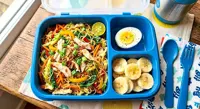
- Fried meehoon with vegetables and shredded chicken, hard-boiled eggs, and a banana.
And here are some creative ideas to make lunch more fun:
- A mini DIY (do-it-yourself) popiah bar containing popiah skin, sweet sauce, grated carrots, shredded lettuce, and mashed tofu or egg.
Your child can then spread a thin layer of sweet sauce on the popiah skin, and fill it up with the carrots, lettuce, and tofu or egg, at school.
- Nasi kerabu-inspired bento with blue rice (use butterfly pea flower for the colouring), shredded cabbage, grated carrots, egg strips and a small piece of grilled fish.
You can also add some grated coconut (serunding) for flavour.
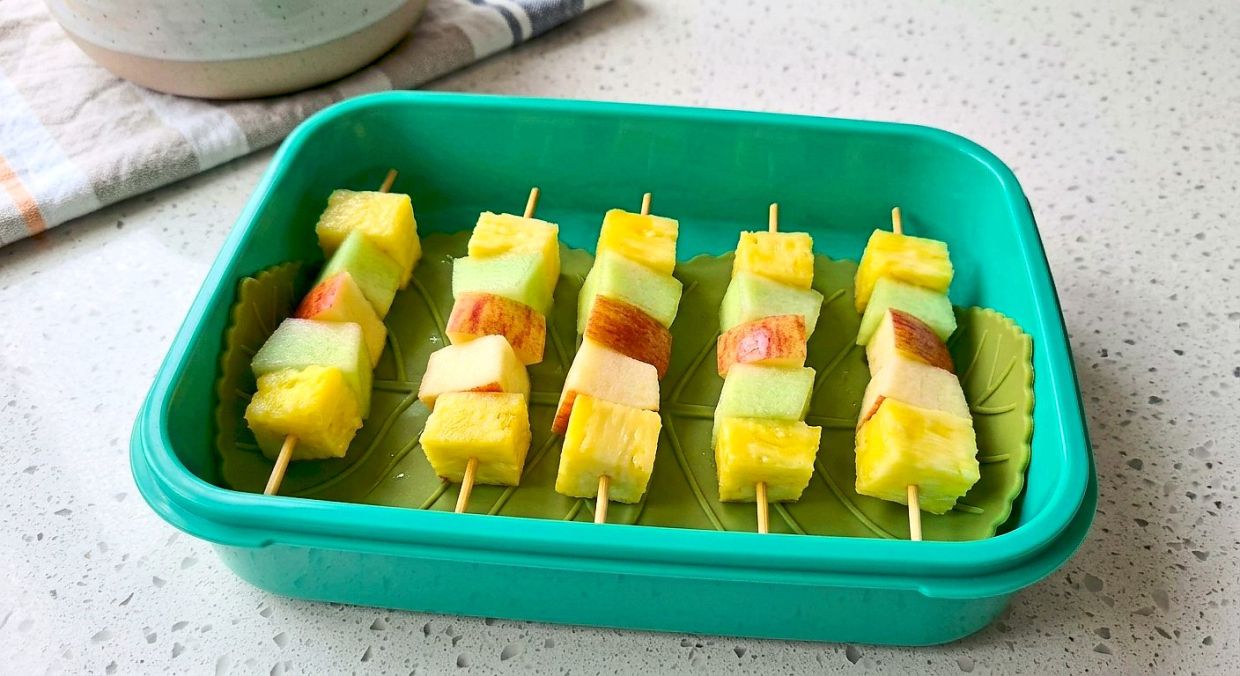
- Fruit skewers with alternate cubes of pineapple, honeydew and jambu air, as well as a yoghurt dip.
Overcoming picky eating
To encourage healthier eating habits and reduce picky eating, involve your child in the lunchbox meal process.
Let them help plan menus and give them the power to choose between two or three healthy options.
Making food visually appealing can also go a long way.
You can use cookie cutters for fun shapes or pack meals in bento-style containers with separate compartments for dips and sauces, for example.
Establishing a simple routine, such as setting aside time once a week to prepare meals together, not only builds valuable life skills, but also makes kids more likely to enjoy what they’ve helped create.
Finally, here’s a basic checklist for parents to help keep those lunchboxes healthy:
- Keep portions age-appropriate
- Avoid sugary, salty or oily snacks
- Include plain water
- Use insulated containers for hot or cold foods
- Label all lunchbox items with your child’s name.
Keep in mind that small changes to lunchbox meals can make a big difference in how children learn, play and grow throughout the day.
Dr Roseline Yap is a nutritionist. This article is courtesy of the Malaysian Paediatric Association’s Positive Parenting programme in collaboration with expert partners. For further information, please email starhealth@thestar.com.my. The information provided is for educational and communication purposes only, and it should not be construed as personal medical advice. Information published in this article is not intended to replace, supplant or augment a consultation with a health professional regarding the reader’s own medical care. The Star does not give any warranty on accuracy, completeness, functionality, usefulness or other assurances as to the content appearing in this column. The Star disclaims all responsibility for any losses, damage to property or personal injury suffered directly or indirectly from reliance on such information.