
Do you know what to do if you or a friend is in a mental health crisis?
Despite the plethora of information out there, many people still remain clueless.
Norman Goh, 39, was no different.
As a former hospital nurse, he was aware of suicidal symptoms; yet, he didn’t know how to respond when it hit him.
“Sometimes, you are in denial.
“It’s like a rabbit hole – you fall deeper and deeper until you reach a breaking point and you’re no longer able to get out.
“It may happen to another person and watching him/her may affect you as well,” he says.
Negative spiral
Goh, who is now a journalist with an international publication, shares his experience with a close friend who died by suicide a few years ago.
Their group of friends didn’t notice the deceased’s calls for help, both verbal and via social media.
They brushed them aside, thinking it was normal behaviour.
He says: “We tend to judge our friends too easily – that they are seeking attention.
“It was only afterwards that we started blaming ourselves and wondered how we missed the signs.”
Later, another intellectually-disabled family friend also took her own life, as she was not able to recover from the grief of losing her father.
Those incidents kept playing repeatedly in Goh’s mind, but he didn’t realise he was slowly spiralling into depression.
“When you are in a depressive episode, it’s like having a fever – you need help to bring the temperature down.
“Similarly, when you have a mental health crisis, you need treatment.
“While in this state, news that you see or hear might trigger negative thoughts, but how do you control your thoughts and not be affected?
“The biggest stigma is to consult a doctor because you will feel like you’re being judged,” he says.
Youths are particularly vulnerable to the Werther Effect, also known as copycat effect – a phenomenon where someone dies by suicide after being exposed to media or social media coverage about another person’s suicide.
On the contrary, the Papageno effect prevents people from suicide by promoting positive examples of suicide crisis management.
Harbouring secrets
As a teenager, Goh experienced several traumatic events, including being sexually harassed.
He kept the dark secrets to himself.
These traumas started building up over the years and his breaking point came during the Covid-19 pandemic when the movement control order was enforced.
“My parents live in Kuching. I was alone and isolated here in Kuala Lumpur.
“Life was tough because I hardly had any human interaction.
“Dark thoughts started creeping in and I couldn’t get out of the hole,” he shares.
With such thoughts going unattended, that’s when suicidal ideation (planning without action) popped up.
Goh, a suicide survivor, began researching and planning how to end his life.
He says: “I told my friends about it and they said I needed help as I was in bad shape.
“I finally mustered enough courage to consult a psychiatrist at a hospital and was diagnosed with major depressive disorder (MDD).”
ALSO READ: Knowing the difference between feeling down and depression
That began his journey into understanding medicines and the importance of mental health therapy.
He credits his friend, Kampung Tunku state assemblywoman Lim Yi Wei, as being instrumental in pulling him out from his deep abyss.
Last month (September 2026), Lim herself revealed during a DAP fundraising event how she is a suicide survivor, and subsequently shared it on her social media.
According to statistics, roughly a million Malaysians above the age of 16 were estimated to have depression in 2023, double the rate in 2019.
Malaysia recorded 1,119 suicide deaths in 2024 and 1,079 in 2025.
While in the past, attempting suicide was a crime in Malaysia, it no longer is one.
In 2023, Parliament repealed Section 309 of the Penal Code, which criminalised attempted suicide.
The change came into force on World Suicide Prevention Day (Sept 10) last year (2025).
A survivor is now referred for medical and mental health assessment rather than being prosecuted, although abetting a suicide stays an offence under sections 305 and 306.
To boost national suicide prevention, the Health Ministry recently launched two new initiatives: The National Suicide and Fatal Injury Registry Malaysia (NSFIRM) and the Postvention Services Guideline.
These are both designed to provide comprehensive support to individuals affected by a suicide death.
Helping others
Goh was on medication for MDD from 2020 to 2023.
Today, he is managing his condition entirely through conservative ways and has become a suicide prevention advocate.
He says: “I wish there were more people to advocate suicide prevention through their lived experiences.
“This will encourage those in distress to see a doctor – there is nothing to be scared or ashamed of to get help.”
Nowadays, he is not affected by stories of suicide in the media.
“That’s because I’m part of a group that monitors unsafe reporting in the news.
“We help document these case studies and share them with newsrooms to prevent the copycat effect, e.g. inappropriate visuals or language, or sensationalised headlines.”
Of late, there have been many such cases with similar patterns reported in the media.
“If you notice that an individual is going through a depressive episode or is in a mental health crisis, make sure they are in a safe space.
“If in a public place, bring them to a quiet and private space to allow them to breathe.
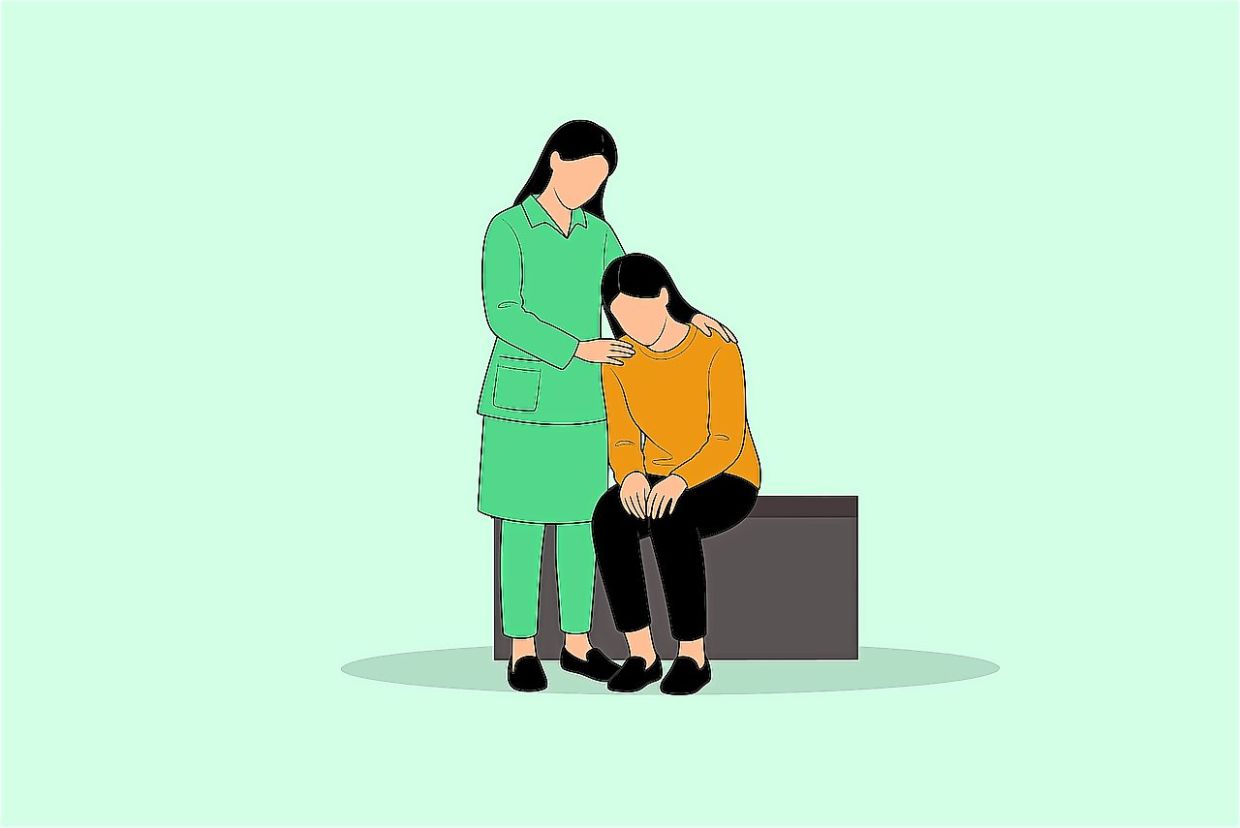
“Keep them grounded with feet firmly on the floor, preferably seated and don’t stare at their face,” advises Goh.
Stay with them and ask if there is something they want to talk about or share with you.
He adds: “Even if they appear cold and silent, stay with them.
“Once they are ready, they will talk... that’s how you guide and eventually steer them to seek help.”
He adds that you can also tell them that it’s okay to cry, or say: “I may not be able to understand you, but I acknowledge that you are in a lot of pain.”
“Don’t pry too much out of privacy and respect their space – let them tell you.
“One of the things my friend did was to hold my shoulders and tap slowly using her fingers, like when you pat a baby to sleep,” says Goh, who is currently pursuing his PhD in political science and international relations at Universiti Malaya.
Personally, he says that opening up to his parents also helped.
He recalls: “I explained to them what I went through as I wanted them to be part of my journey.
“I think they took it very well and were happy that I was transparent with them because I was facing things head on and being true to myself.
“They become your support system and they will also learn to help their friends.”
ALSO READ: How parents can approach the topic of suicide
Tips for self-care
Here are some of his suggestions on navigating a mental health crisis when you are alone:
- Create a small, trusted circle (two or three close friends) that can be called upon for immediate support during a crisis to ensure you have a fallback when feeling isolated.
- If no one is around, stay firmly grounded with two feet firmly on the floor and find safe spaces (like a parked car or quiet corner in the office) to manage acute panic or anxiety attacks.
Never self-medicate.
- Crying is therapeutic, so allow yourself to cry, whether alone or with trusted company.
Watch a sad movie or listen to music that brings tears as this is a natural mechanism for releasing emotional pressure and stabilising feelings.
- Actively change your environment to break negative thought patterns, exploring places like bookstores, parks or beaches, and disconnecting from digital devices.
- Prioritise daily “me time” for self-care, engaging in activities like watching movies, enjoying meals, spa treatments or attending music concerts.
- Understand that mental health struggles, including depression and suicidal ideation, can affect anyone, regardless of age, background, gender or perceived strength.
Don’t assume it will never happen to you.
- Acknowledge that unresolved past traumas and prolonged isolation could significantly exacerbate mental health conditions – seek help to process these experiences.